




New Delhi: Four Indian world heritage sites were discussed at a UNESCO committee meeting in Korea, with the sharpest findings reserved for Assam’s Manas Wildlife Sanctuary, where nearly half the grassland is reported lost to invasive species and long-standing farmland encroachment remains frozen.
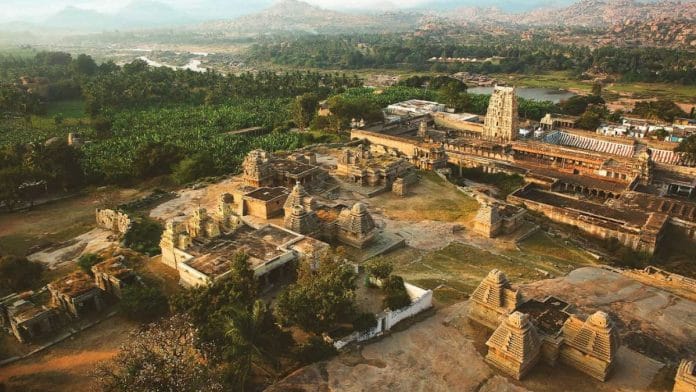
The United Nations Educational, Scientific and Cultural Organization (UNESCO) World Heritage Committee also faulted India over construction at the Group of Monuments at Hampi in Karnataka and the Historic City of Ahmadabad in Gujarat that was completed before mandatory heritage impact assessments were filed.
The panel, however, welcomed progress at the Kakatiya Rudreshwara (Ramappa) Temple in Telangana, the only one of the four sites to draw no criticism.
The observations came during the 48th session of the World Heritage Committee in Busan in Korea, from 20 to 29 July, when it is examining the state of conservation of 147 inscribed sites worldwide. Four of them are in India.
The World Heritage Committee is the governing body of the 1972 World Heritage Convention. Made up of representatives of 21 countries elected from the 196 states party to the Convention, it decides which sites join the World Heritage List and reviews how existing ones are being looked after.
It acts on assessments by UNESCO’s secretariat and its advisory bodies, the International Council on Monuments and Sites (ICOMOS), and the International Union for Conservation of Nature (IUCN).
Manas: encroachment, funding and a dam upstream
Manas, inscribed as a UNESCO World Heritage site in 1985, lies in Assam’s Bodoland Territorial Region.
It was on the List of World Heritage in Danger from 1992 to 2011, after damage to its infrastructure and wildlife during the Bodo agitation.
Its recovery was supported by a UNESCO programme that ran between 2007 and 2015, funded through the India World Heritage United Nations Foundation, to enhance management effectiveness, build staff capacity and increase the involvement of local communities.
Three joint World Heritage Centre-IUCN monitoring missions visited between 2005 and 2011 before the site was taken off the danger list.
India’s report says encroachment “remains unresolved due to socio-political sensitivities involving the rights of Indigenous communities”, and that “it is unlikely to be resolved in the near future so the status quo is being maintained”.
The committee acknowledged that no new encroachment has occurred, and asked India “to continue to address encroachment pressure with due respect to social, economic and cultural rights of Indigenous Peoples and local communities, and respecting all relevant international norms, and to provide further details of such management activities”.
On habitat, the draft decision “notes with significant concern that invasive species continue to impact the grassland-woodland ecosystem of the property and that nearly half of the grassland in the Manas National Park and the Manas Tiger Reserve is reported to have been lost”.
The species named are Leea spp., Chromolaena odorata and Mikania micrantha. The World Heritage Centre and IUCN note the figure “is a significant increase since the 2014-2018 study that was previously reported, which found 20% of grasslands to be severely affected”. Grassland at Manas supports the pygmy hog, Bengal florican, hog deer and wild buffalo.
Pilot studies on invasive plant control are underway and will inform a new action plan. The committee wants them finalised as a matter of priority and has said India may wish to seek International Assistance from the World Heritage Fund. Manas has received two such grants, totalling about $165,000, both approved in 1997.
Funding for community work has stalled. A tripartite memorandum of understanding between the Manas Tiger Conservation Foundation, the National Tiger Conservation Authority (NTCA) and The Energy and Resources Institute (TERI) is meant to generate carbon-market revenue for “conservation management, community development initiatives, and measures to mitigate human-wildlife conflict within the Manas landscape”.
First reported in 2022, field activities are yet to commence. The committee called sustainable financing “a persistent gap”.
On protection, India reported 182 new positions, weekly patrolling, additional anti-poaching camps and an institutional restructuring, with monitoring showing stable rhinoceros numbers, steady tiger growth, and recovery of the pygmy hog.
The committee noted that post-2023 data was supplied for only five species, over areas that “extend beyond the property”.
Separately, the panel noted with concern that nothing further has been submitted on Bhutan’s Mangdechhu hydroelectric project, upstream of Manas and inaugurated in 2019.
At a November 2024 meeting, India and Bhutan said mitigation measures under the project’s Environmental Impact Assessment (EIA) and Environmental Management Plan (EMP) had been implemented; the World Heritage Centre and IUCN recalled that neither document had been submitted for review.
Both countries have been asked to say whether the project negatively impacts the Outstanding Universal Value (OUV) of the property — the cultural or natural significance UNESCO deems exceptional enough to matter beyond national borders, and the basis on which a site is inscribed. Both sides have been asked to meet again no later than 1 December 2026.
ThePrint reached out to Manas National Park and Tiger Reserve field director Sonali Ghosh by text message and telephone. This story will be updated if and when a response is received.
Hampi: Pilgrim buildings and a ropeway
At Hampi, inscribed in 1986 and on the Danger List from 1999 to 2006, the draft decision “expresses concern and deplores” that the construction of two buildings, namely the pilgrim accommodation and pilgrim-related facilities in the buffer zone, in the vicinity of the Anjanadri foothill, was already completed before a Heritage Impact Assessment (HIA) was submitted.
Only three smaller, already built developments were covered by the assessment eventually filed. An assessment for a township or 600-bed accommodation proposal was cited in India’s report but was not submitted to the World Heritage Centre.
The assessment that did arrive found the projects lacked adequate prior planning for water and waste, and recommended that the area around Anjanadri Hill be zoned as agricultural land.
The state tourism department has meanwhile begun a feasibility study for a ropeway there. Hampi’s own draft Master Plan 2021 states that no development is allowed in forest areas and hillocks.
Speaking during the session proceedings on Wednesday, an ICOMOS representative said it was important that heritage impact assessments be carried out in a timely manner, and that projects in the buffer zone be put on hold to avoid further negative impacts, noting that the monitoring mission to the site had been requested by the committee.
The committee’s record of factors affecting Hampi still lists demolition works in the Hampi bazaar near the Virupaksha temple, housing conditions and a proposed pilgrim township.
India has said homestays are now part of Karnataka’s tourism policy as a way of scaling down large tourism infrastructure and creating local livelihoods.
The socio-economic sectoral plan, conservation plan, tourism strategy and visitor management plan remain unfinished, and the panel noted that “development continues to occur without this guidance”.
A joint World Heritage Centre-ICOMOS reactive monitoring mission was invited for late June and early July 2026.
ThePrint sent queries to the Karnataka tourism department by email. This report will be updated if and when a response is received.
Ahmadabad: Heights and a completed fire station
For Ahmadabad, inscribed in 2017, the draft decision “regrets that the construction of the Danapith Fire Station and multi-level car park development have been completed before Heritage Impact Assessment (HIA) processes that fully consider potential impacts on the property’s OUV were completed”.
A 2023 technical review had said the Danapith project should not proceed as this will have a “clear, direct and lasting negative impact” on the site’s OUV.
The committee had earlier called the Kalupur railway precinct redevelopment a “clear threat” to the OUV of the property due to its location and scale, being located partly within the buffer zone.
A reactive monitoring mission in March this year found the buildings had been substantially completed by the beginning of 2025.
The mission traced the issue to planning rules that set building heights by road width and plot size alone. The panel wants the clause revised and heights inside the property capped at 15 metres.
India has reported a Heritage Tradable Development Rights scheme for owners of pol houses. Pols are the walled city’s traditional gated residential clusters, dense pockets of tightly packed timber-fronted houses entered through narrow gateways and organised around shared courtyards, usually by community or trade. They are central to why Ahmadabad was inscribed, and their decay and demolition have been a running concern in the committee’s files.
India has also reported a digital database of those houses, 376 structures outside the walled city being listed, a tourism cell for livelihood enhancement and a long-term Vision 2070 framework. The committee has sought details on these.
ThePrint reached out to the Ahmedabad district collector for comment by email. This report will be updated if and when a response is received.
Ramappa: The one that drew no criticism
The 13th-century Kakatiya Rudreshwara temple at Palampet, inscribed in 2021, is the newest Indian entry on the list and the only one in this batch the committee welcomed outright, noting India’s continued efforts for the protection, conservation and presentation of the property.
Its earlier problem was governance. The committee records list a lack of effective management and adequate protection, pending the finalisation of an integrated conservation and management plan and the constitution and functioning of the Palampet Special Area Development Authority (PSDA).
The authority is now working, and is preparing to extend the site’s buffer zone to take in the ancient irrigation system that the temple was built alongside, including the canals and Lake Ramappa. India has told the committee the process will take about a year and will involve stakeholder consultations and impact assessments. The panel has encouraged it to file a formal minor boundary modification request before 1 February 2027.
On the Pilgrimage Rejuvenation and Spiritual Heritage Augmentation Drive (PRASHAD) scheme, the sequencing that failed at Hampi and Ahmadabad appears to have held. An updated heritage impact assessment was filed and annexed to India’s report, covering direct, indirect, cumulative and interpretive effects, along with visual material showing how the 27-acre and 10-acre parcels sit against the site and buffer zone boundaries.
Both are described as lying beyond the 100-metre prohibited zone and 300-metre regulated zone marked by the Archaeological Survey of India under the Ancient Monuments and Archaeological Sites and Remains Act, 1958. The assessment now goes to ICOMOS for technical review.
Larger works under the site’s Tourism Development Master Plan remain at a preparatory level, and India has said the Telangana provincial committee and PSDA will clear them only after mandatory assessments. The committee has asked that those, with site plans, sections and elevations, be sent to it before any decision is taken.
(Edited by: Sugita Katyal)
Also Read: Bhairav Yatra now has a cultural heritage tag. How did J&K’s sacred procession get here?