







Thrissur: A small group of workers in makeshift sheds in the middle of paddy fields were hard at work to make a record amount of fireworks. The festival of Thrissur Pooram was just days away, and they were racing to prepare fireworks in record volume for the festival.
The 62-year-old Valsala K.V. was also among them, sieving chemicals. Suddenly, an explosion broke the rhythm of work.
Smoke and dust filled her eyes as shattered tiles flew around her. Before she could make sense of what was happening, she ran for her life. She stumbled as she rushed forward but managed to reach the road just a stone’s throw away.
But Valsala was among the lucky people who escaped the Tuesday blast at the fireworks unit in Thrissur’s Mundathikode with minor injuries. Ten others were not so lucky.
Of the 10 deceased, officials have identified nine bodies so far. They have also recovered 30 body parts.
Ten other people were injured in the incident, four of them, including the licensee Satheesh, are in critical condition with 90 percent burns, according to officials.
The state government on Wednesday announced a judicial probe into the incident. A meeting by the festival office-bearers of the Thiruvambady and Karamekkavu Devaswom boards Thursday decided to cancel the fireworks display for the Pooram this year.
While the cause of the fire has not been established yet, locals and workers suspect extreme heat.
The incident has raised questions on precautions and regulations, especially ahead of Thrissur Pooram, when Devaswoms (temple bodies) procure firecrackers in huge quantities for competitive firework display.
Also Read: No NOC, no licence — Vivek Vihar blaze exposes lax fire safety in ‘most smaller Delhi hospitals’
‘We take extreme caution’
Meanwhile, on the fire at the unit, Valsala said they take “extreme caution”.
“We don’t let outsiders in. We always wash our feet before entering so that soil won’t enter the mix. We keep the surroundings wet to avoid any untoward fire entering the premises. And they (the licensee) have been doing this for decades, nothing happened till now,” she said.
According to her, extreme heat could have triggered the fire at the shed where chemicals were being filled into shells.
As per the 2008 Explosives Rules, enforced by the Petroleum and Explosives Safety Organisation (PESO), every fireworks unit must have a valid PESO (Petroleum and Explosives Safety Organisation) license, with a pre-approved location and capacity.
It also states that chemicals such as black powder (usually a mix of potassium nitrate, charcoal, sulphur), aluminium powder-based compositions, and barium-strontium salts used for colours should be mixed in controlled ratios, with different activities such as mixing, filling, and drying carried out in separate sheds with approved quantities.
The rules also mentions that operators and assistants are required to be examined and certified through a dedicated certificate of competency (Form LE‑11A), valid for a fixed period and liable to suspension or revocation in the event of violations.
Similarly, conditions for display licenses now mandate critical operational controls during a show, including mandatory loading of fireworks into mortars only prior to the display, he said.
He added that mock drills must be conducted in advance, under the supervision of the licensing authority, to test and refine the on‑site emergency plan, and all persons engaged in the display must wear distinct, high‑visibility jackets and carry identity cards so that responsibilities are clear and access can be controlled.
However, similar incidents in the state in the past, including the 2006 blast before Thrissur Pooram itself, have highlighted violations of these rules, including the usage and storage of excess quantities of gunpowder and closely placed sheds, leading to fire incidents.
The fireworks unit in Mundathikode was a temporary structure built on a small plot of land in the middle of paddy fields. It mainly consisted of four makeshift sheds for the preparation and storage of fireworks ordered by various temple committees.
At the time of incident, the unit was making fireworks for the Thiruvambady group for the upcoming Thrissur Pooram.
‘Rules exist but not always followed’
The Pooram, the most popular temple festival in Kerala, is known for its fireworks, elephant procession, and Kudamattam (changing of umbrellas)—all of which is done in manner of competition between Thioruvambady and Paramekkavu Devaswom groups.
The exact number of workers at the unit at the time of the incident is still not clear, with officials relying on the number of lunch orders made at a local hotel.
Dr Venugopal R, a former Joint Chief Controller of Explosives at the PESO, said the premise was unauthorised, though the owner had a license to manufacture the fireworks.
He said the Mundathikode facility had large quantities of compositions mixed, assembled and dried in relatively open or semi‑open areas, without proper compartmentation and necessary safety distances. He said the facility also had more workers per shed than permitted.
“Under the legal framework, fireworks and explosive compositions must be manufactured and processed only on licensed premises, with approved layouts, specified safety distances between sheds, controlled quantities and strict man‑limits for each shed. Open agricultural fields are not designed or licensed as fireworks factories and treating them as de‑facto manufacturing yards is fundamentally unsafe and contrary to the intent of the law,” Venugopal told ThePrint.
Venugopal acknowledged that rules on safety and precaution exist, but not always followed during the festival season.
He said that the latest incident and a similar tragedy in Thrissur (in 2006) reveals the gap between the regulated world of licensed display sites, certified operators and engineered safety measures, and the unregulated reality of intensive fireworks manufacturing inside Devaswom premises and festival grounds.
“It is imperative that all Devaswoms and festival committees recognise that they are not fireworks manufacturers under law. At most, they are clients who may procure fireworks from licensed factories and arrange licensed displays under the supervision of certified display operators,” he said.
For Thrissur Pooram, major temple groups such as Thiruvambady and Paramekkavu are typically permitted to store fireworks up to around 2,000 kg each. However, locals who have worked in fireworks units in the past, say this is not always followed.
“For fireworks to have more impact, we need more chemicals. So, there is usually an adjustment between officials and workers,” one local said.
Valsala said mixing is usually done by men who are experienced, and she was taught her job a year ago by her colleagues when she joined the group. She said she does not know much about the names or nature of the chemical substances she works with. “It’s not a difficult job. Just needs to be shown once,” she says.
ThePrint asked locals, workers, and police to understand the volume of chemicals stored at the sheds at the time of the incident, but everyone said they do not know yet.
“The state government has set up a judicial probe. We can’t reveal any other information,” said Krishnakumar K, Deputy Collector in Thrissur. Who is in-charge of disaster management.
‘An earthquake’
Located nearly 20 km from the district headquarters, Mundathikode village captures attention due to its vast paddy fields and greenery, and homes with large courtyards.
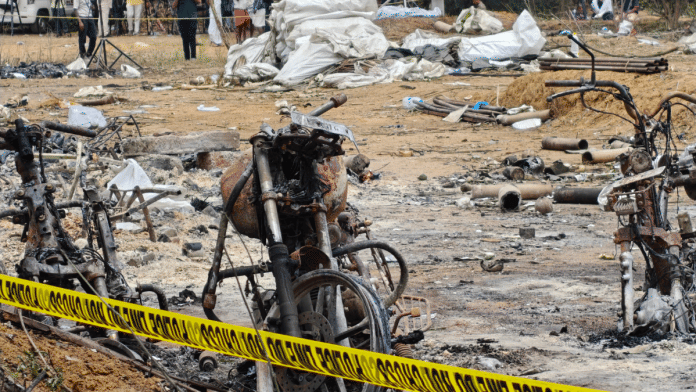
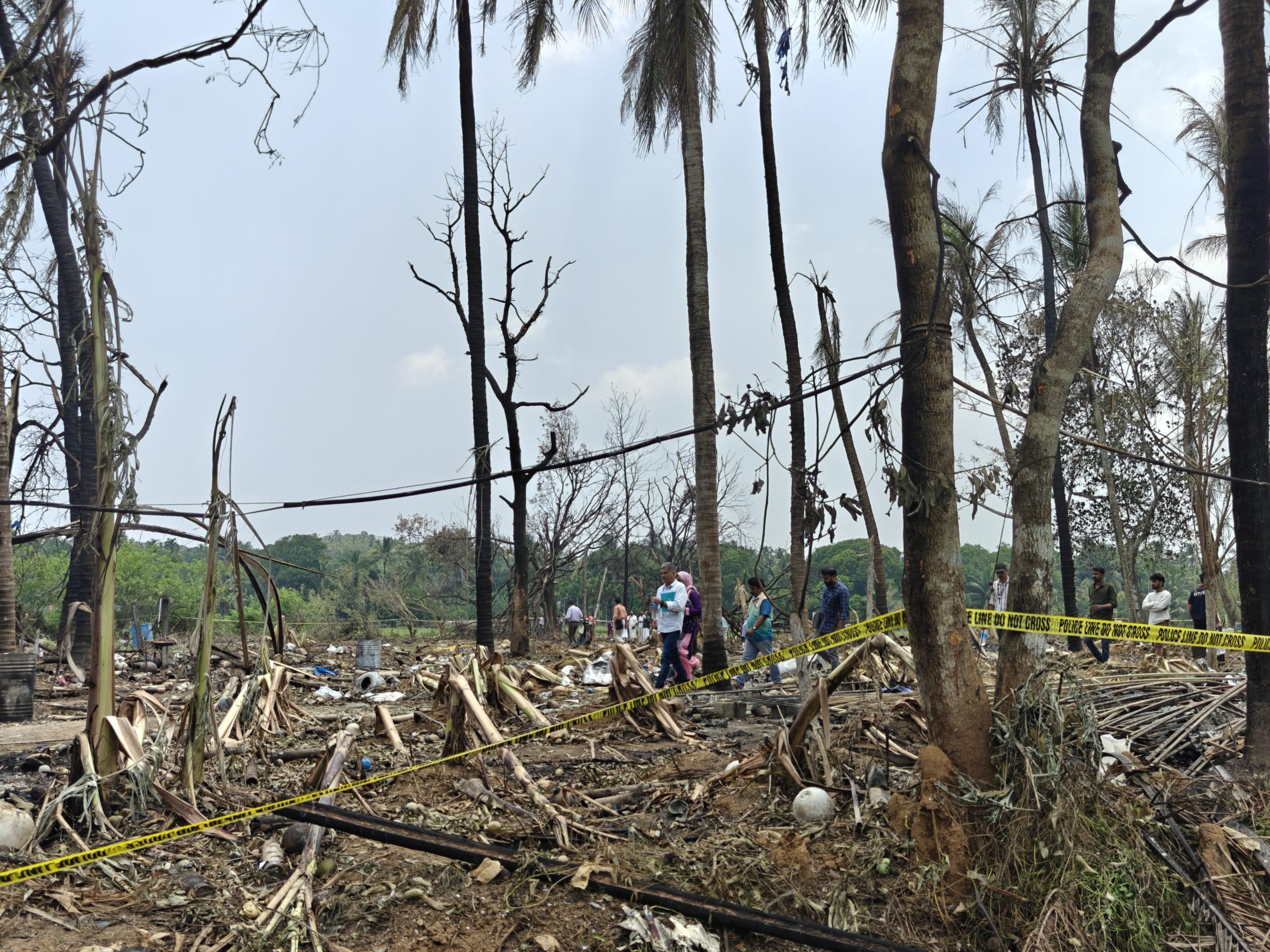
The fireworks manufacturing unit also existed in such a paddy field of nearly three acres, in four sheds located in an island-like area in the middle of the fields. They are now completely charred, along with surrounding fields, coconut trees, and even bikes.
There were three loud, ground-shaking noises, shortly followed by smoke and the smell of burning chemicals.
The 53-year-old Subramanian, who lives within metres of the site, said he initially thought an earthquake struck the village.
All the windows of his house shattered, cracks appeared in multiple places and within minutes, he said, he saw a burned palm land in his courtyard and a charred abdomen hanging on a tree near his kitchen.
Multiple houses in half a kilometre radius reported similar scenes. The explosions started after 2.30 pm and there were blasts till 6 pm one after the other, making the rescue operation difficult.
While the village mourns the tragedy, they acknowledge Satheesh and his work.
Preparing fireworks is a seasonal job in the area. Sheds are set up every year by December at the same place, preparing fireworks for festival seasons for different temples and churches.
The 23-year-old Athul Krishna EB, a bank employee who lives close to the incident site, says the work has been in Satheesh’s family for decades, even during the time of his great-grandfather. Satheesh’s father Mani was fondly called ‘Padakkam Mani’ (firecracker Mani) by locals.
On Tuesday, Satheesh and his team had multiple visitors from outside, including local TV channels and YouTubers, who came to shoot the preparations ahead of the Pooram. Locals and workers also say around five youngsters, part of the Thiruvambady temple committee, also joined them that day to oversee the works and help.
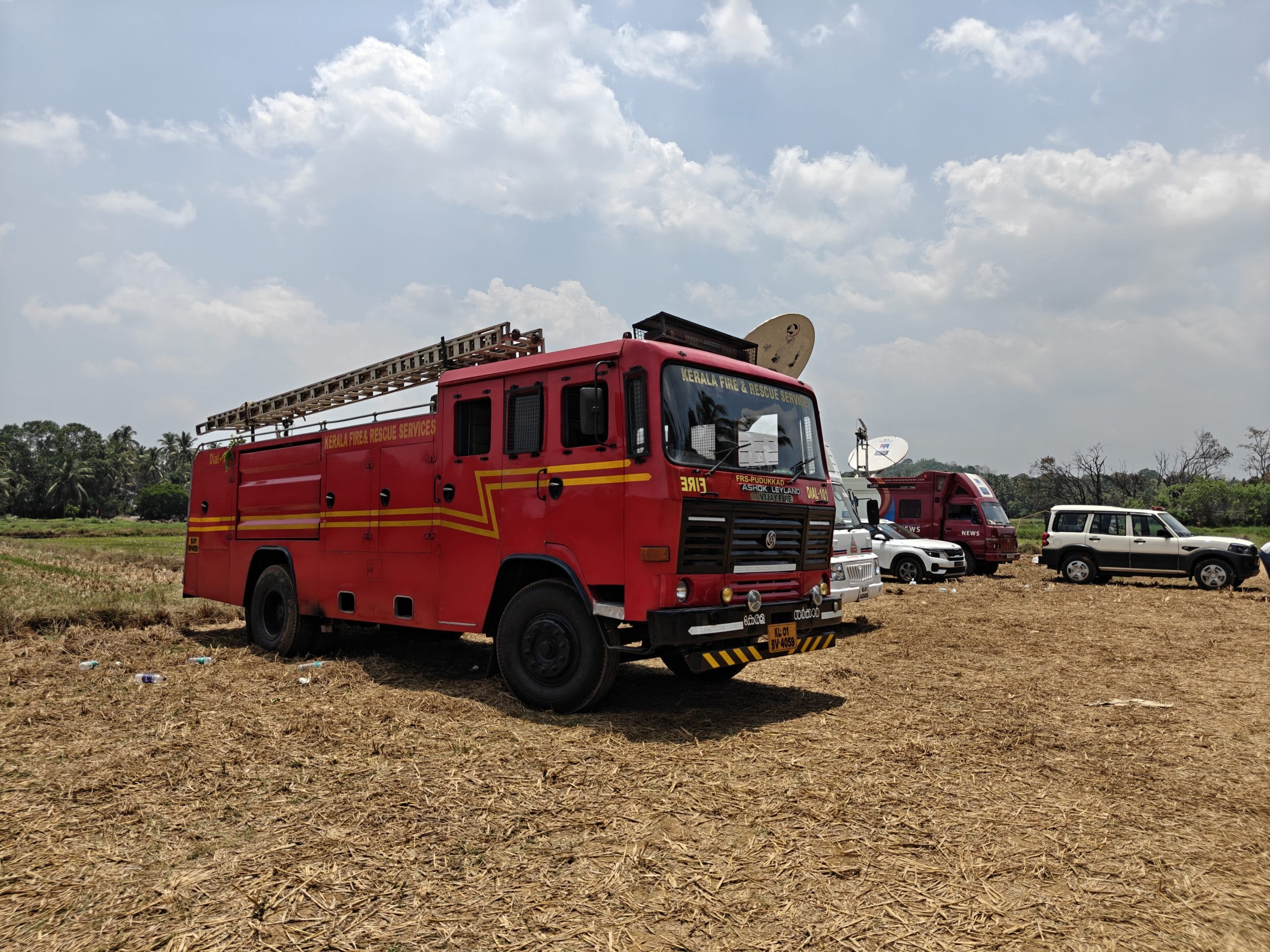
Athul recalls Satheesh saying he planned to stop the work this year due to personal health issues and a lack of workers. However, another local said it would have been a difficult decision as nearly 40 families directly depend on him for their livelihoods.
The 58-year-old Subadra KV, another worker who escaped the tragedy, echoes the sentiments. She was a daily-wage worker, and she joined Satheesh’s team last summer after her neighbour, who is employed there, recommended it to her.
“As coolie workers, we don’t have stable work and income. Here, we get continuous work for the entire summer. The work is less intense and tiring. And it is also a joy to sit and work together in a team, talking and singing. Though our relatives had told us it was dangerous, we always loved going there,” she says.
Athul also recalled how watchful the workers were. He remembers an incident from last week when youngsters from the village gathered to play cricket in the harvested field half a kilometre away from the sheds.
“When some people tried to smoke, the workers came running with a bucket of water and yelled at us, asking if we were stupid to do it here. They were always watchful,” he says.
The famed Pooram and dark memories
Central Kerala districts such as Palakkad and Thrissur, that see extreme heat in summer, are known for extravagant temple festivals in the same season with large-scale displays of fireworks and elephants. In some places, bull effigies replace elephants based on tradition.
Often held in harvested paddy fields, these festivals are a hallmark of the region, including Nenmara Vallangi Vela, Kavassery Pooram and Chinakkathoor Pooram in Palakkad district, as well as celebrations at the Anthimahakalankavu Temple and Uthralikkavu Temple in Thrissur district.
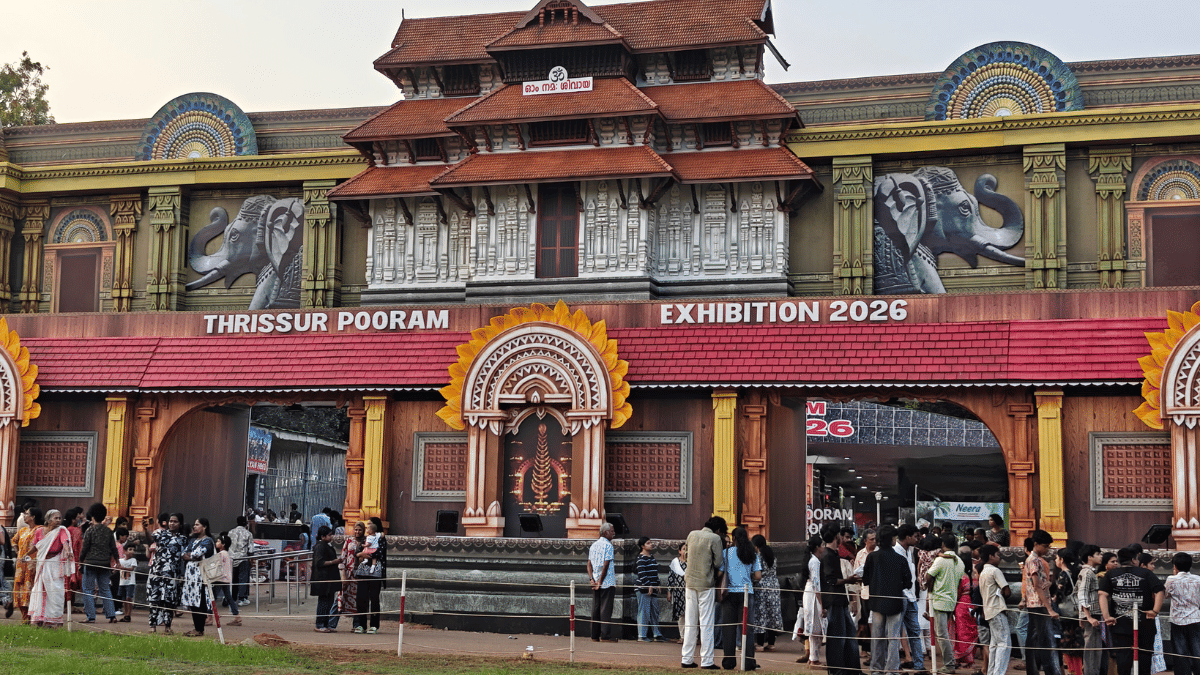
However, the most famous is Thrissur Pooram, which has placed the district on the global cultural map, attracting more than one million visitors, including foreigners.
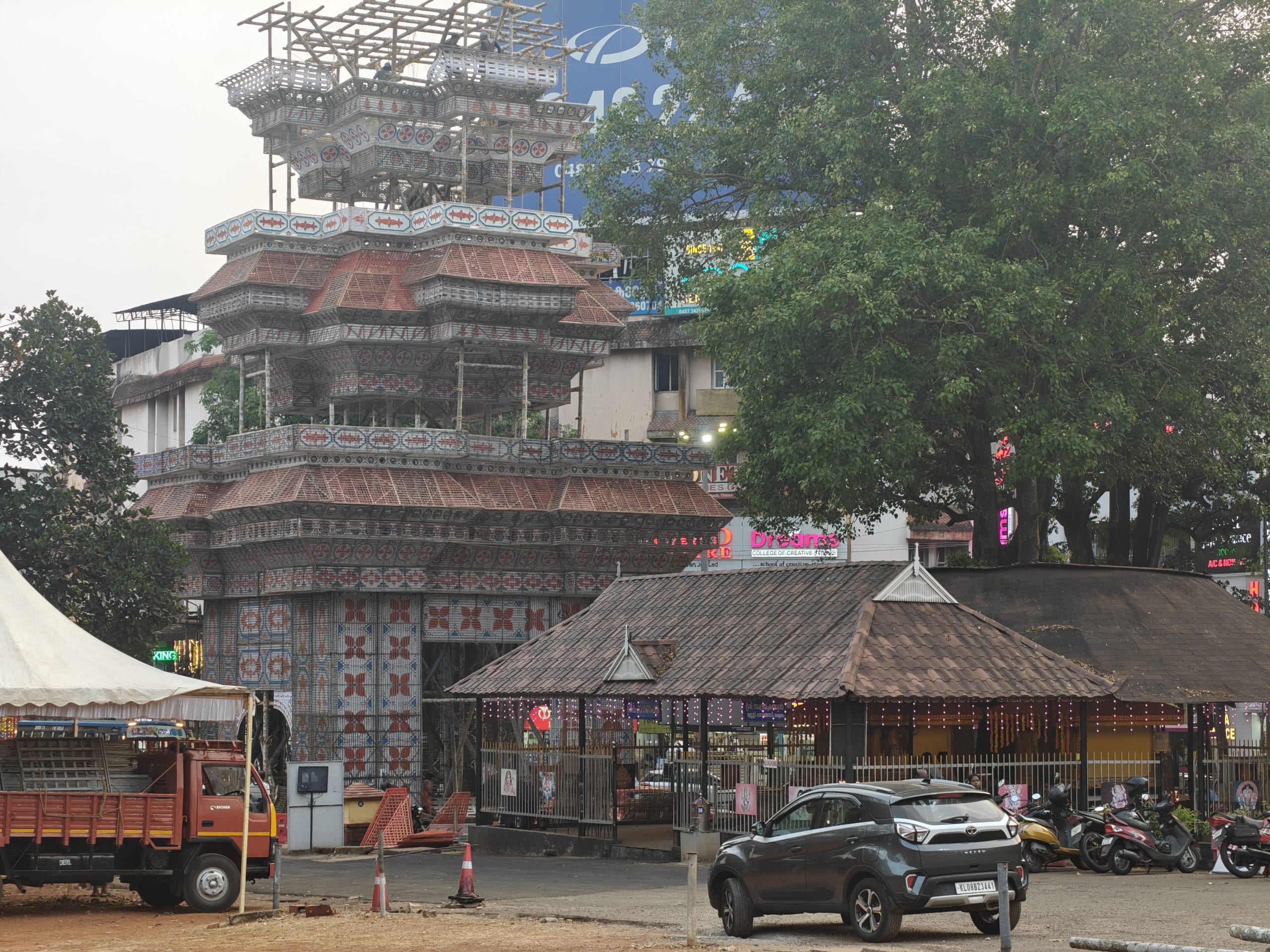
The festival, a brainchild of former Cochin ruler Sakthan Thampuran, is held at Vadakkunnathan Temple and the surrounding Thekkinkadu Maidan, a circular open ground around the temple in the heart of Thrissur city.
The event is centred on a ceremonial rivalry between the Paramekkavu Devaswom and the Thiruvambady Devaswom, featuring elephant processions, kudamattam—the rhythmic exchange of colourful parasols—accompanied by traditional percussion ensembles, and elaborate fireworks displays.
These displays are held twice: once on the main Pooram night and earlier during a ‘sample’ show, each involving large quantities of fireworks.
The Mundathikode unit was preparing fireworks for the Thiruvambady Devaswom.
In May 2006, days before the Thrissur Pooram, seven people died in a similar explosion at a fireworks unit just five kilometres away from the city. Damage was reported to houses located as far as four kilometres away. The incident happened just a day before the sample fireworks of Thrissur Pooram, and the sample event was cancelled that year.
Similarly, in 2012, six people lost their lives after a fireworks unit exploded in the district’s Mulamkunnathukavu. The unit was reported to have 2,000 kg of gunpowder in store.
In 2016, Kerala witnessed its worst tragedy when a spark during a fireworks display set off an explosion at a storage unit during a festival in Kollam district, claiming 108 lives and injuring over 300. Inquiry later found unlicensed fireworks display, failure to maintain safety distances, use and storage of unauthorised fireworks, and lack of crowd control as reasons.
The latest incident in Thrissur also happens days after a similar tragedy occurred in Tamil Nadu’s Virudhunagar district. The 19 April blast at the Vanaja Fireworks Unit claimed 23 lives and injured multiple people, mostly women.
Officials found multiple violations at the facility, including overcrowding of workers at the time, violation of safety norm and rules.
(Edited by Ajeet Tiwari)
Also Read: What is bamboo scaffolding? Hong Kong’s deadliest fire in 100 years was made worse by it