





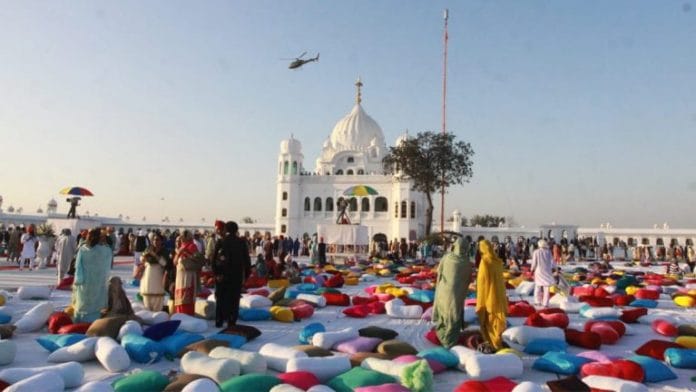



Chandigarh: The Shiromani Gurdwara Parbandhak Committee (SGPC) Saturday passed a resolution demanding that India reopen the Kartarpur Corridor to allow Sikh devotees to visit Gurdwara Darbar Sahib in Pakistan.
The gurdwara is the final resting place of Guru Nanak Dev, the first Guru of the Sikhs, who spent his last 18 years there.
The 4.7-km corridor connecting Punjab’s Dera Baba Nanak in Gurdaspur to Kartarpur in Pakistan has remained shut since May last year, when ties between India and Pakistan plunged in the aftermath of a terror attack in Kashmir’s Pahalgam and Operation Sindoor.
The resolution was passed at the SGPC’s general body meeting held at Teja Singh Samundri Hall at the organisation’s headquarters in Amritsar, in a session convened primarily to pass the annual budget.
SGPC President Harjinder Singh Dhami presided over the meeting, which was held in the presence of Guru Granth Sahib. General Secretary Sher Singh Mandwala presented the budget.
Also Read: What ails Punjab NRI sabha today? It was the protector of the global Punjabi rights and roots
The budget
The SGPC passed a budget of Rs 1,487 crore for 2026-27, a 7.28 percent increase over the previous year.
Of this, Rs 1,127 crore was allocated to gurdwaras, Rs 120 crore to the Dharam Prachar Committee, and Rs 33 crore for the construction of new sarais (inns) associated with Sri Darbar Sahib (Golden Temple) in Amritsar.
Panthic welfare activities have been allocated Rs 7.61 crore, covering support for Nihang Singh jathebandis (communities), legal assistance and lawyer fees for Sikhs in jails, monthly honorariums for Bandi Singhs—Sikhs jailed for militancy for the cause of Khalistan—pensions for families of those who sacrificed for Sikhism, assistance to families of martyrs and injured Sikhs, and support for religious soldiers, Sikligar and Vanjara Sikhs, as well as Sikh preaching through social organisations and village granthis.
Dhami sought to counter the perception that the SGPC’s finances rival those of the state government, saying the organisation’s budget was only 0.9 percent of Punjab’s, roughly equivalent to that of a large municipal corporation. He said the primary sources of revenue are offerings and dasvandh—a tenth of income—contributed by the Sikh sangat.
Other resolutions
The general house Saturday criticised Chief Minister Bhagwant Mann over the Punjab Prevention of Offences Against Holy Scriptures Bill, 2025, saying he had failed to clarify whether the proposed legislation would cover all religious texts or only Guru Granth Sahib. Members pointed out that the Punjab government had not shared information about the proposed legislation with the SGPC despite repeated requests.
Addressing a gathering at Fatehgarh Sahib Saturday, the chief minister announced that a special session of the state assembly would be convened on 13 April to bring in strict legislation to deal with sacrilege of Guru Granth Sahib. He said the government had decided to amend the Jagat Jot Sri Guru Granth Sahib Satkar Act, 2008, to strengthen it and enhance punishment up to 10 years for those found guilty sacrilege of the Guru Granth Sahib.
The SGPC general body however, objected to any proposed amendments to the Act.
The 2008 Act primarily regulates the printing and publishing of Guru Granth Sahib while Punjab Prevention of Offences Against Holy Scriptures Bill, 2025, proposes strict punishments, including life sentence, for those found guilty of sacrilege of any holy scripture. The Bill was tabled in the Vidhan Sabha last year and was handed over to a select committee for further deliberations.
Members also criticised the Punjab government’s handling of sacrilege cases, saying that despite repeated incidents, neither thorough investigations had been conducted nor exemplary punishments delivered.
Expressing concern over the misuse of artificial intelligence, the SGPC called upon the Indian government to rise to the growing challenge and form a policy to prevent the spread of objectionable content hurting Sikh religious sentiments, while ensuring prompt action and issuing directives to state governments.
The general house also raised concern over what it termed “increasing police encounters” involving youth in Punjab, stating that such trends create fear and raise questions about law and order.
A resolution condemned attempts on social media to undermine the distinct identity of the Sikh community. It said that such efforts not only target Sikh identity but also challenge the sanctity, autonomy and universal ideals of Sikhism, including truth, justice, equality, brotherhood, and service. The resolution linked such tendencies to narratives promoted online and urged Sikh institutions, scholars, and the global Sikh community to remain vigilant and united in safeguarding the originality and distinctiveness of Sikh identity.
Another resolution condemned incidents where Sikh students are forced to remove their articles of faith during competitive and other examinations, stating that such actions hurt religious sentiments and adversely affect students’ performance, and demanded strict action against those responsible.
The SGPC also urged the government to take effective diplomatic measures to address issues faced by Sikhs abroad, ensure protection of their religious rights, and prevent racial discrimination and violence. It condemned recent incidents of opposition to Nagar Kirtan (procession) in New Zealand by some elements and asked the government to take necessary measures to ensure such incidents do not recur.
Also Read: Punjab gangsters are shooting village sarpanches now. Moving on from NRIs and pop stars