



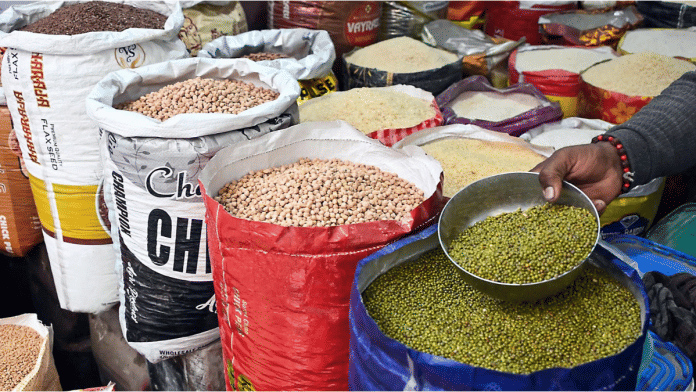
Chennai: Tamil Nadu households are grappling with rising prices of essential commodities, including rice, pulses, ghee and onions, during the festive season. Retail prices of popular rice varieties have surged by up to 35 percent in a month, while pulses and vegetables have also become costlier. The pressure on household budgets has intensified with state-owned dairy cooperative, Aavin raising prices of over 60 milk-based products from Wednesday.
Several essential commodities are costlier in Tamil Nadu than the national average. In September, rice averaged Rs 61.66 per kg in the state, against the all-India average of Rs 46.20. Toor dal cost Rs 134.23 per kg, compared with Rs 124.41 nationally. Onion prices stood at Rs 59.28 per kg, against the national average of Rs 52.96, while palm oil cost Rs 160.28 per litre, compared with Rs 150.91 across India.
Rice has recorded the sharpest increase, with several popular varieties becoming significantly more expensive in Chennai and other parts of Tamil Nadu. Boiled Ponni rice, which sold for around Rs 61 per kg in September, has risen by about Rs 19 per kg. Raw rice prices, previously ranging from Rs 58 to Rs 75 per kg, have also increased, while some basmati varieties have seen prices rise from Rs 60 to Rs 98 per kg. Fine and superfine varieties are now commonly sold in the open market for Rs 75–90 per kg. Parboiled rice is currently selling for Rs 70–80 per kg.
Wholesale prices have followed a similar trend. Traders at Chennai’s Koyambedu wholesale market reported increases of Rs 300–600 in the prices of 25 kg bags of certain varieties.
Traders expect the prices to remain elevated throughout the festive season and attributed it to alleged government inaction. They said supplies remain constrained and inflation was weighing on consumption.
Rise in price of pulses has further strained household budgets. Wholesale toor dal prices in Chennai have risen from around Rs 125 per kg in September to Rs 150 per kg currently. Urad, moong and gram dal have also become costlier by Rs 8–15 per kg in recent weeks.
The state government has responded with subsidised sales and measures to curb possible hoarding. Minister for Food and Civil Supplies P. Venkatramanan told the media that cooperative and Amudham outlets had been directed to sell fine-quality rice at Rs 30 per kg, with an initial allocation of 25,000 tonnes. He added that toor dal is being sold at a subsidised rate of Rs 130 per kg. Officials from the department said the increase in rice prices was temporary and that stocks were adequate.
Also Read: ‘If we had finished him at Karur’—DMK councillor booked; TVK revives stampede ‘pre-planned’ claim
Vijay seeks Centre’s nod for stockholding limits
Chief Minister C. Joseph Vijay has written to the Union Ministry of Consumer Affairs, Food and Public Distribution seeking approval to impose stockholding limits on rice, pulses, edible oils and onions under the Essential Commodities Act.
The state government said crop failures linked to climatic factors, El Niño and inadequate rainfall could prompt wholesalers and millers to hold excessive stocks, fuelling inflation and eroding consumers’ purchasing power.
For rice, Tamil Nadu has proposed a stockholding cap of 2,000 metric tonnes for wholesalers and eight metric tonnes for retailers. Millers would be allowed to hold stocks equivalent to no more than one month’s production capacity.
For toor and urad dal, the proposed limits are 200 metric tonnes for wholesalers and five metric tonnes for retailers. For edible oils and vanaspati, the state has proposed limits of 500 quintals for wholesalers and 30 quintals for retailers. Onion stocks would be capped at 25 metric tonnes for wholesalers and two metric tonnes for retailers.
Reduced supplies from neighbouring states
Andhra Pradesh, Karnataka and Telangana have also faced upward pressure on rice prices. However, Tamil Nadu has recorded a sharper increase, partly because it depends on supplies from these states, particularly for fine and superfine varieties.
Traders attribute the rise to reduced arrivals from major rice-producing regions, where lower yields and rainfall deficits have tightened supplies. Rainfall shortfalls associated with El Niño and limited water availability have affected production across parts of the supply network serving Tamil Nadu.
“We did not receive the varieties of rice and toor dal supplies from other states in regular amounts and that naturally led to an increase in the prices. The neighbouring states are also struggling with water so they have stocked the supplies and not exported to Tamil Nadu. After the recent rain, we expect that prices might not increase further,” R Punnaiappan, a trader at Koyambedu wholesale market, told ThePrint.
Production constraints within Tamil Nadu have added to the pressure. Millers have attributed lower local paddy output to inadequate rainfall and irrigation water in the Cauvery delta, along with climate-related crop losses. Prices of fine and superfine paddy have crossed Rs 40–42 per kg in the state.
Millers said higher procurement prices had increased their costs, while a larger share of paddy entering government procurement had reduced the quantity available to private buyers in the open market. They also cited higher fertiliser, fuel and labour costs, continued rice exports and strong urban demand for premium varieties in Chennai, Madurai and Coimbatore.
Farmer associations, however, have accused millers of hoarding stocks and contributing to the price rise, calling for stricter government intervention.
P. Viswanathan, president of the Tamil Nadu River and Irrigation Farmers’ Association, told ThePrint, “We had good production last year but because of the poor monsoon conditions and climate change, the millers have stocked rice and are saying there is low production. The higher procurement prices, input costs and reduced private-market availability have also been given as the reason for limited stock availability.” He said the government should have made an intervention to verify the claims and ensure that the price hike is controlled. “It is the people who suffer and others are using the opportunity to make money,” he added.
Aavin raises prices of dairy products
The rise in food prices has coincided with Aavin’s decision to revise prices across a range of dairy products from 28 October. The revision covers ghee, butter, curd, buttermilk, milkshakes, lassi, sweets and cookies, affecting products commonly purchased by households for daily consumption and festive preparations.
Ghee prices have risen sharply. The price of 100 ml packs, previously Rs 80–85, has increased to Rs 95. The 200 ml pack is now priced at Rs 180 and the 500 ml pack at Rs 400.
The price of 100 g table butter has increased from Rs 60 to Rs 70, while curd prices have risen by around Rs 5–10, depending on pack size. A 200 ml pack of buttermilk now costs Rs 10, up from Rs 8.
Aavin attributed the revisions to higher raw-material and procurement costs. The federation said more than 90 per cent of the additional revenue would support dairy farmers.
Vijay faces Opposition criticism
Former chief minister and DMK president M.K. Stalin has criticised Vijay and the TVK government over the rising cost of essential commodities. He claimed that within four months of the new government taking office, Tamil Nadu has become the country’s leading state in inflation and price rise.
Stalin accused the administration of lacking basic governance knowledge and questioned whether watching reels would fill people’s stomachs. He said ordinary households were struggling to afford groceries while the government remained preoccupied with other matters.
“Within four months of the TVK government, Tamil Nadu has become the number one state in the country. In what? Inflation and price rise!” he wrote on X.
The Aavin price revision has also drawn criticism from AIADMK general secretary Edappadi K. Palaniswami, who called it a bitter “Vettri Deepavali gift” that took advantage of festive demand. He urged the government to roll back the price increases.
(Edited by Chingkheinganbi Mayengbam)
Also Read: Oppn turns up the heat on Vijay govt after Tamil Nadu jailbreak, 13 of 17 escaped inmates caught