







New Delhi: A Delhi court has allowed the Central Bureau of Investigation (CBI) to collect additional handwriting and signature samples of a physics professor arrested as part of the investigation into leak of the NEET-UG examination paper this year.
This was after specimen handwriting samples of the accused on around 60 pages proved insufficient.
On Wednesday, special CBI judge Ajay Gupta allowed the agency’s plea, stating that signature samples of accused Manisha Sanjay Havaldar had proved to be inadequate in the investigation and further samples were needed.
The court instructed the jail superintendent to make arrangements for the agency to record signature samples between 27 and 29 July during office hours.
Employed with Pune’s Seth Hiralal Saraf Prashala, Havaldar was involved in the NEET-UG 2026 examination process and was appointed by the National Testing Agency (NTA) as an expert, a CBI spokesperson had said at the time of her arrest in May this year.
She allegedly had access to the subject’s entire question paper and passed on questions to another prime accused, Manisha Waghmare.
Havaldar was arrested by the agency after question papers, allegedly handwritten by her, were recovered from the mobile phone of key accused Waghmare. A businesswoman from Pune, Mandhare has been identified as a key person behind the leak and dissemination of NEET question papers by the CBI.
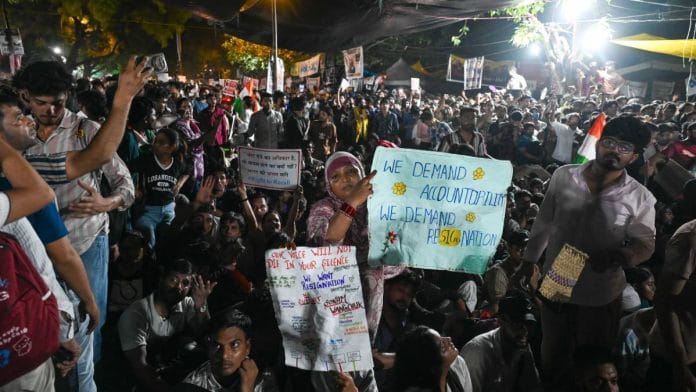
Protests are currently ongoing at New Delhi’s Jantar Mantar and in other cities against the exam paper leaks, with the youth demanding the resignation of education minister Dharmendra Pradhan.
“On the request of the CBI and pursuant to the order dated 30.05.2026 of this Hon’ble Court, CBI obtained specimen writings from the accused, Mrs Manisha Sanjay Havaldar, while she was in police custody at the CBI office. However, the Government Examiner of Questioned Documents (GEQD) has indicated that the specimen material presently available is inadequate for a comprehensive forensic comparison,” CBI’s public prosecutor Neetu Singh submitted in the plea moved last week.
“For a just and effective investigation, it is necessary to determine the authorship of the recovered question papers pertaining to NEET UG 2026. Accordingly, it is essential that additional specimen handwritings/signatures of Mrs. Manisha Sanjay Havaldar be obtained within the jail premises in New Delhi over a period of three days, in the presence of an independent witness,” the plea added.
Havaldar’s counsel, advocate Akhil Rexwal, countered the agency’s plea, stating that the CBI had already recorded the professor’s specimen handwriting samples on around 60 pages following an earlier court order and that it had failed to disclose why those specimens proved to be insufficient.
“Keeping in view the aforementioned facts and circumstances… that the documents which are to be compared by the Forensic Lab are bulky and also that the GEQD has indicated insufficiency of the specimen handwriting/signatures already obtained, therefore, the permission sought by CBI is allowed,” judge Gupta stated.
(Edited by Nida Fatima Siddiqui)
Also Read: ThePrint Exclusive: CBI traces NEET paper leak to prof who was part of NTA panel that set paper