







New Delhi: The police have a problem at hand, and it’s made in China. Standalone solar-based Closed-Circuit Television (CCTV) cameras of Chinese origin have been of late used in alleged espionage by Pakistan’s Inter-Services Intelligence (ISI).
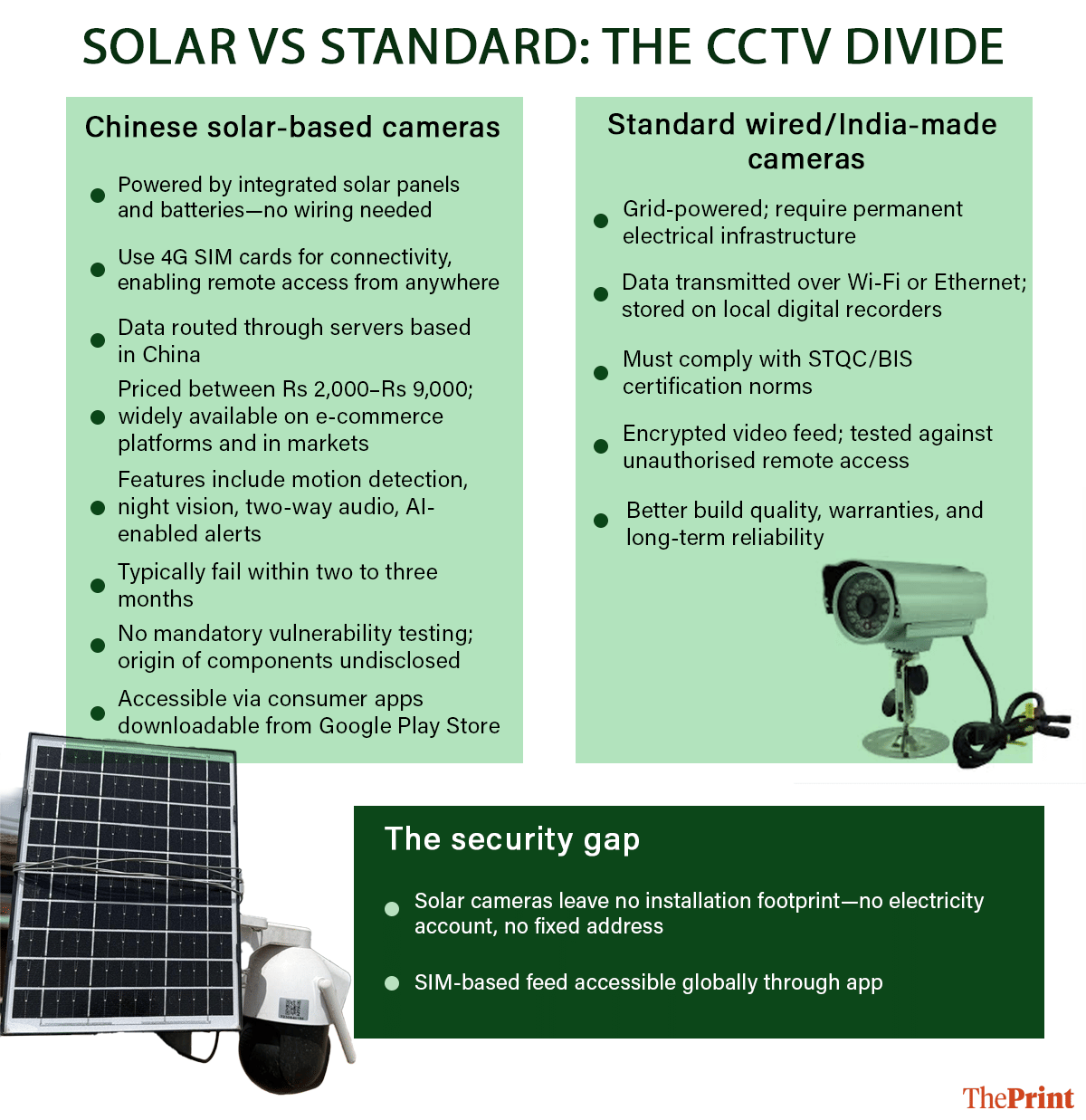
These Chinese solar-based CCTV cameras are different from regular wired/grid-powered CCTV cameras due to their power source, installation method and 4G connectivity, making them ideal for remote or off-grid surveillance. Unlike traditional cameras that require permanent electrical wiring, these solar based cameras use integrated solar panels and batteries to operate independently, often using 4G SIM cards for Internet access instead of the usual Wi-Fi or Ethernet connection.
Such Chinese CCTV cameras have allegedly been used in two modules, both backed by the ISI, and one by banned terror group Babbar Khalsa International (BKI). The police in Ghaziabad and Delhi held 32 people, including juveniles in connection with the investigations. The problem at hand remains, though, as these cameras continue to be sold both online and offline.
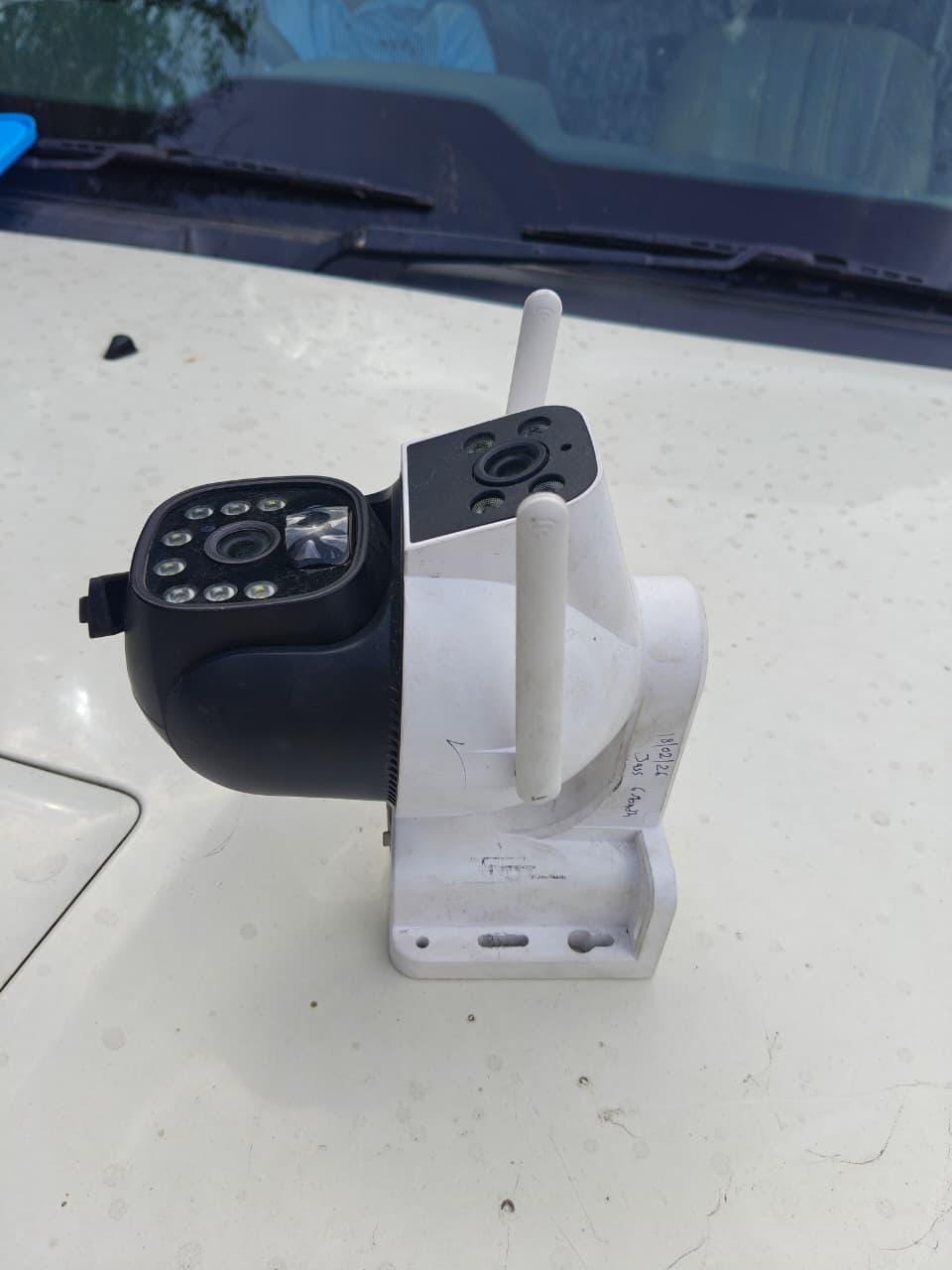
These cameras have now become a major security concern for the police because of the vulnerabilities that devolve from unauthorised remote access and, in many cases, from transmitting data like live video feed to Chinese data servers. Due to these risks, state governments like Delhi’s are also taking action against Chinese CCTV cameras.
The alleged espionage racket first came to the notice of the Ghaziabad Police on 14 March when a beat officer posted at Kaushambi Police Station received a tip-off about a group of men from Bhovapur acting suspiciously.
“These individuals were reportedly recording videos of railway stations and locations associated with security forces, transmitting them to specific individuals, and luring other youngsters into participating in these activities by offering financial incentives,” an officer probing the matter said.
Also Read: How arrested ‘ISI spy’ targeted Indian defence personnel using malware & a school fee loophole
Cost and convenience
These Chinese CCTV cameras usually feature 5 megapixel resolution and weigh around half a kilo; on ecommerce websites, their feature list usually includes terms like weatherproof build, night vision, motion detection, high-tech features like Artificial Intelligence, facial recognition, almost everything a regular CCTV does. The build is cheaper and they are mostly assembled, the police say.
In comparison, Indian built branded CCTV cameras have cybersecurity standards, better privacy, warranties and build quality making them secure and better for long-term installation. Indian-made Wi-Fi CCTV cameras also ensure that video data is encrypted and safe. Besides, Indian manufacturers are required to comply with Standardisation Testing and Quality Certification (STQC) norms, which ensure devices are tested for vulnerabilities.
On ecommerce website Amazon, Chinese solar CCTV cameras promise dual lens, dual screens, 180-degree blind spot-free coverage. Companies claim these cameras are waterproof and dustproof and that they can withstand monsoon rains, extreme heat and dust storms. Some even have coloured night vision up to 10 m. Most cameras claim to have smart human-detection that sends real-time push notifications to phones. They also have a built-in microphone and speaker allowing people to hear and speak through the camera while using the associated app.
That said, these cameras usually stop working in two or three months.
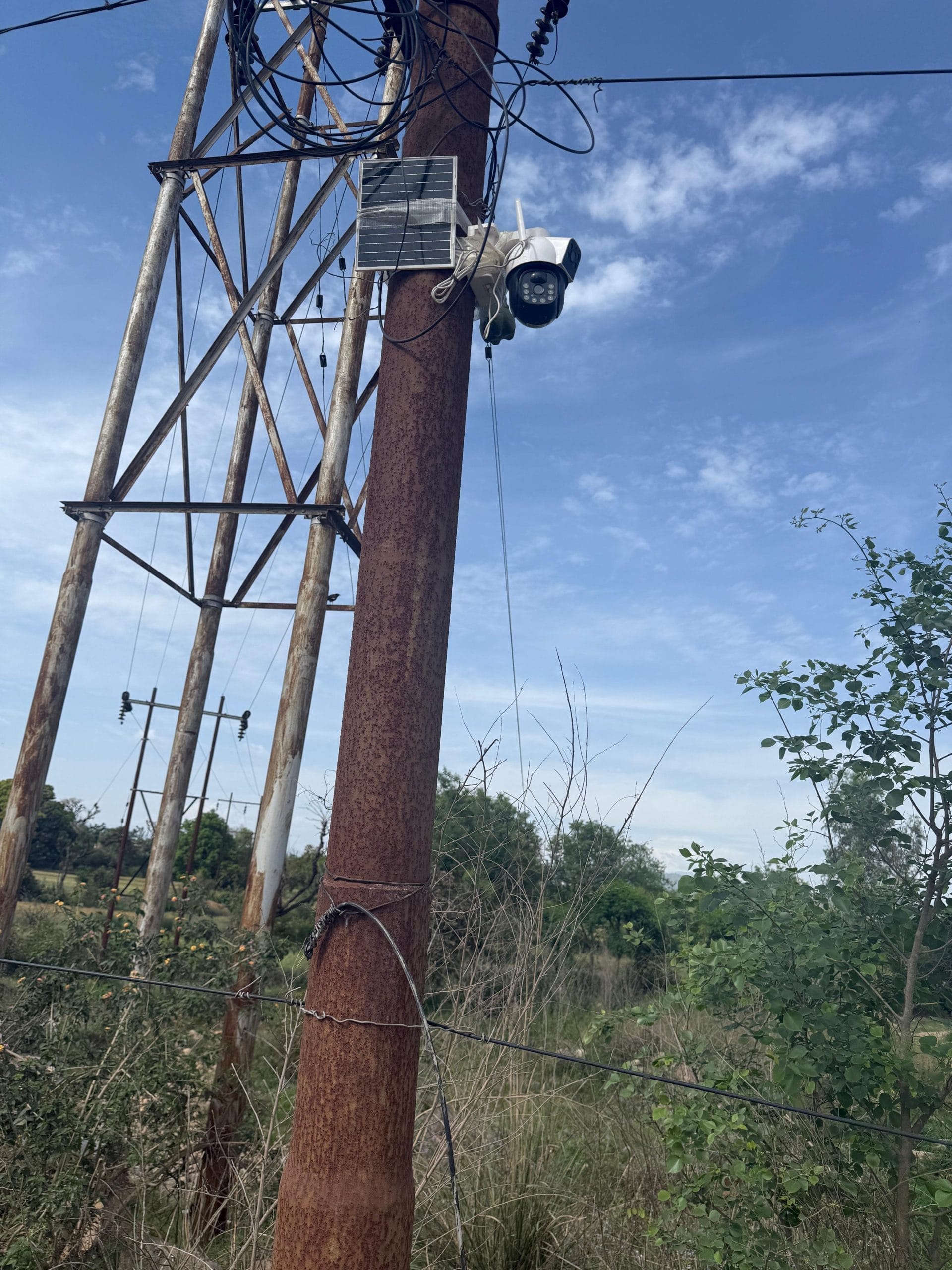
Police sources in Delhi said that this modus operandi of using solar based Chinese CCTV cameras has become popular only three to four months ago. “ISI-connected handlers involved in running the modules from across the border have instructed the use of these specific Chinese cameras because these are readily available in markets, cheap, need no electricity connection, are equipped with SIM cards and solar panels, and no identification is possible,” said a police officer from Ghaziabad. “It allowed them to have real-time surveillance, using mobile applications that can be downloaded via Google Play Store.”
An officer probing the Delhi matter said, “Handlers had access to Google Maps, so they instructed their module members individually on where to set up the camera, and if somebody were to ask them who they were, to say they are from the municipality or revenue department. They managed to get away.”
Police sources say the accused used the gap in the system where government agencies, resident associations and the police had focused on installing CCTV cameras. That allowed the sale and trade of Chinese cameras in the market at a very cheap price.
Solar-based cameras using 4G are readily available on Amazon for between Rs 2,000 and 9,000. These are wireless, with two-way audio and have 8000 Milliampere-Hour (MAH) batteries. These cameras are readily available in Delhi markets like Nehru Place and Bhagirath Palace.
System needs to be in place
Cyber Security Association of India President Prof NK Goyal who has worked in the telecom sector for 55 years said that Chinese solar-powered cameras (typically wireless/4G security cameras with integrated or attached solar panels for off-grid use) have gained significant traction globally and in India due to their ease of installation, low maintenance, no wiring needs, and suitability for remote areas like farms, construction sites, borders, or rural homes.
These are often marketed for residential, agricultural, and light commercial surveillance. “Pertaining to the Ghaziabad module, this is the first time we have seen standalone SIM enabled solar powered CCTV deployed at sensitive installations,” he said.
He stressed on putting a system in place where CCTVs installed in public places are enrolled with some agency with the name of the owner, details and purposes. He also proposes a directive from the government to find unidentified CCTVs countrywide for their removal, an immediate security audit of CCTVs installed across India at sensitive locations and their replacement, and to ensure that deployed CCTVs are the same as certified and tested by STQC or Bureau of Indian Standards or the Ministry of Electronics and Information Technology.
“The accused used standalone cameras that are solar and SIM-based. Through the SIM, the feed can be accessed anywhere in the world,” an officer from Ghaziabad Police’s Special Investigation Team said. He said that such cameras have been in circulation for some time now, but were not being used for espionage. “Normally, when people install CCTV cameras, they use wired and networked cameras that are connected to digital recorders.”
The police said the data servers for these cameras are based in China, and the feed is accessible in China as well. By using a mobile application, Pakistan-based handlers found it easy to access footage of these sensitive locations. The information was then shared on WhatsApp.
Officials from Delhi and Ghaziabad Police said that they are conducting CCTV audits now.
Also Read: Farmer, DJ, MBA: The men ‘recruited’ by ISI-BKI to install cameras for spying on Indian military
Sensitive locations captured
The police investigation found out the accused arrested in the modules were paid around Rs 16,000-17,000. Usually, people are paid Rs 6,000-7,000 to install a CCTV camera. The alleged racket featured handlers based in India. Meanwhile, video footage of sensitive locations like army establishments, Indian Air Force stations, Border Security Force (BSF) camps and railway stations were shared on WhatsApp.
The racket was based on people desperate for quick money. The handlers were tasked to trawl Instagram for specific profiles—young men with technical skills like mobile repair, computer mechanics, CCTV operation—who were in need of money, Additional Commissioner of Police (LO & Traffic) Raj Karan Nayyar, who probed the matter, said. The individuals were trained to use apps that overlay GPS coordinates and timestamps directly onto photographs of sensitive installations.
The Delhi Police’s Special Cell too received a tip-off that individuals were involved in installing solar based CCTV cameras. Nine CCTV cameras were installed across Kapurthala, Jalandhar, Pathankot, Patiala, Moga, Ambala, Kathua, Bikaner and Alwar. Feeds of these cameras were being relayed through a mobile application to the Pak-based handlers, said Additional Commissioner of Police (Special Cell) P.S. Kushwah.
Kushwah said a credible and specific input was received from a reliable source indicating some “foreign-based handlers of banned terrorist outfit ‘Babbar Khalsa International (BKI)’ in coordination with Pakistan-based gangsters and ISI operatives are conspiring to perpetrate subversive and terrorist activities in Delhi and Punjab”.
He added: “The nexus is involved in radicalising, recruiting and indoctrinating youths for carrying out terror activities and arms smuggling.”
Delhi cleans up
The Delhi government has plans to tackle this problem that first began in Ghaziabad. On 1 April, Public Works Department Minister Parvesh Varma said that the department has initiated a phased process to remove Chinese-origin CCTV cameras installed across the capital during the Aam Aadmi Party government.
As per data provided by the Public Works Department, a total of 2,74,389 CCTV cameras were installed in Delhi across key phases. This comprises 1,40,000 cameras in the first phase from September 2020 to November 2022, then 1,34,388 cameras in the second phase from June 2025 to March 2026.
“All 1,40,000 cameras installed during the first phase belong to the Chinese company Hikvision — a firm against which security related concerns have been raised globally,” Varma said. “A surveillance system is not merely a matter of optics; it is a grave issue concerning the control of sensitive data.”
Varma said this is no ordinary procurement process, and when such technology is deployed across the entire city, it becomes a decision directly linked to national security. He added that the PWD department has decided that such CCTV cameras installed across the city will be removed in a phased manner, specifically those procured from Chinese companies. They will be replaced by modern, secure, and technologically superior systems that meet high standards of data security and are backed by robust supply and service support.
Talking about how this entire process will be conducted, Varma said that the entire process will be executed in stages to ensure that there is no disruption to the surveillance infrastructure. In the first phase, approval has been granted for the replacement of 50,000 Chinese cameras. “The entire process will be implemented in a phased manner. Thereby, ensuring that there is no disruption to the surveillance network while simultaneously making the system more secure and effective,” Varma said.
In February, Union Home Minister Amit Shah inaugurated the first phase of the Safe City Project, built at a cost of about Rs 857 crore, and the first phase of the program to connect Delhi with 10,000 cameras. Some 2,000 cameras went live and the work of integrating more than 15,000 existing cameras with the system has been completed.
Delhi Police has around 2,100 high-end cameras under the Safe City Project. In total, Delhi Police operate around 19,000 AI-enabled CCTV cameras as part of a city-wide surveillance system. Separately, more than 2.5 lakh cameras have been installed by the Delhi Government, and many of them are through the Residents Welfare Associations and Market Welfare Associations.
#WATCH | Delhi: Union Home Minister Amit Shah says, "… The foundation stone for ten new Delhi Police projects was also laid today… The first phase of the Safe City Project has also been inaugurated. The modern Integrated Command Control Communication and Computer Centre… https://t.co/lwj3REX0pT pic.twitter.com/Mn9cTJM6jW
— ANI (@ANI) February 16, 2026
Enter MeitY
Union Minister of State for Electronics and Information Technology Jitin Prasada told the Lok Sabha in March that the Government of India is conscious of the cybersecurity security risks posed by digital technologies, and that it has undertaken major reforms for strengthening of security of CCTV systems and notified the mandatory essential requirements required for CCTVs in the Indian market.
It has laid down clear security requirements. For ensuring hardware security, clear documentation of the origin of critical components like System-on-Chip or SoC is now mandatory. He said that devices must be tested against vulnerabilities that could allow unauthorised remote access, and devices must now undergo testing at accredited labs. At present, Prasada said, 507 models of CCTV cameras are certified. Government departments have also been restricted from buying CCTV equipment that does not meet these criteria.
The Government of India has also blocked 652 mobile applications on account of concerns relating to data security and other malpractices under Section 69A of IT Act. Along with this, Prasada said that the National Cyber Coordination Centre implemented by the Indian Computer Emergency Response Team (CERT-In) has shared information with concerned organisations, state governments, and stakeholder agencies for taking action. CERT-In has empaneled 237 security auditing organisations to support and audit implementation.
(Edited by Nardeep Singh Dahiya)
Also Read: Bitter pill: Pharmacists upset over Delhi govt’s advisory making CCTV cameras ‘mandatory