


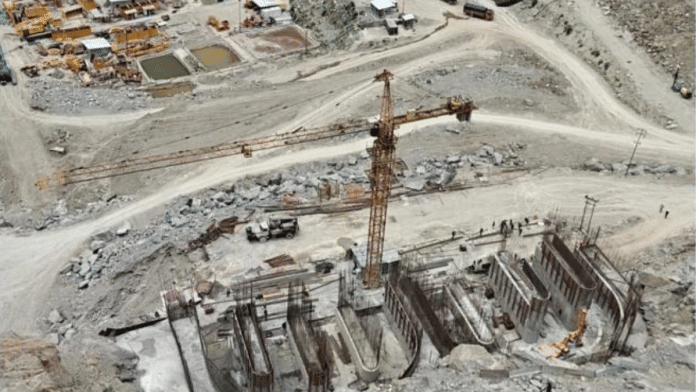
New Delhi: India is inching closer to commissioning two crucial hydro power projects on the Indus river basin—the 1000 MW Pakal Dul and 624 MW Kiru—both coming up on the Chenab river, with the government looking at a December-end deadline to start the process, ThePrint has learnt.
“The process of commissioning both the 624 MW Kiru and 1000 MW Pakal Dul project has started. We are hopeful of operationalising the two projects in the next couple of months,” a senior government official involved with the projects told ThePrint.
These would be the first hydro power projects on the western river to be completed after India put the 1960 World Bank-brokered Indus Water Treaty (IWT) between India and Pakistan on hold last April in the aftermath of the Pahalgam terror attack.
The treaty allows India unrestricted rights over waters of the three eastern rivers in the Indus basin—Ravi, Beas, Sutlej—which is approximately 20 percent of the water carried by the Indus system. Pakistan is allowed unrestricted use of waters of the three western rivers—Indus, Jhelum and Chenab—which is roughly 80 percent of the total water in the Indus river system.
Another government official said the actual operationalisation of hydropower projects takes time after the process of commissioning starts. “A number of tests are carried out, systems are checked, the dam is filled up and then emptied. Even after the construction is completed, all these processes take time,” said the official, who did not want to be named.
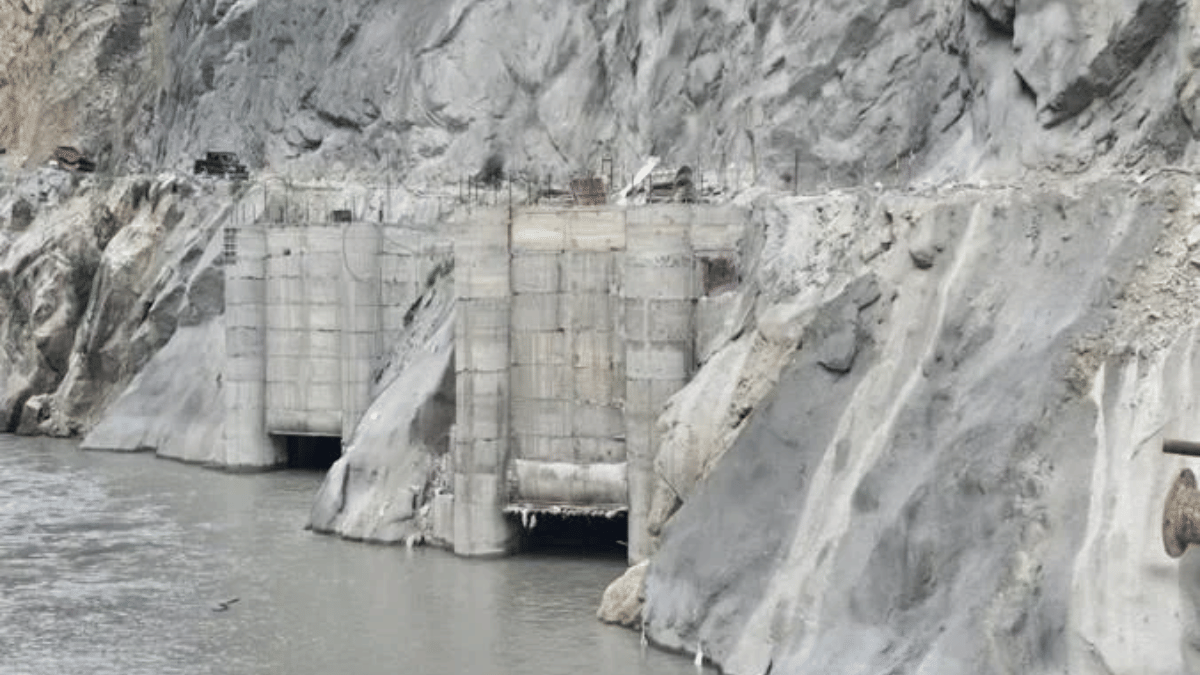
Both are ‘run-of-the-river projects’ (generating power without live storage as an integral part of the plant, except for pondage and surcharge storage) and are being executed by the Chenab Valley Power Projects Limited, a joint venture between the National Hydroelectric Power Corporation and Jammu and Kashmir State Power Development Corporation.
Besides Kiru and Pakadul, the Centre is also fast-tracking work on the other ongoing hydro-power projects on the Chenab including the 540 MW Kwar and the 850 MW Ratle projects.
“Kwar is likely to be commissioned by 2028, while the Ratle project is delayed due to various factors,” the second official said.
There are four other proposed hydropower projects on the western rivers in various stages of planning. These include 1,856 MW Sawalkot, 930 MW Kirthai-II, 260 MW Dulhasti Stage-II and 240 MW Uri-I Stage-II.
The IWT provisions currently put a number of restrictions not only related to design of projects that India already has or is undertaking in the Indus basin but also operational restrictions.
The first official quoted earlier said that with the treaty on hold, these restrictions are not there now. “There is no back and forth like earlier. This will help expedite the projects,” the official said.
No clarity if IWT will be renegotiated
While there is no clarity on when, and if at all, the IWT will be renegotiated, India has used the opportunity to expedite its ongoing project on the western river, where it does not have the required infrastructure in place to utilise its share of the water.
Under the treaty, Pakistan is allowed unrestricted use of waters of the three western rivers, while India is allowed to use the waters of the three western rivers in “non-consumptive” ways, including for run-of-the-river hydroelectric power generation, agricultural and domestic use.
Among the completed hydropower projects that India has built on the three western rivers are the Baglihar, Salal and Kishanganga. But these are not enough to utilise its share of water as per the provisions of the IWT.
The water that India can use from the western rivers has the potential to generate 18,569 MW of hydropower. However, as on date, India has only developed 3,500 MW of hydel generation capacity.
“Once all the projects on the western rivers are complete, India will be able to better harness the water of the western rivers and bolster our energy requirements,” the second official added.
Besides the hydropower projects in the works, India is also exploring multiple options including a proposal to build a 10-12 km tunnel to transfer water from the Chenab to Ravi.
Shahpur Kandi project to be operational soon
Besides Pakal Dul and Kiru on the Chenab, the Shahpurkandi multipurpose river valley project on Ravi, one of the eastern rivers in the Indus river basin, will also become operational by mid 2027.
While the Shahpurkandi dam is complete, the hydropower project with an installed capacity of 206 MW is nearing completion. A senior official of the Punjab irrigation department told ThePrint that the entire project will become operational by the middle of next year.
India currently utilises around 95 percent of its share of water in the eastern rivers through a network of dams, including the Bhakra on Satluj, Ranjit Sagar on Ravi, and Pong and Pandoh on Beas.
The Rs 3,300 crore Shahpurkandi multipurpose river valley project, being implemented by Punjab, will help minimise some of the water of Ravi that is currently going waste through the Madhopur barrage downstream to Pakistan. However, the full benefit of the project—irrigation and power generation—will be realised only after completion of the power plants.
Besides the Shahpur Kandi dam project, India plans to build a multipurpose project on the Ujh river (a tributary of Ravi) in Jammu and Kashmir for irrigation and hydro power, and the second Sutlej-Beas link project in Punjab.
(Edited by Viny Mishra)
Also read: India says the Indus Waters Treaty is in abeyance. Here’s the legal case for it