





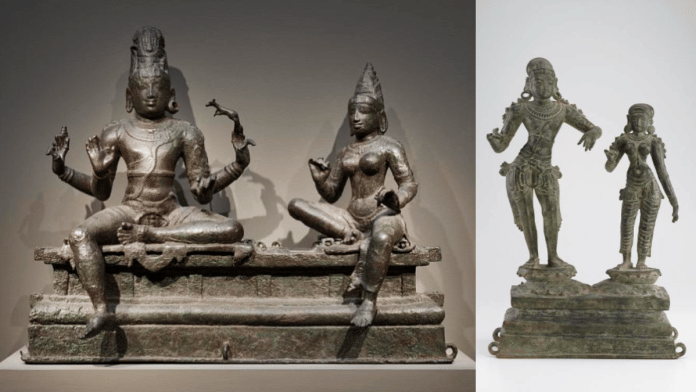


New Delhi: Two temple-linked bronze artefacts from the United States reached India late Tuesday night, with the Centre Wednesday detailing a fresh set of returns from American and Australian institutions and placing the total number of antiquities repatriated since 2014 at 668.
Addressing a press conference in Delhi, Union Culture Minister Gajendra Singh Shekhawat said the latest arrivals are part of three artefacts identified in the collection of the Smithsonian Institution and traced to temples in Tamil Nadu through archival evidence.
“These idols, antiquities and archaeological remains are not merely artistic objects,” Shekhawat said. “For India, they are living symbols of thousands of years of cultural continuity.”
The return of the two bronze artefacts that arrived this week—Somaskanda (Shiva and Uma) and Saint Sundarar with Paravai—was announced by the Smithsonian in January 2026 after a provenance exercise led by the Archaeological Survey of India (ASI).
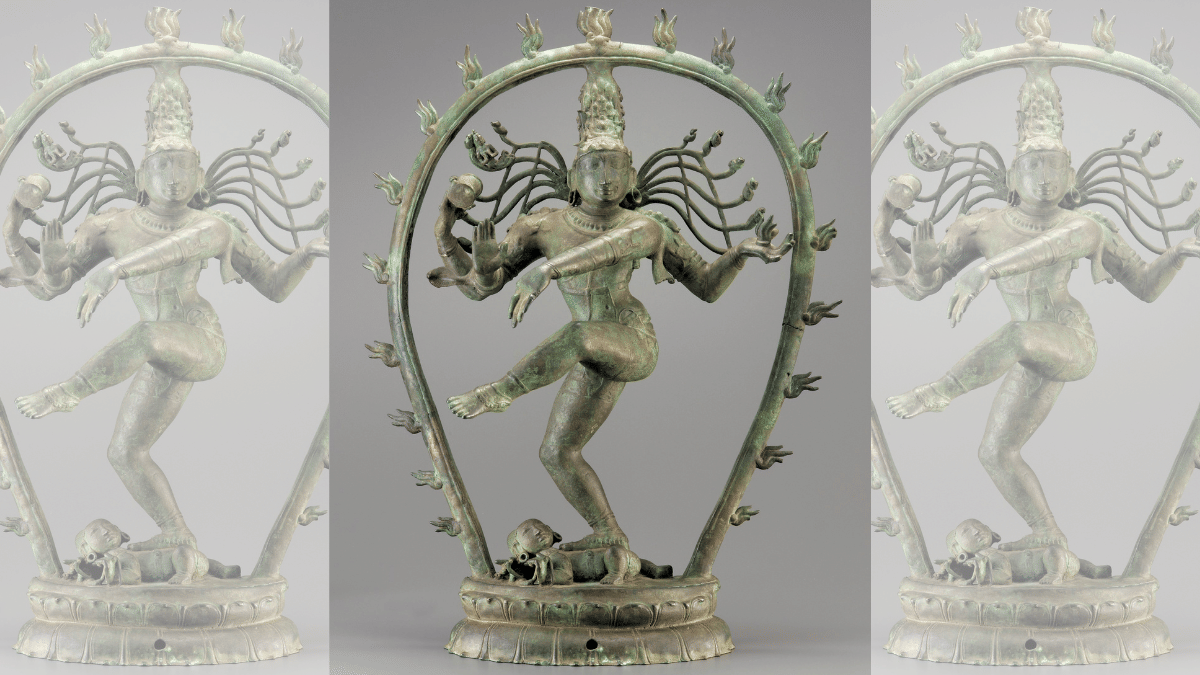
The third object—a Shiva Nataraja bronze—has been accepted for repatriation after being identified as originating from a temple in Tamil Nadu, but will not return immediately. It is currently on display at the Smithsonian National Museum of Asian Art as part of the exhibition ‘Art of Knowing in South Asia, Southeast Asia, and the Himalayas’. At the request of the Smithsonian Institution, India has agreed to a three-year loan arrangement from 2025 to 2028, after which the sculpture is scheduled to be brought back to India.
Officials said the ASI established the origin of the three bronzes using photographs from the 1950s and 1960s showing the idols inside temples in Tamil Nadu. These were matched with objects held abroad to build a provenance case.
“We located those photographs and proved these were idols from our temples,” Shekhawat said.
According to the government, the Nataraja sculpture dates to the Chola period, around 990 CE, and was documented at the Sri Bhava Aushadesvara temple in Thanjavur district in 1957.
The Somaskanda bronze, also from the Chola period (12th century), was photographed in 1959 at the Visvanatha temple in Alattur village. The Sundarar with Paravai bronze, from the Vijayanagara period (16th century), was photographed in 1956 at a Shiva temple in Veerasolapuram.
All three were utsava murtis, or processional idols used in temple festivals.
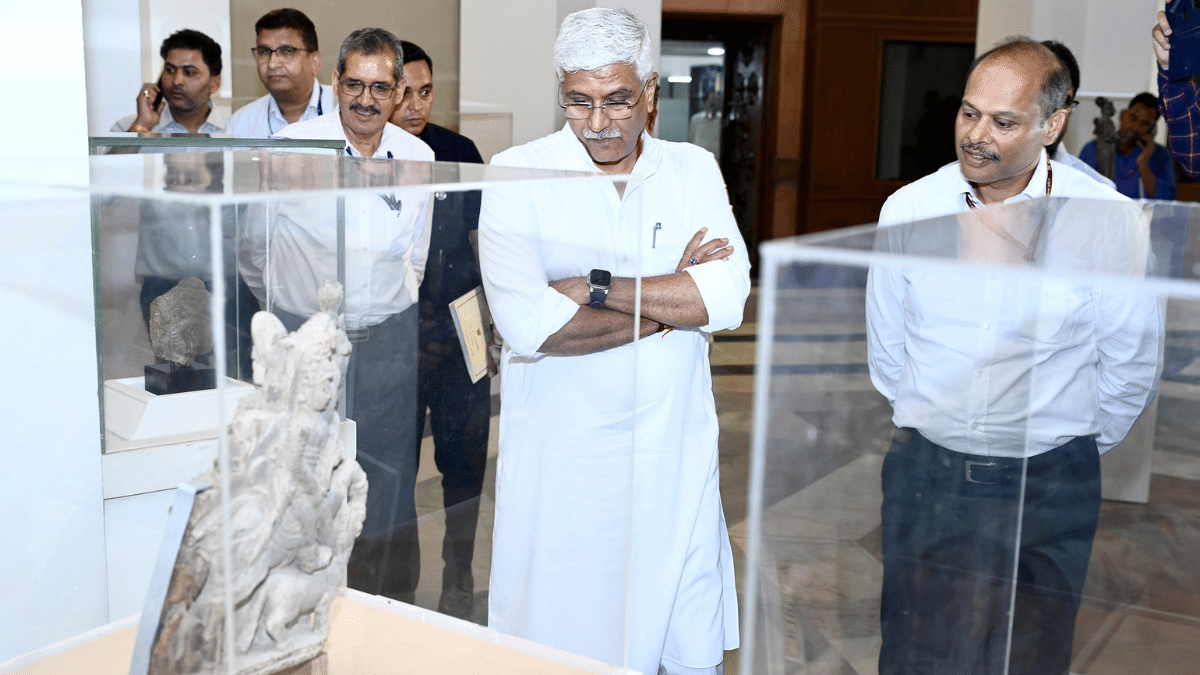
The Smithsonian returns are part of a broader repatriation effort involving structured negotiations between the ASI, the Ministry of Culture, the Smithsonian and the Embassy of India in Washington. Officials said the acceptance of India’s claims followed documentation of provenance through archival records, field research and photographic evidence.
Alongside the US developments, the government also detailed a separate batch of 11 antiquities received in March 2026 from Australia through the High Commission of India. Eight of these were repatriated by the National Gallery of Australia and three by the Art Gallery of New South Wales.
The Australian consignments include terracotta objects from the Shunga period, a Pala-period sculpture of Varaha depicting the lifting of Bhudevi, an 11th-century Bodhisattva figure and a wooden sculpture of Brahma.
India has over several decades been a source country for antiquities trafficked through illicit networks, particularly before the 1970 UNESCO Convention and the Antiquities and Art Treasures Act, 1972. Many objects removed during that period entered museum collections and private holdings abroad.
Shekhawat said that between 1972 and 2014, only 13 antiquities were returned to India. Since 2014, the government has stepped up efforts involving the ASI, Indian missions abroad and enforcement agencies, leading to the recovery of hundreds of objects.
“These artefacts were taken out through theft or illicit trafficking, and their return is part of restoring our cultural heritage,” he said.
The minister also referred to a Cultural Property Agreement signed between India and the United States, which has streamlined procedures for seizure and return of antiquities. He said the US had earlier been a major destination for trafficked Indian artefacts, and that the agreement has reduced procedural delays in repatriation.
In addition to the artefacts already returned, US law enforcement agencies have handed over 657 objects of Indian origin to the Indian embassy following seizures in multiple investigations. These artefacts are yet to be transported to India and will undergo verification by ASI experts to determine their antiquarian status before further action.
Officials said the process of packing and logistics for these objects has been completed and they are expected to be brought to India in the near future.
The Centre plans to place a selection of repatriated antiquities on public display at a gallery inside the Red Fort. According to officials, artefacts whose original sites can be identified may eventually be returned to those locations, while others will remain under ASI custody.
The repatriation effort has also been tied to exhibition programmes. Shekhawat said recent displays of returned artefacts have drawn more than 2,00,000 visitors over a four-month period.
“Whoever visited came back with a feeling of pride in being Indian,” he said.
The government said the return of antiquities reflects ongoing coordination between the Ministry of Culture, ASI, diplomatic missions and foreign institutions, supported by provenance research and international engagement.
(Edited by Viny Mishra)
Also read: UNESCO opens a virtual museum of stolen artefacts. The goal is to empty it