





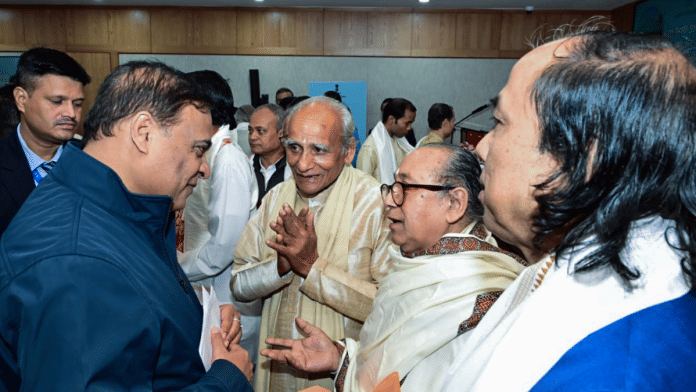



New Delhi: The Himanta Biswa Sarma-led Assam government Friday rolled out a scheme for providing a monthly assistance of Rs 1,500 for Udasin Bhakats, celibate monks associated with satras (neo-Vaishnavite monasteries) of the state. He said the scheme helps in “reaffirming our commitment to preserve Assam’s spiritual and cultural heritage”.
Describing the celibate Vaishnavite saints as the “true flag-bearers of our (Assamese) tradition”, the CM set in motion this scheme for 620 beneficiaries across the state. He said the programme had been initially announced in the budget of the previous year, adding that if any Udasin Bhakat was left out, the government would try to include them in the scheme.
Founded by the revered Bhakti saint Srimanta Sankardeva (1449–1568), the Institution of Satra, where the Udasin Bhakats reside, is a unique feature of neo-Vaishnavism in Assam.
The neo-Vaishnavite tradition, which began in Assam as a religious and social reform movement in the fifteenth century and evolved through the sixteenth century, led by Sankardeva, had ushered in what many term ‘cultural renaissance’ in Assam.
The satras, as part of that tradition, uphold and preserve the cultural distinctiveness of the Assamese society, acting not just as monasteries, but also as centers of performative arts and repositories of ancient religious philosophy. The government in Assam has portrayed this scheme as part of a concerted attempt to restore the status of the satras, as they remain an integral part of the socio-cultural way of life in Assam.
The devotees, known as bhakats, utilise the satras as places to offer prayers and perform as a form of devotion.
This scheme comes just a few days after Union Home Minister Amit Shah inaugurated the Rs 227-crore redeveloped Batadrava Than, the birthplace of Srimanta Sankardeva.
The support to the Udasin Bhakats and satras
Also Read: 2,000+ Muslims killed in Nellie. But Assam panel report buried for 42 yrs says it wasn’t communal
Who are Udasin Bhakats?
The word bhakat means a devotee or disciple, and udasin means one who is detached. Udasin Bhakats, also known as “Kevaliya Bhakats”, thereby imply “detached devotee”, who are detached, above all, from desires of married life, and fully devoted to spirituality and religious thought.
“Udasin Bhakats live in Satras, renouncing worldly affairs & dedicate their lives to the service of Dharmá,” CM wrote in a post on X, noting their exalted status.
Satras are also categorised as udasin or grihasti. The satras, where bhakats lead celibate lives, are called udasin satras. Udasin Satras are residential, usually male monasteries where the bhakats practice monastic discipline.
Udasin Bhakats dedicate their entire lives to serving Satras and take forward the ideals of Srimanta Sankardev.
Shri Sonaram Sarma, Burha Bhakat emotionally explains what the ₹1500 would mean to them and how Govt of Assam under HCM Dr @himantabiswa has taken steps to protect… pic.twitter.com/jhzHH2UZQS
— Chief Minister Assam (@CMOfficeAssam) January 2, 2026
In a paper titled ‘Monasticism in Neo-Vaishnavism of Assam: Transition in Life and Ideology’, published in 2017, the authors note the presence of 12 Satras, including Auniati, Dakhinpat, and Kamalabari, belonging to the udasin type, whose sattradhikar (head of the satra) and bhakats, both practice celibacy.
Auniati, Dakhinpat, and Kamalabari are in Majuli, the largest river island in the world and home of the neo-Vaishnavite movement. The authors argue that the Udasin satras, “being the ideal representative of the kind, are the most well-known and influential in society”.
The other type of satras, called the grihasti satras, is the ones where the bhakats are involved in conjugal or domestic life in general.
Interestingly, the founder of the neo-Vaishnavite bhakti movement in Assam, Srimanta Sankardeva, neither adopted nor was in favour of celibacy as a way of religious life.
Madhavdeva, who was the immediate successor of Sankardeva, however, remained celibate, though he also did not uphold celibacy as the ideal form of devotion. Celibacy became institutionalised as a part and parcel of udasin satras later, often as a mark of respect to Madhavdeva.
The adherence to stricter regulations, like ritual bathing and physical distancing from outsiders, is essential to maintain ritual purity and devotion of these celibate monks, notes Deepsikha Chatterjee in the book Puppet and Spirit: Ritual, Religion, and Performing Objects: Volume I.
Udasin Bhakats embrace dance and songs as mediums in their quest for the ultimate being. They also partake in a host of functions related to the overall functioning of the satras, ranging from preserving the ritual life by performing kirtan and naam, to being involved in the cultural aspects of devotion-seeking like bhaona, satriya dance, mask-making, etc. The bhakats also teach novices and manage the day-to-day functions of the satra.
The number of bhakats in Udasin satras, however, has witnessed a decline even though the neo-Vaishnavite philosophy and art forms have been passed down generations through the guru–shishya tradition inherent in them.
Majuli, the bastion of the neo-Vaishnavite movement, still retains the highest number of such bhakats. The decline in their numbers is attributed to several factors, including the rise of nuclear families, fewer children, and the availability of other opportunities made possible through education.
Sushovan Chakraborty is an intern with ThePrint.
(Edited by Ajeet Tiwari)
Also Read: Bodoland poll loss a wake-up call for Assam BJP. Zubeen’s death puts CM Sarma in a tight spot