








Gurugram: Just weeks after the Rs 590-crore IDFC First Bank scandal rocked Chandigarh, Haryana has been hit by yet another banking fraud.
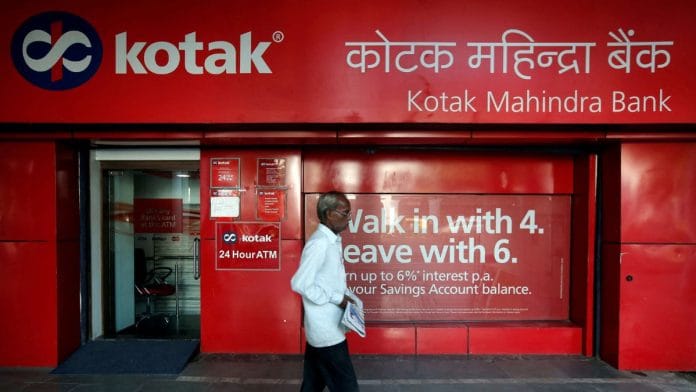
The Panchkula Municipal Corporation has uncovered discrepancies of nearly Rs 150 crore in its Fixed Deposit Receipts (FDRs) held at the Panchkula branch of Kotak Mahindra Bank, with irregularities surfacing only when the civic body asked the bank to transfer funds upon maturity of one such FDR.
Acting swiftly, the Haryana government referred the Kotak Mahindra Bank fixed deposit fraud involving the Panchkula Municipal Corporation to the State Vigilance and Anti-Corruption Bureau (SV&ACB), directing it to register a First Information Report (FIR) and conduct a thorough investigation.
A letter from the Chief Secretary’s Office, Vigilance Department, dated 24 March 2026, has been sent to the Director General of Police, State Vigilance and Anti-Corruption Bureau (SV&ACB), Haryana, Panchkula, directing a full probe into the discrepancies related to the FDRs of the Municipal Corporation as well as the bank accounts maintained with Kotak Mahindra Bank, Sector-11, Panchkula.
Contacted by ThePrint on Wednesday, Arshinder Singh Chawla, Director General of Police, SV&ACB, confirmed that an FIR has been registered at the bureau’s Panchkula Range Police Station and investigations have begun.
The development marks a significant escalation in what is fast becoming Haryana’s second major banking scandal in quick succession, and one that investigators suspect may be linked in method, if not in personnel, to the Rs 590-crore IDFC First Bank fraud that has already rattled several government departments across the state.
Also Read: IDFC First Bank case: FIR registered, Haryana ACB conducts probe
How the ‘scam’ came to light
The Panchkula Municipal Corporation had opened an account at the Sector-11 branch of Kotak Mahindra Bank, where 16 fixed deposits belonging to the civic body, originally transferred from the State Bank of India, were held. The fraud surfaced almost accidentally. When the IDFC First Bank fraud came to light and rattled government officials, the corporation wrote to Kotak Mahindra Bank, asking that its FDRs be returned upon maturity. The bank’s reply stunned officials: five of those fixed deposits had no record in the bank’s system whatsoever.
An internal inquiry committee was constituted immediately, comprising the Accounts Officer, Commissioner and Joint Commissioner of the corporation. The committee compiled a report and sent it back to both the bank and the state government.
Meanwhile, Kotak Mahindra Bank filed a separate complaint with the Deputy Commissioner of Police, Panchkula, which was forwarded to the Economic Wing for investigation, before the state government stepped in and transferred the case to the ACB.
How the ‘fraud’ was executed
The accused, according to details emerging from the investigation, operated with considerable cunning. The corporation had opened two accounts with the bank. Two additional accounts were quietly opened using the same documents, and money was progressively routed out of these shadow accounts into other accounts.
Renewal documents for the FDRs were regularly dispatched to corporation offices, keeping officials reassured that their deposits were intact and accruing interest. Nobody in the corporation thought it necessary to physically verify the accounts with the bank, and the fraudsters exploited that institutional complacency to the hilt.
When the scam was finally on the verge of unravelling, a bank employee turned up at the corporation office and offered to renew the deposits at a higher interest rate, apparently an attempt to keep the matter buried. This time, however, corporation officials did not bite the bait and the full extent of the fraud came out.
The IDFC investigation reveals shell firms, forged statements, a hotelier’s trail. A source in the Haryana Vigilance and Anti-Corruption Bureau, speaking on condition of anonymity, told ThePrint that the parallel investigation into the IDFC First Bank fraud has revealed a deeply structured criminal network.
In the IDFC case, three bank officials, Rishav Rishi, Abhay Kumar, and Seema Dhiman, posted at the Sector 32 branch in Chandigarh between 2023 and 2025, have been arrested for allegedly facilitating the entire operation.
The source revealed that the accused disclosed that bank account statements being regularly sent to government departments were forged and did not reflect actual transactions they had been making through shell firms. Shell firms under the names of CAPCO Fintech, R S Traders, and Swastik Desh Project were floated in the names of close relatives and associates of the accused.
Funds from at least eight Haryana government departments were first transferred to these companies and then routed onward into real estate investments across Chandigarh, Mohali, Kharar, and other locations.
The source said investigators have found that crucial documents related to the investments were kept at various locations with relatives of the accused. “Funds from government department accounts would first be transferred to the accounts of these shell companies and thereafter routed into personal accounts,” the source said. “The bank statements being relied upon for reconciliation were fabricated to show the deposits were intact.”
Realtor and hotelier Vikram Wadhwa, who has also been arrested, has disclosed to the Chandigarh Police and the Economic Offences Wing that he was introduced to Rishav Rishi through Rishi’s father, Rakesh Kumar Rishi, and that he facilitated loans for his Landmark Hotel before introducing his son Ribhav Rishi, who later became a bank manager. Wadhwa told investigators that Ribhav Rishi had informed him that several government department accounts held substantial funds. “He told me that since I require funds for investment in real estate, he could arrange large amounts from government department accounts without any interest,” Wadhwa stated in his disclosure. Reverse entries were made to return funds to government accounts when required, ensuring the transactions remained undetected, according to the police.
A senior officer in the state vigilance establishment told ThePrint that both cases, the Rs 590-crore IDFC fraud and the Kotak Mahindra FDR scam, point to a systemic failure in how government funds are parked, monitored, and reconciled in private bank branches. “The common thread is the same: forged documents, shadow accounts, and officials who never bothered to verify,” the officer said.
(Edited by Nardeep Singh Dahiya)
Also Read: IDFC FIRST Bank fraud is not a credit-quality story. It is about governance