





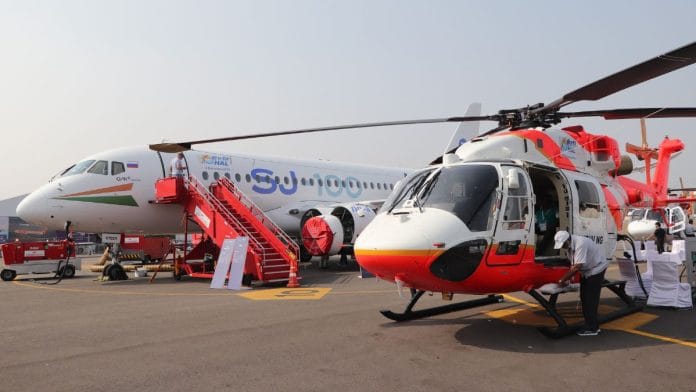



Hyderabad: Hindustan Aeronautics Limited will open Wings India 2026, Asia’s largest civil aviation event, with a strong civil-military aircraft crossover display. Spotlighting the Dhruv New Generation helicopter alongside the formal debut of the SuperJet 100 regional jet, marks a visible shift in the state-run aerospace major’s diversification push.
The Dhruv NG is part of HAL’s broader civil aviation portfolio. However, variants of the Advanced Light Helicopter (ALH) Dhruv’s fleet have been grounded since 2025 following safety reviews after recent crashes from the Indian Coast Guard.
The backdrop underlines the challenges in HAL’s rotary-wing line as it goes back to fixed-wing manufacturing.
But it is Russia’s SJ-100 that marks the strategic turning point. The country has not run a full-fledged commercial aircraft production line since HAL’s Avro HS-748 programme ended in 1988.
HAL’s partnership with Russia’s United Aircraft Corporation (PJSC-UAC) was formalised through a Memorandum of Understanding signed in Moscow on 28 October 2025. This gives the Indian company manufacturing rights for the SJ-100.
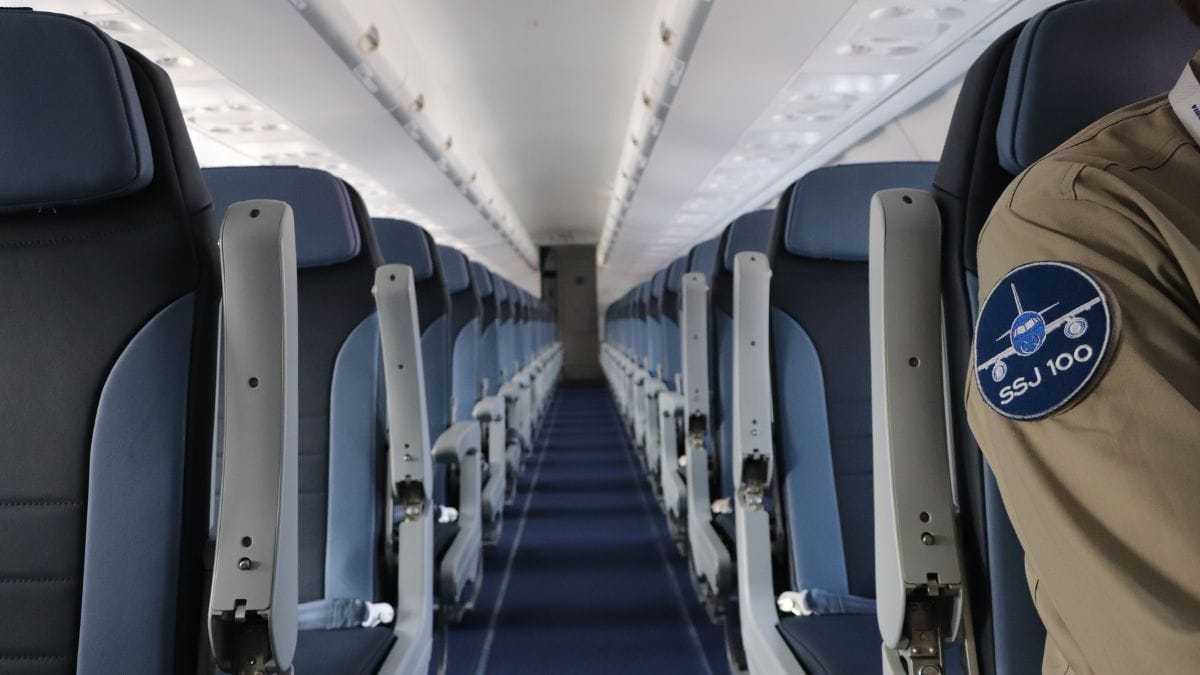
The twin-engine jet is designed for sectors of roughly 3,000 km, a range that aligns closely with India’s expanding Tier-2 and Tier-3 city connectivity routes. The maximum cruising speed of the aircraft is Mach 0.81. An inside view of the aircraft on display shows a full-scale regional passenger layout designed for short- and medium-haul operations, with a narrow-body configuration built to seat up to 100 passengers. The aircraft’s operating envelope, rated from –55°C to 45°C, also positions it for varied climates across India and the wider region.
A joint working group is expected to begin technical coordination, with prototype testing and certification timelines projected within one to two years.
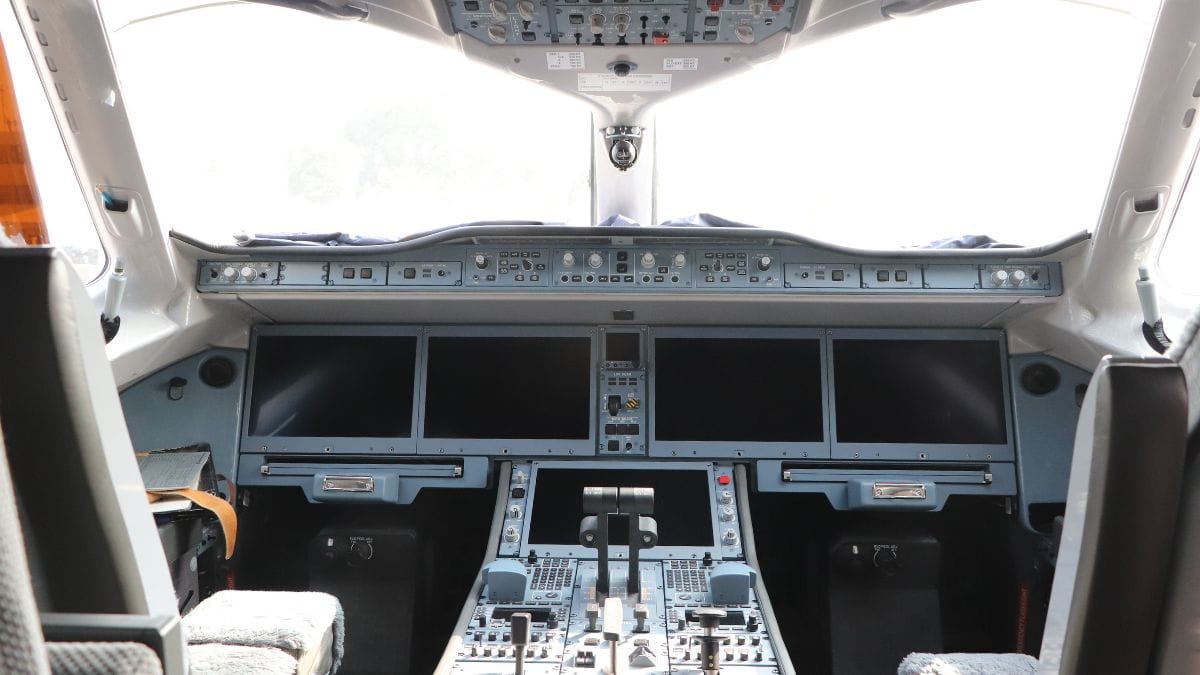
The long-term goal is for India to build its own commercial aircraft. India is expected to need more than 200 regional jets, with another 350 aircraft likely required to serve Indian Ocean routes and tourism corridors. Yet for decades, the country’s civil fleet growth has depended almost entirely on imports. For India, the SJ100 programme carries industrial weight beyond fleet numbers.
(Edited by Theres Sudeep)