





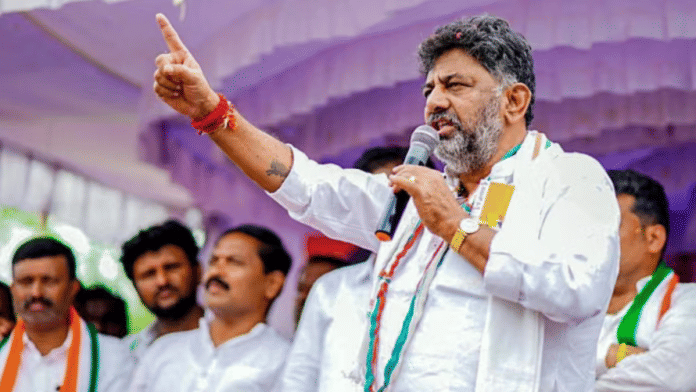

Bengaluru: Karnataka Chief Minister D.K. Shivakumar has carved out a new department, ‘Praja Seva’, to ensure time-bound resolution of people’s grievances, and to bridge the gap between elected representatives and the electorate.
“It is not right to govern from afar, sitting in Vidhana Soudha, DC’s office, or taluk offices. Not every citizen can directly meet ministers, legislators, or officials. Therefore, the Public Service Department will operate with the clear aim of listening to people’s problems and providing solutions right on the spot,” Shivakumar said after the launch of the new campaign.
Amid rising complaints of administrative high-handedness and inaccessibility, Shivakumar hopes to soften the perception that officials and legislators overlook ordinary citizens.
“Ordinary people should not have to go searching for legislators, ministers, or taluk officials. With the purpose that officials themselves should go directly to the people, listen to their difficulties, and resolve them, the Public Service Department has been created, and ‘Government at your doorstep, cooperation in service’ is the motto of this campaign,” the Chief Minister said.
‘ನನ್ನನ್ನು ನಾಡಿನ ದೊರೆ ಎನ್ನಬೇಡಿ, ಪ್ರಜಾಸೇವಕ ಎನ್ನಿ’
ನಮ್ಮ ದೇಶದಲ್ಲಿ ಪ್ರಭುಗಳ ಕಾಲ ಮುಗಿದು ಪ್ರಜಾಪ್ರಭುತ್ವ ಬಂದಿದೆ, ನನ್ನನ್ನು ‘ನಾಡಿನ ದೊರೆ’ ಎಂದು ಕರೆಯುವ ಬದಲು ‘ಪ್ರಜಾಸೇವಕ’ ಎಂದು ಕರೆದರೆ ನನಗೆ ಅತೀವ ಸಂತೋಷವಾಗುತ್ತದೆ.
ಸಾರ್ವಜನಿಕರು ತಮ್ಮ ಕೆಲಸಗಳಿಗಾಗಿ ಸರ್ಕಾರಿ ಕಚೇರಿಗಳು ಹಾಗೂ ಅಧಿಕಾರಿಗಳ ಬಳಿ ಅಲೆಯುವ ಕಾಲ ಈಗ… pic.twitter.com/5XPgZ0t0Tr
— CM of Karnataka (@CMofKarnataka) September 5, 2026
The government said that Praja Seva Abhiyaan meetings would provide a unified system through which people can raise complaints or grievances using the data-based and paperless software system called the Integrated Public Grievance Redressal System (IPGRS).
Complaints can be registered by calling 1902, through the website, or through the Janaspandan mobile app.
“Grievances/complaints from citizens are being redressed through a three-tier grievance redressal system using Artificial Intelligence (AI) technology,” Karnataka Chief Secretary Shalini Rajneesh said in a statement.
She added that a unified Calendar of Events has been prepared to organise all Taluk/Hobli activities, and the same will be communicated via pamphlets, door-to-door intimation or automated calls informing the complainant of the time, place, list of documents, and other details at least a fortnight in advance.
As part of the campaign, there will be two meetings every month, on the first and third Saturdays, at the Taluka Centre, led by the district in-charge minister.
During the second and fourth Saturdays, a meeting will be organised at the Taluk/Hobli level under the chairmanship of the local MLA. Members of any local bodies, government officials, and others will participate in these meetings.
Citizens will receive information, pre-printed application forms, and document checklists at least 15 days in advance via pamphlets, door-to-door intimation, or automated calls.
Advance applications and petitions can also be submitted at Gram One centres.
On the day of the Praja Seva Abhiyan meetings, grievances will be processed in two separate queues: one for new grievances and another for unresolved or unsatisfactorily resolved issues.
Eligible beneficiaries can receive sanction letters on the spot, alongside formal confirmation letters for resolved grievances. Applicants can monitor the progress of their petitions using a real-time tracking system.
In just the last week, Shivakumar has constituted committees, proposed amendments and announced other measures to expand outreach, reduce ambiguity and project the administration as more collective and inclusive.
These include the formation of a Group of Ministers (GoM), a 10-member super cabinet of sorts that will review subjects before they are placed before the cabinet, official government spokespersons, and a department to deal with international residents and attract investment, among other measures.
With less than two years to go for the 2028 Assembly elections, Shivakumar has announced a flurry of schemes, campaigns, projects and measures that he hopes will help the Congress perform well in the upcoming Greater Bengaluru Authority, Zilla and Taluka Panchayat polls and retain power.
With the Opposition relentlessly mounting pressure over rising corruption allegations and administrative high-handedness, Shivakumar is pushing reforms to show some semblance of development and governance after the Congress party’s first three years (2023-26) under Siddaramaiah, which were largely centred on its ‘Guarantees’ and the financial constraints associated with them.
(Edited by Jeyasri A.T.)
Also Read : Forging consensus: CM Shivakumar sets up 10-member GoM to discuss key matters before they reach cabinet