





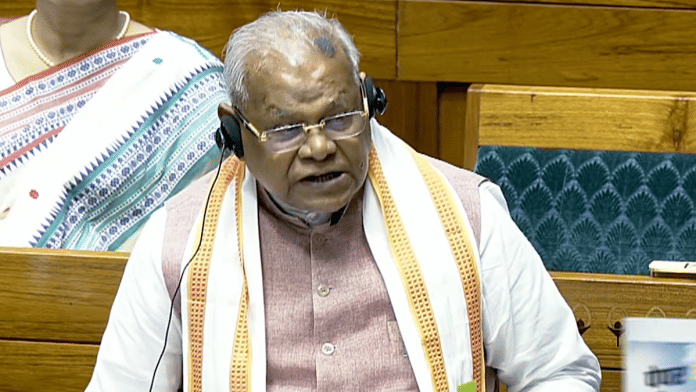

New Delhi: Days after the Rajya Sabha cleared the passage of the Micro, Small and Medium Enterprises Development (Amendment) Bill, 2026, the Lok Sabha Friday also passed the new law which intends to improve the existing administrative framework and payment mechanisms for micro, small and medium businesses.
Essentially, the Bill seeks to upgrade the earlier law on MSMEs laid down over two decades ago in the 2006 Act, by bringing in new changes like the introduction of a development commissioner and a TReDS system (which refers to the Trade Receivables Discounting System, an RBI-regulated electronic platform in India designed to help MSMEs convert their unpaid trade invoices into cash), legal and constitutional experts have told ThePrint.
For small and medium businesses, the proposed changes could make a difference in three main areas, including registration of the business, access to working capital and alternative dispute resolution mechanisms, Sourabh Roy of the Vidhi Centre for Legal Policy told ThePrint.
While the broad objective of the new law is to address payment delays to MSMEs and simplify the dispute resolution mechanism, it also mandates that the mediation of disputes should be completed within 90 days. If an appeal is pending longer than six months, courts will be required to release 50 percent of the dispute amount to the MSMEs.
Nearly 20 years ago, the Centre had passed the 2006 law with the hope of facilitating the promotion, development and enhancing the competitiveness of MSMEs.
Underlining that micro, small and medium enterprises are the key drivers of economic growth, generate employment and foster innovation, the Bill states that such businesses contribute significantly to India’s Gross Domestic Product (GDP), exports, and are the backbone of the economy.
What changes in the new law?
One of the major changes that the 2026 amendment will bring in its wake is making registration of micro, small and medium businesses, free and voluntary. Roy said the proposed framework also seeks to move away from the earlier approach of treating violations primarily through the criminal justice system, by seeking redressal before the courts.
However, now, violations under the new law, such as the failure to comply or wilfully furnishing false information at the time of registration will be met with an inquiry by the administrative authority followed by the imposition of monetary penalties.
Speaking to ThePrint, Roy said, “These changes could also improve cash flow for MSMEs through the Trade Receivables Discounting System (TReDS), an RBI-regulated electronic platform through which businesses can discount unpaid invoices and raise funds against them.”
“A lot of times invoices are stuck when such businesses are dealing with Public Sector Undertakings (PSUs), and they often get stuck with gathering working capital,” Roy explained, adding that the new Bill creates a system based on a portal under Section 15A where the MSMEs can continue their business activity, without being kept waiting for the clearance of final payment.
Illustrating this point with an example, he said, “Suppose I have supplied goods to a PSU, which has uploaded an invoice on the TReDS system. Based on my existing invoices showing money is due to me, I can claim more credit against the receivables now because the portal shows that I have something in my account. MSMEs currently struggle with having working capital, so this helps them immensely,” he said, adding that this provision will help MSMEs immensely.
Apart from this, one of the most significant structural changes is the introduction of a Development Commissioner as a dedicated interface between the MSMEs and the state, Mayuri Gupta, Senior Resident Fellow, Charkha (Vidhi Centre for Legal Policy) told ThePrint.
Role of the Development Commissioner
A recurring figure in the new law is the “Development Commissioner”, who has been defined under Section 2 (da) as the administrative head of the Office of the Development Commissioner within the Ministry of MSME.
Primarily, the tasks of the commissioner include being the adjudicating authority for handing out fines and penalties.
“One of the Bill’s most significant structural changes is the introduction of a Development Officer as a dedicated interface between the MSMEs and the State,” Gupta told ThePrint.
She also pointed out how this move has the potential to make government support more accessible by reducing information gaps, improving coordination across departments, and helping small businesses navigate existing schemes and compliance requirements.
However, the creation of a new office is only part of the solution, Gupta said, adding that its effectiveness will depend on the position being adequately staffed, empowered, and equipped to simplify interactions between MSMEs and the government, rather than becoming just another layer of administration under the Act.
Dispute resolution mechanisms
The amendment also seeks to make dispute resolution more predictable by prescribing timelines for mediation and arbitration. The proposed framework provides 90 days for mediation, followed by a 30-day period before the matter moves to arbitration and a further 90 days for passing of an arbitral award.
Another change is the clearer procedural separation between mediation and arbitration, an ambiguity under the 2006 law that had also been flagged by the Supreme Court in 2021, Roy said, adding that this is a “great step in progress”.
The amendment also introduces online dispute-resolution mechanisms, allowing the government to facilitate mediation and resolution of disputes through digital platforms.
This could be particularly useful for small businesses, which may otherwise have to spend considerable time and resources pursuing disputes through physical proceedings. The move is also significant in light of the Supreme Court’s push towards greater use of online alternative dispute resolution mechanisms, Roy pointed out.
Finally, the Micro and Small Enterprises Facilitation Council (MSEFC) has also been strengthened under the proposed framework. The council has often been the first forum for resolving payment disputes involving micro and small enterprises. The changes provide for an additional mediation service provider, giving a party with a grievance the option of choosing between the MSEFC and an alternative service provider.
In a nutshell, the changes to the 2006 Act signal a move towards a framework which focuses on easier registration, access to working capital and faster, online mechanisms for resolving disputes.
(Edited by Viny Mishra)
Also read: India’s use of Quality Control Orders hurting MSMEs & supply chains, needs a rethink—CSEP study