






New Delhi: For years, police constable Biyeshwar Vishnu Gedam was part of the intelligence department of the Gadchiroli district police. Known to be a reliable hand on the ground, he frequently visited remote forests in the inter-state region between Gadchiroli in Maharashtra and Bijapur in Chhattisgarh to gather intelligence on Maoists and to persuade Maoist commanders to surrender.
In 2021, Gedam was awarded the President’s Gallantry Medal for his work in tackling Left-Wing Extremism (LWE) which plagued forested areas in central and eastern India for decades.
Now, in a reversal of roles, the decorated officer finds himself under the scanner.
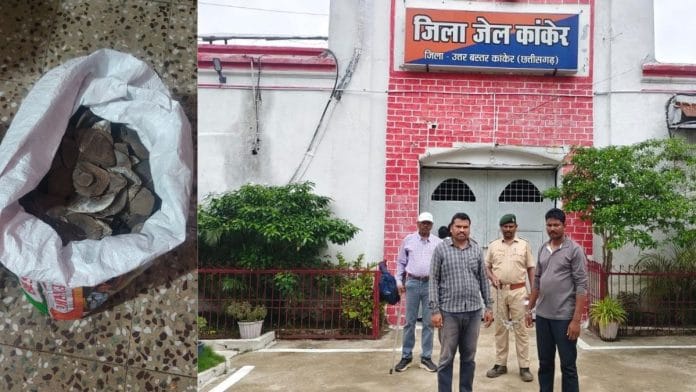
Forest officials allege that Gedam used his network of tribals as well as surrendered Naxals that he cultivated during anti-insurgency operations to assist in the poaching of tigers from the Indravati Tiger Reserve, located on the banks of the Indravati river in Bastar, separating Bijapur and Gadchiroli. A joint team of the state’s forest department and Wildlife Crime Control Bureau (WCCB) arrested him and a Home Guard jawan with a tiger skin in Chhattisgarh’s Kanker in June this year, according to state forest department officials.
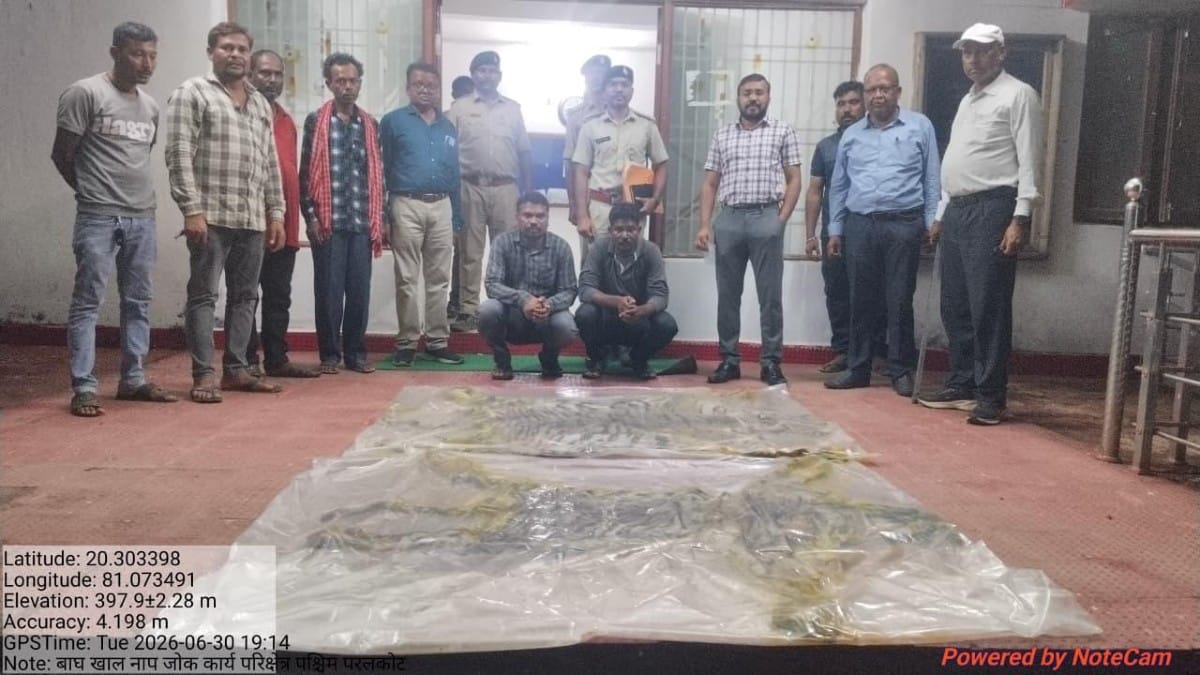
As the probe gathered pace, the department assessed the scale and extent of the poaching, which was not limited to tigers, and found evidence of a wider national-level syndicate involving police officials. The department has now sent a proposal to Chhattisgarh’s Home Department seeking a Central Bureau of Investigation (CBI) probe into a suspected nationwide tiger poaching racket allegedly operating from Indravati Tiger Reserve, which was the den of the Communist Party of India (Maoist) until recently.
Also Read: The curious case of India’s tiger paradox. Tiger numbers are rising, so are deaths
Jungle contacts
According to his service records, Gedam joined the police department in 2011. He joined the anti-Naxal cell of the police’s special branch around 2015-16, said sources in Gadchiroli police.
Asked about the allegations against Gedam, Gadchiroli Superintendent of Police M. Ramesh told ThePrint that a departmental inquiry found prima facie evidence of his involvement in the case and he was likely to be dismissed from service. “He was put on suspension immediately after the information was shared with us about his arrest and an inquiry was initiated,” Ramesh told ThePrint.
“The fact of the particular criminal case is beyond the scope of our inquiry, but findings have revealed that his activities were illegal and beyond his official mandate. It has brought disrepute to the organisation. Hence, a disciplinary action will be initiated, and he is most likely to be dismissed from the service,” he added.
The forest department has so far arrested nine accused, including Gedam and Baburao Madavi, the Home Guard jawan, who claimed to be a police informer after his arrest on 29 June. The forest department and police jointly recovered two tiger skins and 13 pairs of whiskers from them. According to forest officials, tiger skins are sold for at least Rs 50 lakh apiece and the price keeps increasing as the skins change hands.
A source in Gadchiroli Police said that Gedam was known to be indiscreet and was “quite loose” in his conversations about his influence and network in the jungles. “He has a relative in the Indravati Tiger Reserve area, and he had assured them that there would not be any problem from the side of the police. That’s how the network must have mushroomed,” a police personnel in Gadchiroli told ThePrint. Adding, “He used to speak a lot about all this stuff and may well have been caught because of leaking his own secrets.”
The forest department informed the state’s home department that investigations so far had revealed links between an illegal poaching syndicate and the states of Chhattisgarh and Maharashtra.
“There is a strong suspicion that the criminals are utilising the inaccessible terrain along the border-straddling Indravati river for international and interstate wildlife smuggling. The apprehended prime accused have been found to have connections with the police intelligence departments of other states, a fact that significantly heightens the case’s sensitivity,” the forest department said. The department then sought a probe by the CBI.
“Given the gravity of the matter, national security implications (due to the sensitive border location), and the global importance of wildlife conservation, it is essential that the investigation be conducted by a central agency,” added the forest department.
‘Chains of intelligence’
Sources in the forest department said Gedam and Babu Rao allegedly revealed during questioning that they were working with two more men, Tulsiram Majji and Santosh Majji of Netwada village, near the Indravati river, and that they had killed four tigers in the Bijapur range of the tiger reserve.
Officials said information about poaching was passed on to Gedam, who then collected the skins. “The tiger skins recovered from both accused revealed that the tigers were killed in the recent past. The tiger skins were not older than a year. The investigation revealed that the tiger skins were handed over to both the accused on the same day that they were arrested,” a forest department official privy to the probe told ThePrint.
Forest department raids at Netwada village last month allegedly led to the recovery of equipment used in poaching, such as hunting snares and knives, as well as 12 claws and four canine teeth.
The department also found another tiger skin hidden along the banks of the Indravati river. Additionally, the teams also recovered the carcass of a fourth tiger from the river area.
However, the forest department claims that more tiger skins are yet to be recovered and persistent rains have hampered the search. “There was intelligence about the poaching of seven tigers from the tiger reserve. We have recovered two, and several more are yet to be found,” said the official quoted earlier.
‘Not limited to tigers’
Officers also alleged that the smuggling network extended beyond tigers, to pangolins.
An analysis of Gedam’s phone revealed videos of live pangolins, among the most heavily trafficked mammals commanding a high price in the illegal wildlife trade market.
“The presence of pangolins in his phone provided crucial leads about his involvement in possible pangolin trafficking as well,” an official said, adding that intelligence inputs were followed up with raids at Gedam’s residence in Gadchiroli district’s Aheri block.
From his residence, the forest department seized 5.39 kg of pangolin scales, a widely sought-after item on the black market owing to its use in traditional medicines.
The official said Gedam was questioned about the source of the videos, leading investigators to other police department personnel, who allegedly said that they received the scales from someone in the forest region. “The last person who was suspected of having live pangolins with him was questioned, but he denied the allegations. He said he had them briefly and released them shortly after in the forest,” the forest department said.
The department added that it sought a CBI probe since it did not have the bandwidth for a probe of this scale.
(Edited by Sugita Katyal)
Also Read: 12 officers, a tip-off, and a 7-day operation—how DFO Parveen Kaswan caught ‘Veerappan of East’