





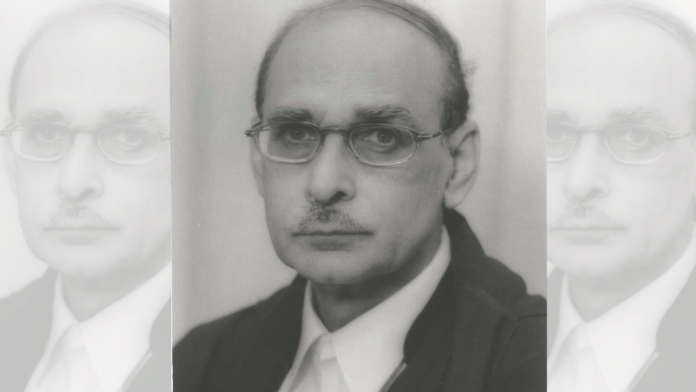


New Delhi: Justice (Retd) Prakash Prabhakar Naolekar, who is set to head a “High-Level Committee on Demographic Change”, is a third-generation lawyer, a former Supreme Court judge, a forgotten hero in the battle against Section 377 of the erstwhile Indian Penal Code, and has had a controversial tenure as the Lokayukta of Madhya Pradesh.
Union Home Minister Amit Shah announced the formation of the Committee on social media platform X on Tuesday, asserting that “infiltration and other reasons causing unnatural demographic change pose a very significant challenge to the present and future of any nation”.
To address this challenge, Prime Minister Narendra Modi had announced formation of such a committee on 15 August 2025, Shah’s post says.
This committee, he explains, will conduct a comprehensive assessment of demographic changes occurring across India due to illegal immigration and other unnatural causes, analyse patterns of abnormal population shifts at the levels of religious and social communities, and present a planned and time-bound solution for the same.
The committee will also include Census Commissioner along with Durga Shankar Mishra (Retd IAS), Balaji Srivastava (Retd IPS), and Dr. Shamika Ravi as members. The Joint Secretary (Foreigners-I), Ministry of Home Affairs, will serve as the committee’s Member Secretary.
घुसपैठ और अन्य कारणों से Unnatural Demographic Change किसी भी राष्ट्र के वर्तमान व भविष्य के लिए एक बहुत बड़ी चुनौती है।
इसी चुनौती से निपटने के लिए 15 अगस्त 2025 को प्रधानमंत्री @narendramodi जी ने ‘High-Level Committee on Demographic Change’ की घोषणा की थी। मुझे बताते हुए हर्ष…
— Amit Shah (@AmitShah) May 26, 2026
Incidentally, Justice (Retd) Naolekar was one of the judges who Shah had met back in 2018, as a part of the Sampark for Samarthan campaign at his residence in Jabalpur, Madhya Pradesh. During his tenure as the Lokayukta of Madhya Pradesh, the Congress had called him a “BJP man”.
Justice (Retd) Naolekar is a third generation lawyer, with his father and grandfather being leading lawyers at the Madhya Pradesh high court at Jabalpur.
As a Supreme Court judge, Justice (Retd) Naolekar was also a part of the two judge bench that delivered the landmark 2005 judgment in the 2001 Parliament attack case, upholding Afzal Guru’s death sentence.
He began practicing in December 1965, going on to practice in the chamber of Justice AP Sen and later, Justice JS Verma, when they were practicing lawyers at the high court. Both Justice Sen and Justice Verma went on to be judges of the Supreme Court as well.
Justice (Retd) Naolekar made his way to the bench in the year 1992, and was also a judge at the Rajasthan high court and the chief justice of Gauhati high court, before being elevated as a Supreme Court judge in 2002. He retired in June 2008.
A year after retirement, he was appointed as the Lokayukta in Madhya Pradesh in June 2009.
Also Read: India to lose ‘demographic dividend’? Govt report says over-30s to outnumber ‘young’ by 2036
The Lokayukta controversy
As per reports from the time, Justice (Retd) Naolekar’s first day as Lokayukta saw him call a meeting of top office-bearers. He reportedly emphasised on the need for speedy disposal of cases, and assured them that the office of the Lokyakta would not be misused under his watch.
However, his tenure as the Lokayukta soon came under criticism.
In 2011, former DGP of Madhya Pradesh Arun Gurtoo, and RTI activist Ajay Dubey challenged his appointment as the lokayukta in the Supreme Court. Among other things, they alleged that the appointment was vitiated because then chief minister Shivraj Singh Chouhan played a pivotal role in the selection and appointment process despite the fact that there was a corruption case pending against him before the Lokayukta at the time.
However, the petition was withdrawn.
The case against Chouhan and his wife Sadhna Singh pertained to what is known as the ‘dumper scam’, which included allegations of “quid-pro-quo” for out-of-turn mining leases and disproportionate assets. The Lokayukta had given them a clean chit in later 2010, after which the court also absolved them in 2011.
The Congress at the time had attacked the Lokayukta, terming him a “BJP man” and calling the institution of the Lokayukta a “puppet”. It had also raised questions on a trip taken by Justice (Retd) Naolekar’s son Sandeep Naolekar to China, alleging that the expenditure was met by the state government since he was a part of an official delegation led by Chouhan.
However, Sandeep had maintained that he was a part of the delegation in his capacity as the chairman of Confederation of Indian Industry’s MP chapter, and that he bore the expenses on his own account.
The Section 377 order
While Justice (Retd) Naolekar’s six-year term as Lokayukta ended in June 2015, the state government extended his services till a new appointment was made. Additionally, in 2014, the government had also amended the MP Lokayukta and Deputy Lokayukta Act, 1981, allowing the Lokayuktas to continue serving on the post even after completion of their term—allowing time to the government to appoint a replacement.
Justice (Retd) Naolekar retired as Lokayukta in 2016, after serving on the post for seven years.
As a SC judge, while he upheld the death sentence awarded to Afzal Guru, the bench had reduced the death penalty handed over to Shaukat Hussain Guru to 10 years’ imprisonment, while upholding the acquittal of two other accused.
Justice (Retd) Naolekar’s order as part of a division bench is cited as the forgotten hero in the struggle against Section 377 of the Indian Penal Code, which was a colonial-era law that criminalised consensual homosexual relationships along with such non-consensual encounters.
Initially, the Delhi High Court had rejected the petition filed by Naz Foundation challenging the provision, asserting that there was no cause of action.
However, when the foundation came to the Supreme Court, a bench comprising Justices YK Sabharwal and Justice Naolekar had then urged the Delhi HC to hear the case, observing that it cannot refuse to do so just because it was an academic question. An article in legal news platform Bar and Bench documents this.
The Delhi HC then heard the case and delivered its landmark judgment in 2009 declaring Section 377 unconstitutional.
(Edited by Ajeet Tiwari)