



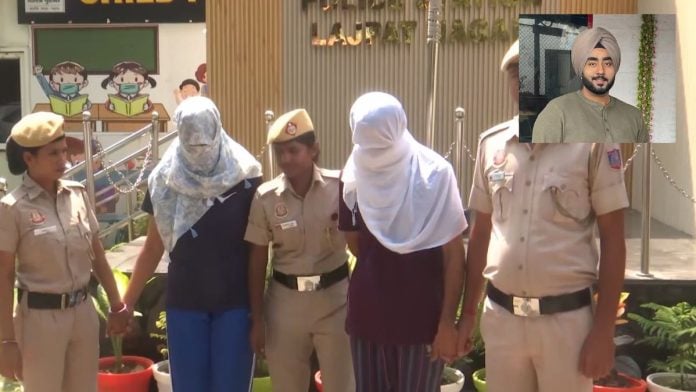
Gurugram: For nearly a week in September, a family in Delhi searched for their son while his body lay in a Gurugram mortuary. Then the police cremated it as unidentified, without uploading the details of the body on the Zonal Integrated Police Network (ZIPNET), an inter-state database meant for identification by families and acquaintances.
This lapse has resulted in the suspension of SHO Rajesh Bagri of Badshahpur police station, which handled the body. The Sector 56 SHO has been given charge of the station. The action against the SHO has come only after the Supreme Court asked the Delhi Police Commissioner and Gurugram Police Commissioner to file affidavits explaining why the body was cremated before identification.
A spokesperson of the Gurugram Police confirmed when contacted by ThePrint Friday that Bagri has been placed under suspension for the lapse. “He was suspended Thursday,” the spokesperson added.
The action follows the death of Yuvraj Singh Manchanda, a 31-year-old sales manager with Adani Realty. The police have arrested Manchanda’s former colleague Anya Vats and her partner Sanyam Sachdeva, and say the two have confessed to killing him over Rs 1 crore Anya owed Manchanda.
Gurugram Police recovered Yuvraj Manchanda’s dead body on 10 September from a flooded area.
His sister, Harsimran Manchanda, has moved the Supreme Court. She says the police denied her family the chance to identify and cremate him by failing to upload details of the body on ZIPNET.
The investigating officer, ASI Sahun Khan, who was directly responsible for the lapse, had already been suspended.
A source in Gurugram Police told ThePrint that at least five more personnel, including an inspector and members of the forensic unit, could also face action. Departmental inquiries have also been ordered against a woman sub-inspector from the police control room and against the doctor who conducted the post-mortem, which initially said cause of death was drowning.
The source said the police will send a recommendation to the Haryana health department for action against the doctor. The post mortem report had initially said the cause of death was likely drowning. The postmortem, conducted at Gurugram Civil Hospital, didn’t find any external injuries responsible for the death and attributed the death to ante mortem asphyxia caused by drowning.
Changes in procedure
Gurugram Police has also issued new guidelines for unidentified bodies. The ACP (Headquarters) will monitor every such case in the district as special nodal officer. A senior Crime Branch officer will assist and report to the DCP (Crime).
Whenever an unidentified body is found, the Gurugram control room must immediately contact the control rooms of Delhi Police and of neighbouring districts of Faridabad, Jhajjar, Nuh, Rewari and Palwal. They will share the photographs and description of the body to match it with missing-persons reports.
Supreme Court’s concerns
Harsimran’s petition, filed through senior advocate Amit Prasad, asks the court to frame a uniform national procedure for missing persons and unidentified bodies. On 22 September, the Supreme Court directed the Delhi Police Commissioner and Gurugram Police to file affidavits explaining why the body was cremated before identification and why details of its recovery were not entered on the Crime and Criminal Tracking Network and Systems (CCTNS). The Gurugram Commissioner submitted an affidavit before the SC on October 1.
A Delhi court, hearing a separate plea by Harsimran for preservation of records, had earlier criticised the Gurugram Police. It asked how a body could be cremated along with belongings, after the family’s counsel said a burnt watch and kada were recovered from the cremation site. It also noted that two post mortem reports did not match. One mentioned bullet wounds and the other said drowning.
(Edited by Viny Mishra)
Also read Gurugram manager murder: Ex-colleague owed him ‘close to Rs 1 cr’, bought pistol 3 months in advance