








Hyderabad: Last September, Vijayawada couple Parthasarathy Annavarapu and his wife Poorna planned a two-day trip to Tirumala, the famous temple town in Andhra Pradesh’s Tirupati district, to catch a glimpse of the deity Venkateswara. With rail tickets booked and bags packed, they were ready to leave the following evening with their three-year-old twins in tow.
The visit from Vijayawada to Tirumala was doubly special for them: it was their maiden visit there as a family and the couple had also planned their twin’s first tonsure ceremony by the holy bathing spot.
But a news flash on the television set made the couple’s hair stand on end. More than two lakh pilgrims were scheduled to visit Tirumala the same day as their arrival for the dazzling Brahmotsavam, or the annual festival at the Venkateswara Temple. Held over nine days, more than 10 lakh devotees are known to offer prayers during the period.
The Annavarapus looked at each other wistfully, knowing well that ascending the seven hills and negotiating the sea of devotees during this season could be an endless wait. Not wanting to be sapped and put their children through the arduous journey, Parthasarathy texted the WhatsApp governance number he had heard so much about from his colleagues in the state revenue department where he worked.
With cautious optimism and a prayer, he reached out to the 10-digit, all-knowing helpline on WhatsApp.
To his relief, a simple ‘Hi’ to ‘Mana Mitra’ on 9552300009 resolved all his problems.
An exhaustive menu of services by the Andhra Pradesh government, including the Tirumala Tirupati Devasthanams, the trust which manages the temple, led him to buy a ‘seeghra darsanam’ (special fast-track entry) ticket, laddu prasadam, and even a bus ticket back home two days later.
“Venkateswara (deity) came in the form of Mana Mitra (our friend),” Parthasarathy told ThePrint, eyes brimming with tears as he recounted the family’s Tirumala experience made easy by the WhatsApp platform.
A month later, Mana Mitra was resolving concerns of a different kind as Cyclone Montha made landfall in the state’s Narasapuram in October.
Helpless people sought intervention to deal with the devastation and destruction as furious rain and winds sank standing crops, razed houses and scattered trees and poles everywhere.
A continuous stream of messages kept pouring in on the service, keeping almost every government department busy, officials handling the platform said.
From shifting tree trunks and disposing of animal carcasses to restoring electricity and re-issuing important certificates soiled by rain, Mana Mitra helped resolve more than 25,000 grievances raised by the public through the text-interactive service.
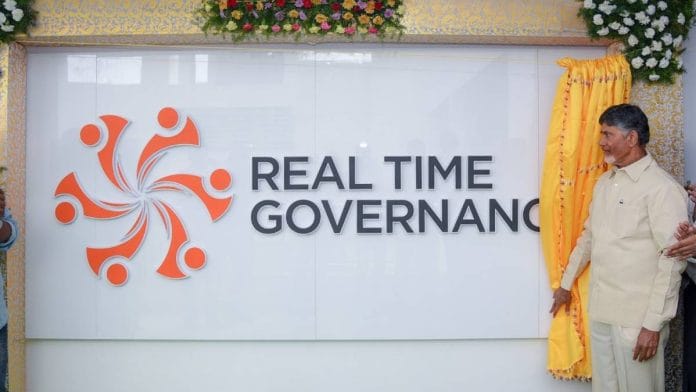
“This is our real purpose. To be on the platform that is available to all and offer services seamlessly. Governance has to make life simpler,” Prakhar Jain, IAS officer and CEO of Real-Time Governance Society (RTGS), the department that manages the WhatsApp governance service, told ThePrint.
It is this sentiment of ease of living that lies at the heart of the year-old WhatsApp governance platform, which has now emerged as a vital yardstick for the state to judge whether growth translates into better lives.
Mana Mitra was launched a year ago in January 2025 and more than two crore services have been delivered so far to 40 lakh users, the government’s portal states.
Crawling through data on 450 government sites and stretching its arms to draw 40 departments closer, the real-time platform has integrated more than 870 services. Interactive services are available in both English and Telugu.
The idea is known to be Andhra Pradesh IT & HRD minister Nara Lokesh’s brainchild.
“In today’s world, everything is accessible at the touch of a button—whether it is booking a cab, ordering food, or watching a movie. So, why shouldn’t governance be as accessible?” he said during the launch of Mana Mitra.
He attributed the idea’s emergence to his findings from the state-wide Yuva Galam Padayatra that he undertook before the assembly election in 2024. “I closely interacted with citizens and understood their struggles with bureaucratic processes,” he explained.
A look at the service
Developed in association with Meta (earlier Facebook) that owns WhatsApp, and Tata Consultancy Services, the dedicated WhatsApp governance number has a service list attached to it.
The drop-down menu displays names of government departments whose services can be availed, be it police, revenue, women and child welfare or rural development.
In a country like India, where even correcting one’s name on an electricity meter usually means hectic parleys and cumbersome paperwork, Mana Mitra’s appeal lies in not just the wide-ranging service offerings, but also its ease of use.
It’s a chatty platform, so people of all ages flock to it to get things resolved, government officials said. The most common services sought include those related to securing encumbrance certificates and civil-municipality services.
“People look for small grievances to be resolved as a test case. If these are resolved on time, then more pronounced problems are brought forth,” said Jain.
But how real time is the service delivery? For all that is available in digitalised form, the response is quick, officials from the RTGS department explained.
If the query concerns one department, the response is resolved within 24 hours. However, complaints regarding road repair or those requiring physical verification of land before issuance of encumbrance certificate take anywhere between 30-45 days before the “ticket is closed”.
Given that there is sensitive data involved, each document issued through the platform carries a QR code linked to the Andhra Pradesh government’s official portal, ensuring authenticity and preventing fraudulent certificates. All data, Jain explained, is stored in a centralised manner at a data centre in Amaravathi to prevent phishing or cyber fraud. Moreover, the state government plans to integrate blockchain technology for enhanced security and seamless digital service delivery.
The platform is still far from its final avatar but has enough subscribers to compel the RTGS team to stack it with newer, easier features. In the coming months, updates will include AI-driven chatbots and voice-based services, making governance even more accessible to citizens, the officials said.
“We want to re-engineer certain services to ensure it doesn’t ask too many questions,” Jain asserted.
‘Step in right direction’
Assessing its performance, experts who have assisted in the roll out of the platform said true governance must go beyond GDP numbers and service delivery mechanisms. Its real measure is in enquiring how easily a student gets to school, how secure a woman feels on city streets, and how a family is able to access water, healthcare and housing in a cost-effective way.
Sridhar Gadhi, founder of Paradigm IT Group, a global IT solutions provider, made a larger point for more people to embrace the platform: the elimination of exploitative middlemen.
“People don’t know where to go, how to fill the application, and when their work will get done. Mana Mitra, as a transparent digital platform, ticks all of these boxes,” he told ThePrint.
Calling this form of governance delivery nothing short of remarkable, he added: “As we move from the age of information to the age of intelligence, we need to ensure that we deliver well-being along with welfare.”
The idea sits well with Sridhar Seshadri too. A deep tech serial entrepreneur and policy adviser who was involved in the conception of Mana Mitra, he agreed that governance needs to be proactive.
Recognising the WhatsApp governance platform as a first step for the state to meet the 2030 Sustainable Development Goals of the United Nations, he augured that easy access to welfare schemes and services would hasten better living prospects.
“Once service delivery and timely welfare is assured, the next aspirational step is to move up the ladder economically. And this governance model is a step in the right direction,” Sridhar said.
(Edited by Nida Fatima Siddiqui)
Also Read: Andhra Pradesh missing from Budget spotlight, why Chandrababu Naidu’s still happy