


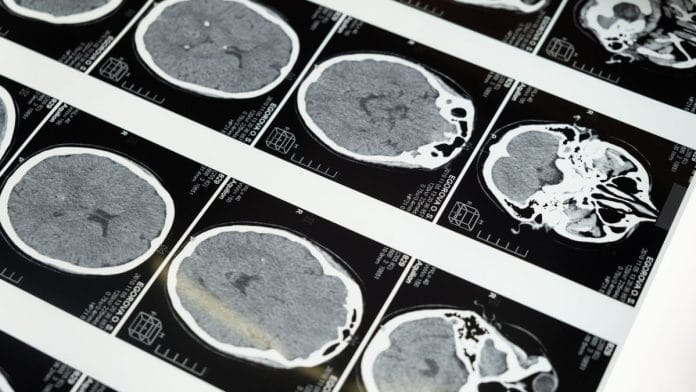
New Delhi: Children exposed to radiation from medical imaging, including CT scans, may face a higher risk of developing brain tumours, with the risk increasing as cumulative radiation exposure rises, a large study of 3.7 million children in the US and Canada has found. The findings, however, need to be interpreted with caution, the authors said.
The study, led by researchers at the University of California, Davis, and published in JAMA on 19 November, has found that children who received a cumulative radiation dose of 150 milligray (mGy) or more to the brain had nearly four times the risk of developing a brain tumour compared with those with no recorded exposure. A milligray is a standard International System of Units (SI) measure of absorbed radiation dose.
By the age of 21, the incidence of brain tumours was 22.1 per 10,000 children in the higher-exposure group, compared with 5.4 per 10,000 among those who had not been exposed, the study found.
“This study adds to the growing evidence that pediatric medical imaging with ionising radiation is associated with increased cancer risk,” the authors wrote. They said imaging examinations involving ionising radiation should be ordered only when clinically justified and performed using protocols that minimise radiation exposure.
Ionising radiation is high-energy radiation that removes electrons from atoms to create ions, which can damage living tissue and DNA, potentially leading to cellular harm or radiation sickness.
The findings add to evidence from earlier studies in the UK, Australia, the Netherlands and other European countries linking radiation exposure from medical imaging to an increased risk of brain tumours.
They also underline the importance of limiting unnecessary scans, particularly in children, whose developing bodies may be more vulnerable to radiation.
Researchers analysed medical records of 3,704,860 children born between 1996 and 2016, who were followed for an average of 12.3 years. The analysis included radiation exposure from CT scans, conventional X-rays, fluoroscopy, angiography and nuclear medicine procedures. A total of 1,536 children developed brain tumours.
For every additional 100 mGy of estimated radiation dose, the excess relative risk of all brain tumours increased by 1.27, rising to 1.51 for more aggressive tumours.
The authors said the study also offered a broader assessment than earlier research because it examined cumulative exposure from different types of medical imaging, rather than CT scans alone.
Cumulative radiation exposure (or cumulative dose) is the total amount of ionising radiation a person absorbs over time from repeated exposures to the whole body or a specific body part.
Dr Manisha Jana, professor at the Department of Radiodiagnosis at the All India Institute of Medical Sciences (AIIMS), New Delhi, told ThePrint the study is significant because it calculates cumulative radiation exposure. “Children have a longer lifespan, and if they undergo repeated imaging examinations involving radiation, the total dose they receive can become quite high,” Jana said.
However, she cautioned against interpreting cumulative radiation exposure as evidence that doses received through scans conducted years apart necessarily accumulate in the body. She pointed to the body’s DNA repair mechanisms and said there was no evidence that doses administered a year or more apart compound in the way suggested.
Why the findings need cautious interpretation
Children with neurological symptoms or underlying conditions may be more likely to undergo medical imaging and may also have a higher likelihood of being diagnosed with a brain tumour. This makes it difficult to establish how much of the increased risk is attributable to radiation itself, the authors said.
To address this, researchers extended the gap between radiation exposure and tumour diagnosis from two to five years. The excess relative risk, which measures the increase in tumour risk linked to radiation exposure, fell from 1.27 to 0.80 per 100 mGy, but remained statistically significant.
The authors also said they could not account for cancer-predisposing genetic syndromes.
In an accompanying editorial, Ruggero De Maria, a scientist at the Università Cattolica del Sacro Cuore in Rome, and colleagues said the findings put the relatively rare outcome in perspective and should not be used in isolation when counselling families.
“For an individual child, the small potential long-term risk must be considered alongside the often much larger and immediate benefit of obtaining the correct diagnosis,” they wrote.
CT scans, MRI and India’s safeguards
CT scans use X-rays, a form of ionising radiation that can damage cells. MRI, by contrast, uses magnetic fields and radio waves and does not involve ionising radiation.
The two tests, however, are not interchangeable. CT scans are faster and are often used in emergencies, including serious head injuries, to identify bleeding or other damage. MRI provides more detailed images of soft tissues but generally takes longer.
In India, the Atomic Energy Regulatory Board (AERB) regulates medical diagnostic X-ray equipment, including CT scanners. Its prescribed dose limits apply to radiation workers and members of the public, rather than patients, Dr Jana said.
For patients, doctors follow the principle of keeping radiation exposure “as low as reasonably achievable”, commonly known as ALARA. There is no fixed upper radiation dose limit for patients, she said, leaving clinicians to determine whether a scan is necessary and what dose is appropriate.
Modern CT scanners can automatically adjust radiation exposure according to a patient’s size and body thickness. Many newer machines also have child-specific protocols that radiologists can modify further, Dr Jana explained.
She added that imaging in children is already subject to strict precautions.
“Whenever we can get the same or similar information using another investigation which does not involve radiation, in children, it is always preferred,” she said.
However, she added that the benefits of imaging must be weighed against potential risks, particularly in emergencies. In cases of serious trauma, for instance, the immediate risk of missing an injury may outweigh the possible long-term effects of radiation exposure.
According to Dr Arjun Narula, Radiologist at Narula Diagnostic Centres & Institute in Rohtak and Gurugram, Haryana, MRI is increasingly being preferred for paediatric imaging because newer machines have significantly reduced scanning times.
“In my practice, CT scans are now largely reserved for trauma and certain head and lung examinations, while MRI and ultrasound are used for many other cases,” he said.
But access to newer equipment remains uneven.
Dr Narula said only five or six centres in India could currently conduct the shorter, roughly five-minute MRI protocols, while not all scanners have automatic exposure control.
Dr Jana said that in smaller cities, where MRI facilities may not be readily available, paediatricians sometimes have little choice but to recommend a CT scan. This can become a concern when children require repeated imaging.
Dr Narula said improving awareness and access to better equipment is more important than introducing additional monitoring requirements. “It is impossible to monitor every scan. Doing so would place an additional regulatory burden,” he added.
(Edited by Anupama Yadav)
Also Read: For brain tumor patients, laser therapy can extend survival by months