


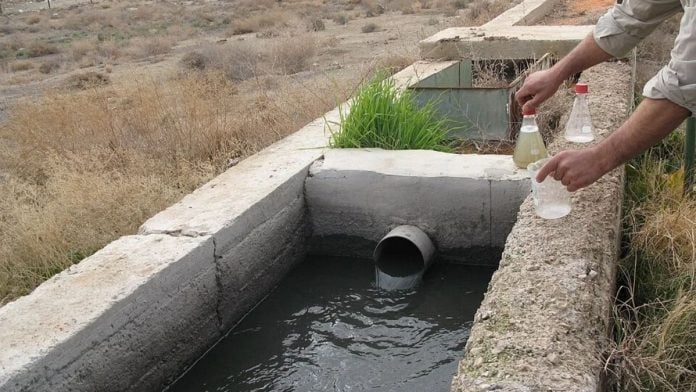
New Delhi: Sewage samples from across India could help health authorities spot disease outbreaks before patients begin turning up at hospitals, according to new guidelines by the government.
The Centre Monday laid down common national guidelines for collecting and testing wastewater samples, with laboratories required to upload the findings on India’s existing disease surveillance platform within 48 hours of completing tests. This will help detect the circulation of pathogens up to one to two weeks before they reflect in clinical data.
The National Guidelines on Wastewater Surveillance for Pathogens of Public Health Importance have been jointly developed by the National Centre for Disease Control (NCDC) and the Alliance for Pathogen Surveillance Innovations (APSI)-India consortium. Released by Dr Rakesh Gupta, Additional Secretary (Public Health) in the Ministry of Health and Family Welfare, they set out common procedures for collecting sewage samples, testing them, interpreting the findings, and sharing results with the government’s disease surveillance network.
“The guidelines mark an important step towards strengthening wastewater-based surveillance as an early warning tool for detecting pathogens, monitoring disease trends and supporting timely public health interventions,” the ministry said.
𝗦𝘁𝗿𝗲𝗻𝗴𝘁𝗵𝗲𝗻𝗶𝗻𝗴 𝗜𝗻𝗱𝗶𝗮’𝘀 𝗣𝘂𝗯𝗹𝗶𝗰 𝗛𝗲𝗮𝗹𝘁𝗵 𝗦𝘂𝗿𝘃𝗲𝗶𝗹𝗹𝗮𝗻𝗰𝗲 𝗮𝗻𝗱 𝗣𝗿𝗲𝗽𝗮𝗿𝗲𝗱𝗻𝗲𝘀𝘀!
Dr. Rakesh Gupta, Additional Secretary (Public Health), Ministry of Health & Family Welfare, released the National Guidelines on Wastewater Surveillance… pic.twitter.com/4EK3Kr6yTZ
— Ministry of Health (@MoHFW_INDIA) November 16, 2026
The new framework aims to bring together wastewater surveillance efforts that have so far been carried out by different institutions and research groups, and proposes a common system for monitoring infections across communities. The idea is to detect pathogens being shed into sewage by infected people, including those who have mild symptoms or do not seek medical attention.
Also Read: Recycled plastic likely to find its way into food packaging. FSSAI proposes new draft safety rules
Current surveillance
India has used wastewater surveillance before, particularly to monitor the spread of polio virus. Environmental surveillance of sewage began in Mumbai in 2001, and was later expanded to other locations as a supplement to the country’s acute flaccid paralysis surveillance programme.
The Covid-19 pandemic further demonstrated the utility of the approach. Research institutions and government agencies used sewage samples to track SARS-CoV-2 transmission, with testing protocols standardised across organisations including NCDC, the Department of Biotechnology, the Department of Science and Technology, the Council of Scientific and Industrial Research and the Indian Council of Medical Research.
However, these initiatives largely focused on specific pathogens or individual programmes. The new guidelines seek to provide a broader national framework that can be adapted to monitor several infectious diseases and emerging public-health threats.
The document identifies poliovirus, SARS-CoV-2, influenza, respiratory syncytial virus, measles, hepatitis A and E, dengue and cholera among potential priority targets. It also includes monitoring antimicrobial resistance genes in wastewater, and exploring methods to detect unknown pathogens with pandemic potential.
Sample collection & how the findings will be used
According to the new guidelines, samples can be collected from sewage treatment plants, sewer networks, open drains and hospital wastewater outlets, depending on local sanitation infrastructure, the population being monitored and the pathogen under surveillance.
In large cities, sewer networks can be divided into catchment areas covering around one lakh to three lakh people. The guidelines caution against sampling areas dependent on septic tanks, individual latrines or open fields, as these may not represent a clearly defined population.
Routine sampling will be done weekly or fortnightly. Laboratories must upload findings to the Integrated Health Information Platform (IHIP), under the Integrated Disease Surveillance Programme (IDSP), within 48 hours of completing tests. They must meet this deadline in at least 80 percent of cases over a year.
The guidelines call for more frequent reporting, if a serious pathogen is detected in a previously unaffected area, pathogen levels rise over two consecutive sampling cycles, or sequencing identifies a novel variant.
The data is intended to help authorities detect potential outbreaks early and take targeted action. A spike in pathogen levels could trigger diagnostic testing through mobile testing vans and fever clinics, while hospitals could prepare beds, oxygen supplies and stocks of medicines.
The guidelines also propose localised vaccination drives, GIS mapping of hotspots and containment measures. Detection of waterborne pathogens could prompt water-quality testing, checks on chlorination, and repairs to leaking water and sewer lines.
Additionally, wastewater use to track antimicrobial resistance (AMR), in which microbes become less susceptible to medicines, has also been proposed. Laboratories would test samples for antibiotic resistance genes, using sewage treatment plant inlets to monitor community-level resistance, and hospital wastewater to establish baseline levels within healthcare facilities.
The findings could help track resistance patterns, identify geographic hotspots and prioritise diagnostic testing and infection-control measures. However, the guidelines describe this application as “largely conceptual”, noting that most evidence comes from pilot projects and proof-of-concept studies. They also say there are no documented examples of routine wastewater surveillance for AMR consistently informing public-health action.
Resistance genes can enter sewage through animal waste and environmental sources, so their detection does not necessarily indicate resistant infections among people in the area.
The guidelines caution that wastewater testing cannot identify infected individuals or establish exact case numbers. Pathogen levels can fluctuate with rainfall, sewage flow and sampling conditions. At least three sampling points are needed to establish a trend, meaning weekly testing would require around three weeks of data to identify a consistent change.
They also prohibit using wastewater data to identify individuals or households. Findings from areas covering fewer than 3,000 people or individual facilities should not be made public.
(Edited by Mannat Chugh)