





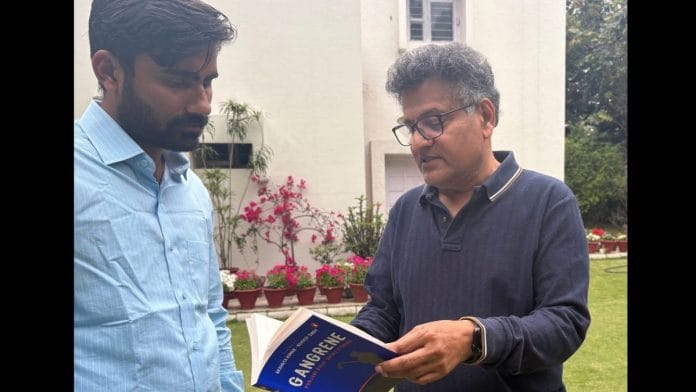



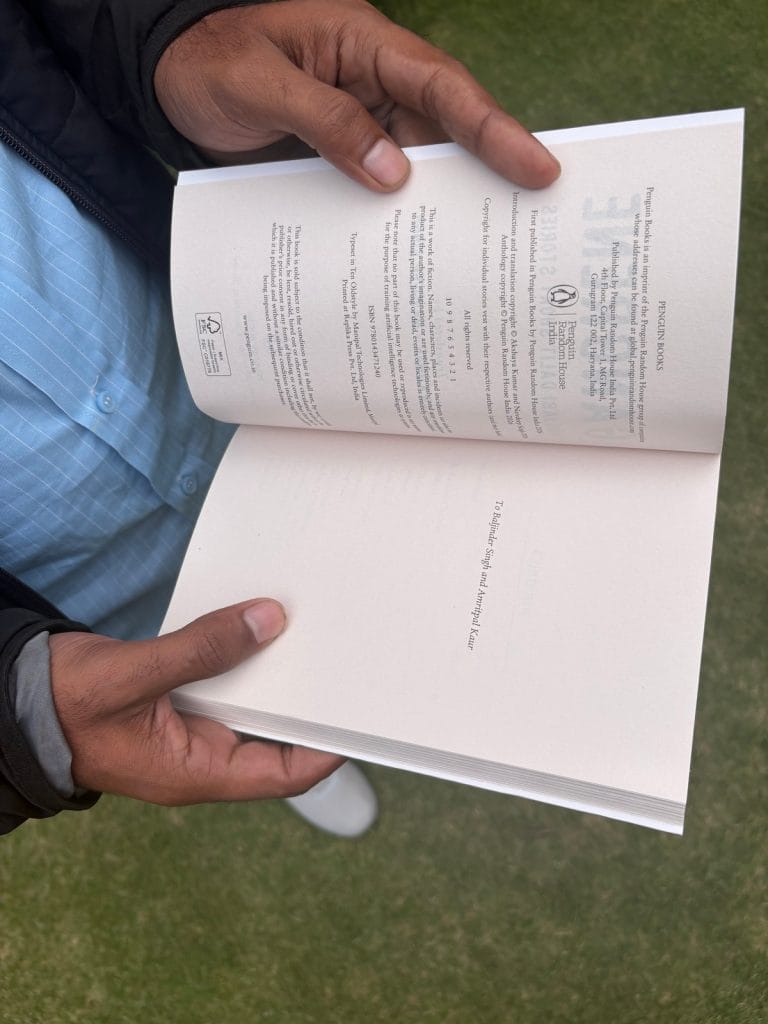
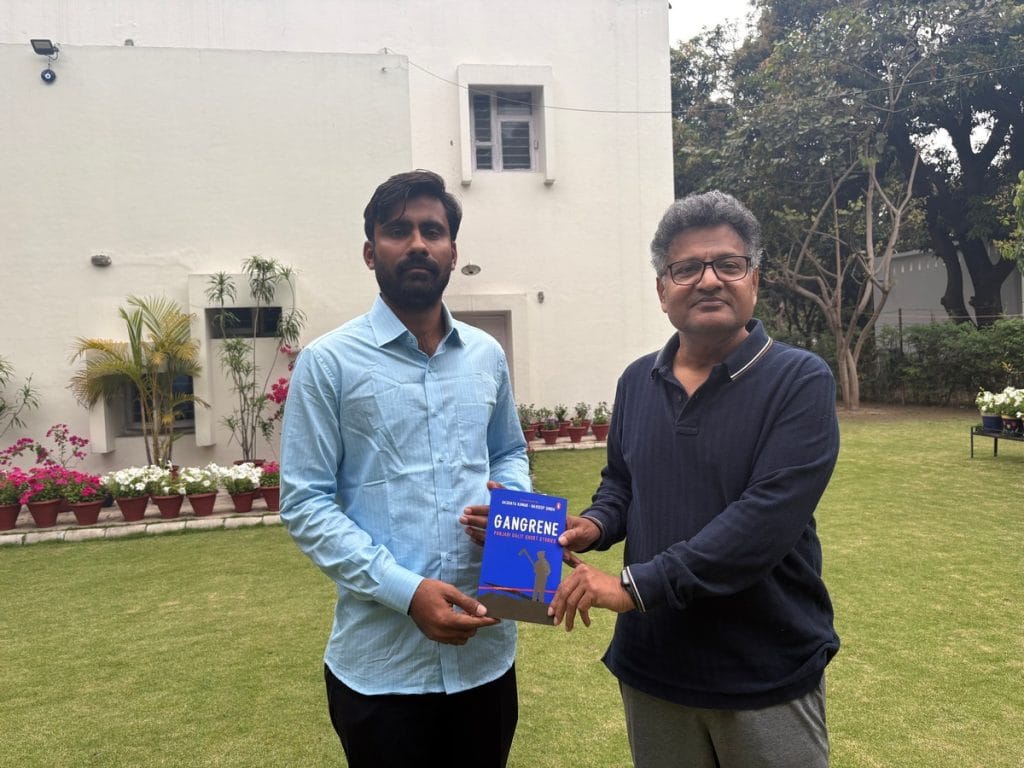
Chandigarh and Jalandhar: During a visit to Panjab University, Navdeep Singh kept looking at the blue book in his hands as if it might disappear. The title is Gangrene: Punjabi Dalit Short Stories, a collection published by Penguin. The assistant professor at MR Government College in Fazilka has his name on the cover, along with that of Panjab University professor Akshaya Kumar. Yet, he is still unable to celebrate it.
There is a disconnect between his academic world and his Mazhabi Dalit Sikh community in Firozpur’s Panjawa village. He has dedicated the book to his parents, but the question that haunts him is this: will the book mean anything to his community of mostly farm labourers?
“I can’t fully grasp it. My parents don’t understand how big this is, and I don’t think I can quite explain it either. Maybe the next book I’m working on with Prof Akshaya will bring a sense of happiness and pride,” said the 28-year-old teacher of English literature, smiling anxiously as he sat in Kumar’s allotted quarter in Chandigarh.
Gangrene brings fiction by writers such as Attarjit, Prem Gorkhi, Mohan Lal Phillauria, and Bhagwant Rasulpuri to a pan-India audience. Their stories explore what it means to be Dalit in a state where nearly a third of the population belongs to the community, but the literature has barely had any reach even within Punjab.
We wanted to translate the works of Punjabi Dalit writers and bring them to a national audience. Even within the Punjabi Dalit literary landscape, these stories often struggle to find space. Yet the body of work is rich and robust, deserving a wider audience
-Prof Akshaya Kumar
Dalit writing in India is usually associated with Maharashtra — the raw, explosive autobiographies born from extreme deprivation and the Ambedkar-Phule revolutionary legacy. But Punjabi Dalit writing emerged from a very different terrain, influenced by agricultural abundance, the egalitarian ethos of Sikhism, Marxist thought, Dera culture, and the pre-independence Ad Dharmi socioreligious movement of the ‘untouchables’.
In Punjab, the dominant social tension is not the typical “Brahmin versus Dalit” divide seen elsewhere in North India, but a conflict over land and power between dominant Jatts— classified as OBC nationally but General locally— and Dalits.
“Punjab may lack the raw, in-your-face brutality seen elsewhere, but discrimination here is postponed and diffused, taking many forms,” said Kumar, who belongs to the Bania community and has lived in Chandigarh for 30 years.
The subtle ways in which discrimination manifests in the state has lent itself particularly well to layered, sharply observed fiction rather than autobiographical outbursts. Here, oppression whispers through averted glances at communal wells, stolen wages, or the unequal flow of diaspora remittances.
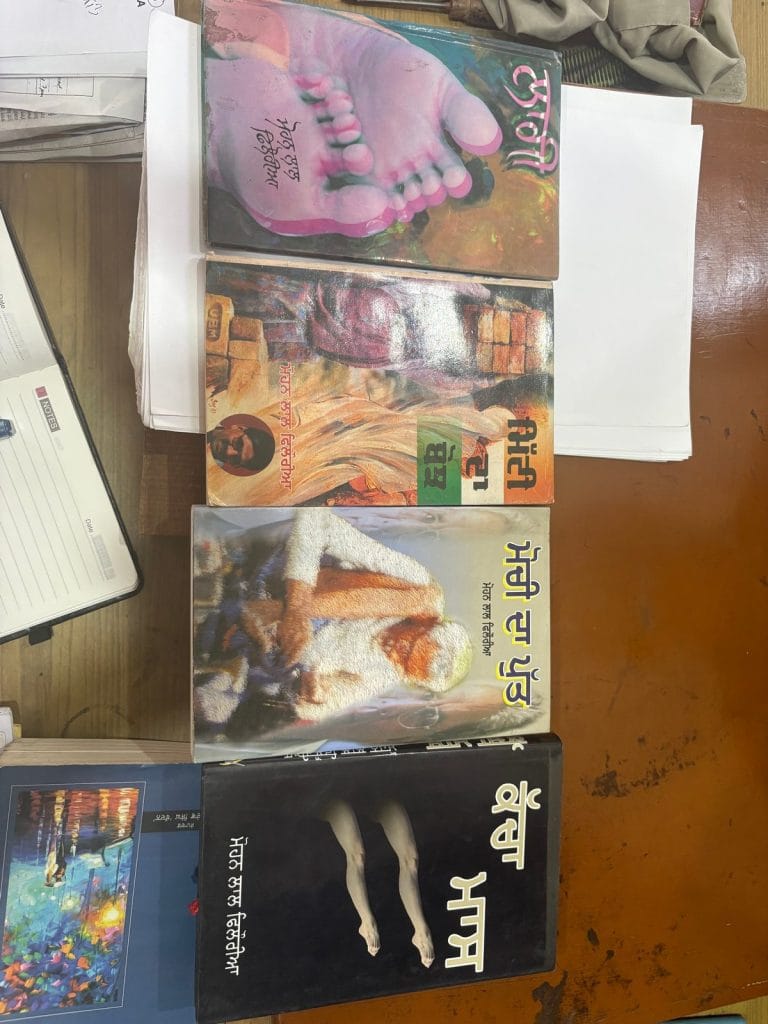
Since the 1970s, Punjabi Dalit writers have written about caste as it is lived, from exploitation in the village to alienation in the city. Attarjit’s Bathlu Chamiar is about a leatherworker in a village. Mohan Lal Phillauria’s Mochi da Put follows a man with a government job who tries to hide that he is a cobbler’s son. In Bhagwant Rasulpuri’s Roots, a man converts to Buddhism to escape caste but it doesn’t work as well as he had hoped.
In contrast to portrayals by non-Dalits, such as Gurdial Singh’s 1964 novel Marhi da Deeva, which depicted Dalits as passive victims, these modern stories are infused with Ambedkarite consciousness and agency. They are also rooted in much older traditions of caste defiance—from the 17th-century warrior-poet Bhai Jaita, born into the Mazhabi community, whose epic Sri Gur Katha provided an account of the birth of the Khalsa to Giani Ditt Singh’s 19th-century polemics against caste hypocrisy.
“Unlike Marathi Dalit literature, which mostly began in the 20th century as a response to extreme hardship, Punjabi Dalit writing has a much longer history,” said Rajkumar Hans, a historian and expert on Dalit studies, Punjabi literature, and Sikh history. “Punjabi Dalit stories and poems capture both subtle everyday oppression and broader social change, showing how the community has navigated inequality across generations.”
Also Read: A rebellious Hoshiarpur cobbler that PhD students love to cite
No escaping caste?
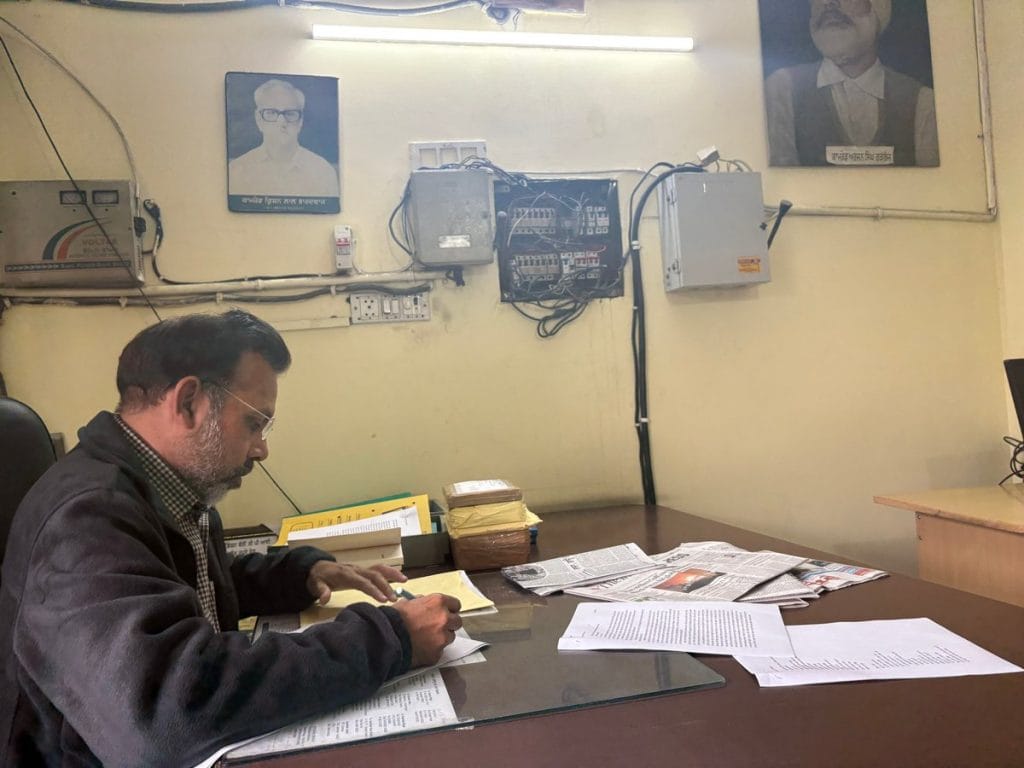
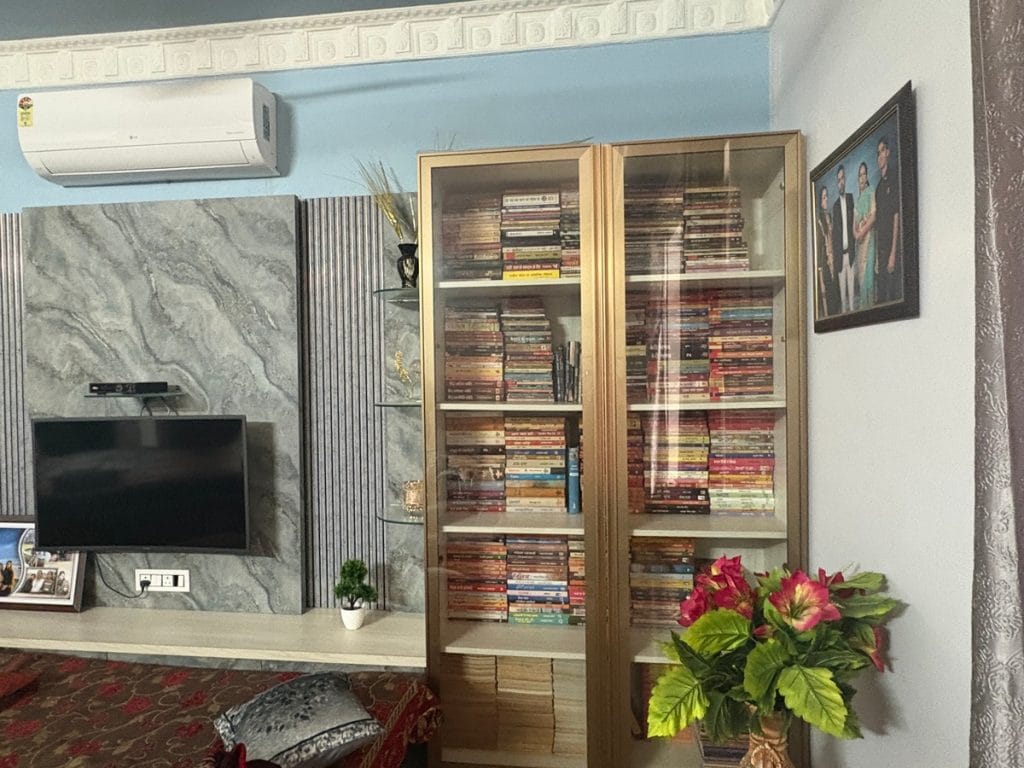
On the second floor of Bhagwant Rasulpuri’s spacious home in Jalandhar, rows of Punjabi books fill every wall. His wife and daughter are writers too, he says. Rasulpuri is one of Punjab’s most prominent Dalit literary voices. His day job is editing the Sunday edition of the daily Nawan Zamana, but he also runs Kahani Dhara, a quarterly Punjabi literary magazine he founded over a decade ago. It is in his writing, though, that he is most completely himself.
Rasulpuri has written six short story collections and one novel over the course of 30 years, but it is relatively recently that wider recognition has come his way. His collection Delivery Man won a 2025 Dhahan Prize for Punjabi fiction, which took him to Surrey in Canada.
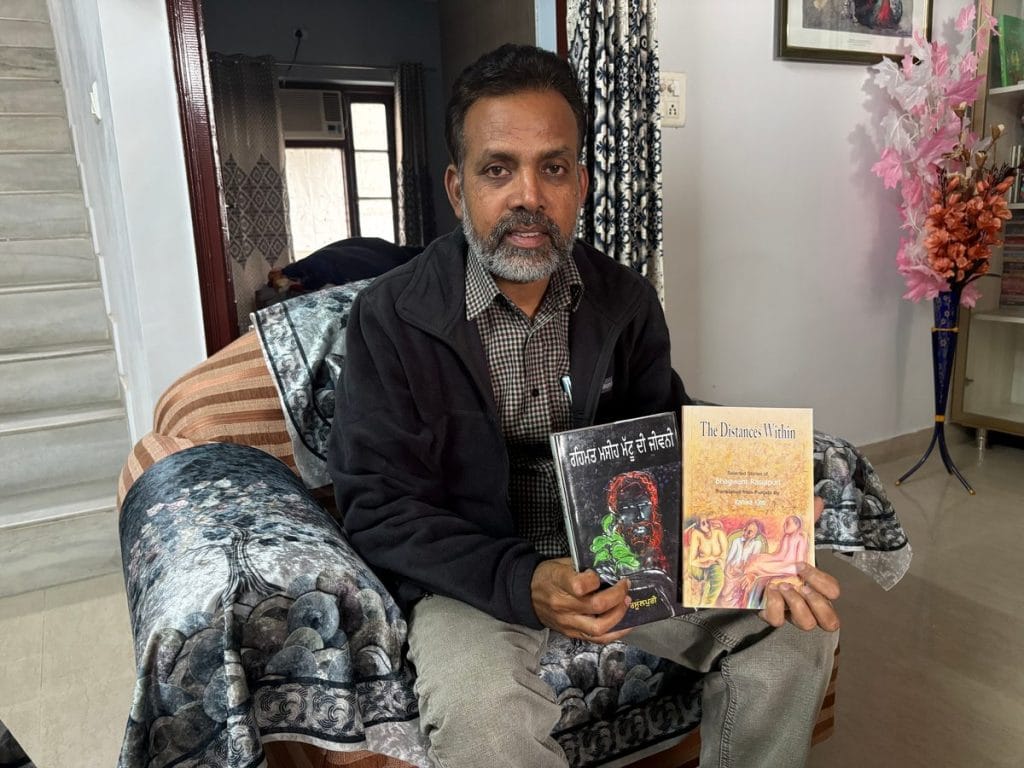
The stories explore loneliness, displacement and gender struggles, including one in which a divorced female professor finds comfort with a delivery man. In 2017, one of his earlier stories was adapted into the acclaimed Punjabi film Chamm, about a Dalit slaughterhouse worker caught between his community’s leather-working traditions and the dominance of Jat landowners. The film also shows how some Dalits in the trade refuse to kill injured animals for money on ethical grounds.
A persistent question runs through much of his work: can a person ever truly escape where they come from?
“Communities evolve — economically, socially, and spiritually — while carrying forward deep-rooted identities and contradictions,” said Rasulpuri.
I noticed that even within Dalit communities, divisions emerge. Those who gain wealth, education, and status start to distance themselves from, and at times discriminate against, those who remain workers
-Bhagwant Rasulpuri, author
In ‘Roots’, set in the Doaba region and included in Gangrene, a man named Gyan Chand tries to completely reinvent himself. Renaming himself Bhikshu Gian Ratan, he turns to Buddhism, fully convinced that it offers an escape from caste and a path toward dignity. He builds Buddhavihars, preaches to others, and immerses himself in his chosen identity. For a while, it seems like a complete transformation. But his parents challenge him. The community he hoped to inspire resists. And then his own voice betrays him. In the middle of Buddhist teachings, he utters out of habit: “Jai Ravidas.” He is caught between identities, unable to fully belong to either.
“The story ends when Gian opens a Buddhist text and discovers something unexpected inside. He finds a picture of Ravidas,” said Rasulpuri. “His past is not outside him, but embedded within him. It is something he cannot erase.”
Then there is the story ‘Life Story of Rehmat Masih Matoo’, where the eponymous character rises from scavenging leftovers at village feasts to becoming a state-awarded teacher, only to find that even his success cannot wash away the stigma of caste.
“His very name reflects generations of shifting identities. ‘Rehmat’ gestures toward a Muslim past, ‘Masih’ suggests a Christian phase, and ‘Matoo’ ties him to his Dalit origins. His life reflects the long and complex history of marginalised communities in Punjab,” said Rasulpuri.
Rasulpuri has seen versions of these stories unfold in his own family. He was born to a father who worked as a labourer and a grandfather bound to handling dead animals’ skin. Over time, his grandfather became a business owner in the same industry of leatherwork. Education, migration, and economic opportunities created new pathways for the family.
“But I noticed that even within Dalit communities, divisions emerge. Those who gain wealth, education, and status start to distance themselves from, and at times discriminate against, those who remain workers,” said Rasulpuri.
When identity arrives first
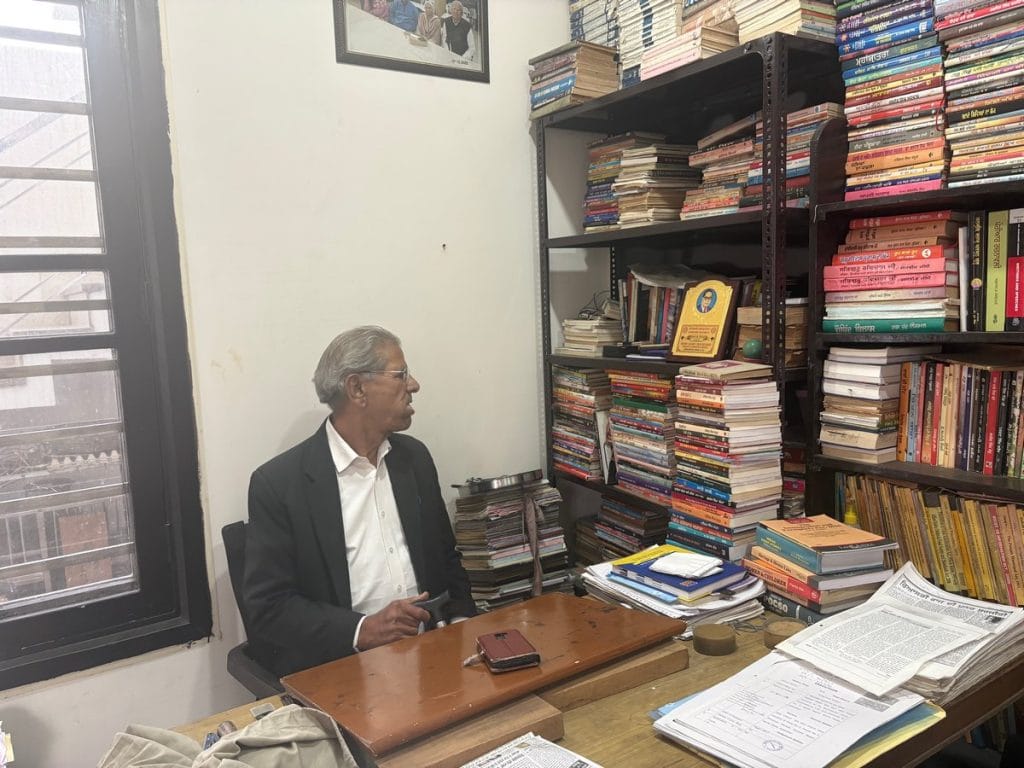
Mohan Lal Phillauria’s job in the Union Bank of India took him across the country — Banaras, Lucknow, Jabalpur, Bombay, Delhi, Bhopal, Chandigarh. Yet even before he stepped into an office, he was already known by his caste, his background, his place in a hierarchy that preceded introductions.
“Mere pahunchne se pehle meri identity pahunch jaati thi offices mein (My identity would reach those offices before I did),” recounted Phillauria, now in his seventies, sipping chai at his home in Jalandhar.
He has worked as an advocate since retiring and has written five books, but those years at the bank were formative. One of his early stories, Sarkari Vardi, emerged from working there in the early 1990s. As the demand for reservation grew, Dalit employees would gather to discuss delayed promotions and the barriers that held them back.
“Over time, unions formed, and they collectively demanded their rights,” he said. “But as job vacancies became limited, an anti-reservation sentiment began to rise.”
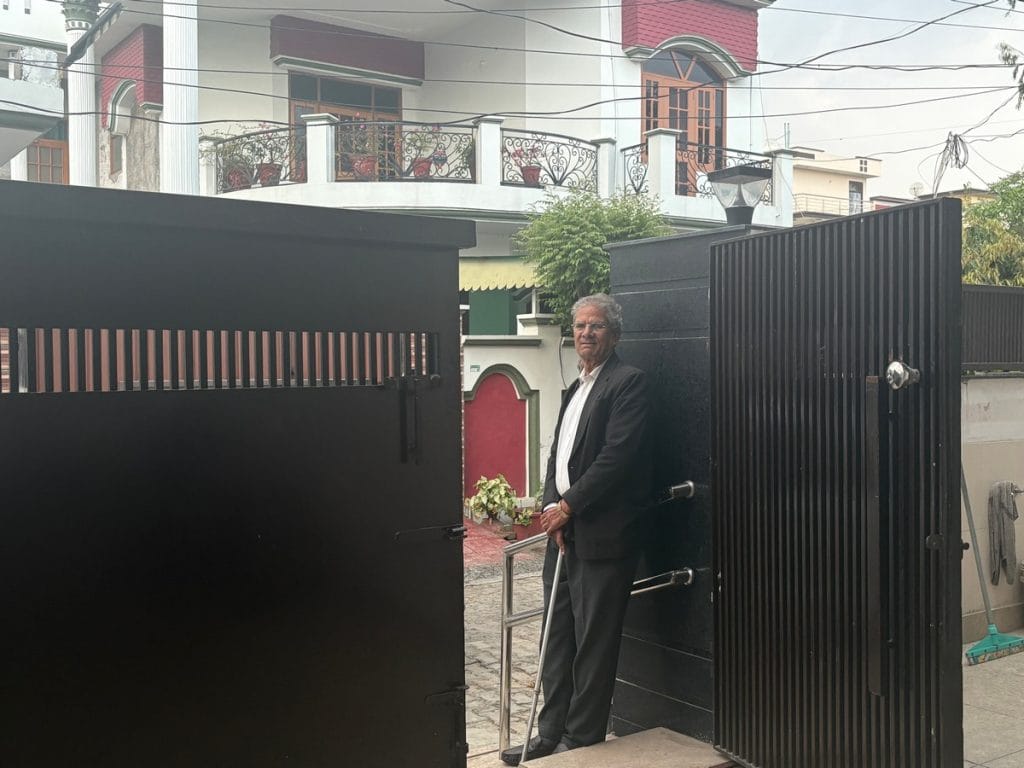
His work draws deeply from this lived experience, especially in Mochi da Put (Son of a Cobbler), which is also included in Gangrene. The story follows a Dalit man with a government job who has ascended the class ladder and lives in a society where few know his background. When his father comes to live with him and begins visiting a cobbler every day, the son urges him to stop, fearing his caste will be revealed. The father then questions him: Why be ashamed of your own history? Later in the story, the son introduces himself openly as a cobbler’s son.
For Phillauria, the story is symbolic of a shift from concealment to assertion.
“A playwright adapted it into a performance around 2000, and soon multiple theatre groups were staging it,” he said.
In recognition of his contribution to Punjabi literature, Phillauria was honoured with the Gurdass Ram Alam Award in 2008 and the Kewal Vig Award in 2019. His other books include Kachche Mans, Laagi, and Mitti ke Bojh.
First we were Shudras, then Achhuts, then Harijans, then Scheduled Castes, and now Dalits. What we will be called next, I don’t know
-Mohan Lal Phillauria, author
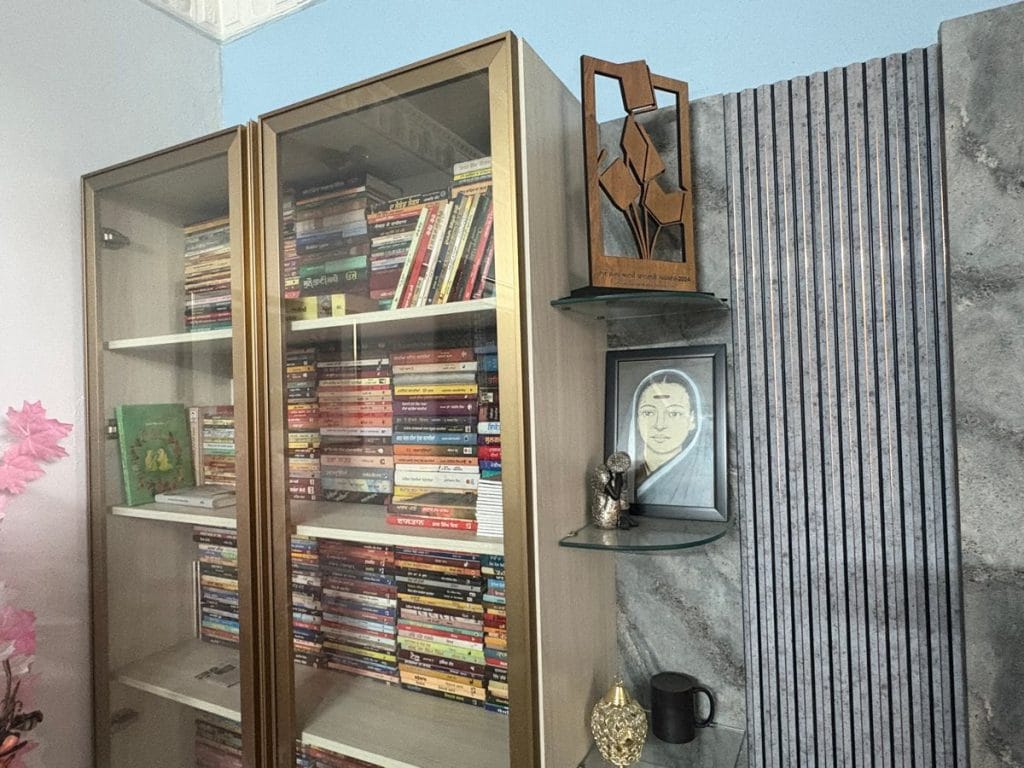
Today, he lives in a small, white villa-like house in Jalandhar with a large garden that he proudly shows his visitors. His personal library is overflowing with books and a tad dusty because he can no longer manage their upkeep fully. Small lizards move among the shelves, but he does not mind their presence. There’s always space for new volumes. His daughter frequently sends him books, the two most recent being Mamta Kaliya’s memoir Jeete Ji Allahabad and Crimson Spring by Navtej Sarna, a novel based on the Jallianwala Bagh massacre.
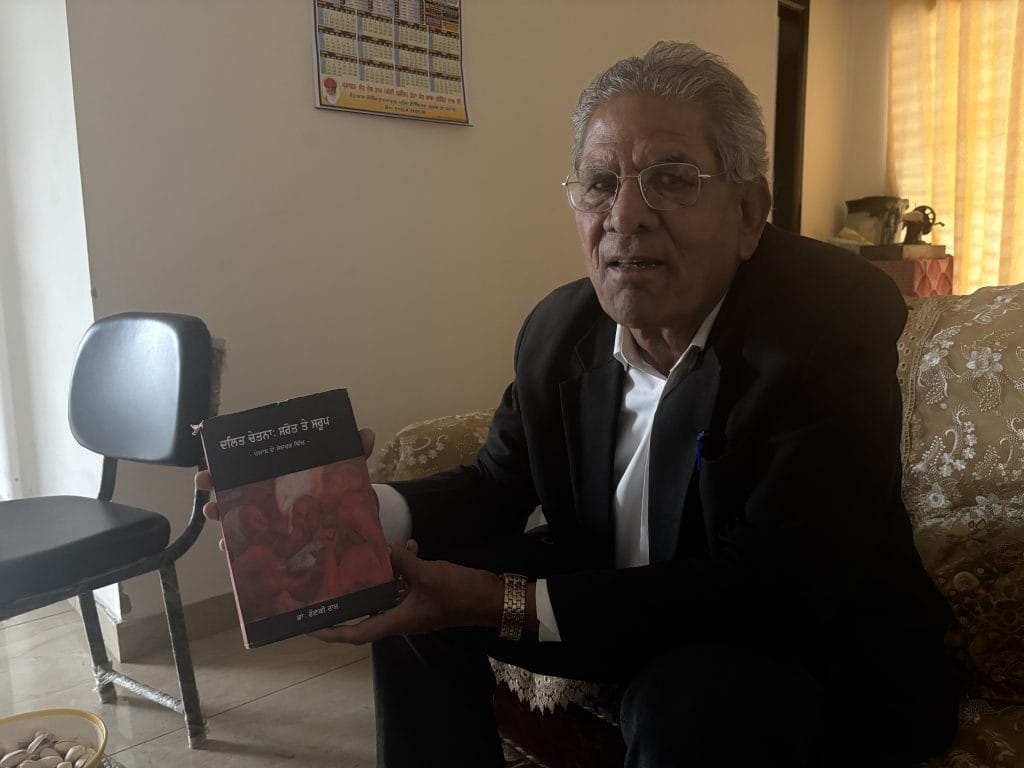
Tucked away in these shelves are books that helped him place his own everyday experiences of exclusion and struggle within the larger story of a community finding its voice—such as Marathi writer Sharankumar Limbale’s autobiographical work, Akkarmashi. The word itself means someone who doesn’t know their own father, or ‘half-caste’. Such works, he said, became foundational to the Dalit literary movement in Punjab too.
“There is no first or last story,” he said.
A land of fluid hierarchies
In the national imagination, the Dalit literary canon is often viewed as an archive of extreme deprivation and fierce resistance, anchored by autobiographical works like Om Prakash Valmiki’s Joothan, Laxman Gaikwad’s Uchalya, and Sharankumar Limbale’s Akkarmashi.
In contrast, as Rasulpuri pointed out in a 2009 essay, Punjabi Dalit literature largely eschewed the “sharp manner and rebellious nature” of its Marathi and Hindi counterparts and focused more on the “fine layers”. It was only after the 1980s, he argued, that Dalit literature “came to Punjabi through Hindi… in a big way.”
But caste itself evolved differently in Punjab.
Unlike much of India, social hierarchies in Punjab never hardened into a rigid varna system. Its position as a northwestern gateway kept it open to traders, invaders, and Sufi mystics, creating a “free-floating” environment where no single system could dominate.
“Punjab Dalit writings emerged from a more open and fluid social landscape, which was nuanced, layered, and complex,” said Rajkumar Hans.
The Sikh tradition played a central role in this openness. Guru Nanak and the other Gurus promoted a Nirguni philosophy — where God was formless, without qualities — and the rejection of caste ego. Even Gurus from Kshatriya backgrounds actively challenged hierarchical structures, while the institutionalisation of Sikh education and texts like the Adi Granth democratised knowledge.
“The formation of the Khalsa under Guru Gobind Singh further reinforced equality, with all initiates taking the surname Singh, erasing caste distinctions,” said Hans. “These social revolutions opened doors for education and mobility, laying the groundwork for Punjabi Dalit intellectuals.”
Punjab Dalit writings emerged from a more open and fluid social landscape, which was nuanced, layered, and complex
-Rajkumar Hans, historian
Yet, this fluidity had a ceiling. The Jatts, historically a peasant group, became the dominant land-owning class, while those from the lower castes remained landless farm labourers or were categorised by ancestral professions — such as the Chuhra/Mazhabi (sweepers) and Ramdasia/Ravidasia (leather workers).
By the 1920s, this divide sparked the Ad Dharm movement. Led by Manguram Mugowalia, who returned from the revolutionary Ghadar Party in the US, the movement rejected the idea of being on the margins of someone else’s religion. Mugowalia argued that Dalits were the Ad (original) inhabitants of the land, independent of Hindu, Sikh, or Islamic hierarchies. In the 1931 Census, nearly half a million of these oppressed castes had registered as Ad Dharmis. Embracing Ambedkarite ideas, they mobilised politically and contested provincial elections.
This was the zeitgeist that Ambedkar entered when he visited Punjab after resigning as law minister in 1951, delivering speeches and engaging with people.
“These visits left a lasting impression. Punjab, along with Bengal and Kerala, was seen as relatively more politically awakened during that time,” said Phillauria.
This awakening, he added, filtered into literature as well. Dalits began to assert their right to tell their own stories, in their own voices. In this era, a leading light was Sujan Singh, whose short story collections, such as Sabh Rang (1949) and Narkaan Ka Devta (1951) focused on the plight of the oppressed castes of Punjab.
Later political movements, such as Kanshi Ram’s in Uttar Pradesh further solidified a sense of identity among Dalits in Punjab. Meanwhile, Phillauria said, many Punjabis travelled abroad — to England, America, and the Middle East — and brought back new perspectives that gradually began to influence social structures back home.
“First we were Shudras, then Achhuts, then Harijans, then Scheduled Castes, and now Dalits. What we will be called next, I don’t know,” said Phillauria.
But language barriers restricted the reach of Punjabi literature, and the influential Progressive Writers’ Association steered North India’s literary terrain toward a leftist framework well into the 1970s. This ideology prioritised class over caste, often dismissing specific caste struggles as secondary to the economic revolution.
“Left influence emerged here through the Communist Party, especially from places like West Bengal. Following Russian philosophical thought, they argued that only class matters, not caste. But here, the reality is different — caste remains central. No matter how much you analyse society through class, caste keeps reappearing within it,” said Phillauria.
Voices in the margins
Jasvir Begampuri, 58, has been running a bookshop full of Punjabi literature in his village Begampur since 2001. Despite its richness, Dalit fiction is not a hot seller, according to him.
“When it comes to Dalit literature, fiction doesn’t sell as much,” he said. “What sells more are autobiographies and writings by major figures like Dr Ambedkar, Jyotiba Phule, and others. Readers are more interested in their original writings and life stories,” said Begampuri, an avid reader himself.
Fictional works only seem to break through when tethered to historical reality, such as Balbir Madhopuri’s novel Mitti Bol Paye, based on the life of Mangoo Ram. Beyond such exceptions, the demand is almost exclusively for foundational texts such as Annihilation of Caste or Waiting for a Visa.
Through Gangrene, Akshaya Kumar and Navdeep Singh hope to narrow this gap and give fiction its due.
“We wanted to translate the works of Punjabi Dalit writers and bring them to a national audience through a publisher with a wide reach. Even within the Punjabi Dalit literary landscape, these stories often struggle to find space. Yet the body of work is rich and robust, deserving a wider audience,” said Kumar.
Even the autobiography section of bookstores is thin on Punjabi Dalit works. Kumar estimated there were fewer than a dozen, and none written by a Dalit woman. He also noted that while progressive writers have long dominated the literary scene in Punjab, they’ve often resisted granting Dalit writing a separate identity, preferring to subsume it under a “unified” tradition.
This has meant that fiction documenting the changing forms of caste oppression has struggled for visibility — including newer writing set in cities, where caste was supposed to dissolve but hasn’t.
“Early Punjabi Dalit stories were often rooted in rural life, focusing on village realities and agrarian struggles. But newer writers are exploring urban experiences like factory work, migration, and life in cities,” he said.
Also Read: India’s teens are reading Young Adult fiction. They don’t want myth & morality lessons
In parts of India, a Dalit man riding on a horse at his wedding or merely asking for his wages can be an act fraught with danger. But in Punjab, caste is more cloaked, as is the violence around it.
“In Punjab, surnames are often shared across caste lines. A name like ‘Siddhu’, for instance, may belong to both dominant castes and Dalit communities. This creates a kind of ambiguity—one cannot immediately identify someone’s caste,” said Kumar.
It looks egalitarian on the surface, but underneath, the hierarchy holds firm. Within Sikhism, separate gurdwaras often exist for different communities and even conversion isn’t a reliable exit.
“Conversion to Christianity or Islam doesn’t necessarily dissolve caste identity. Instead, it often survives in new forms, carried into new religious contexts,” said Kumar.
These realities of caste seeping into everyday life, including faith and love, are the lifeblood of Punjabi Dalit fiction.
In ‘Gangrene’ by Attarjit, Jagtar Master, a schoolteacher, accuses Paramjit, the woman he loves, of disloyalty — only to realise that caste and family pressure forced her hand. As his world unravels, he confronts the hypocrisy around him and the hollow ring of sacred teachings such as ek pita ekas ke ham barik (we are children of one father) and rana rank barabari (the king and beggar are equal).
He then begins to reject everything he once believed in and removes the symbols of his faith. He is ostracised, labelled mad, and eventually suspended from his job.
In the final scene, Jagtar watches lizards circle a lamp, waiting for a moth. He throws a stick at the lizards and they disappear into a hole in the ceiling, but not before one’s tail falls off. Then he sees ants dragging away the tail, and something clicks.
“Paramjit was not unfaithful… it was this gangrene that has forced her to do what she did. The gangrene, the moth and the lizard…” he keeps repeating. The gangrene of the title is not a disease of the body but the rot within a society that claims to be equal.
(Edited by Asavari Singh)