





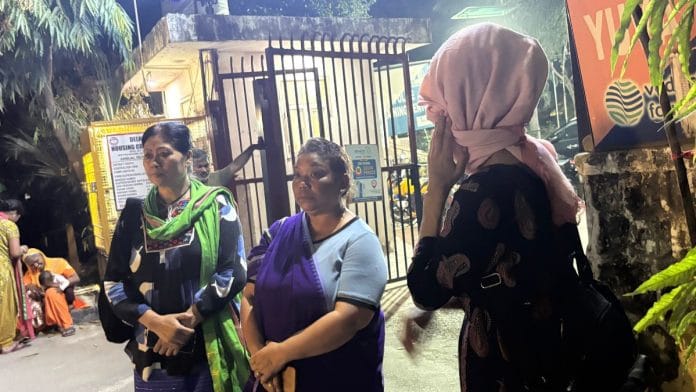



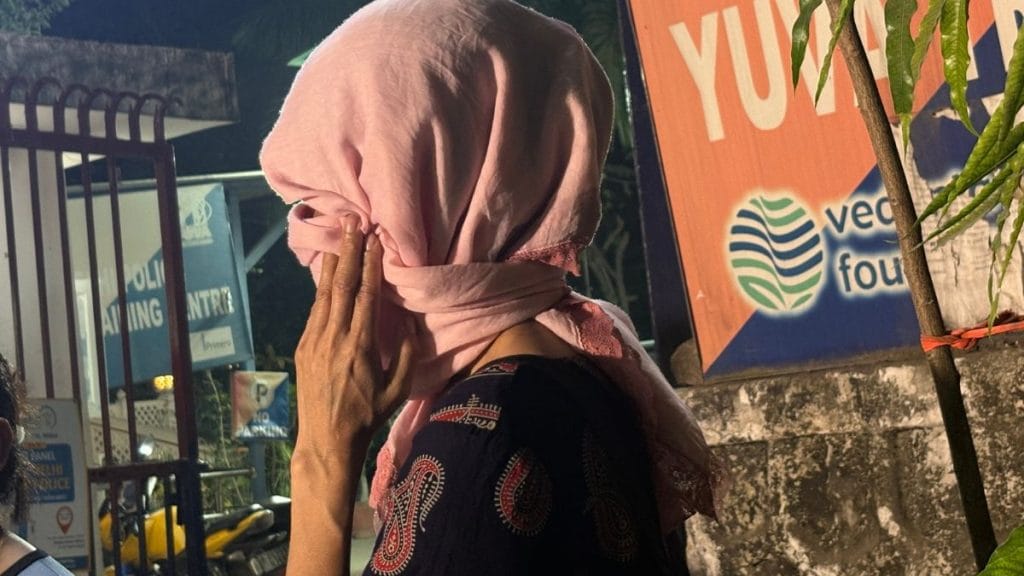
New Delhi: A woman stood wearily outside Malviya Nagar police station on Sunday afternoon, her face covered with a pink dupatta, trying to shield herself from cameras. The stitches behind her ears were still fresh. A day earlier, an evening walk in a nearby park with a transwoman friend turned violent for the 37-year-old lawyer from Manipur when a group of teenage boys racially abused and attacked her with a knife — the latest in a series of incidents that people from the Northeast say reflect how quickly everyday prejudice in the national capital can turn into open hostility.
“We are Indians too, so why are we being discriminated against?” said the victim’s friend, 50-year-old Sangeeta Keisam, who accompanied her. “We are now living in fear.”
The attack comes at a time when several recent incidents in south Delhi have once again pushed the question of racism against people from the Northeast into the public view. Just three weeks earlier, three women from Arunachal Pradesh accused a neighbour in the same Malviya Nagar area of abusing them with racial slurs; a video of the confrontation that circulated widely on social media showed the woman falsely alleging that they ran a “massage parlour” at home.
For many Northeastern migrants in Delhi — students, professionals and service industry workers — such hostility is rarely sudden. It often builds through everyday remarks about appearance, food, and culture before spilling into open confrontation. From everyday profiling to suspicions from neighbours and landlords — Northeasterners have a tough time navigating the national capital.
What unfolded in the Malviya Nagar park was another moment when those simmering tensions became visible — bringing back echoes of earlier incidents of fatal violence against people from the Northeast, including the 2014 killing of Nido Tania, a 19-year-old from Arunachal Pradesh who was beaten to death in Lajpat Nagar after being mocked for his hairstyle, and the 2025 attack on Anjel Chakma, a 24-year-old student from Tripura who died 17 days after he was assaulted in December in Dehradun.
Lawyer Upasana Goyal, who is assisting the victim in the case, said the incident reflects a deeper social failure.
“Both victims are from Manipur, a region that has already faced severe conflict and instability,” Upasana said. “They came to the capital in search of safety and opportunity. Yet even here, they were not protected.”
A walk gone awry
Just a few metres from the police station, the three women finally sat at a cafe, sipping tea and catching their breath after nearly 24 hours of back and forth with cops, hospitals and the court.
Not having the strength to speak, the victim asked her friend, Keisam, to narrate the incident.
Around 5:30pm on Saturday, the lawyer and her transwoman friend, 39, had gone to the nearby Satpula Park for what was meant to be a short walk. They planned to take photographs of flowers and spend some time together after work. Instead, they say they were surrounded by a group of boys.
“Five or six boys started teasing them about their appearance using racial slurs,” Keisam recounted. “They were around fifteen or sixteen.”
At first, the remarks came from a distance. Soon, the boys began following them.
“They used extremely vulgar language, including sexual and transphobic slurs,” Keisam said. According to the complainants, the situation turned violent the moment the women confronted the boys.
“When she asked them why they were speaking like that, the boys became even more aggressive,” Keisam said. “Their ego was hurt. How could someone from the Northeast and a transwoman ask them to behave?”
What began as taunts quickly turned violent.
One of the boys suddenly punched the lawyer in the mouth. When her friend tried to intervene, the group turned on both of them.
Then, Keisam said, one of the boys pulled out a knife. Frightened, the two women tried to run. But the boys chased them down.
During the attack, the lawyer suffered a deep cut behind her ear. Another boy allegedly removed his belt, fitted with sharp metal edges, and repeatedly struck her from behind.
The two women eventually managed to escape and went to the nearby Madan Mohan Malviya Hospital. Doctors recorded a laceration behind the lawyer’s ear and an abrasion on her chin. She received four stitches. Her friend escaped with minor injuries.
Delhi Police detained four juveniles aged between 15 and 16 in connection with the case on Sunday. An FIR has been registered under multiple sections of the Bharatiya Nyaya Sanhita.
Conrad K Sangma, the Chief Minister of Meghalaya, also expressed anger over the attack.
“Angered by the repeated attacks on North East people in mainland India. The physical attack on two of our people from Manipur and Assam near Saket Court, Delhi, is sickening. Racial bullying should not be accepted as the new normal, and we must act against it,” he wrote on X (formerly Twitter).
Angered by the repeated attacks on North East people in Mainland India. The physical attack on two of our people from Manipur and Assam near Saket Court, Delhi is sickening. Racial bullying should not be accepted as the new normal and we must act against it. Urge the authorities…
— Conrad K Sangma (@SangmaConrad) March 9, 2026
“Chinese” “Nepali”
Sophie, a masseuse, says casual remarks and seemingly innocuous questions from clients about her food habits and religion remain routine, even 20 years after she moved from Nagaland.
“This has always been the situation,” the 50-year-old said. She recalled how quickly casual encounters can turn uncomfortable.
“If I refuse to give money to someone begging, they call me ‘Nepali’. These are all kids. Where are they learning this from?” she said.
For many Northeasterners living in metro cities, such remarks are routine. Slurs like “Chinese” and “momo” are often thrown around casually — reminders, they say, that their appearance alone is enough for strangers to treat them as foreigners in their own country.
The recent incidents have only sharpened that sense of vulnerability, particularly for those who face added prejudice.
Holly, a transwoman and social activist from Manipur, spoke about the stereotypes that single women from the Northeast, especially transwomen, often face. Many people assume that women living independently must be involved in sex work. Such stereotypes, she added, are not formed in isolation.
“Northeastern women and transpeople are frequently objectified and treated as if they are sexually available. These ideas are not created by young boys on their own—they come from the social environment, from the language and attitudes they see and hear every day,” she said.
Holly currently lives in Malviya Nagar. As news of the Manipur lawyer’s assault spread, her friends suggested she move to a ‘safer’ neighbourhood like Safdarjung, where many Northeastern residents live and have a strong community. But she believes creating such pockets is not a solution.
“Safety should not mean being confined to certain areas,” she said. Living away from home, Holly added, requires constant adjustment.
“You have to navigate social situations carefully, build relationships, and find ways to coexist with people who may see the world very differently from you,” she said.
According to NSSO and Census data, hordes of young people from the Northeast move to cities like Delhi, Bengaluru, Mumbai, and Chennai every year. Many work in hospitality, aviation, healthcare, retail, and beauty services. Others move for higher education and professional courses.
Cities promise aspiration, independence, and exposure. But even positions of authority do not always shield Northeastern migrants from prejudice.
IPS officer Robin Hibu, attending an event at the Arunachal Bhawan this week, said that he too has faced racism despite his stature.
“People used to make fun of my food,” he said. “But the more you tolerate it silently, the more it will continue. Don’t fight unnecessarily and always respond with patience and kindness.”
Also Read: ‘We are not Chinese’—Northeast students protest against killing of Anjel Chakma in Delhi
‘Cannot pay rent’
For singer John Oinam, 32, who moved to Delhi from Manipur, discrimination often appeared in quieter ways, until it was right in his face.
“Comments about small eyes, height, or appearance in workplaces are unfortunately common,” he said. “They are rarely treated as something serious.”
Housing, he said, is where the prejudice becomes most visible.
About six months ago, John was searching for a rented flat in Malviya Nagar and found a two-bedroom apartment through a broker. The meeting with the landlord quickly became uncomfortable.
“The landlord asked whether I eat beef, if I was married and how many people would be living with me,” John said. “I answered everything honestly.”
Then, to his shock, the landlord visited John’s current residence and enquired about him in the area. Despite all the checks, he eventually told the broker he did not think John could afford the rent.
To test the claim, John offered to pay six months’ rent in advance.
The landlord agreed but demanded another six months’ rent before the first six months ended. John got the hint and didn’t move houses.
“Landlords say things like, ‘People from your community have never lived here before,’” he said. “Even the language they use — ‘your people’ — shows they see us as outsiders.”
John often gets mistaken for a foreigner and gets unsavoury questions in public: “How do you say this in Japanese?”
‘No one helped’
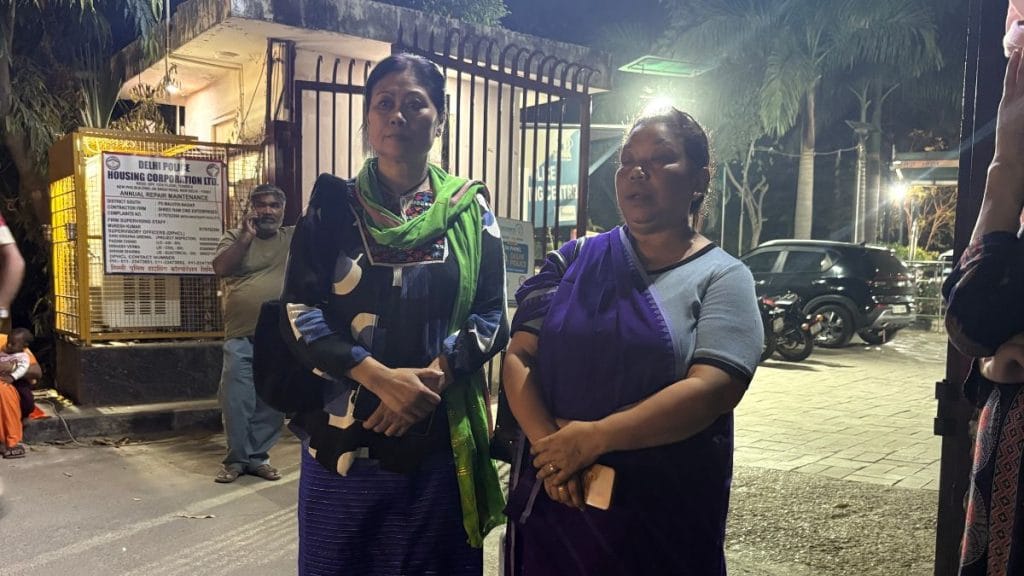
As the women finished their tea outside the police station, the victim slowly pulled the dupatta back over her face before stepping out again. Her lawyer Upasana and Keisham flank her.
Just three days before the attack, the victim was asked by ThePrint about discrimination she had faced in Delhi. She had not — “nothing noteworthy,” she had then said. Three days later, she was filing an assault complaint.
For Upasana and Keisham the shock has not settled in.
“No one goes to a park thinking they would be attacked. I saw those boys for the first time that day. How could they attack someone in broad daylight?” Upasana said.
What made the situation worse, they said, was that no one intervened, no one helped.
“Around 40 people were present in the park but no one helped,” Keisam said. “Everyone just watched, some even laughed.”
(Edited by Stela Dey)
For a change, why doesn’t ThePrint report on the casual racism, everyday profiling, violence and bigotry faced by non-tribals residing in north-eastern states?
Why is it not ‘cool’ to report on the xenophobic attitudes of the natives of north-eastern states and the repeated bouts of violence targeted at non-tribals?
I might be called bias but seriously dude, Delhi you have always been disgusting to me. Is there anything positive which comes from this city ? It’s filled with uncivilized idiots who act like pigs or filled with champagne socialists who live in their own echo chambers both of which annoy me.
It’s not just about attacks on north eastern folks but so many other issues which has never made me feel like Delhi is a good city. Obviously there are really nice folks but it’s also a fact that per capita there are more uncivilized people in Delhi than in other major city.