





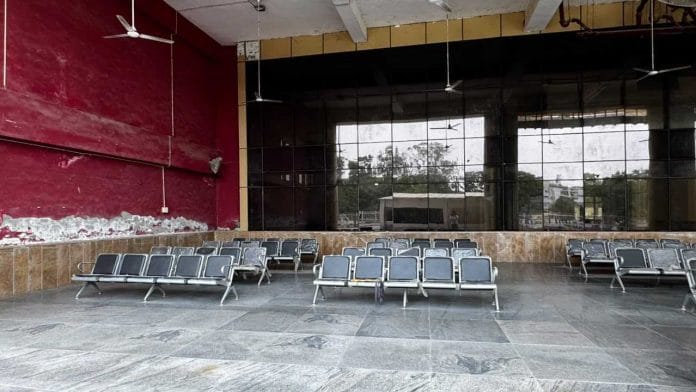


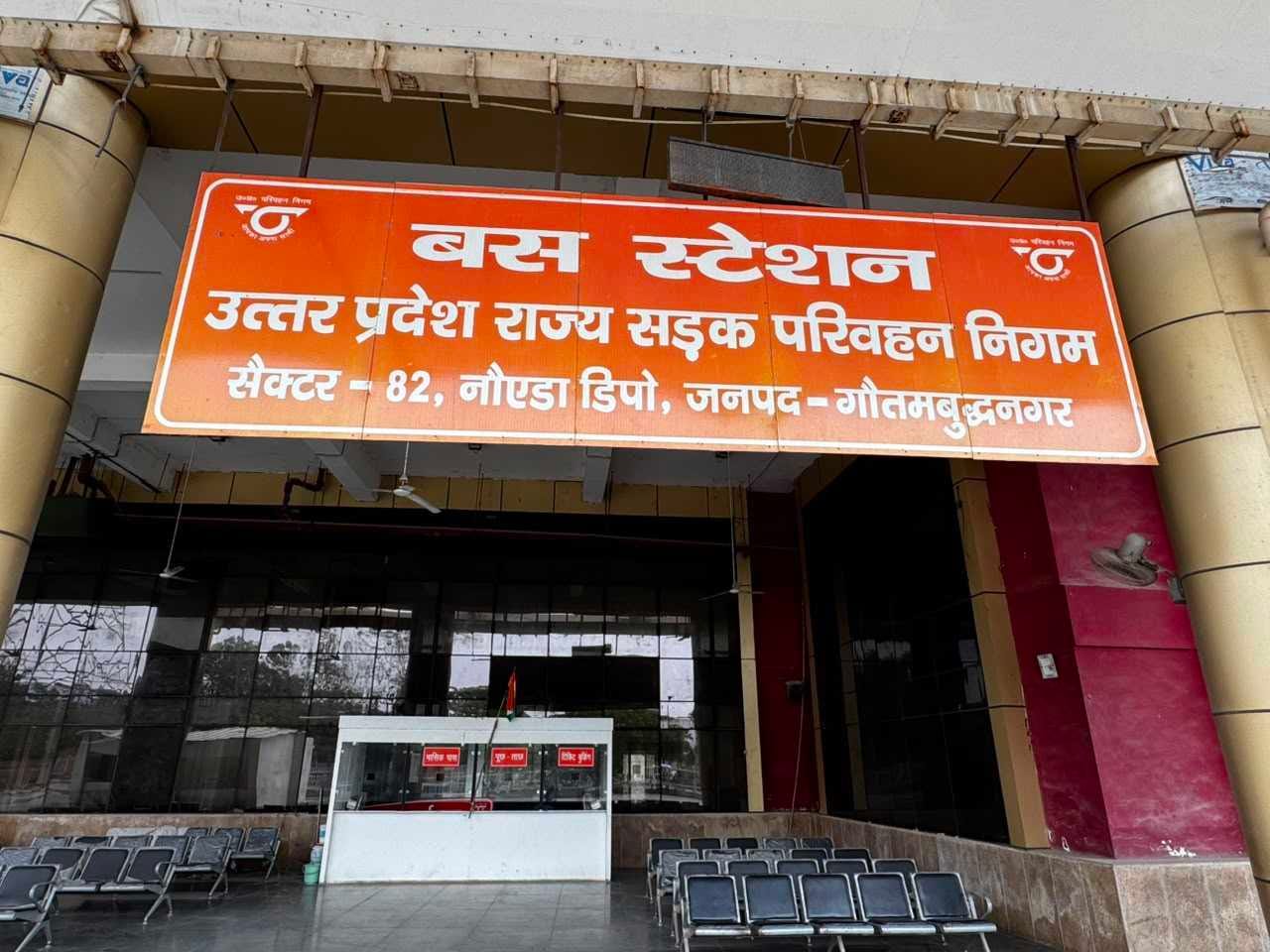
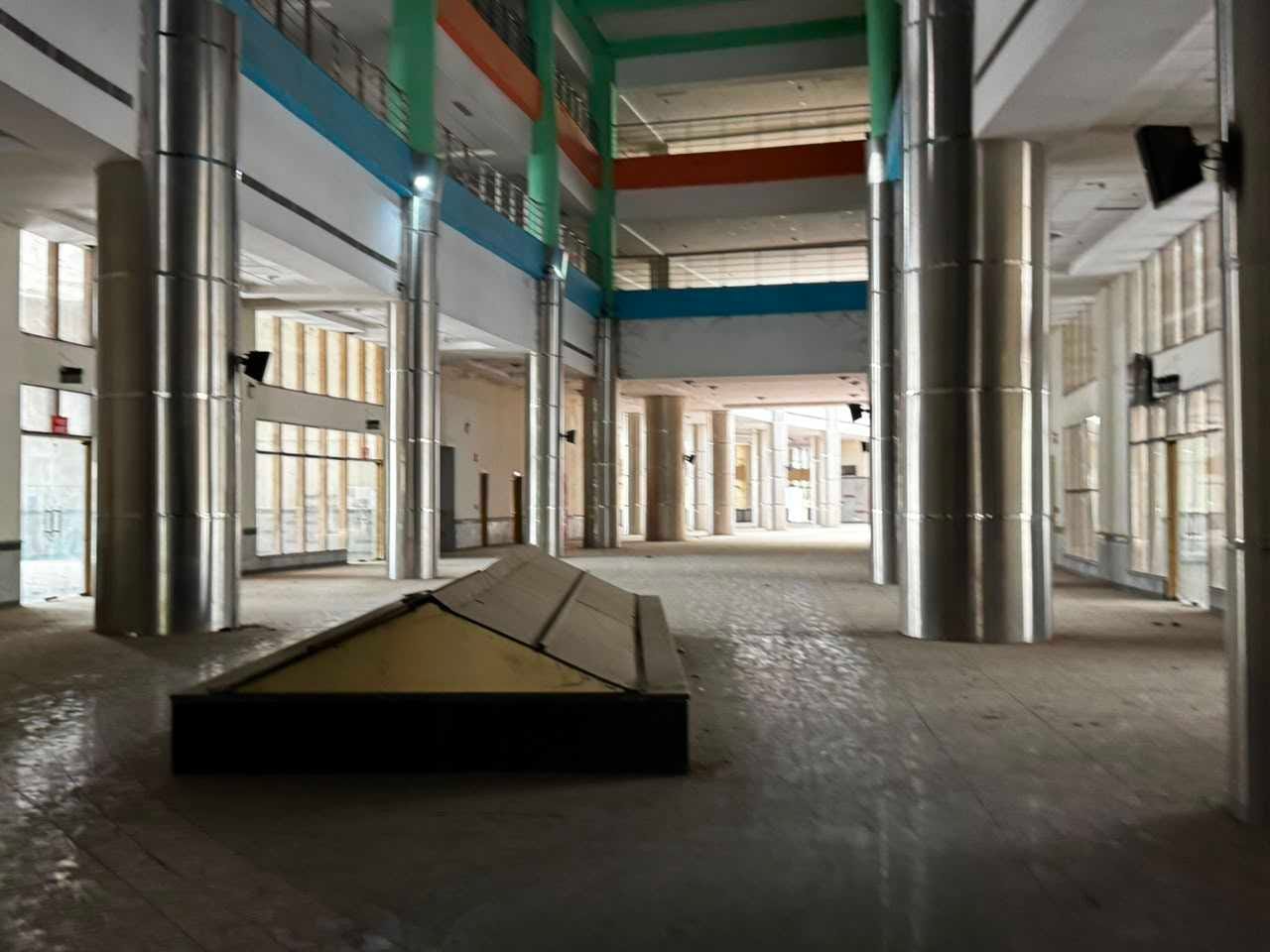
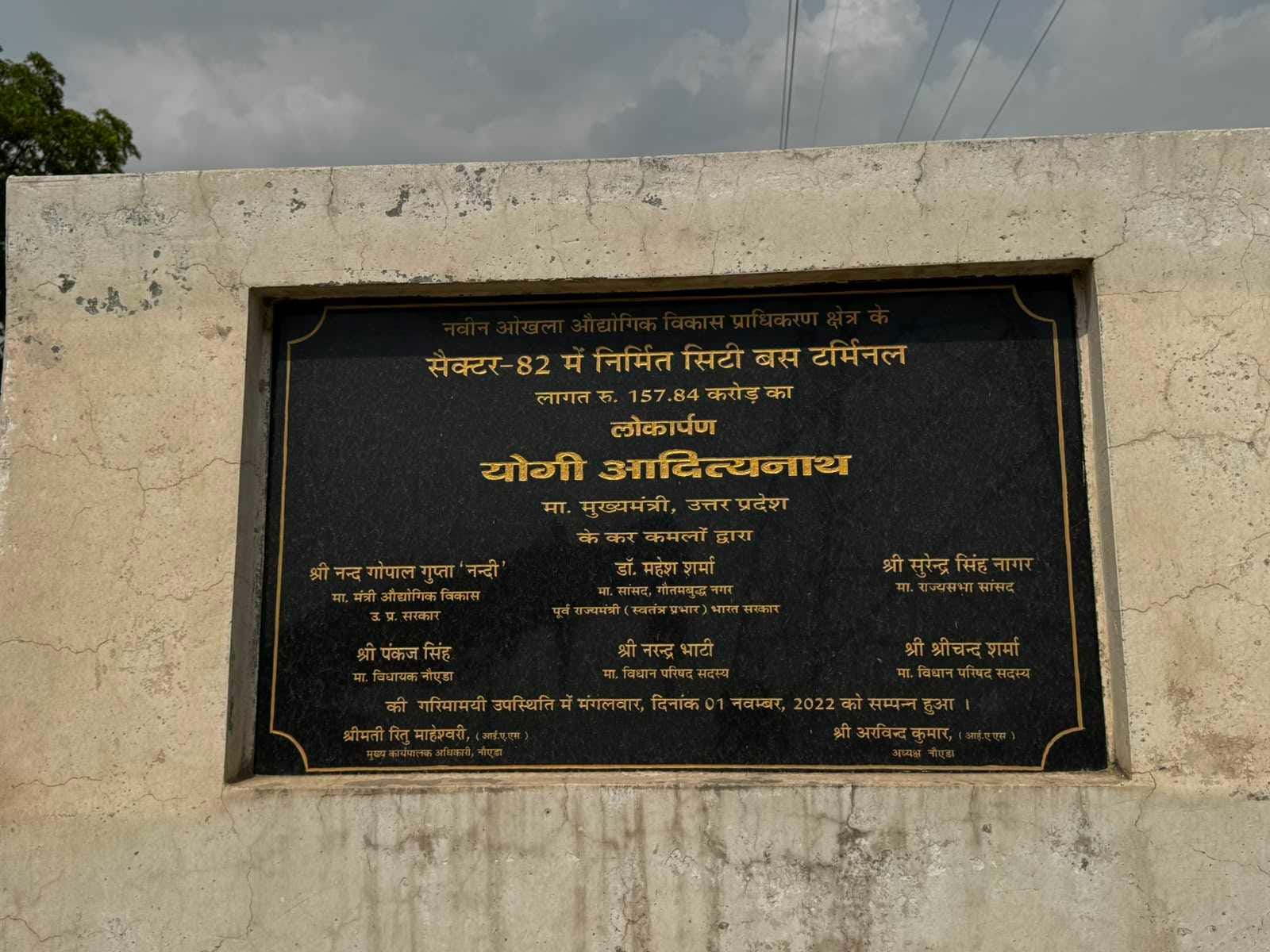
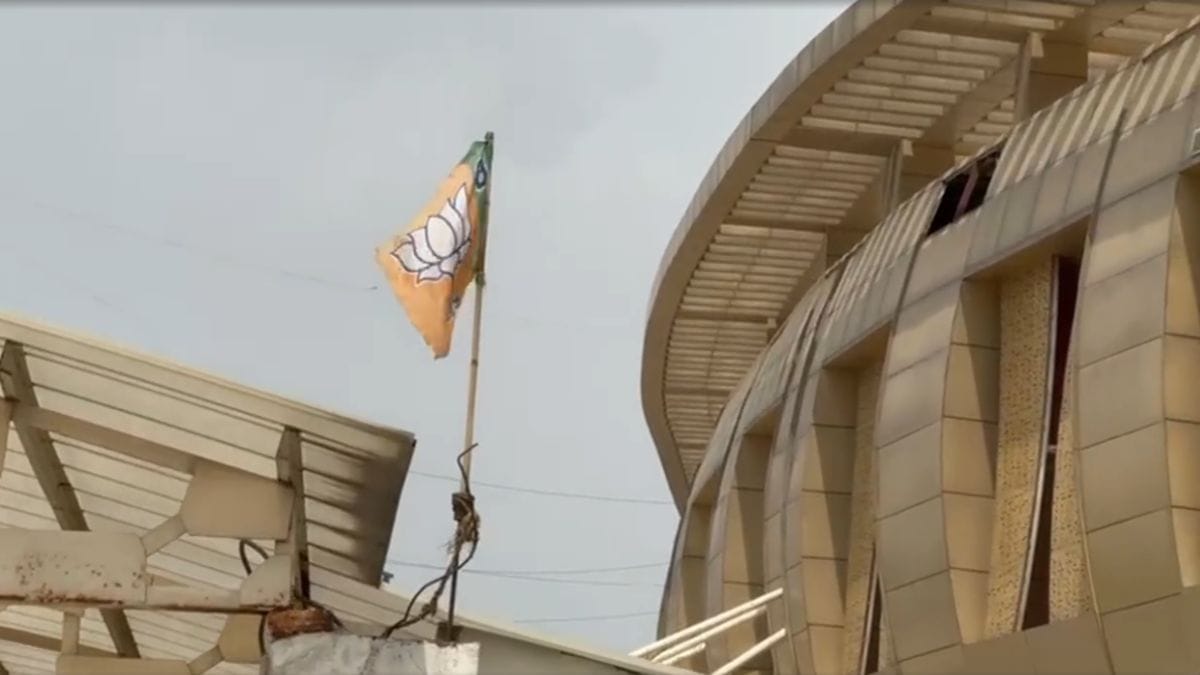
New Delhi: A small BJP flag, its colours faded, flutters at Noida’s Sector 82 City Bus Terminal, where the grand promise of the Rs 158 crore transport hub has faded just as noticeably. At the entrance, a stone plaque bearing Uttar Pradesh chief minister Yogi Adityanath’s name marks the project’s inauguration on 1 November 2022. Inside, the empty bus bays draped in spider webs, peeling walls, shuttered commercial spaces, and echoing corridors give the sprawling eight-storey structure the feel of a ghost town.
“Barely four buses come to this terminal now. Earlier, there were around 10 or 11, but even that was nowhere close to what this bus terminal was built for,” said 58-year-old Ram Kishore Saxena, who has worked at the terminal as an operator since its inception.
Over the years, the New Okhla Industrial Development Authority has struggled to justify the terminal’s existence. It was conceived as an ambitious project under the Yogi government to transform Noida into a major regional transit hub that would redefine the city’s connectivity—much like the Jewar airport.
The terminal is not just a bus station that didn’t take off. It is symbolic of an urban infrastructure model where grand construction is prioritised over actual planning and use.
Ayush Raj Singh, an urban planner from Noida, said that the problem begins at the planning stage.
“Demand assessments are often based on studies that become outdated by the time a project is approved, tendered, and built. Infrastructure projects can take 5 to 10 years to complete, and in that period, the original transport demand is often met through other means, making the project less relevant,” Singh said.
By the time a project is built, the demand has already changed, making the infrastructure less relevant.
“Implementation remains the real challenge. Demand is identified, DPRs prepared, tenders floated, and infrastructure built—but this typically takes five to eight years once land acquisition, financing, and construction delays are factored in. By the time a project is operational, the mobility landscape it was designed for has often already shifted,” Singh added.
When the terminal was inaugurated in November 2022, CM Yogi Adityanath hailed it as a “gift for the public” in an official statement.
“The people of all three assembly constituencies (Noida, Dadri and Jewar) in Gautam Buddh Nagar had elected BJP MLAs in the last election. These project inaugurations are a gift for the public,” Adityanath said in Hindi.
For years, officials have cycled through one proposal after another in an attempt to pump life into the deserted complex. Last year, an English daily captured the helplessness of authorities in giving the terminal a new identity.
“Bus terminal fails, Noida to try luck with wedding hall,” read the headline in The Times of India.
Various plans have surfaced to convert parts of the complex into a wedding venue, lease out the space to startups, or develop it into commercial facilities. The terminal has been trying to find its purpose.
Now, a new plan has been proposed that would keep the identity intact—not as a major bus terminal but as an e-bus terminal for the Jewar airport.
Speaking to ThePrint, a senior official from the Authority said the terminal could finally see a revival, with around 100 electric buses expected to operate from the facility. But that is only part of the plan.
“Along with operating around 100 e-buses, including services connecting passengers to Jewar airport, we are planning to convert the upper floors into corporate office spaces and make the building functional. It will be a multipurpose facility—it will retain its primary identity as a bus terminal while also serving as a commercial hub,” the senior official said.
A lonely wait
Every morning at 6, Saxena unlocks the cavernous building, sits in a worn-out cabin with a small table fan mounted on the wall, and waits to record the arrival and departure of the handful of buses that trickle in.
In between, he walks over to the two security guards posted at the entrance for a glass of water. With no running water and the toilets lying defunct inside the terminal, Saxena says that his biggest prayer each day is that he doesn’t have to use the washroom.
“I keep a water bottle, but once it’s empty, I go to security guards and ask them for water. The toilets stink and are lying defunct because hardly anyone comes here. And who cares for a bus operator or two security guards?” he asked. “Anyway, I am nearing my retirement age. I will be out in a year or two.”
Saxena worked at the bus terminal in Sector 35. When he was transferred to the new terminal, pegged as an ambitious project, he was elated. He thought he had been chosen for his hard work. That night, he says, he slept easy and proud.
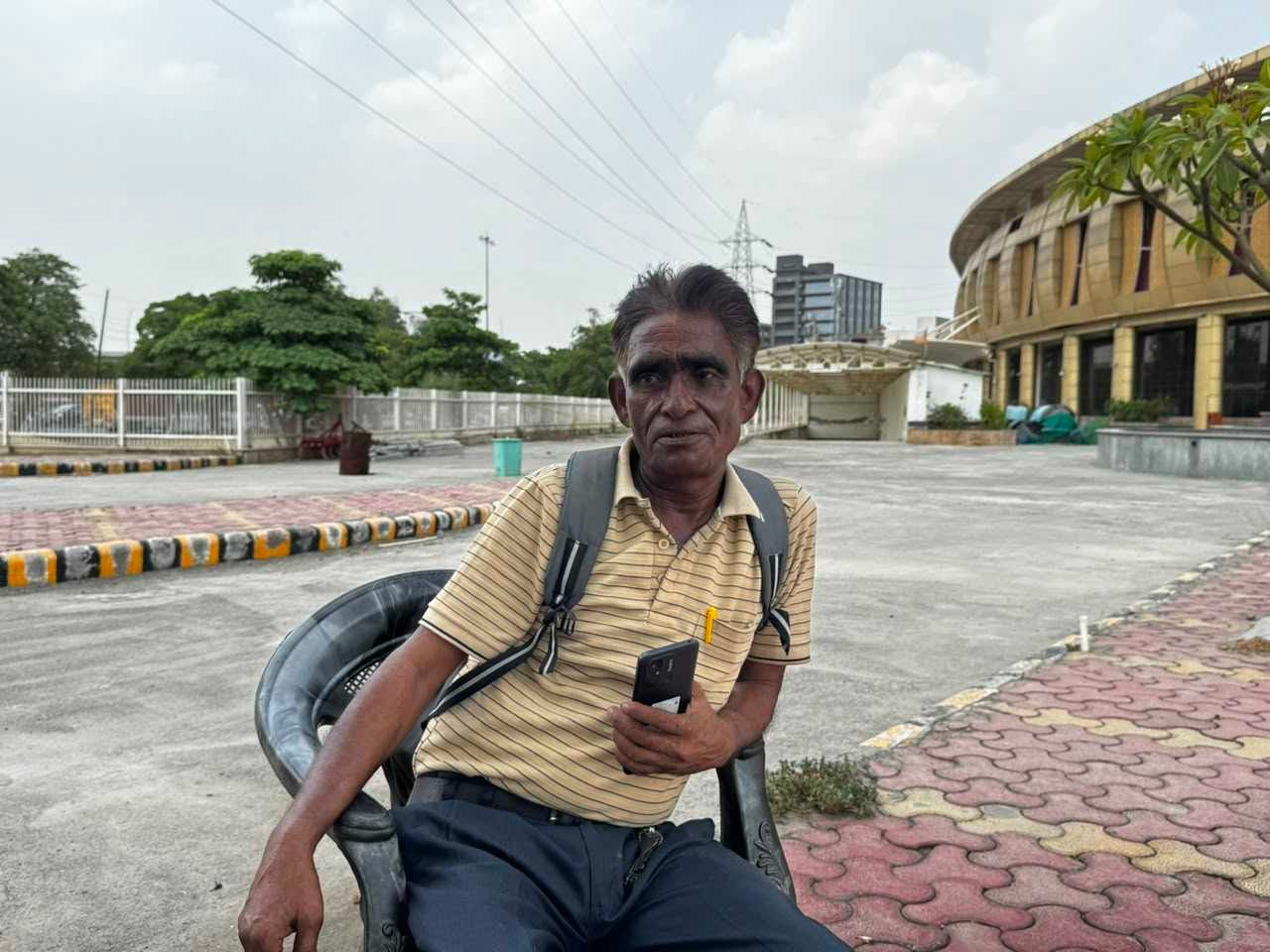
“Yogiji had inaugurated this terminal, and I was chosen to work as an operator here. It was a proud moment for me,” he recalled with a smile. But now, that pride has been replaced by disappointment.
IAS Ritu Maheshwari was the CEO of Noida Development Authority during the launch of the terminal.
‘Soon to be Noida’s biggest transport hub’
The idea of the bus terminal was conceived on the request of Uttar Pradesh State Road Transport (UPSRTC) in 2015. It was envisaged as a major bus hub that would not only cater to local buses but also inter-city bus services.
Noida already had a bus terminal in Sector 35, but the ambitious new terminal in Sector 82 was supposed to be laced with new facilities such as Yatri Niwas and commercial spaces.
“The plan was for the ground floor to function as the bus terminal, the third floor as the Yatri Niwas, and the other upper floors were supposed to house commercial establishments and office spaces,” said a senior official who has been overseeing the terminal since 2022.
However, by the time the Authority took over the bus terminal, they say the UPSRTC informed it that they didn’t see enough passenger demand to operate services from the terminal.
“After repeated requests and a lot of pressure, we were able to get four buses to operate from there,” said the official.
The authority is now pinning hope on the fresh revival. A month ago, after the conversations around the deserted bus terminal resurfaced, the official said that the Uttar Pradesh government approved around 110 electric buses for UPSRTC that would operate from the Sector 82 terminal. The services will connect to the upcoming Jewar airport as well as to other cities.
“The Cabinet approval came around a month ago. We expect operations to begin in the next two to three months. The tenders have been floated. We are actively pushing for it,” the official said.
They added that once the new buses begin operating from the terminal, the authority will move ahead with leasing its commercial spaces. Inspections of the building will begin shortly to identify repair work and structural damage, after which the Authority will clean up the premises.
“We have clear instructions from the higher authorities to make the terminal fully functional within the next two to three months,” the official said. “Once operational, it will be Noida’s biggest transport hub.”
For Saxena, the bus terminal will not lose its original identity.
“It was inaugurated by Yogi baba. Can you see the name on the stone plaque?” he asked, pointing at the entrance. “Come what may, Yogi baba will make sure that buses run here.”
(Edited by Prasanna Bachchhav)
Many Indian cities have such failed projects.