





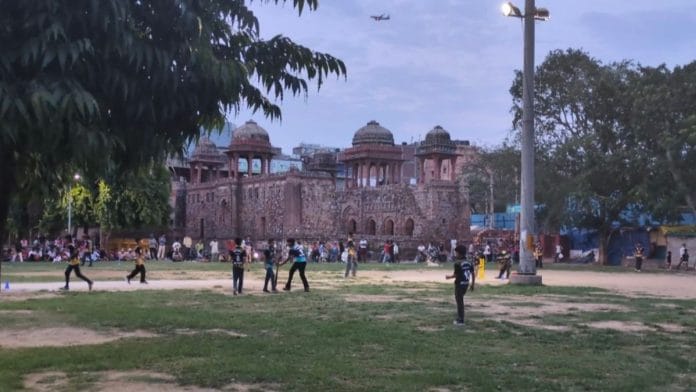


New Delhi: As the sun begins to set over Delhi’s oldest city Mehrauli, the ground tucked in between the iconic Hauz-e-Shamsi and Jahaz Mahal transforms into a cricket field like no other. And it stirs Mehrauli into something grander than it is. Every summer, local teams of under-16 boys gather to compete in the Mehrauli Premier League, the one tournament that briefly elevates the lives of cricket fans of the congested neighbourhood with choked drains, overhanging cable wires and blaring loudspeakers.
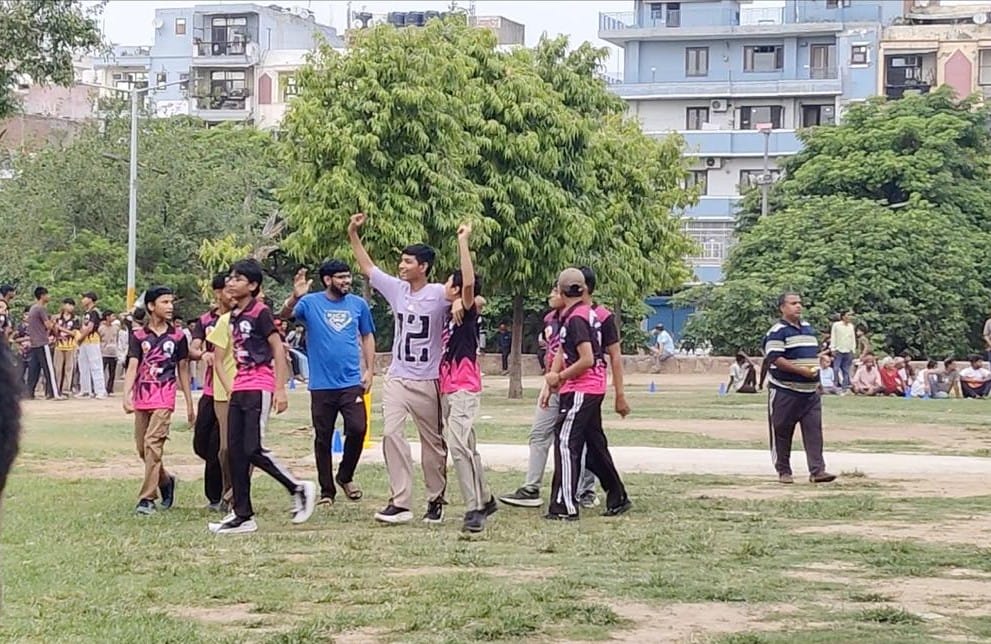
A match between Mehrauli Splendours and Mehrauli Kings reached the last over, with players of another team, Aulija Masjid Hunks, cheering from the sideline. As the vice-captain of Mehrauli Kings, Mohammad Talib, sealed the victory by taking the final wicket, little boys in golden and black jerseys took over the ground, dancing in celebration.
The quintessentially Indian gully cricket has transformed into a powerful community premier cricket league in Mehrauli. The IPL bug has infiltrated deep into choked alleyways.
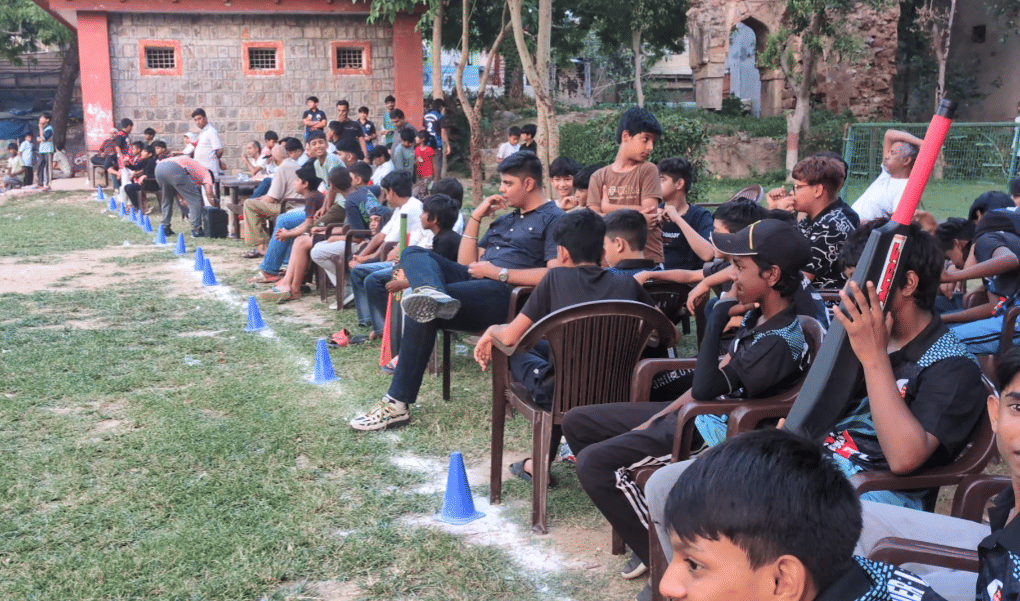
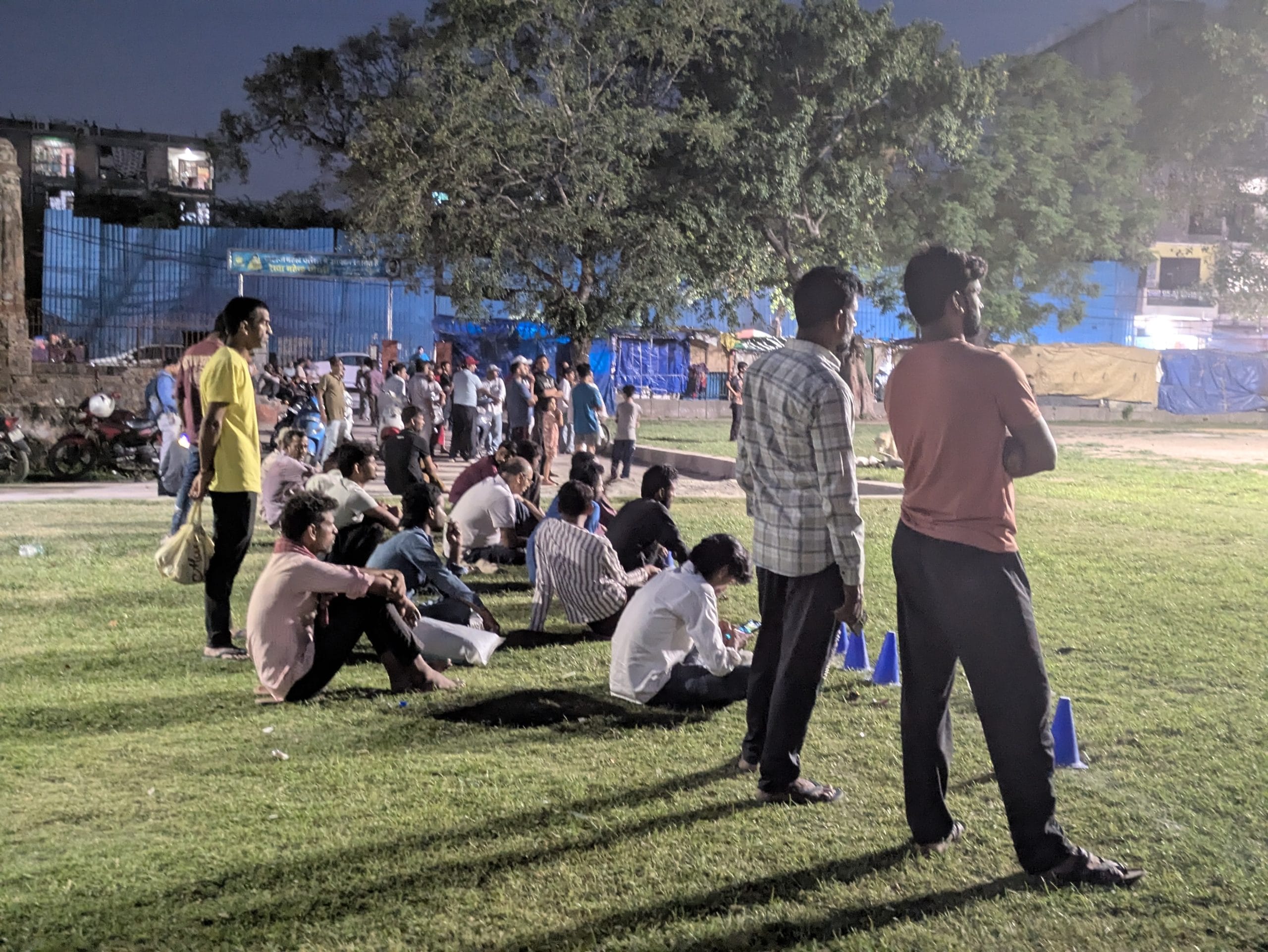
The players battle for the trophy, while spectators settle in on boulders, across the grass, and on top of the protected monument. Their favourite pastime has turned into a moment of pride. The friendly after-school competition among neighbourhood teens is now a fierce sport of team rivalries and chest-thumping celebrations.
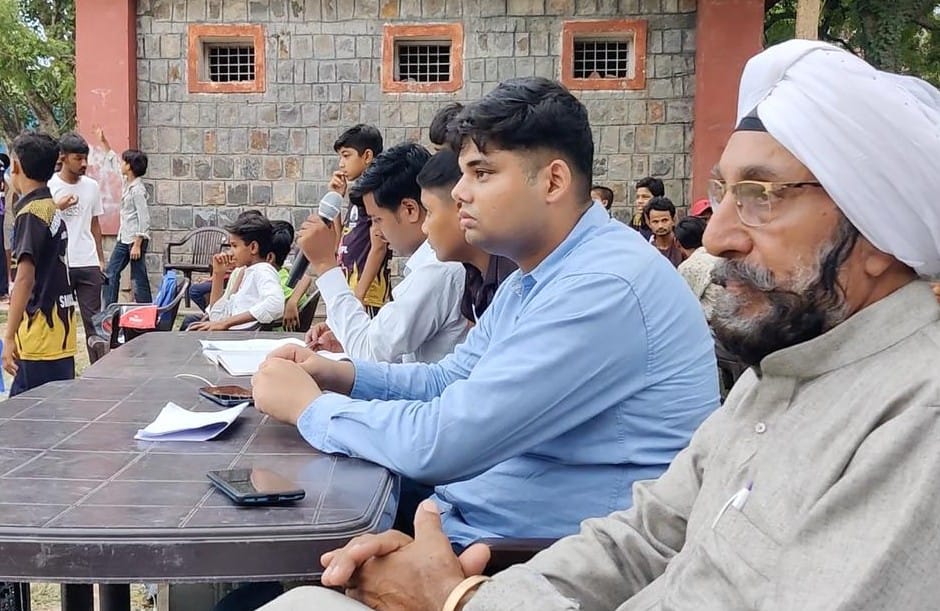
The Mehrauli Premier League, which started in 2008, is an annual cricket tournament organised by the neighbourhood residents and local politicians Mahender and Rekha Chaudhary. Over the years, MPL has grown from being an informal tournament into a proper community league, complete with team jerseys, winning trophies, umpires and commentators. This year’s edition, which began on 13 June, marks the 11th season of the tournament, barring the pandemic years spent in lockdown.
The team names in MPL mirror the swagger of the IPL. Kings 11, Mehrauli Giants, Mehrauli Thunders and Eagle Challengers directly echo popular IPL franchises, while some of the team names are proudly representative of the localities the players belong to, namely Ward 1 Dynamites, Ward 7 Tigers, Kishangarh Lions, among others. Some teams, most notably Mehrauli Kings and Ward 7 Tigers, have become renowned names with long-standing legacies. The players are locally famous figures, and the younger children look up to them. Other teams, such as Mehrauli Wonders, are relatively newer, competing for the first or second time.
“MPL is Mehrauli’s fondest tyohaar (festival),” says Mahender. “The excitement for the league only increases every year.”
The players wait for the league breathlessly, preparing for the tournament months before the registration forms roll out.
“Throughout the year we dedicate all our Sundays to playing cricket and preparing for MPL,” says 13-year-old Ayaan. As the MPL schedule gets released, this preparation becomes more rigorous, and the killer spirit is born. A resident of Mehrauli, Ayaan is the captain of Mehrauli Wonders.
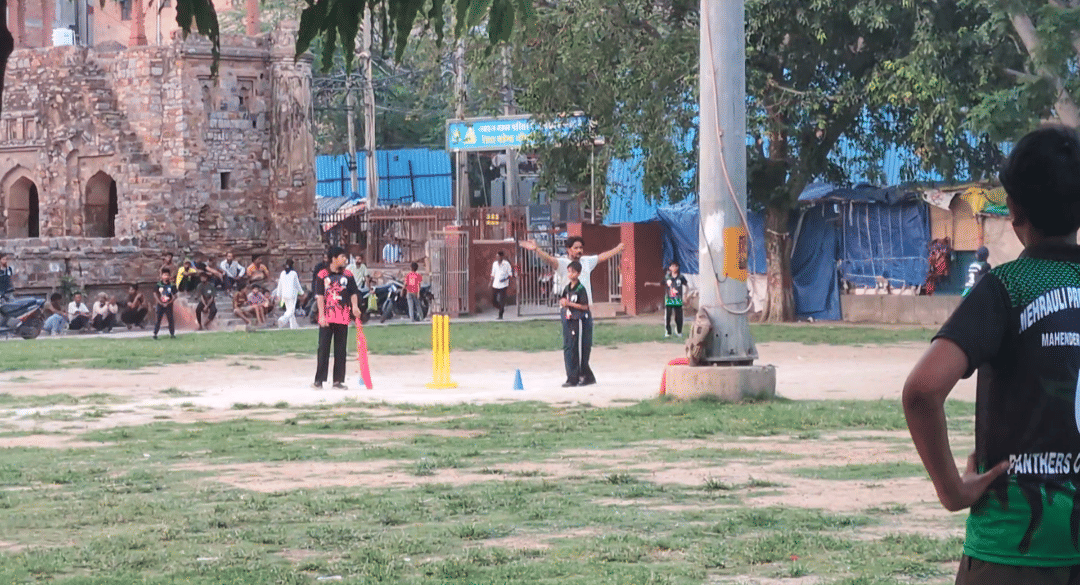
A young batter from Mehrauli Wonders, dressed in a bright blue polyester jersey with “Mahender 4 Mehrauli” arched across the back, takes guard. His teammate at the non-striker’s end shouts encouragement, “Maar bhai, maar! Six maar de! (Hit a six, brother).” The bowler from the opposing team charges in, wearing a contrasting green kit, as his fielders egg him on: “Out kar! Out kar usko! Ye wicket leni hai!”
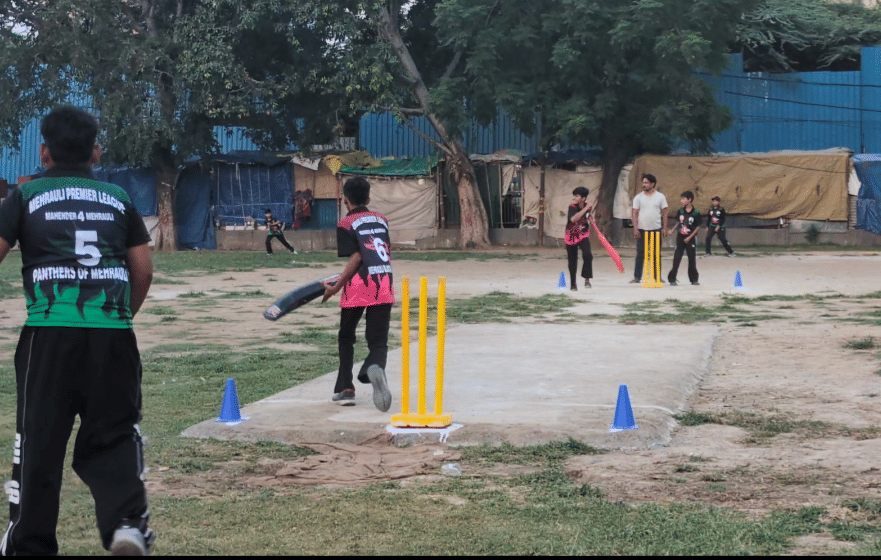
The ball kisses the edge of the bat and races toward the boundary. “Chalo, chalo, double hai!” yells captain Ayaan, clapping furiously from the sidelines. In their colourful, sweat-soaked uniforms, the 13- and 14-year-olds sprint across the concrete pitch, eager to take home the big golden championship trophy.
MPL’s origin story
Mahender Chaudhary was the Aam Aadmi Party (AAP) candidate for the Mehrauli constituency in the 2025 Delhi Assembly election, but lost to BJP’s Ganjender Singh Yadav by a margin of 1,782 votes. His wife, Rekha Mahender Chaudhary, is the ward chief of the locality.
Mahender, a former Ranji Trophy player, grew up witnessing informal cricket tournaments in the neighbourhood. When the tournaments shut off for nearly a decade, Chaudhary decided to restart them.
“We want to bring young people to sports, especially at a time when everyone is glued to phones. That is where MPL comes in,” said Chaudhary.
However, the establishment of the league wasn’t easy, as the available grounds were unkempt. Chaudhary identified a ground at the senior secondary school for the tournament, but that was littered with debris and rubble. Jahaz Mahal ground was in a swamp-like dumpyard that felt “dead.”
“We got the school ground cleaned,” Chaudhary recalled. Arvinder Singh Lovely, then education minister, sanctioned Rs 44 lakh that helped establish a mini-stadium like structure. Over the years, the organisers have continuously improved the venues, as it shifted from the school ground to Aam Bagh to now Jahaz Mahal, which has undergone a makeover.
“They have now added a concrete pitch, planted fresh grass and installed night lighting in the ground,” said Inayat Khan, a former MPL player.
Both Jahaz Mahal and Hauz-i-Shamsi (or Shamsi Talab) are Lodi-era and Mamluk-period heritage locations, which have served as MPL grounds for two years now.
“It is a delight to watch the children play on such historic grounds,” said Chaudhary. He noted how the setting adds to the charm as the athletes perform against the backdrop of monuments that have witnessed centuries of history.
Spectators who come to watch the matches also rattle off the history.
“Jahaz Mahal has served as a sarai, a rest stop for travellers, historically. It is also the venue of the famous Phoolon Wali Sair since the Mughal era. And now, it serves as the ground for the MPL,” said 18-year-old Saad, sitting in the audience.
Senior MPL
Before the Mehrauli Premier League came to exist in its current form, it had a different avatar. MPL, which now has a strict under-15 age limit, once welcomed senior players as well.
But a scuffle between young men playing cricket at Mehrauli’s Aamwale Bagh escalated into an RSS/BJP-led protest outside Mehrauli police station, with four officers transferred pending a vigilance inquiry. Accounts of what triggered the fight differed depending on who was telling it. What’s clear is that the fallout put an end to the senior tournament.
“Up until 2017 or so, there used to be a senior MPL. I used to participate in it,” said Sharifuddin, whose son Talib now plays in the MPL.
Sharifuddin now drives cars to make a living, while his eldest son, Shafin, runs a family shop by the dargah. The family of six now resides in a two-storey house, after Sharifuddin’s mother had to sell their bigger house following the death of her husband.
“The junior MPL, while great, falls short in front of what the senior MPL used to be. It was spectacular. It felt like any other national or international league,” he said.
The senior MPL was played in bigger grounds, which have since been planted with trees and become inaccessible to the game.
Now, Chaudhary notably also begins a lot of the matches by calling for religious unity.
“Hindu, Muslim, Sikh, Isaai – sab bhai bhai,” he declares, before the toss.
Talib – Mehrauli Kings
Talib is 13 and lives beside the sufi dargah of Qutbuddin Bakhtiar Kaki, down a cramped alley next to its main entrance. A narrow staircase leads up to the first floor — a bedroom with red-and-gold wallpaper, mattresses spread across the floor, and a big air cooler guarding the doorway. Another steel staircase climbs to a second floor, wherein the family kitchen fills the air with the smell of cooking.
Talib, the youngest of four brothers, has seen his father play for Dargah Ke Sher as captain.
“Whenever I enter the pitch, people recognise me,” says Talib proudly. “The commentators declare that they’re eager to see how many sixes I will hit in the match. They often use the ‘sher’ title for me too.”
Talib is a short scrawny boy with a big grin consistently plastered over his face. He loves sport generally and likes to tinker with his bicycle — a drawer full of trinkets and colourful lights is waiting to go on it. However, cricket has his heart.
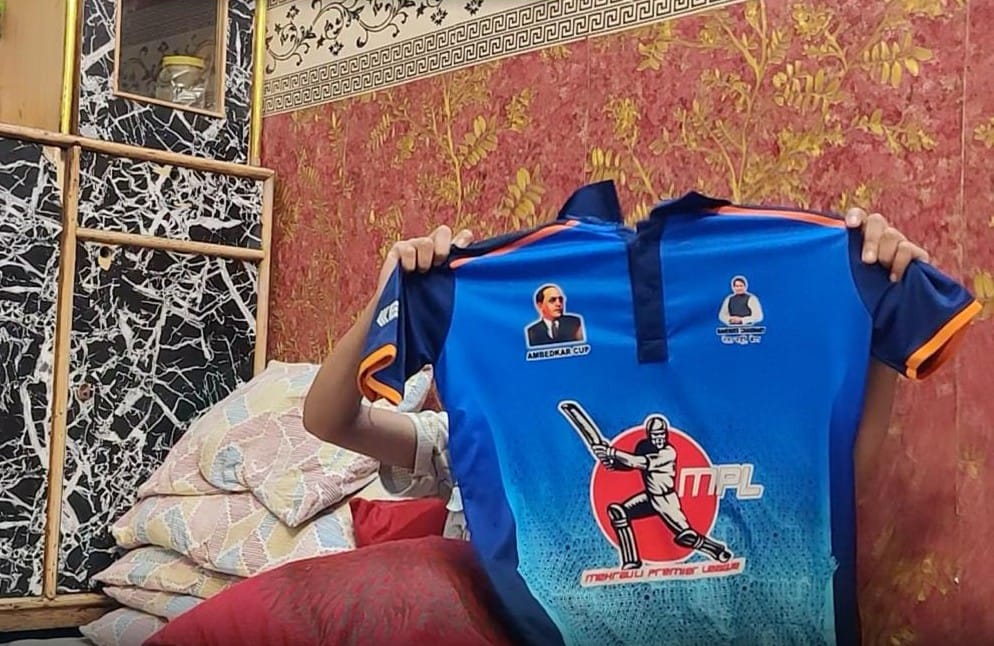
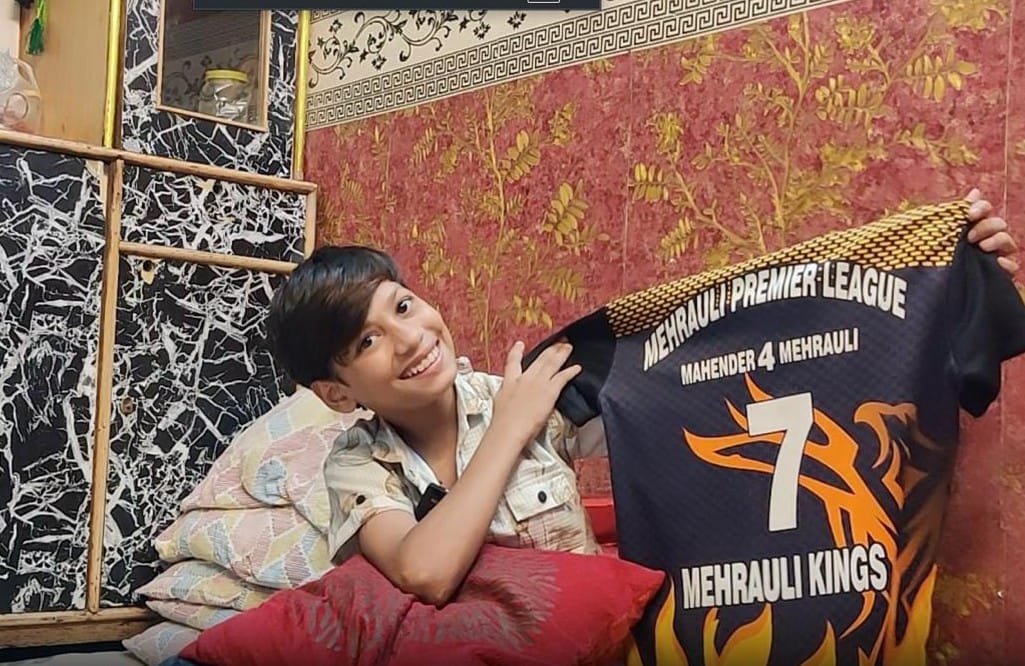
“I have played in MPL for the past three years,” Talib said, showing off his jerseys from the three consecutive years.
The bright blue jersey from his first MPL, with the number 6 etched on its back, serves as a fond memory of his first league match. Notably, the 2024 jersey has a photo of BR Ambedkar and Mahender Chaudhary emblazoned on the chest. The subsequent jerseys replaced Ambedkar with the photo of Rekha Chaudhary, who became the area ward chief.
Before every Mehrauli Kings’ match, he tells his team to play calmly and maintain composure.
The Virat Kohli fan took on the vice-captaincy position to appease another boy who wanted to be captain. Their team has won three out of the four matches in the league stage. His team has now entered the knockout stage, which is set to begin from 28 July.
“If we don’t win, then it will be the other dargah team, Ward 7 tigers,” Talib said.
His parents support his cricket, so long as he keeps up with his studies. Talib will soon join a government school; for now, he attends tuitions. Sharifuddin tries to catch his matches when he gets off work early, while his mother has only seen him play over video call.
“I really like it when my father comes to watch me play. It motivates me,” said Talib.
He dreams of becoming an international player and bringing bigger trophies home.
MPL’s scale and structure
The MPL has grown exponentially. This year, 264 teams applied; after a screening test, 44 advanced, up from about 30 last year. Teams are eliminated if any player falls outside the strict 8-15 age bracket, or if members drop out to travel for summer vacation.
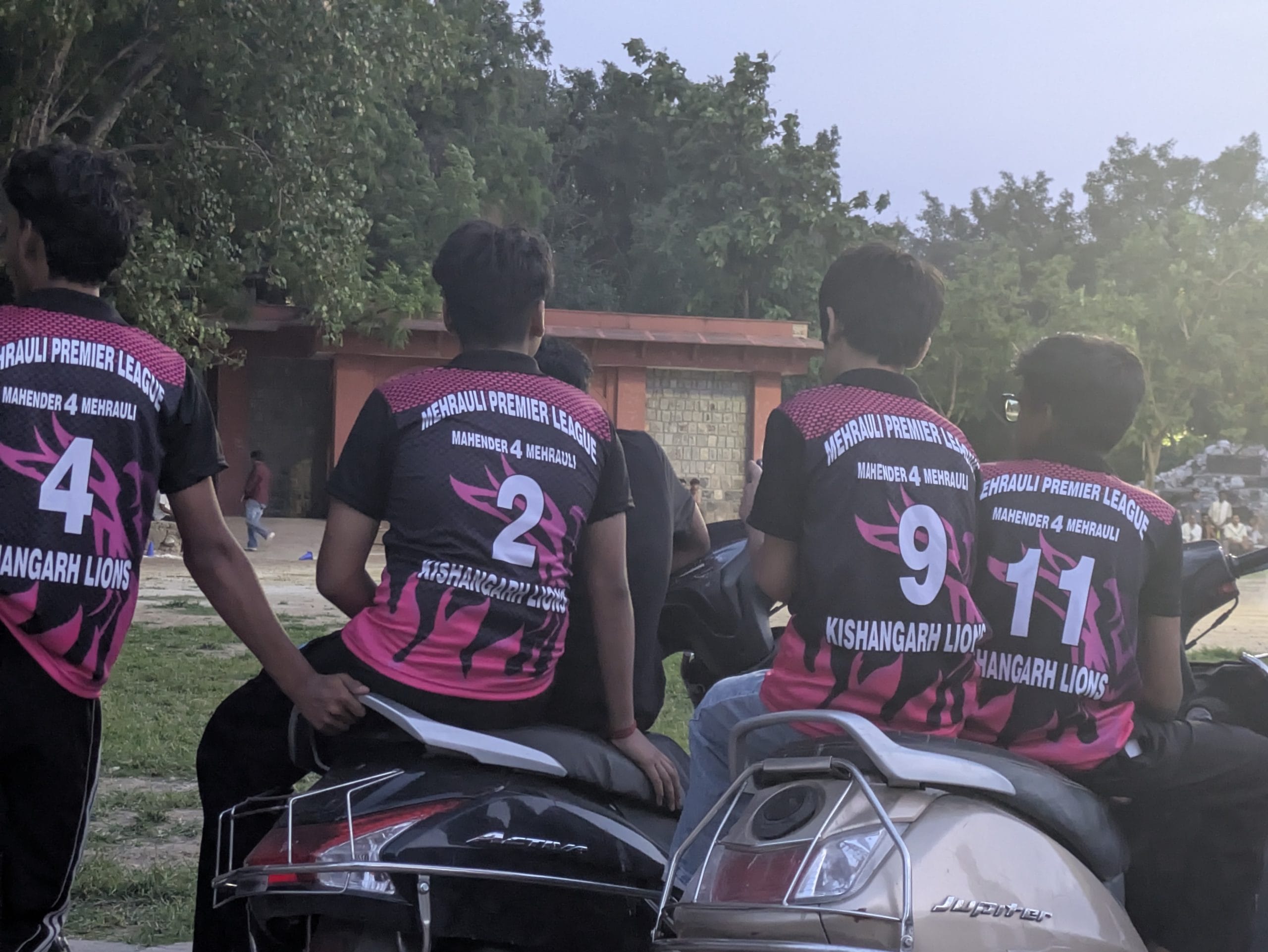
At Mahender Chaudhary’s office, officials verify names, ages, photographs, Aadhaar card numbers, and contact details before issuing jerseys — a point of pride this year, as organisers say they are made from better sweat-absorbent material.
The base is black, with flames and check patterns in each team’s colour marking them apart: Mehrauli Kings in yellow-gold, Eagle Challengers in pink, Mehrauli Tigers in blue.
Every team plays five league matches of six overs each, with five balls to an over, before the top 16 advance to the knockout stage.
Senior MPL matches once started as late as 6:30-7 pm, while junior games ran mornings or early evenings. After last year’s scorching heat, organisers shifted most matches later into the evening, with floodlights now enabling night games.
Registration is free, and organisers fund the balls, refreshments, gifts, and trophies themselves.
“We reward the Man of the Match with a sports cycle. This year we also have smaller gifts for batsmen hitting three consecutive sixers,” explains Chaundary.
The winning team gets a trophy and individual gifts, chosen by organisers, and kept secret until the presentation. Last year, players on the two winning teams got dinner sets. No player receives money.
“We don’t want to encourage gambling by introducing money into the equation,” Chaudhary said. Bats were once distributed too, but discontinued because children prefer choosing their own equipment.
The community effort in organising
What sets the MPL apart is its hyper-local character — every team is drawn from a different part of Mehrauli.
“It is wonderful to see people gather to watch the matches. Parents and grandparents often join in to cheer for their children,” said Chaudhary.
Behind the scenes, around 100 volunteers makes the tournament possible. These are ordinary residents with full-time jobs, from teachers to shopkeepers, who carve out evenings for Mehrauli’s tyohaar. Duties like commentary, umpiring, refreshments, and ground management are divided and rotated.
“Everyone is emotionally attached to the tournament. We try to make time however possible,” Chaudhary said. “Organising the tournament also gives us an excuse to get together and catch up.”
On the ground, though, the management is led largely by Chaudhary’s team and political supporters. Volunteers and former players help, but those working for Chaudhary run the event.
Arvind Pandey, who assists Rekha Chaudhary in her work, has been in the management team for two years and now serves as commentator.
He echoes Chaudhary’s words in describing the necessity of the tournament.
“These days, kids are busy on their mobiles and have a lot of screen time, so this gives them a way to spend time playing on the ground. The sport helps them gain strength both mentally and physically,” he said.
The players
Thirteen-year-old Ayaan, of Mehrauli Wonders, embodies the tournament’s spirit.
“I made the team of my locality, we are called Mehrauli Wonders,” he says with pride. A fan of Virat Kohli, he is playing for the first time this year.
“Last time we were in the semi-finals but couldn’t win. We are going to win this year,” he said.
Ayaan and his teammates practice every Sunday, throughout the year. School comes first, he says, but the real dream is bigger.
“One day we want to become players in national and international matches. We want someone from the team to go on to become a recognised player and make our Mehrauli known through them.”
Ayaan claims 13-14 players from Mehrauli have already progressed to Under-19 leagues, and some to platforms like the Dream League of India.
Limited women participation
While the fields are full of boys, women and girls are strikingly absent. Even the few who make it inside the compound remain observers. Talib’s mother, like many others, has never been to the ground at all.
Chaudhary paused before answering when asked why.
“Girls also want to play, they have mentioned to me. I want to try and include more girls into the tournaments too, I just struggle to know where to start,” he said.
He pointed to a mehendi programme for women that has run since 2011-12, but sport, he said, offers something unique.
“Sport energises you, gives you ways to live. Women are strong… I need a team to make it happen.”
The vision going ahead
Beyond the excitement, the MPL fosters lasting change for the youth participating.
“A lot of the players start to realise the value of fitness after participating in MPL. They start going for walks, runs, cricket academy, gym,” says Chaudhary. “Even if 50 out of the 500 playing end up pursuing cricket or sports seriously, I consider it a win for me.”
This season also saw a push into social media, with dedicated Instagram and Facebook accounts for the tournament. The Instagram account @mehrauli_premier_league with 499 followers posts match schedules, results, and highlight reels. After a spell of rain, one post captured the flooded ground with the caption “kuch din intezaar karna hoga bhateejon” — you’ll have to wait a while, sons.
Talib often reshares the page’s content to his own account, and keeps a story highlight dedicated to the league. The organisers do not plan to stop at cricket.
“We are trying to organise similar leagues for football, volleyball, badminton,” Chaudhary says. A poster for the football league is already up on the MPL account.
With the knockout stage approaching, all of Mehrauli has its eyes on the competing teams. The pressure on the young players is mounting.
“The feel and the thrill of the final is unparalleled. It won’t be any less than the IPL,” Chaudhary says with a smile.
(Edited by Prashant Dixit)