








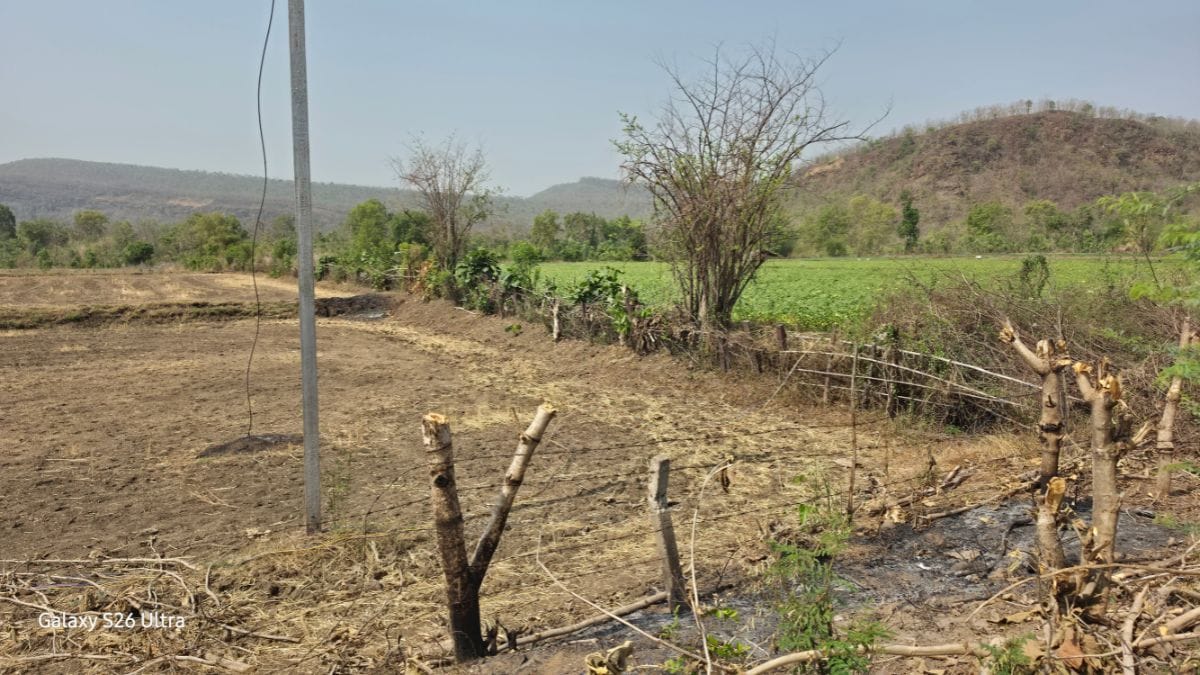
Ratapani/Panna/Bandhavgarh/Bhopal/Indore: On 27 March, the decomposed body of a four-year-old tiger was found in the dense forests of Madhya Pradesh’s Satpura Tiger Reserve. His lifeless body lay half-buried along an illegal opium field, bearing the marks of electrocution and urea poisoning. His bulging eyes, rimmed with dried tears, and the powdery remnants of froth tracing down his mouth, spelled out the final moments of his painful death.
But this was not the most shocking part of the Satpura Field Director’s report. While tiger deaths in Madhya Pradesh are becoming gruesome and routine, the official reasons are becoming more bizarre.
The tiger whose body was found in March had been missing for nearly a month; the last satellite signal recorded from its collar was from 3 March. The forest department said it was unable to track the tiger because the satellite signals — in a small town in Madhya Pradesh — were apparently “jammed by the US-Iran war”.
“The WWF (World Wide Fund for Nature-India) was contacted to recover the tracking location of the tiger, but we were informed that the signals were jammed because of the US-Iran war,” the report, written by Rekha Nanda and filed on 28 March, noted.
Twenty-four hours after the tiger’s body was recovered, Nanda’s incident report confirmed the involvement of illegal opium farmers. The poachers had first tried to electrocute the tiger and then laced its prey with urea to finally kill it. They feared that the movement of a tiger on their “high-yielding” opium farm would scare away their labour.
The Satpura tiger was not the only one to meet this gruesome fate. Across Madhya Pradesh, tigers are dying in large numbers under unnatural and often mysterious circumstances. Last year, the state recorded 55 tiger deaths, the highest ever by any Indian state since the launch of Project Tiger in 1973. The previous highest was Maharashtra’s 52 deaths in 2023, which came down to 38 deaths last year.
This year, Madhya Pradesh is already catching up: in just five months, the state has recorded 34 tiger deaths.
Last year, Madhya Pradesh recorded 55 tiger deaths, the highest ever by any Indian state since the launch of Project Tiger in 1973. This year, in just five months, the state has already recorded 34 tiger deaths.
With big cats becoming victims to poachers, unmanned electric wires, and rail and road accidents, wildlife experts and environmentalists are sounding the alarm. Many point to deep administrative failure as the reason behind this spike in tiger deaths. Madhya Pradesh’s inconsistent tiger tracking, loopholes in post-mortem investigations, weak surveillance of poaching networks and poor data management are collectively undoing years of tiger conservation efforts and raising fears for the future of its tiger population.
“The most important takeaway from this is that many of these tiger deaths are preventable,” said wildlife activist Ajay Dubey, who has filed a public interest litigation (PIL) in the Madhya Pradesh High Court. “The government is taking credit for the rise in tiger numbers, but that is the animal’s natural cycle. You need to answer why the unnatural death count is rising, why aren’t your teams following proper post-mortem protocols and why are your tracking systems failing.”

Poor data management, no protocol
Dubey, a 45-year-old Bhopal-based activist, has been locked in a battle with the Madhya Pradesh forest department for nearly two decades. His demands are simple: that foresters follow the established protocol for recording tiger deaths, ensure the data is transparent, and make an honest attempt to protect tigers and preserve their habitat.
In the PIL, Dubey alleged that in many of the tiger death incidents reported last year, the department had failed to file the required preliminary offence reports, blatantly skipped mandatory videography during post-mortems, left forensic investigations incomplete, and failed to submit final incident reports to the National Tiger Conservation Authority (NTCA).
Court documents show that in Shahdol district, nine tigers died between 2021 and 2023. But the NTCA did not receive the final report in any of these cases. Independent special investigation teams (SITs) found that in majority of the cases, the carcasses were recovered late and post-mortems were conducted by the animal husbandry department’s veterinarians who did not have prior experience with wild animals.
Many of these tiger deaths are preventable. The government is taking credit for the rise in tiger numbers, but that is the animal’s natural cycle. You need to answer why the unnatural death count is rising
Ajay Dubey, wildlife activist
In Bandhavgarh Tiger Reserve, which recorded 34 tiger deaths during the same period, the final reports to the NTCA were filed two to three years later. In at least four deaths, the SIT found lapses ranging from “incomplete and inadequate investigation” to “not connecting evidence to the accused”, and “serious negligence by treatment teams.”
The forest department, however, has denied all the allegations.
A senior official said all NTCA guidelines are mandatorily followed while reporting tiger deaths, and that in a “few stray cases” where the protocol was not followed, the department took strict action.
“As a state, we have taken the task of tiger conservation very seriously. When the numbers (of tigers) start increasing, the fatality count will also go up naturally. That is common sense,” the official told ThePrint, speaking on the condition of anonymity.
ThePrint also reached out to Samita Rajora, the head of the wildlife wing of the Madhya Pradesh forest department, but she did not comment.
In December 2025, Dubey’s PIL in the Jabalpur High Court noted a “grim paradox” — official announcements applaud the rise in tiger numbers even as the state’s forests expose “an alarming trail of tiger carcasses.”
Dubey is determined to hold the department accountable.
His house in Bhopal is proof of his dedication. On one side of his living room, over two dozen files and newspaper cuttings documenting government apathy are stacked. On the other, stuffed animal souvenirs from tiger reserve gift shops and framed family safari photographs line the shelves, serving as proof that for Dubey, the fight has never been separate from his love for these animals.
“Someone has to become their voice. Even the most powerful animal needs a representative in the human world,” Dubey said.
Also read: Are Indian tigers getting aggressive? Answer lies in the numbers
What is killing the tigers?
Just 30 kms away from the bustling town of Umaria, wildlife enthusiasts in hats, face covers and camouflage fatigue line up at the gates of the Bandhavgarh Tiger Reserve with their high-focus lens cameras.
“Every day we have two safaris, booked months in advance. Everyone wants to spot a tiger and most days, we are able to make that happen,” a forest official said absentmindedly while managing the safari crowd.
A night before, one of their star tigers—the nine-year-old known locally as ‘Pujari’—was killed in the Dhamdhama area of the reserve. The department suspects it to be a territorial dispute between two tigers. Rangers reported hearing loud roars from deep inside the forest and found a dead tiger bearing battle wounds.
According to the NTCA, it was the fifth tiger death recorded at the reserve this year, matching the total from all of last year.
While the NTCA stopped uploading the reason behind individual tiger deaths from 2020 onwards, district-wise case files accessed by ThePrint showed that electrocution, accidents, and poaching accounted for the majority of deaths.
Besides getting electrocuted by wires set up by poachers to trap wild boar, many tigers are also killed in revenge for preying on livestock from nearby villages.
Disease is also taking its toll. At least five tigers in Kanha National Park have fallen prey this month to the deadly Canine Distemper Virus (CDV), spread through unvaccinated dogs.
Experts warned that the CDV can wipe out wild cat populations — in 1994, it killed over 1,000 lions in Tanzania’s Serengeti National Park, nearly a third of the country’s total.
The forest department said it has started vaccinating dogs in villages bordering the park.
“We have vaccinated close to 100 dogs already and are keeping a close eye on stray dog movements within the park,” an official said.
While the NTCA no longer publicly uploads causes of tiger deaths, district records accessed by ThePrint show that most deaths in Madhya Pradesh are linked to electrocution, poaching, revenge killings by villagers and even deadly diseases such as canine distemper.
The big raid
In December last year, a 10-year-old tiger poaching case that unfolded over 4,000 km away in Ethiopia was finally cracked. In 2015, Ethiopian authorities had caught a transporter carrying eight Indian tiger hides, three of which belonged to tigers from the Satpura Tiger Reserve. The seizure exposed one of the biggest poaching networks operating in central India, with conspirators spread across Delhi, Siliguri, Gangtok, Kolkata, Kanpur, Itarsi and Hoshangabad.
A decade-long wait paid off when Yangchen Lachungpa, a 43-year-old poacher on Interpol’s most wanted list, was arrested carrying tiger skin, four pieces of tiger bones and bone oil extract. Her syndicate Jai Tamang was also arrested, and 36 people aiding the poaching and transportation of tiger parts were identified. Once killed, the animals are stripped with surgical precision, their claws, teeth, and skin making their way to buyers across China, Myanmar, Nepal, Bhutan and Ethiopia. The carcass is left to rot.
These networks are deeply embedded within the system, residents allege — and it is no secret.
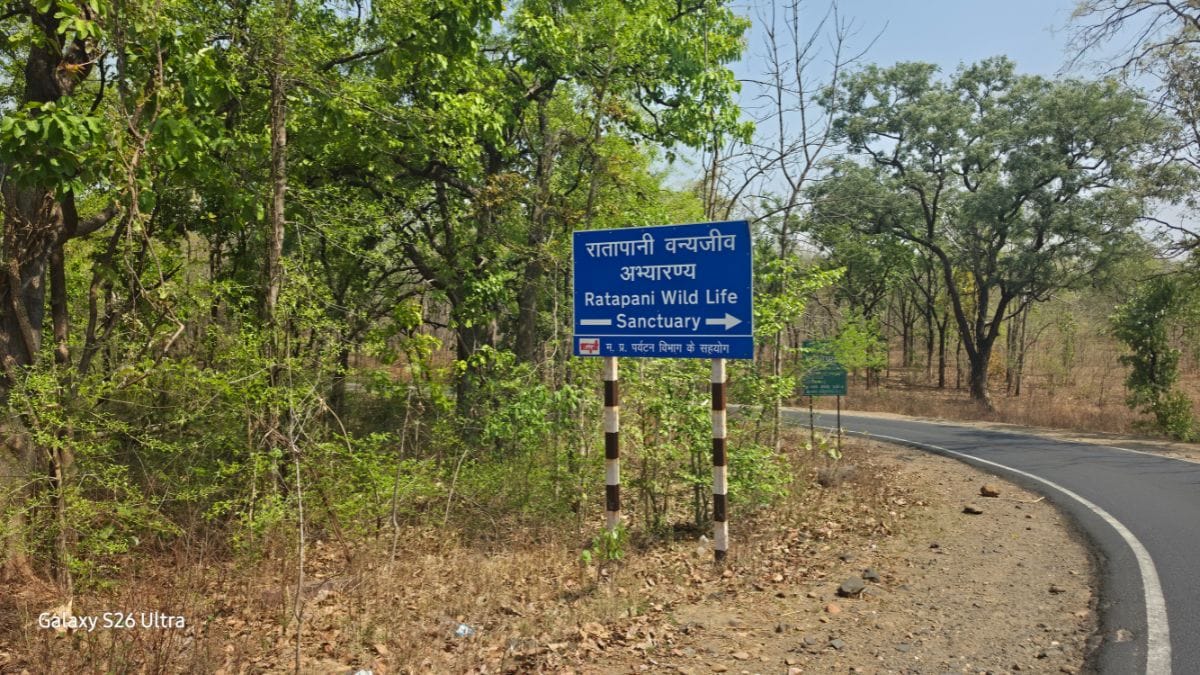
“You think even a leaf can fly in the reserve without the knowledge of the forest staff? They are hand-in-glove with the poachers in many areas. They get a fat cut just to close their eyes to the poaching,” said a 37-year-old resident of Ratapani village, which shares its boundaries with the Ratapani Tiger Reserve.
In a 2025 case, activists raised questions about the department’s involvement in sheltering poaching gangs. The carcass of a female tigress mysteriously went missing from the Sonwani Sanctuary in Balaghat. Officials from the Sonwani Wildlife Protection Committee told ThePrint that when a picture of the dead tigress was uploaded to the official WhatsApp group, some members noted that parts of the carcass appeared to be missing.
“As soon as a possible poaching angle was coming up, the photo was deleted. The next day, when a search party tried to recover the body, they could not find it anywhere,” an official said.
Activists alleged that the tigress’ body was moved, cut up and burnt at three separate locations to destroy any evidence of poaching. The SWPC denied details of the case but confirmed that eight officials were suspended following an inquiry.
Also read: Ranthambhore tiger reserve is paying the price of success
Hope for the future
In 2009, the Panna Tiger Reserve faced a complete wipeout. It then led an ambitious translocation programme, bringing tigers from Bandhavgarh, Kanha and Pench Tiger Reserves to script an impressive comeback. The forest department also invested heavily in community engagement and surveillance. Today, Panna is home to about 80 tigers.
Overall, Madhya Pradesh, despite its failures, has held its position as India’s top tiger state. The 2022 census counted 785 tigers in Madhya Pradesh, ahead of Karnataka with 563, Uttarakhand with 560 and Tamil Nadu with 306.
But conservationists warn counting tigers is not the same as saving them.
“The larger attitude towards tigers needs to be improved. Currently, the focus is on which state has the most number. But the true test of Project Tiger is the health of our habitat and the attitude that people and governments have towards tigers. Only then can we save them in the long haul,” said YV Jhala, one of India’s leading tiger conservationists.
(Edited by Prashant Dixit)