



Srinagar: For four days this month, crowds jostled for seats at Srinagar’s INOX Multiplex and the Sher-e-Kashmir Convention Centre. Kashmiri titles such as Tasrufdar and Batt Koch played to packed houses. Three of the five films by J&K filmmakers took home awards at the inaugural International Film Festival of Jammu and Kashmir 2026.
For a region that has spent decades being filmed by outsiders, Kashmir is now trying something different: making films about itself, for itself. Coming out of more than three decades of conflict, curfews and a cultural shutdown, a homegrown cinema ecosystem is beginning to take shape, with local filmmakers, actors and crews finding their footing. There’s enough local talent and content, but it’s still missing much of the post-production muscle needed to turn scattered films into a sustainable industry, without an over-dependence on the Bollywood machine.
“I think Kashmir’s cinema needs more independent films. Why do we look outside for work? An office doesn’t make films, the fraternity does. Kashmir has the people, be it actors, producers, filmmakers, musicians. It’s all about a collective effort,” said actor Mir Sarwar, who claims that at least 90 per cent of independent Kashmiri filmmakers have made their first film with him. “In order for an ecosystem to build, people need to show faith and take risks. We cannot wait for a film city to make films. We will make films so that a film city happens.”
For decades, Kashmir has been one of Hindi cinema’s favourite backdrops. Its meadows, lakes and mountains have filled the frame from Kashmir Ki Kali and Jab Jab Phool Khile to Bajrangi Bhaijaan, Haider and Raazi. But when Kashmiris themselves entered the story, the region was often reduced to politics and conflict. Now, local filmmakers are trying to flip the camera, reclaiming the gaze and telling stories that go beyond beauty and politics—from the ache of leaving home and the relationship between Kashmiri Pandits and Kashmiri Muslims to love stories, everyday life and even comedy.
But J&K’s film industry remains small and largely untracked. In the past five years, only a handful of Kashmiri-produced features have emerged, including Welcome to Kashmir (2023), reportedly made on a budget of about Rs 5 crore, and Harmukh (2025), a Kashmiri-Kannada crossover, along with a few independent short films and documentaries. With most Kashmiri films releasing on only a few screens, reliable box-office data isn’t available. Welcome to Kashmir, for instance, was reported to have run houseful on weekends at INOX Srinagar, but no official gross was published.
Now, with J&K hosting its first international film festival, the conversation around its cinema just got rebooted. But the bigger question is whether that momentum can translate into the infrastructure, talent and money needed to sustain an industry.
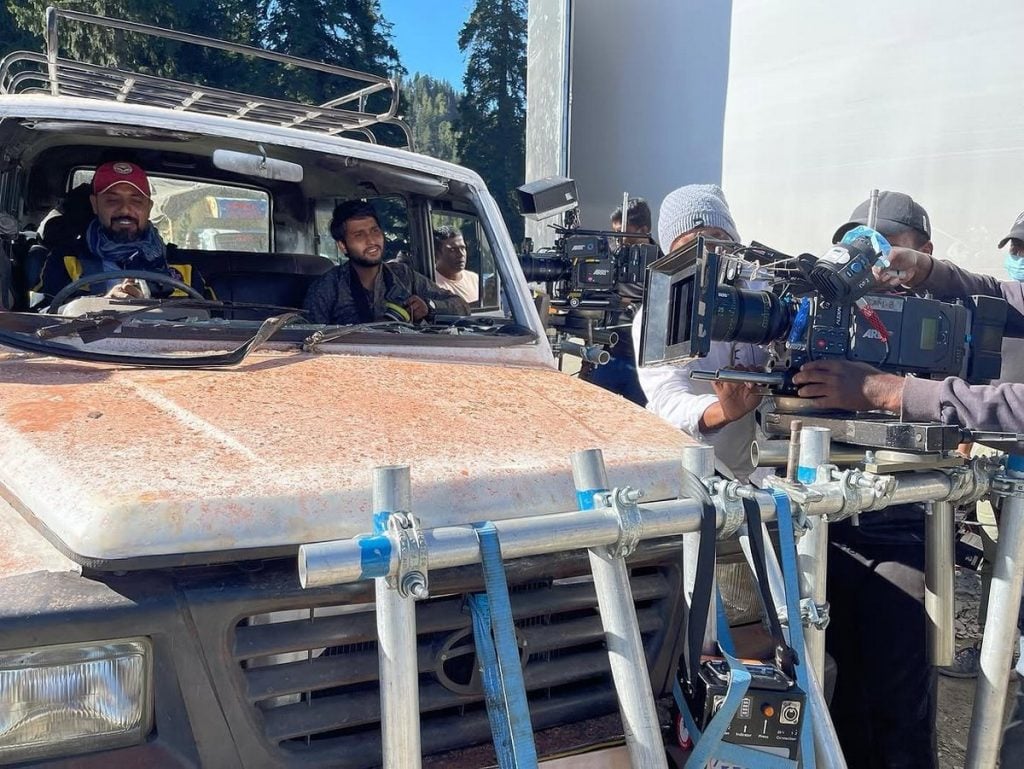
Filming itself is not the issue. Filmmaker Danish Renzu said his film Songs of Paradise was shot entirely in Kashmir. It had a local cast and crew, barring lead actor Saba Azad. But post-production still had to be outsourced to Mumbai.
“The bigger problem in my eyes is lack of education. The youth is very talented here but they are directionless,” said Renzu. “Filmmaking is still not widely seen as a viable career in Kashmir. Universities offer arts programmes, but there are few avenues to study specialised fields such as film direction or production. So, the kids don’t know in which direction they should work.”
Also Read: A made-in-Kashmir film about a Pandit’s spirit wins big at J&K’s first film festival
Dark ages to ‘sunrise’
The Valley’s last working cinema hall shut down in 1999 as militancy engulfed Kashmir, and for more than two decades, watching a film on the big screen simply wasn’t an option. This changed in September 2022, when INOX opened its first multiplex in Srinagar. A screening of Laal Singh Chaddha brought back cinema to the Valley for the first time in 23 years.
The same multiplex went on to screen Kashmiri films such as Welcome to Kashmir, Harmukh, Shushur – The Frozen Times and Tasrufdar. These weren’t box-office blockbusters by Bollywood, Tollywood or even Punjabi industry standards. But each represented a small first: a Kashmiri story, made with Kashmiri money, cast with Kashmiri faces and shown to a Kashmiri audience in a theatre. The circuit didn’t exist five years ago.
Film producer Captain Rahul Bali, who backed Love in Vietnam, partly shot in Jammu, likens the current moment to “a sunrise.”
“Those were the dark ages and now I can see the sunrise. I am talking from 1995 to 1998. That was a very, very bad phase of Kashmir. Now, we are creating the cinema which used to be there before the conflict. We are trying to bring back the Kashmir of Shammi Kapoor or Rajesh Khanna’s era and then take it beyond the beautiful landscape,” said Bali, who served in the Indian Army from 1995 to 2000. “I am sure, seeing this, a lot of other filmmakers are going to come.”
In November 2022, Bali curated ‘Dil Maange More’, a short-film festival conducted by the Indian Army’s Northern Command. It received 15,000 submissions from Jammu and Kashmir and Ladakh.
If I tell you a joke, you will laugh. If I repeat that joke, you may laugh. But if I tell you that joke a third time, you will get angry. When we can’t laugh at the same joke, why do we keep crying over the same problem? Whatever happened was bad. We cried. Let’s move on and let’s now look at the positive part.
– Rahul Bali, film producer
“The interesting part was that of the 15,000 short films submitted, not one was on any negative subject. The storytelling, the lens was there, it just required mentoring,” he said.
Bali is now planning to host a second edition and hopes for 50,000 submissions. He acknowledged that the April 2025 Pahalgam attack was a setback for filmmaking in Kashmir but called such events “temporary roadblocks.”
“Whenever something happens in Kashmir, it is blown out of proportion for TRP which instills fear. It’s easy money for everyone. I would just say, ‘don’t scratch the place which doesn’t get an itch’,” he said. Bali added that he avoids projects that portray a community in a negative light or exploit the pain of the past.
While Shammi Kapoor singing Tareef Karoon Kya Uski against the waters of Dal Lake helped cement a romantic image of Kashmir in the popular imagination, it was Yash Chopra who turned the Valley into Bollywood’s Switzerland. For decades, Kashmir on screen meant love.
Then came the years of conflict, displacement and politics. Between 2015 and 2025, at least 15 notable films mined that terrain, including Fitoor (2016), Half Widow (2017), Hamid (2018), Raazi (2018), No Fathers in Kashmir (2019), Shikara (2020), The Kashmir Files (2022) and Article 370 (2024). An earlier film in this genre was Haider (2014).
But there is growing sentiment within the industry that Kashmir cannot be defined on screen solely by grief and militancy.
“No one is taking away that grief from them. Obviously, the people who have gone through bad times, it is not easy. But I think we should move forward now,” said Bali.
What he wants more of is films that also explore culture, art, everyday lives, love, and the relationship between Kashmiri Muslims and Pandits.
“If I tell you a joke, you will laugh. If I repeat that joke, you may laugh. But if I tell you that joke a third time, you will get angry. When we can’t laugh at the same joke, why do we keep crying over the same problem? Whatever happened was bad. We cried. Let’s move on and let’s now look at the positive part,” he said.
Can filmmakers move on?
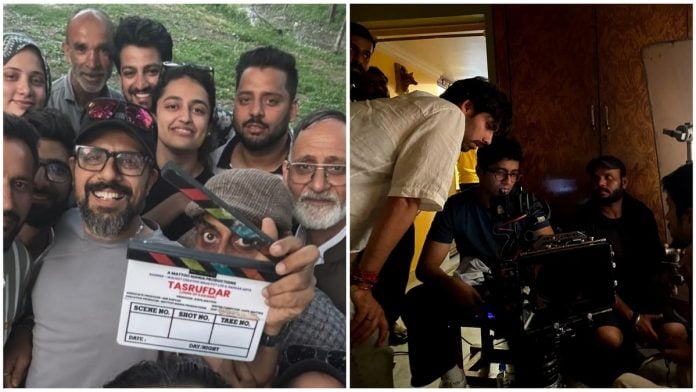
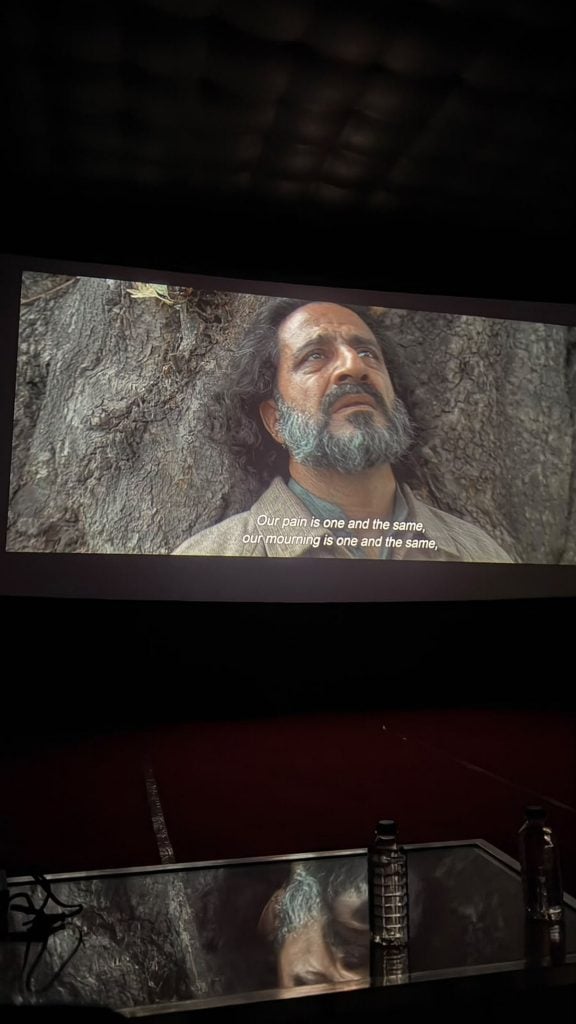
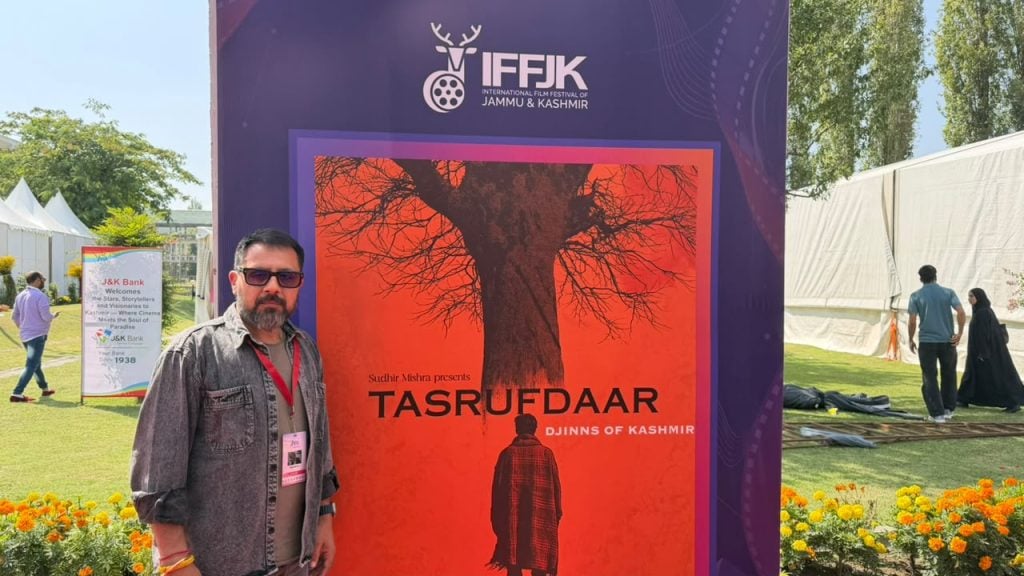
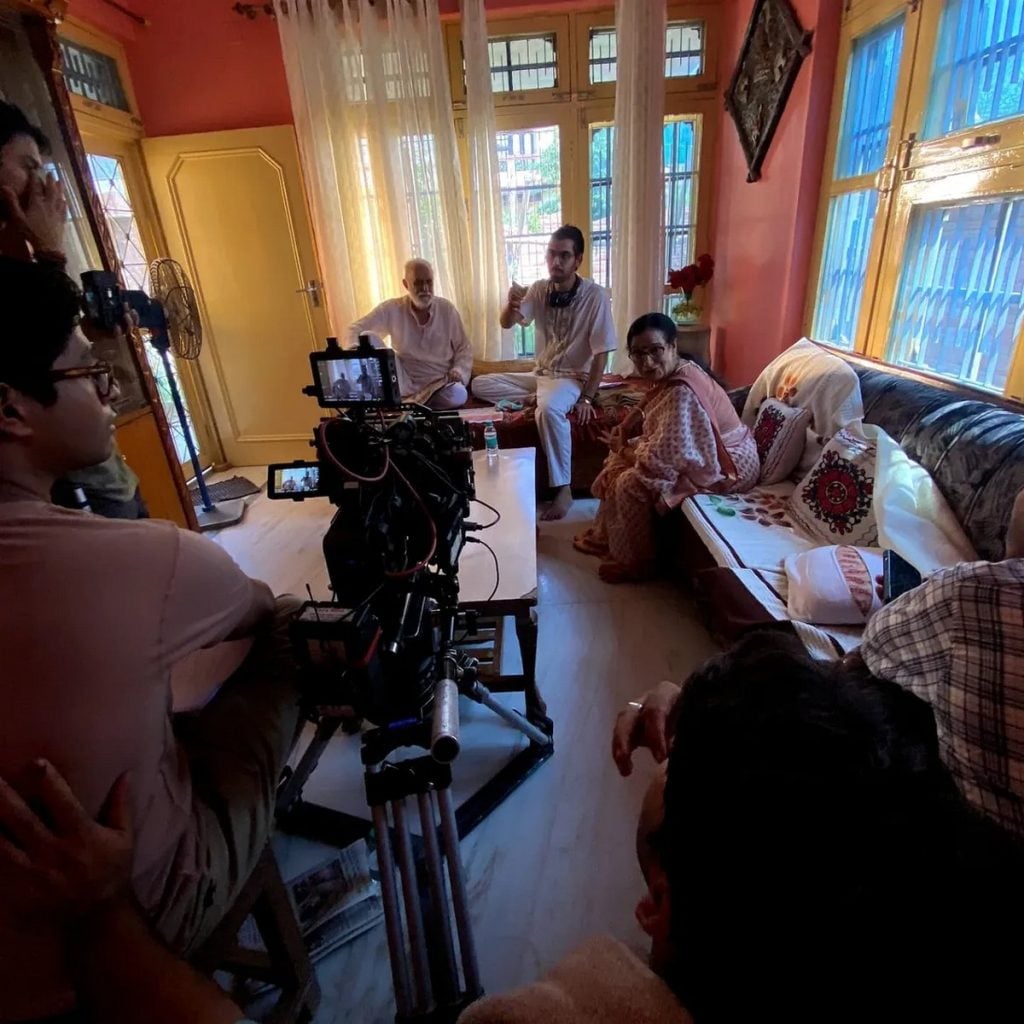
For filmmaker Kapil Mattoo, moving forward does not necessarily mean leaving the past behind. His short film Tasrufdar, which premiered at the IFFJK, follows a middle-aged Kashmiri Muslim who encounters the spirit of his late father’s childhood friend, Shamboo Nath, a Kashmiri Pandit.
“That pain is there. It will always remain. I agree that there is more to Kashmir than conflict and landscapes, but as far as that pain is concerned, it also exists and it will come through in our creativity,” Mattoo said.
That pain is there. It will always remain. I agree that there is more to Kashmir than conflict and landscapes, but as far as that pain is concerned, it also exists and it will come through in our creativity.
– Kapil Mattoo, filmmaker
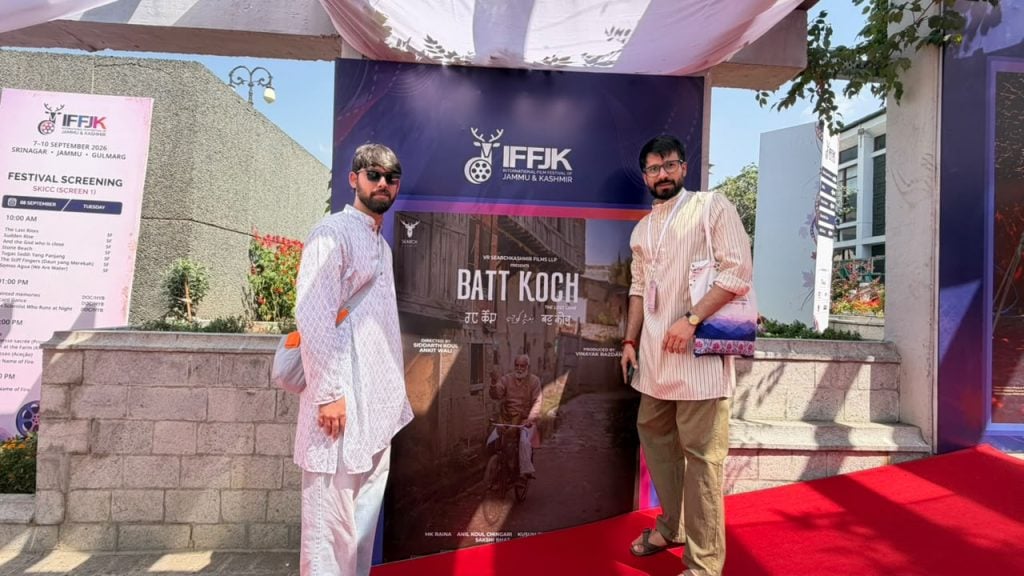
Another J&K film screened at the festival, Batt Koch, also looks at Kashmir through memory and loss rather than anger. It follows Poshkar Nath Koul (MK Raina), an ageing Kashmiri Pandit living in Jammu. After his wife’s death and as his memory begins to fade, he returns to his ancestral home in Kashmir for the first time in 35 years since the exodus. The film explores grief, displacement, identity and the search for closure, steering away from revenge and anger.
But the festival also opened up another possibility for Kashmir on screen. Filmmakers Imtiaz Ali and Sriram Raghavan, who attended as special guests, said they wanted to see more comedies, family dramas and stories of everyday life from the Valley.
“We Kashmiris are very witty. So, a comedy set in Kashmir will be interesting,” said Renzu, adding that he is trying something similar in his upcoming film.
A govt nudge
The government has tried to catch up with this momentum. The J&K Film Policy, first framed in 2021 and updated in 2024, set up subsidies and a single-window clearance system for film shoots, which is largely why Bollywood and South Indian productions have flooded back to the Valley.
Officials say more than 350 films and web series were shot in Jammu and Kashmir in the five years after the policy launched, including Dunki, Article 370, Vedaa and Leo.
We all can sit and complain but we also need to take charge. We cannot sit around for the government to build a film city.
– Mir Sarwar, actor
During the film festival, Chief Minister Omar Abdullah urged the people of J&K to pick up cameras and tell their own stories, while calling on filmmakers from outside the region to look beyond Kashmir’s familiar landscapes and explore the stories and realities beneath them.
“Seek out our stories. Listen to our people, listen to our musicians, walk through our city lanes and let our living, breathing culture of this land infuse your narratives,” Abdullah said at the inauguration of IFFJK.
Stars who made it out and back
When actor Mir Sarwar moved to Mumbai to become an actor, success did not come overnight. He recalls surviving on black coffee and one meal a day. Sarwar even missed the birth of his daughter.
“These are the prices you pay to reach somewhere in life,” he said. A National School of Drama-trained actor, Sarwar moved to Mumbai in 2014 and landed roles in Bajrangi Bhaijaan, Kesari and Jolly LLB 2. Today, he is a known name in Bollywood, but continues to work in Kashmiri productions, often without charging a fee, to encourage local filmmakers.
“I believe, ‘agar hum harkat nahi karenge toh barkat nahi hogi (if we don’t make a move, nothing good will come of it). Kashmir Daily is an example of that,” Sarwar said. The 2017 film was made on a “small budget”, with Sarwar doing everything “from spot boy to producer”. He also played journalist Hussain Durrani.
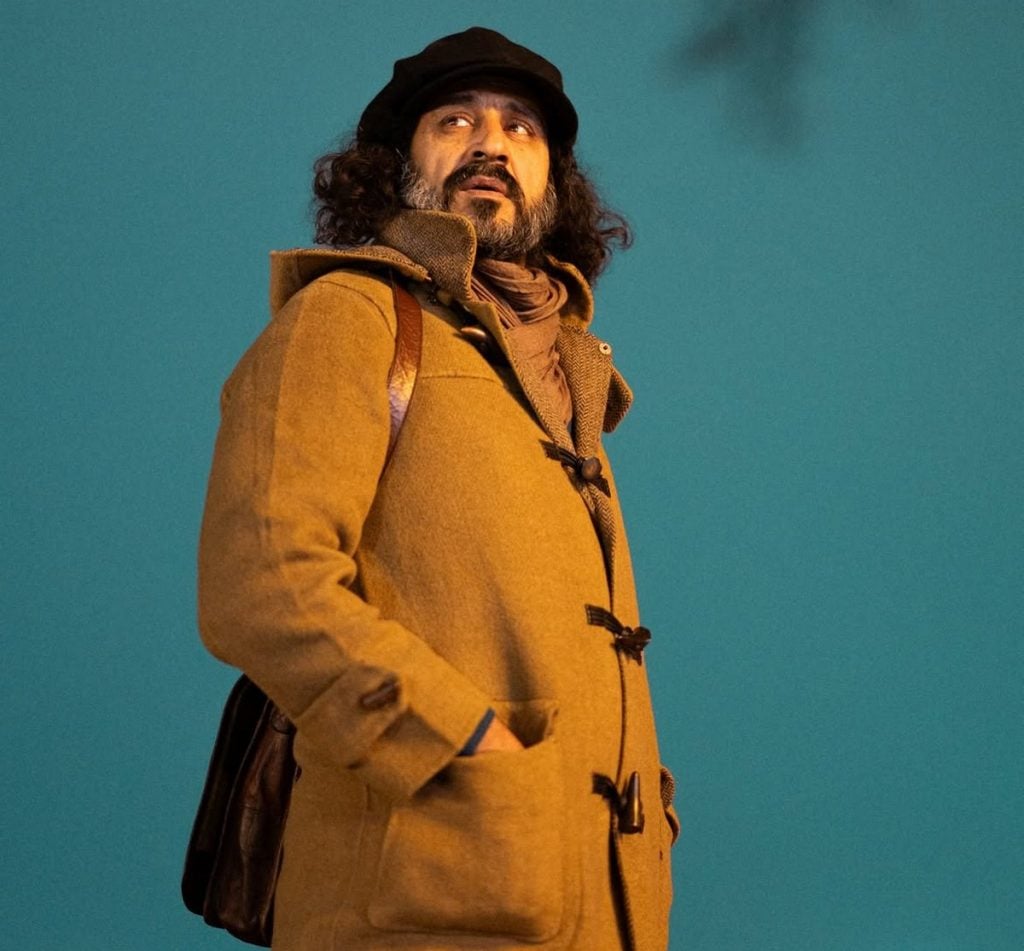
“It took us three years to make the film and we used the basic DSLR camera. We didn’t have money. Nobody got the money. The film was made and sold at a small amount to Eros. It’s available for public consumption and will always be remembered. So we all can sit and complain but we also need to take charge. We cannot sit around for the government to build a film city,” said Sarwar.
It is a popular myth that the dream of working in films is not available for Kashmiri women. Actors like Farrhana Bhatt and Sadia Khateeb are proving otherwise. Khateeb, born in Bhaderwah, made her debut in Vidhu Vinod Chopra’s Shikara (2020), playing a Kashmiri Pandit teenager during the insurgency and exodus. The role earned her a Filmfare Best Female Debut nomination and led to roles in Raksha Bandhan and The Diplomat.

Over the years, J&K has given Bollywood actors such as Mohit Raina, Kunal Kemmu, Manav Kaul, Hina Khan, Sanjay Suri and Aly Goni. There is also Zaira Wasim, the Srinagar-born actor who broke out as one of the daughters in Dangal before headlining Secret Superstar. She quit acting in 2019.
Renzu himself is something of a template for the ‘left, learned, came back’ arc that defines this generation. He studied screenwriting at UCLA, quit a corporate job at AT&T in 2015 to make films, and returned to Srinagar to direct Half Widow (2017), a drama about women whose husbands disappeared during the insurgency. He shot it with a mostly local cast and crew, including actor Neelofar Hamid.
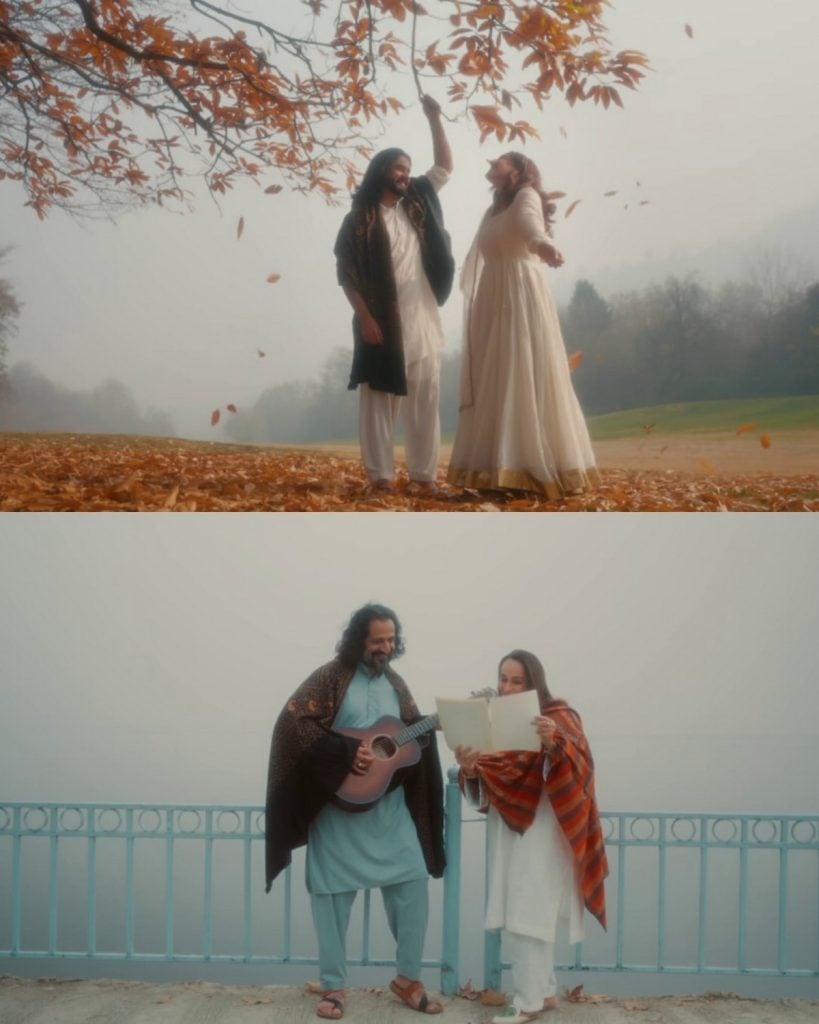
He also launched Renzu Music, a label built specifically to carry Kashmiri, Balti and Pahadi-language music into the mainstream alongside Hindi and English releases. Its roster includes Noor Mohammad, Huzaif Nazar, Masrat un Nisa and Duha Shah, while its early releases have paired Kashmiri musicians with established names such as Shankar Mahadevan, Sonu Nigam and Ali Sethi.
Singers such as Ishfaq Kawa, sometimes described locally as a cross between Arijit Singh and Bryan Adams, have built massive YouTube followings through self-produced Kashmiri-language music, often without formal training or a label. Rasiq Imtiyaz Khan’s Kashmiri single ‘Lolan’ found a home on Zee Music, one of the country’s biggest labels.
“Kashmir’s music has the potential to resonate with India. I was very particular to keep Kashmiri songs in my show, Songs of Paradise because in translation the meaning would get lost. The track Dil Tsooran got so much love from across India, I didn’t expect that. But the music resonated with everyone,” Renzu said. “It just gave me the confidence that Kashmiri music can enjoy a pan-India audience.”
Another filmmaker who has taken stories of identity, conflict, displacement, religion and human suffering into independent Indian cinema is Rahat Kazmi. As director, writer and producer, his credits include Mantostaan, Rabbi, Million Dollar Nomad, Side A & Side B, Cyanide, Country of Blind and Lihaaf: The Quilt.
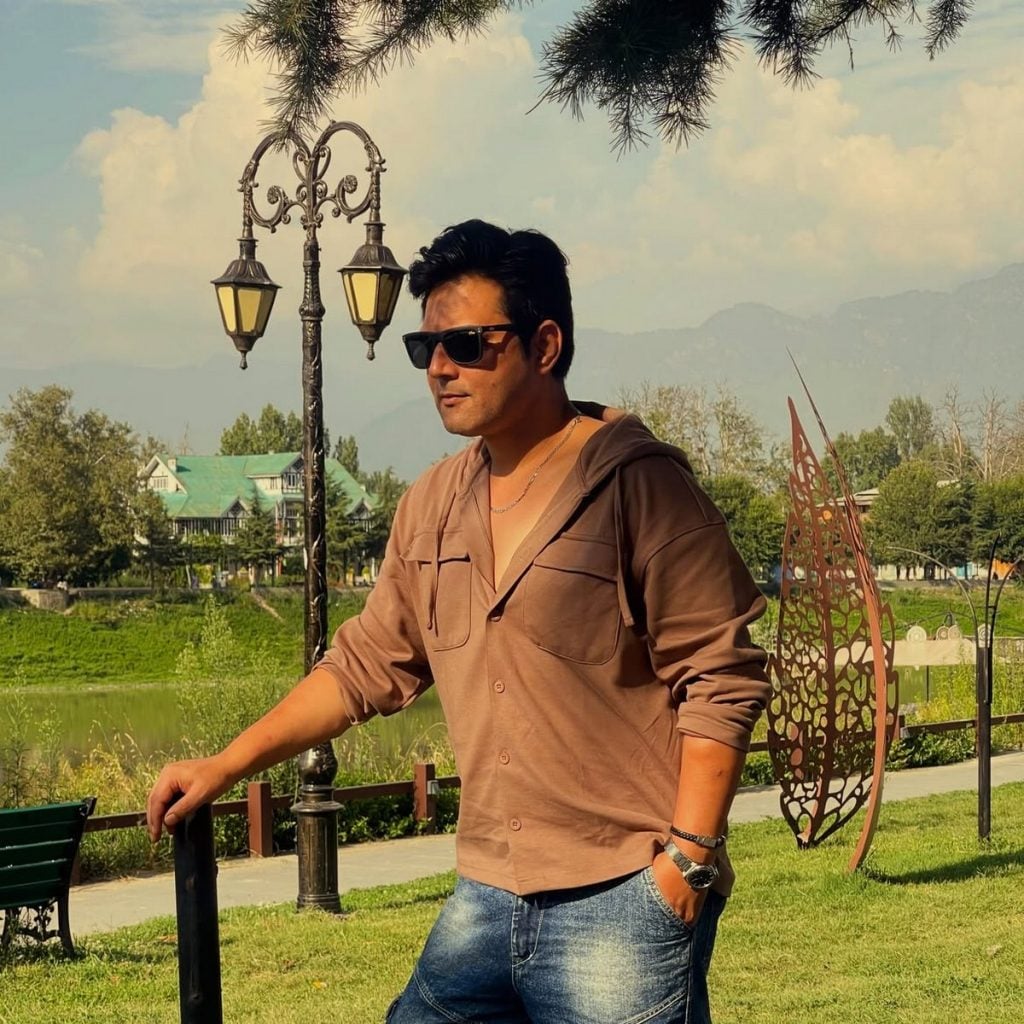
Kazmi made his directorial debut with Mantostaan in 2017. He recalled that he had no money, and actors such as Raghubir Yadav and Veerendra Saxena came on board for no fee. The film was shot on a 5D camera. His goal, he said, was simply to make the film; awards or a successful festival run were not on his mind.
“After six months of making that film, we were at Cannes. It was bought by Netflix. Platforms like the UK Asian Film Festival and BAFTA recognised and also awarded our film. It was made in a few lakhs, and it did ten times more business,” he said.
Kazmi strongly endorses the idea of “local stories for a global audience”.
He also said that while the industry is growing, society needs to evolve and allow more Kashmiri youth to step out.
“Our culture and families don’t let us go outside. Because we are being told that it’s not for us. Here, if a girl band emerges, they get banned,” he said.
Kashmir, he said, could learn from Iran, which has produced major filmmakers, artists and athletes.
“It’s a Muslim country and they are going through wars and whatnot, but the kind of talent they have produced… Even America is impressed by their filmography. They win Oscars. Why? Because they didn’t kill their talent.”
Also Read: Film studios are making a comeback in Malayalam cinema. They aren’t replacing Kerala’s landscape
What’s next?
For Kashmir’s cinema fraternity, the Valley needs two things urgently: a film school and post-production facilities. This was the buzzing conversation among actors and filmmakers who attended the film festival.
“Kashmir does not have a single dedicated film school,” Renzu said.
There are no standing government grants for independent filmmakers, no screenwriting residencies, no professional post-production houses, and even basic camera and sound equipment can be hard to rent locally.
Most young Kashmiris serious about filmmaking have had to leave the Valley to train at institutes in Mumbai, Delhi or abroad. This also turns filmmaking into a privilege reserved for those who can afford to leave and come back.
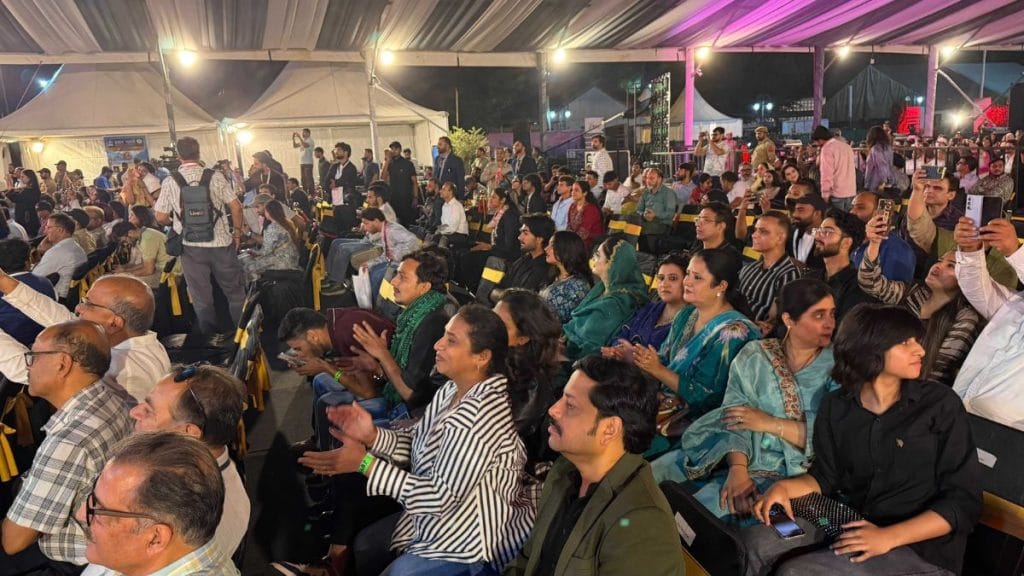
“The government needs to help and handhold local filmmakers and enable them to tell their stories. They need to create enablers who can mentor the upcoming talent. You need three to four years of mentoring here,” Renzu said. “They have to work on their craft. Craft should speak for itself. It is one area where people in J&K can improve.”
Filmmakers like Renzu shoot 80 per cent of their films in Kashmir, with local HODs across departments from makeup and costume to line production. But when it comes to post-production, even they turn to Mumbai.
What exists today is mostly small-scale. Local directories list a handful of production houses in Srinagar, including RISE Production KMR in Rajbagh and others on Sulekha and Justdial. Most advertise wedding videography, event coverage and basic editing rather than dedicated film post-production facilities for colour grading, sound design or visual effects.
Line-production and fixer companies such as Trisna Films do list post-production among their services for outside crews filming in J&K. But filmmakers say such services are limited to the availability of editing software such as Premiere, Avid and Final Cut, rather than a dedicated post-production studio with colour grading, sound design and visual-effects facilities.
“There is representation I would say, but one or two studios at best. Also, these studios aren’t entirely for films. More film studios with proper post production will strengthen the ecosystem… and then the dream of film city in Kashmir won’t be a distant dream,” Sarwar said.
The government has also acknowledged the gap. At IFFJK, Chief Minister Omar Abdullah said the administration plans to invest in post-production facilities, equipment banks, studios and film education institutes across J&K.
He described the goal as building a “complete end-to-end production ecosystem” rather than treating the region purely as a shooting location, and said films employing local artists, technicians and crew would receive support from the government.
“Cinema is not merely entertainment for us, but an official industry,” the CM said.
Renzu called the film festival a “great initiative.”
“I see it as a beginning, a stepping stone. Our cinema is growing. Though it’s not like a completely regional film set up yet, it’s going in that direction,” he said. “This film festival is great but we must keep asking: ‘what’s next?’”
(Edited by Asavari Singh)