



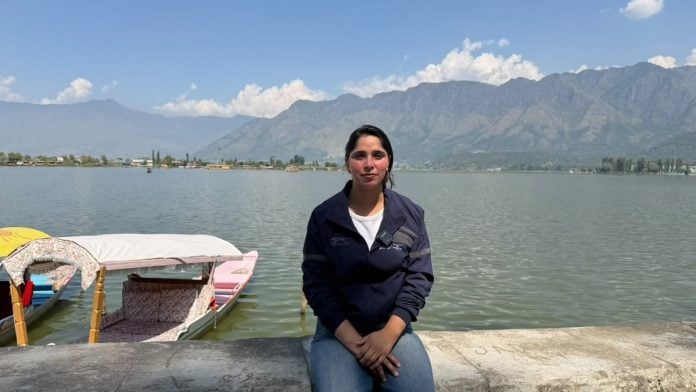
Srinagar: In Kashmir’s Bakarwal community of nomadic shepherds, even sending a girl to school is viewed as a luxury. So, when Nazia Bibi wore shorts and a t-shirt and started playing kho kho in 2014, it set tongues wagging. It was unimaginable.
Today she is a national kho kho champion. Since winning the Kho Kho World Cup in 2025 with her team—the first Muslim woman from J&K to do so—Nazia Bibi has been living the big, beautiful dream, even as Kashmir has struggled to catch up.
Underneath the pride and persistence sits a nagging hurt.
“Winning the Kho Kho World Cup is the biggest achievement of my life, but it has turned sour with every passing month. It has been over a year since our win, and I haven’t got a single rupee from the J&K government,” 23-year-old Nazia Bibi told ThePrint.
Long eclipsed by cricket and football in J&K—which produced regional stars such as cricketers Parvez Rasool, Abdul Samad and Auqib Nabi, and footballers Mehrajuddin Wadoo, Abdul Majeed Kakroo and Ishfaq Ahmed—kho kho shot into the limelight with the inaugural World Cup in January 2025, with attacker Nazia Bibi as part of the winning team. She became the first-ever Muslim tribal player from the UT to represent India in kho kho.
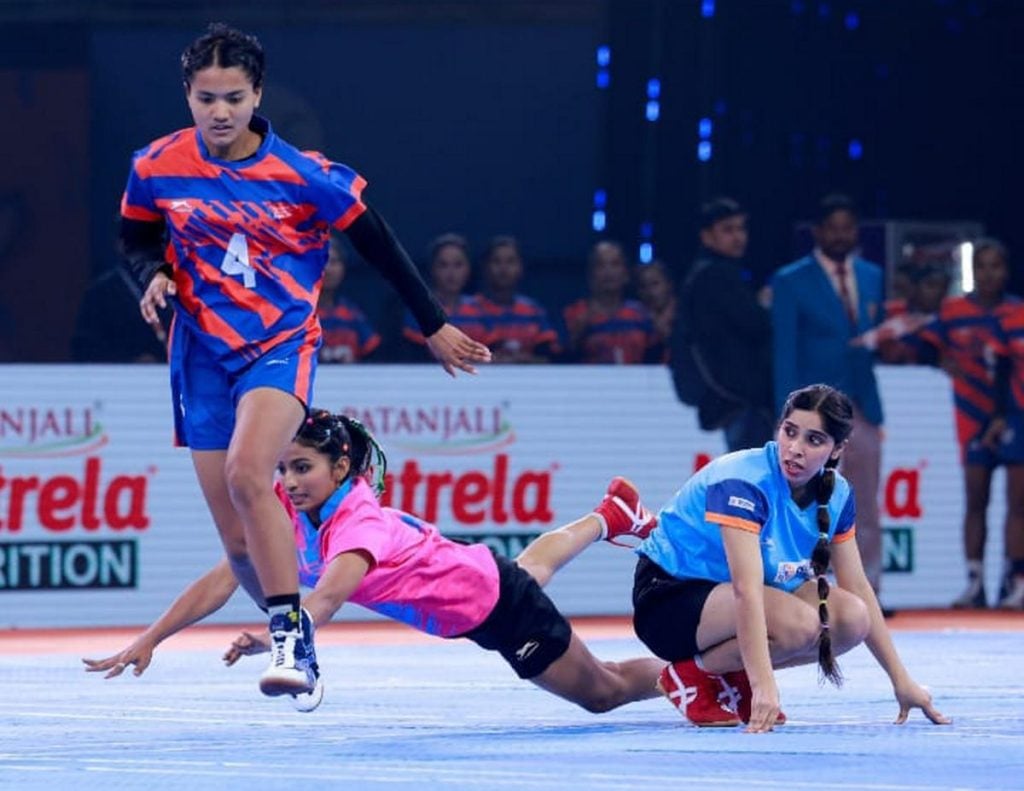
But the aftermath of her win has been far from the glory she imagined. While her World Cup-winning teammates from other states went home with rewards worth lakhs, even crores, the J&K government announced just Rs 40,000. More than a year later, even that has not been credited.
We want Nazia to become an icon in J&K
– Sudhanshu Mittal, president of the Kho-Kho Federation of India
“Is that how the state government treats a World Cup winner? I feel embarrassed. This Rs 40,000 is nothing but an insult,” she said at a café near Dal Lake in Srinagar, dressed in track pants and with sun damage visible across her cheeks from years of training outdoors. “Is it because I am a Muslim woman? Is it because I belong to the Bakarwal community? If this is how people in power plan to promote sports here, it’s never going to work.”
Now, Nazia Bibi is counting down the days to the first Commonwealth Kho Kho Championship. The tournament was originally scheduled for Kashmir in March 2026, but has since been pushed to the last week of December and relocated to Haryana. The Indian squad hasn’t been named yet, and Nazia Bibi is hoping her name makes the cut.
Also Read: Smriti Mandhana’s 4 records went unnoticed in India. Will Kohli or Rohit get same treatment?
How the meaning of ‘that girl’ changed
Coach Mohammad Tahir’s chest swells with pride whenever Nazia Bibi’s name comes up. He has been her unofficial trainer for three years now. A kho kho player who has represented J&K in championships himself, he spotted her potential long before anyone else did.
“We both used to practice at Green Field Gandhi Nagar. I noticed her because she would come early and train till late, all by herself. I just gave her a helping hand because there was this commitment,” he said.
There were days when I would cry my eyes out. It was unusual for girls of my age to have that strength. They would often say, ‘She drinks goat milk’, that’s why she has the strength
– Nazia Bibi
Sports became her way to prove herself. A weapon against the students who teased and taunted her at Government Girls Higher Secondary School, Bazar Qasaban. There were barely any students from the Bakarwal community, which made her a target of bullying. She recounts how tags like “low caste”, “dirty-looking people”, “not pretty,” were thrown at her.
“Whenever any sports competition would approach, my teachers would tell me to channel my anger there and prove myself. I started emerging as the best player, be it long jump, relay race, football… I have played for my school till the state level. After a point, in any and every sport, my name would always be there,” said Nazia Bibi.
Initially, even her sporting ability became fodder for jibes.
“There were days when I would cry my eyes out. It was unusual for girls of my age to have that strength. They would often say, ‘She drinks goat milk’, that’s why she has the strength,” said Nazia Bibi, who is still a little shy and takes time to warm up to people.
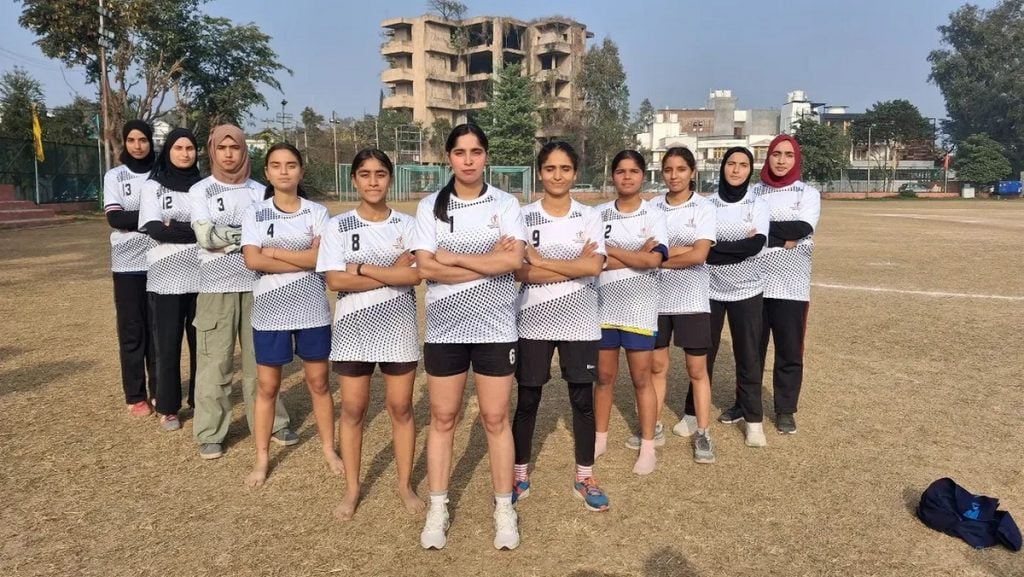
But she never let the words shrink her. Instead, each insult became a brick, something to build on rather than be buried under.
While she was introduced to kho kho at school in Class 5, running was her first love. But unlike some of the other sports she tried, kho kho had an organised circuit around it in J&K. Up to 400 students from districts across Jammu and Kashmir would turn up for unofficial tournaments, and there was a kho kho association to guide players. Running offered no such structure.
“I couldn’t see any scope in running, as there were no coaches to train us in a direction where we could play at the national level. With kho kho, I still could dream of playing nationals,” she said.
But other students were not the only problem. Her parents had settled in Jammu’s Nagrota— rather than following the nomadic herding life of her grandparents, who travelled seasonally between Jammu and Kashmir — but they still occupied a traditional world. Her father runs a sheep and goat business, and girls are rarely allowed to pursue higher education or careers.
As Nazia Bibi fought one battle on the mat, her parents fought another outside it. They faced questions and judgements, but protected her from the onslaught.
When she began travelling for matches, neighbours taunted the family: “Aapne apni ladki ko Delhi bhej diya, pata nahi woh wahan kya karegi” (You’re sending your girl to Delhi, who knows what she will do there).
Tahir recalls that Nazia Bibi was initially reluctant even to submit her World Cup application. She had never seen the world outside J&K, and the leap was daunting.
“I am very mindful of every step and decision I make because my parents are letting me do whatever I want. I don’t want to let them down. So, I think twice-thrice before taking a call,” she said.
Four players—two boys and two girls—had been shortlisted from J&K for the national camp in 2024. Only one of them was going to make the final team.
“I told her to focus on herself and stay loyal to her goal. People will never miss any chance to pull you down, we have to rise above them,” Tahir said. “Ek ladki ne J&K ki image bana di (A girl made J&K’s image). She will always be ‘that girl’ who represented J&K.”
Rewards and rumours
When Ranjana Sarania from the Bodoland Territorial Region represented India at the 2023 Asian Kho Kho Championship, she became an “icon” in Assam, said Sudhanshu Mittal, president of the Kho-Kho Federation of India. He wants Nazia Bibi to do the same for J&K.
“Sarania’s success brought a new wave of energy in youngsters there,” said Mittal. “We want Nazia to become an icon in J&K.”
Mittal also acknowledges the neglect Nazia Bibi has faced despite her World Cup win. He has assured her of the Rs 30 lakh prize money promised by the central government to all World Cup winners.
“Nine players, including Nazia, had not filled the form. We are doing our part and getting her the money she deserves,” he said.
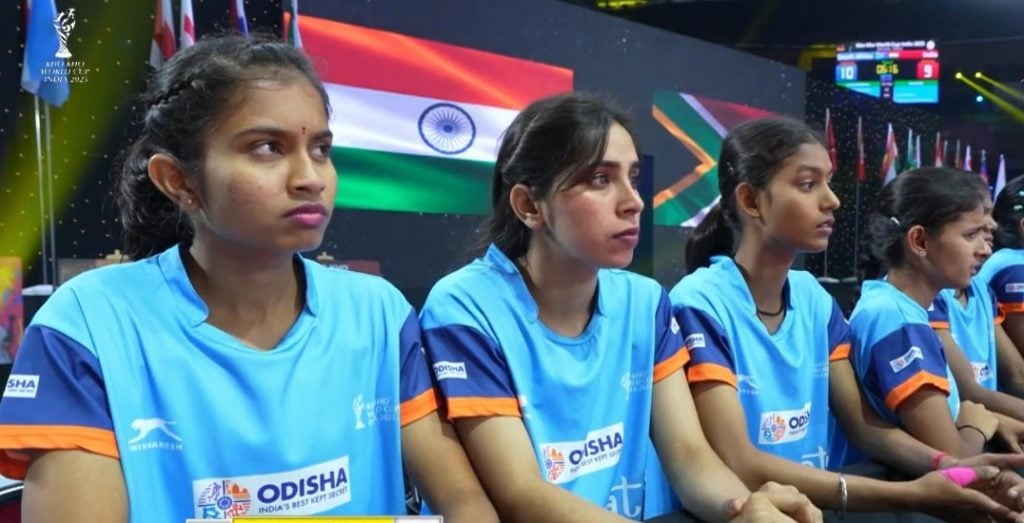
Nazia Bibi says she has more faith in Mittal’s promise than in her own UT government. She also says she had to contend with an ugly rumour in the kho kho circuit that her selection to the national team was not earned on talent, but handed to her as a “political quota” to appease a particular community.
Both Mittal and Sumit Bhatia, chief coach of India’s women’s kho kho team, firmly reject the claim. According to Mittal, team selection follows a 70-30 policy. Seventy percent of slots go on merit, while the remaining 30 per cent are for talented players who could, with the right guidance, become top-level competitors. It is a deliberate balance between a team’s present and its future.
“Nazia had that potential. It is a misconception that her religion or her caste had any role to play,” Mittal said.
‘God-given speed’
Coach Bhatia didn’t expect much from Nazia Bibi when she arrived at the first selection camp in Delhi ahead of the 2025 World Cup. But among 60 players, she topped the fitness and training assessments. Initially, he dismissed it as a fluke.
“Then we did two-three more rounds of performance tests, and we saw she was still at the top. She is very talented… her confidence and drive, that itself was surprising,” Bhatia said.
In a sport that demands speed, agility, strategy and stamina, Bhatia says it is Nazia Bibi’s speed that sets her apart. She is versatile as well.
[Nazia] could do everything with the same precision. You couldn’t put her in a box. Her speed is god-gifted, and she proved to be an asset to our team
-Sumit Bhatia, chief coach of India’s women’s kho kho team
A 15-player kho kho squad is typically built around attackers, defenders and wazirs. Nazia Bibi could switch between roles.
“She could do everything with the same precision. You couldn’t put her in a box. Her speed is god-gifted, and she proved to be an asset to our team,” he said.
Of the 60 players at the camp, representing nine or 10 states, only 15 made the team. Nazia Bibi was the sole name on that list from J&K.
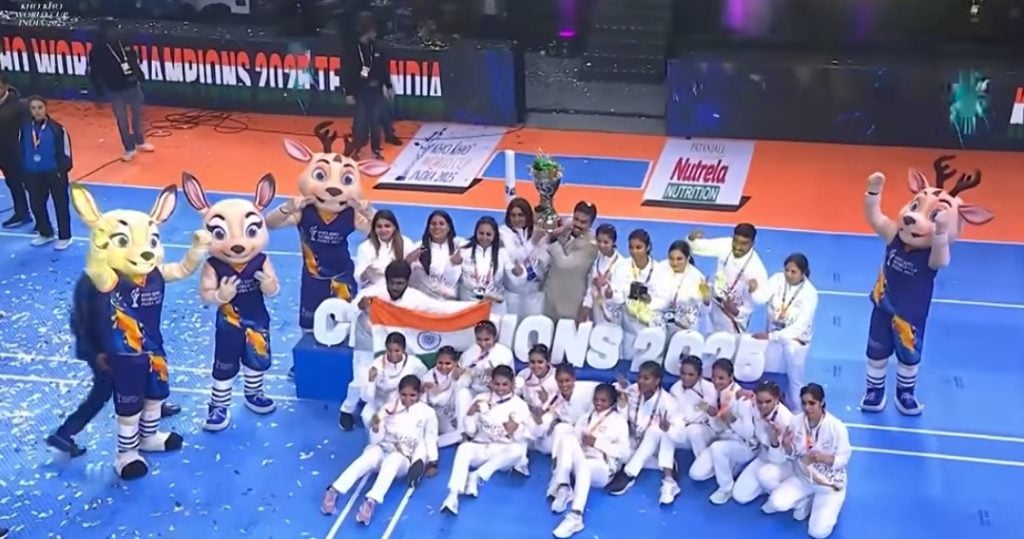
For her, though, the national camp was intimidating. She was suddenly vying for a spot among the best players in the country.
“I lacked confidence. I knew these were the best of the best people from across India. And, everyone was extremely good so you tend to overthink your position,” Nazia Bibi said. She would often sit and watch the others play, studying their game and mannerisms.
But when the assessments began, she blocked out the noise, including her own doubts, and performed.
On the kho kho field, her years as a runner have paid dividends. Nazia Bibi relies on speed, sharp changes of direction and quick bursts across the mat.
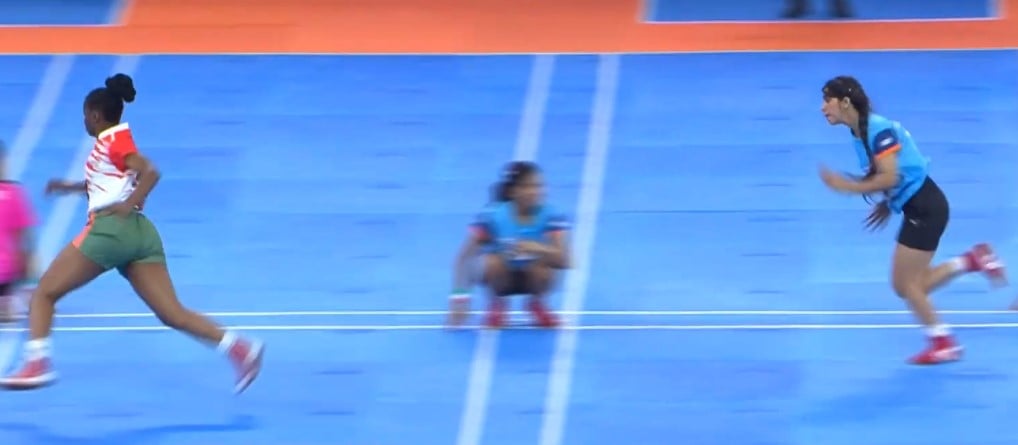
In the semi-final against South Africa, she was among the early Indian attackers caught during the opening turn, after which Chaithra B continued the attack and produced a five-point Dream Run. India eventually won the match 66-16.
“Whenever I played for India, I never let my shortcomings come in the way of my performance. Every bout was do or die for me,” Nazia Bibi said.
Though she is primarily an attacker, she is not confined to one role. At the World Cup, she took on defensive duties as well. Her strength is athleticism—the ability to accelerate, change direction and react quickly as the game shifts around her.
Bhatia said the national camp selections will determine who makes the Commonwealth Championship team.
“If Nazia gets selected for the camp, then she will definitely make it to the team,” he said.
Also Read: Iran women’s kabaddi team is training in Sonipat. They’re rebuilding for 2026 Asian Games
Mitti to mat
Nazia Bibi’s obstacles were never just about caste and identity. Infrastructure has been an equally stubborn opponent.
Kho kho’s struggles mirror what nearly every sport in J&K has dealt with for years. Successive governments have treated sports facilities as a low priority, while administrative collapse and political turnover have repeatedly undermined long-term planning.
A few years ago, the J&K Handball Association pointed out that its regular training centres in Jammu had shrunk from three to one. Cricketers, too, had for years relentlessly complained about the shambolic state of the Jammu and Kashmir Cricket Association until the BCCI took charge in 2021; a Ranji win followed last year.
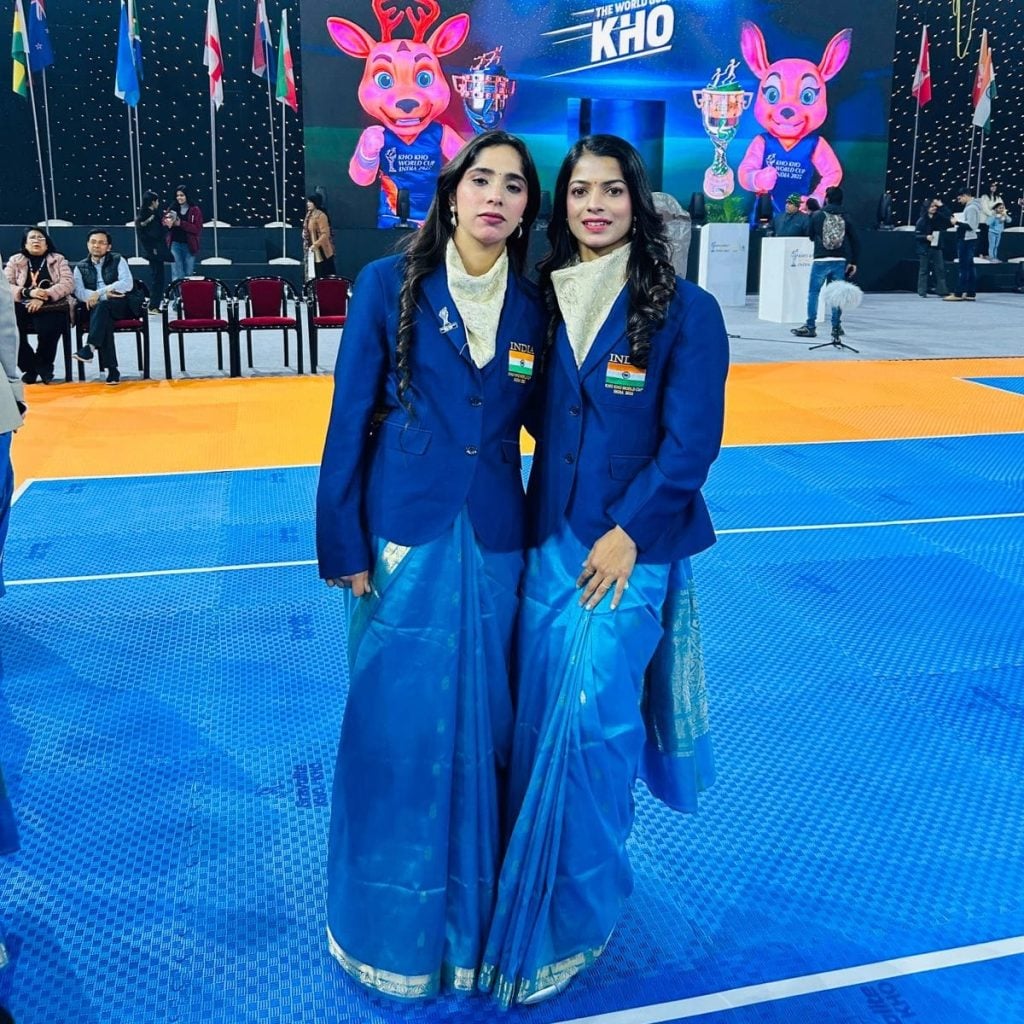
Kho kho hasn’t escaped this pattern. There is only one mat ground for the sport in the entire region—at Green Field in Gandhi Nagar, Jammu. Every other venue makes do with mitti, or plain mud grounds. This has a direct impact on training and performance.
While kho kho was traditionally played on mud, elite competition has shifted to synthetic mats over the past decade. The Ultimate Kho Kho League, World Cup and national championships are now played entirely on mat. Mittal called it a “turning point” for the sport.
Mat surfaces are standardised, cushioned and far more forgiving on the joints during the sport’s signature dives, chases and sudden direction changes. Mitti grounds are uneven, harder on impact and offer none of the grip or consistency a mat does.
“If you get trained only on mitti grounds, your performance will suffer on mat grounds. And, there is a higher chance to sustain injuries,” Tahir said.
That means most kho kho players in J&K are still training on surfaces that work against the technique they will eventually be judged on at the national or international level.
“It took us so long to be considered and seen,” Nazia Bibi said. “We need more attention. More funds for the association to run in a proper manner, funds for proper diets, shoes, and above all, proper infrastructure.”
For now, her father covers her expenses. Outside kho kho, she plans to pursue a postgraduate degree in Jammu, having done her BA at a local government college. What still buoys her is the memory of walking into the stadium for the World Cup final.
“So many emotions were going on. It felt like zameen se utha kar falak par baitha diya” (as if I had been lifted from the ground and placed among the stars). It’s not easy for people like us to dream big,” she said.
(Edited by Asavari Singh)