



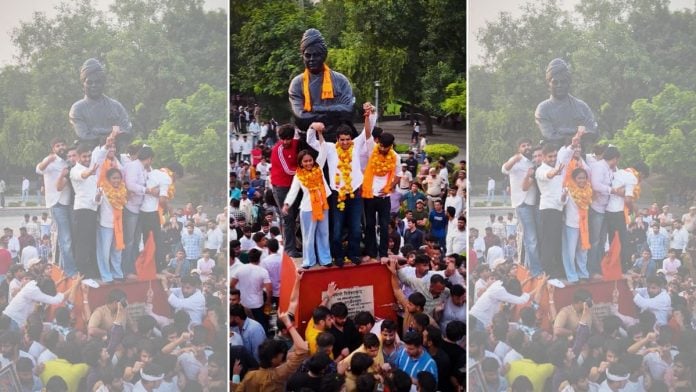
New Delhi: Winning a Delhi University Students’ Union election can lead to a career in politics. Often, it doesn’t. And the story is more complicated, ThePrint’s research and reporting on the last 49 key members of DUSU from 2011 to 2025 showed.
Only two of them — just 4 per cent — have gone on to contest in an election beyond the campus, and not a single former president, vice-president, secretary or joint secretary has won.
Student politics, especially at Delhi University (DU) and Jawaharlal Nehru University (JNU), has long served as the training ground for many politicians including Arun Jaitley, Alka Lamba, Nupur Sharma, and, more recently, Delhi Chief Minister Rekha Gupta. But a DUSU victory offers no straight route to an electoral career.
While some have climbed through the youth wings of the Congress or BJP and into organisational posts; others who moved glacially through student and youth politics have switched parties, moved into teaching, law or business, or left politics altogether. Women are often made to trade it for a family life.
Three of the key posts in 2026 DUSU elections were dominated by Akhil Bharatiya Vidyarthi Parishad (ABVP), with an independent candidate bagging the fourth. The National Students’ Union of India (NSUI) drew a blank.
Yash Dabas won the presidency with 24,576 votes, while the vice-presidency went to the independent candidate, Deepanshu Shokeen by a margin of 13,705 votes. Riya Chhawdi got the Secretary’s post and Lakshya Raj Singh won as the Joint Secretary.
As the new batch takes charge, ThePrint spoke to 37 former DUSU office-bearers from the past 15 years, and researched the careers of the remaining 12 through public records, social media profiles and conversations with their peers to find out what happened after the posters came down.
2011-12
Ajay Chhikara (President) (NSUI)
Chhikara was the only NSUI candidate to win on the panel in 2011. It made it easier for him to get out of it with a real political career, something he noted is not the case for everyone.
“Out of every batch, hardly one person is able to move forward, whether it’s NSUI or ABVP,” he said. “Otherwise, most just contest DUSU elections and get left behind in DU.”
After joining NSUI in 2005, he worked for 5 years before contesting for DUSU elections. Following his tenure as the president, he worked as the national secretary of NSUI, and was then promoted to the National General Secretary. He also briefly served as the Assistant Advocate General for the Haryana government.
“You get name, fame, connections, massive visibility and exposure to the mainstream,” he said of a DUSU win. “From NSUI to Indian Youth Congress (IYC), and from IYC to Main Congress—you get an easy entry into the league.”
He is currently the National General Secretary of IYC, and is in-charge for the Maharashtra division.
Vikas Choudhary (Vice-President) (ABVP)
Choudhary, who won the 2011 DUSU race for second in command, is now out of the public eye.
“He is missing in action,” Chhikara said of his former deputy. “There isn’t much idea about him.”
He won his election by a comfortable 3,780 votes, but nothing about his life after that has surfaced since. He has no traceable social media accounts, and could not be reached.
Vikas Yadav (Secretary) (ABVP)
Yadav now works as an Assistant Professor of Political Science at Delhi University itself, while continuing to be an active member of the Bharatiya Janata Party (BJP).
After working as the Secretary in 2011, he stayed in ABVP for five more years, until his PhD made him ineligible for student politics. Moving to the BJP, he found that nobody was interested in what he had done before.
“If you want to work with the BJP, you have to start working right from the very beginning. Just because you held a position in the ABVP, does not mean you will automatically get a high-ranking post in BJP” he said.
It took Yadav another eight years of working in the BJP before he reached the state level.
Having formerly worked as Delhi vice-president of the BJP’s OBC Morcha, he is currently on the party’s national team for the “One Nation, One Election” campaign.
Deepak Bansal (Joint Secretary)
The 2011 ABVP Joint Secretary, Bansal, has since built a career in politics, but by switching to the Aam Aadmi Party (AAP).
After the completion of his term, he became the ABVP organisation secretary, and then joined the BJP in 2014. He held several posts for the next years in the party — as district general secretary, district president, state secretary and state vice-president of the youth wing, Bharatiya Janata Yuva Morcha (BJYM).
In 2024 he switched to AAP, just when former chief minister Arvind Kejriwal and his deputy Manish Sisodia were in jail.
“The regard that used to exist for party workers was gone in the BJP,” he said. “That is why I switched.”
He is now Delhi state secretary of AAP’s Punjab and Chandigarh Chhatra Yuva Sangharsh Samiti (CYSS). He is also the state coordinator for the DUSU campaign of the party’s student body, ASAP.
2012-13
Arun Hooda (President) (NSUI)
NSUI leader Hooda won the top post in 2012 and then joined the IYC, before switching to AAP. He now practises as an advocate in the Supreme Court.
In 2018, he was the media coordinator of the IYC’s Haryana unit. He then worked as Haryana state president of the AAP’s youth wing, where, he said, things got blurry once the INDIA alliance arrived.
He noted that he was a fighter pilot in the Indian Air Force and a national-level cricket and softball player before DUSU, and that he keeps “exploring other areas” for a reason.
He also calls DUSU “a stepping stone to the bigger politics”, recalling that for decades whichever party won student elections went on to form the government at the Centre.
Varun Khari (Vice-President) (NSUI)
Now the General Secretary of the Congress’s South East Delhi district unit, Khari is supposedly eyeing an election ticket.
He was NSUI national secretary in 2015, and went for the Delhi IYC presidency after.
“All the people who fought for DUSU prepare for their respective assembly elections, to become an MLA,” he said.
According to Hooda, Khari is now trying to contest polls from Wazirpur.
Varun Chaudhary (Secretary) (NSUI)
Chaudhary claimed that he was the “youngest office-bearer in the union’s history”, winning the post at the age of 17 in 2012.
He was from a non-political background. After his time at DUSU, he went on to become NSUI’s national secretary, and was in charge of states from Uttar Pradesh to Karnataka. Then he was promoted to the position of national president in 2021.
Chaudhary is now the Secretary of the All India Congress Committee (AICC) and is co-in-charge of eastern Uttar Pradesh.
Vishu Basoya (ABVP) and Raveena Choudhary (NSUI) (Joint Secretary)
The joint-secretary position was held jointly by the ABVP and NSUI in 2012, following a dead-even tie in votes.
Basoya said the deadlock was broken by a draw of lots.
“A lucky draw was drawn—10 chits for one candidate and 10 chits for the other, and it was decided through a draw of lots. The opponent won,” he said.
Others recall the term being split between the two.
Basoya is now a BJYM national executive member and Uttar Pradesh co-in-charge, and a lawyer who also runs a trust for junior advocates that he says has 1,500 to 2,000 members.
He had been in ABVP from 2008, and moved to the BJP in 2016.
Choudhary, the only woman on the panel, has quit politics.
Both Khari and Hooda confirmed she left politics and is no longer in touch with anyone from the party. Chhikara, said that she was “made to contest” and was never significantly interested in politics.
Her current whereabouts could not be traced.
2013-14
Aman Awana (President) (ABVP)
The 2013 panel ran three-to-one for the ABVP.
Awana holds no formal political post today, but is active in politics. He continues campaigning for the party through his personal Instagram account.
“I am engaged through social work on my personal level, and my social networks,” he said. “Even though I don’t hold an official post currently.”
He noted that politics runs in his family, which led to a natural inclination for him.
After his tenure, in 2014, he ran the college campaign committee for Prime Minister Narendra Modi’s Varanasi run. He stayed with the ABVP until 2019, serving as an NEC member, and a CWC member at the national level.
He now runs a real estate and rental business in Delhi.
Utkarsh Chaudhary (Vice-President) (ABVP)
Like Awana, Chaudhary too has a family steeped into politics, and his uncle is a Union Minister.
After his tenure, he spent two more years in ABVP before joining the BJYM in 2016, and served two terms as its Haryana state vice-president.
Chaudhary is now with the BJP in his home district of Palwal, though he no longer holds a state post. He describes himself as “Karyakarta” on his Facebook account.
While student politics has not resulted in a tangible political career for him yet, he noted that it has helped build his character.
“The main benefit of student politics is that boldness enters your character, which is very necessary for politics,” he said, reflecting on his time at DUSU.
Karishma Thakur (Secretary) (NSUI)
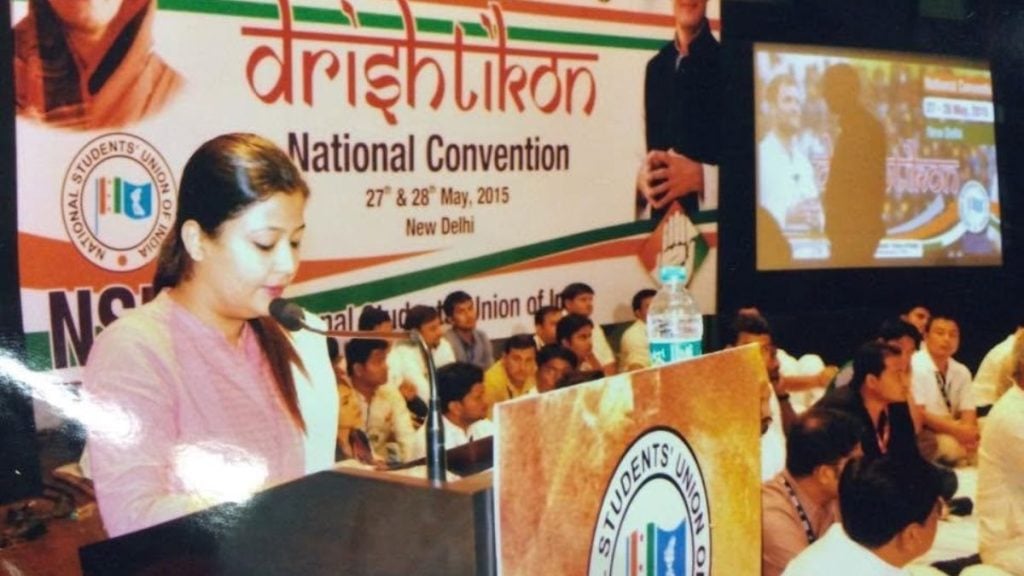
In the past 15 years, Karishma Thakur is among the few women panelists to continue politics. She is one of two panelists to have contested an Assembly election.
Thakur is now a Congress leader and serves as the state president of All India Mahila Congress from Uttar Pradesh.
After her DUSU victory, she rose through the NSUI and became its National General Secretary. By 2021, she had been appointed president of the Mahila Congress’s Bundelkhand zone in Uttar Pradesh, with responsibility for the organisation across 17 district units.
Thakur was chosen by Congress to contest the Govind Nagar Assembly by-election in Kanpur in 2019. She was 25 at the time. She lost to BJP’s Surendra Maithani.
She returned to the same constituency in the 2022 Uttar Pradesh Legislative Assembly election, but lost again.
Her political career has come at a cost, she said. She went through a divorce when her in-laws expected her to give up politics.
“I chose my dreams,” she said. “I am a single mother and pursuing my career.”
Raju Rawat (Joint Secretary) (ABVP)
Rawat describes himself as “somewhat active” in politics, having chosen books over ballots after DUSU.
“Nowadays, the country needs educated leaders,” he said, explaining his choice.
He now teaches History at Satyawati College and is in charge of Jammu and Kashmir for the “One Nation, One Election” outreach.
2014–15
Mohit Nagar (President) (ABVP)
Primarily a practising advocate at the Delhi High Court and district court, Nagar said he stays connected to politics as the Uttar Pradesh in-charge of the BJP’s “One Nation, One Election” team.
“I work to create public awareness for the One Nation One Election proposal,” he explained.
After serving as ABVP’s organising secretary for the south zone, he worked as the Delhi state secretary of the BJYM. He has moved steadily inside the BJP since.
Parvesh Malik (Vice-President) (ABVP)
Since his win, the ABVP leader has largely been out of the public eye, and could not be reached.
Nagar and Vikas Yadav separately said he is no longer in politics, with Nagar putting it down to personal reasons.
He is also not active on social media anymore; he last posted in 2022, campaigning for BJP.
Kanika Shekhawat (Secretary) (ABVP)
Shekhawat, too, is currently out of active politics.
After her time in DUSU, she went back to her homestate, Jaipur, and joined ABVP’s national council. After marriage and the birth of her daughter, politics took a backseat.
“A woman definitely goes through this break period in her political career,” she said, speaking of motherhood. “But I would like to return to serving people again.”
Ashutosh Mathur (Joint Secretary) (ABVP)
ABVP’s Mathur is now the Delhi state vice-president of the BJYM and is also an advocate.
After his time in DUSU, he remained active in ABVP until 2019, then moved to the BJYM national team. He has since served as district president, vice-president and all-morcha in-charge in Delhi.
2015-16
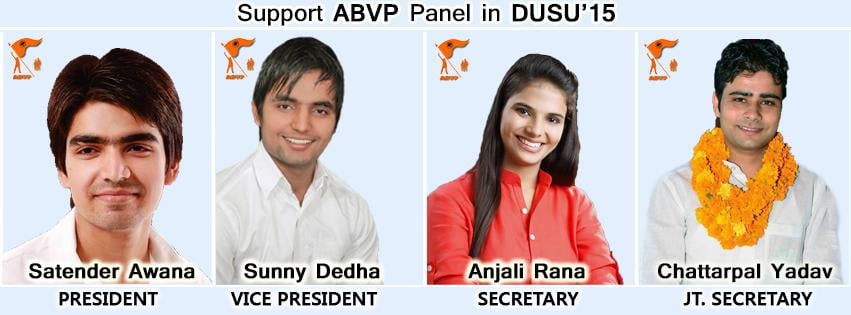
Satendra Awana (President) (ABVP)
Awana said he is now preparing for the 2027 Assembly Election from Dadri.
The road to polls began by accident.
He had sat the CLAT law entrance and joined DU on his brother’s advice that a central university was a good option.
“I didn’t even know there were elections at DU,” he laughed.
Within his first year at Deshbandhu College he was the college vice-president. He joined ABVP in 2013, won DUSU in 2015, served on ABVP’s national executive until 2018, and crossed over to the BJP in Uttar Pradesh that year.
Since 2021, he has been the BJYM’s Uttar Pradesh state vice-president.
Sunny Dedha (Vice-President) (ABVP)
Dedha is now Delhi state secretary of the BJP’s Kisan Morcha, and said he is also pursuing a BSc degree. He joined ABVP in 2009, and worked in the organisation for six years before contesting and winning DUSU elections.
“The Vidyarthi Parishad explains its work at the micro level and teaches management,” he said about the organisation’s role in his political career.
He stayed with ABVP till 2022, and then joined BJP.
Anjali Rana (Secretary) (ABVP)
Rana won the election a month into her first year, which she said had never happened in Delhi before.
Shortly after term at DUSU, she joined the women’s wing of the party, BJP Mahila Morcha, in 2017. She worked as a Vice President until 2024. She is currently a state executive for the party’s Delhi team, in charge of several districts.
She is also the district secretary in the BJP’s Najafgarh unit.
“Our batch is doing much better than the ones before and after,” she said, reflecting on the DUSU panels of her time.
Chhatarpal Yadav (Joint Secretary) (ABVP)
Yadav is now the convener for the Najafgarh assembly seat in the BJP.
After DUSU, Yadav stayed in ABVP for three more years, and then moved to BJYM and became a state president.
Rana claimed that Yadav was denied a Councillor’s ticket from the Isapur ward twice, and may finally get one this time. He did not comment on it himself.
He said he never planned a political career and that it simply grew on him.
“The interest kept growing slowly,” he said.
2016-17
Amit Tanwar (President) (ABVP)
Tanwar is now an Assistant Professor of Commerce at DU, he is also pursuing his PhD at the Delhi School of Economics, and working as the vice-president of BJP Delhi.
He is in charge of the Ambedkar Nagar Assembly seat and is preparing for Chhatarpur as well.
He joined politics well before ABVP. He was with the RSS from 2008 and joined ABVP in 2012, working with the organisation until 2019, he then worked on the South Delhi Lok Sabha constituency campaign that year, before becoming BJP’s district vice-president for Mehrauli.
He described the whole trajectory as something that built on its own rather than something he set out to do. “It wasn’t pre-planned like that,” he said.
Priyanka Chhawri (Vice-President) (ABVP)
Chhawri rose from DUSU to being the BJYM Delhi state secretary, and then state vice-president. She decided to take a break from her political career in 2024, after becoming a mother. She is now focusing on her family life.
She insisted it is a pause, and not an exit.
“I would never say that I would not go back,” she said. “I would most definitely do a comeback, because that’s what I have been doing since my student days.”
Chhawri campaigns for the ABVP still on her personal social media account.
Ankit Sangwan (Secretary) (ABVP)
Sangwan has now shifted to teaching History at Satyawati College (Evening) and while working with BJP on the side.
He is on the national teams of the party’s Samvad Kendra outreach, which he noted covers five states, and of the “One Nation, One Election” campaign.
He was earlier on BJYM’s national team, and worked on the party’s election management in West Bengal in 2021 and Uttar Pradesh in 2022.
“DU allows professors to participate in politics,” he noted.
Mohit Garid (Joint Secretary) (NSUI)
Garid, the only NSUI member on the panel, is now the general secretary of IYC in Delhi.
His DUSU story started with boxing, when he won a bronze and then a silver, and re-took his first year twice along the way, since he was short on attendance.
After his time at DU, he campaigned in UP’s Gorakhpur and spent a couple of years in the Northeast before returning to Delhi.
“If you want to contest further, student politics lays a path in front of you, and you just have to walk on it,” he said.
2017–18
Rocky Tuseed (President) (NSUI)
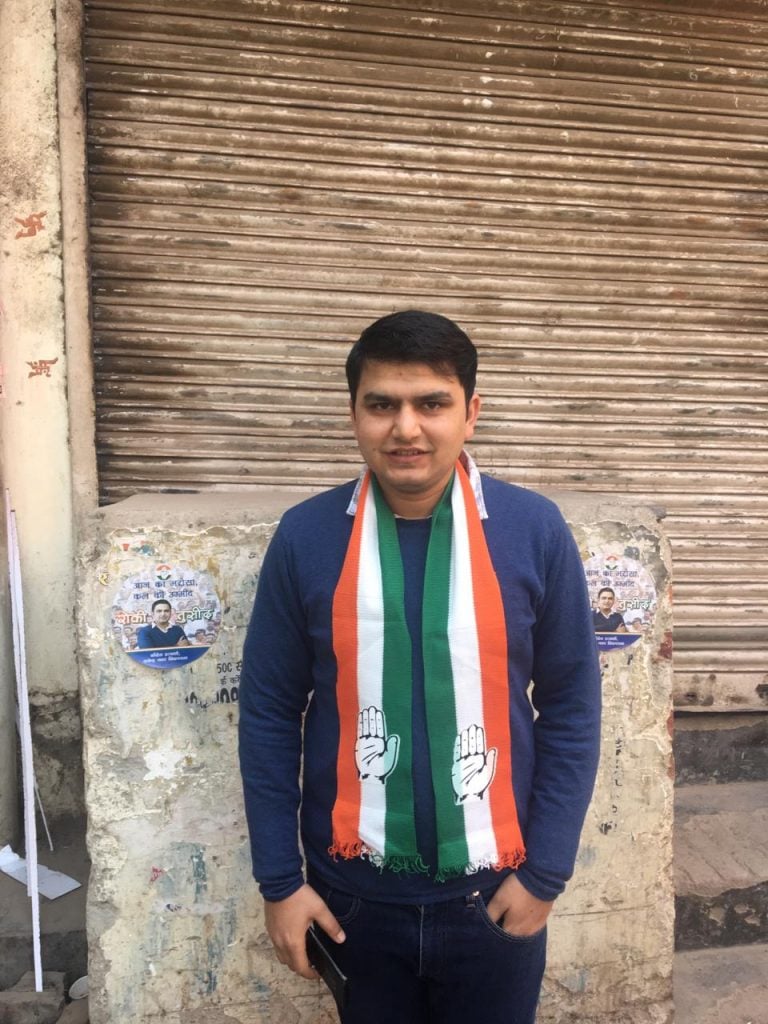
Rocky Tuseed’s journey from Delhi University’s student politics to mainstream electoral politics has been unusually fast.
After his term as DUSU president, he became the NSUI national vice-president and, within three years, was the Congress’s candidate from Rajendra Nagar in the 2020 Delhi Assembly election.
He was the youngest candidate in that election at 25, and the second from this list to contest polls, apart from Thakur.
“Now I am working in the All India Congress Committee, working in the backroom of Congress,” he said.
Kunal Sehrawat (Vice-President) (NSUI)
Sehrawat is between posts. He went from NSUI Delhi state president to National General Secretary in charge of Karnataka, and that committee was dissolved four months ago. His future depends on the new one.
“If I continue in that committee, fine,” he said. “Otherwise, I’ll shift to IYC.”
Mahamedhaa Nagar (Secretary) (ABVP)
Previously a BJP spokesperson, Nagar is now a Pradesh Mantri of the BJP’s Uttar Pradesh unit. She had spent over six years with the ABVP before her DUSU victory and has since continued in the BJP
Her Facebook profile suggests a career built around political communication and youth engagement.
Alongside her political career, she has also been a Roadies X4 contestant.
Uma Shankar (Joint Secretary) (ABVP)
Shankar has switched from politics to take on the role of a businessman. He now runs a family sweets shop and restaurant, a construction company, and a salon he set up himself.
He describes himself as connected to the party but not in any active role, since after DUSU there was a business to build and a family to look after.
“No, no, I will definitely join politics again,” he clarified. “I just prioritised differently.”
2018-19
Ankiv Baisoya (President) (ABVP)
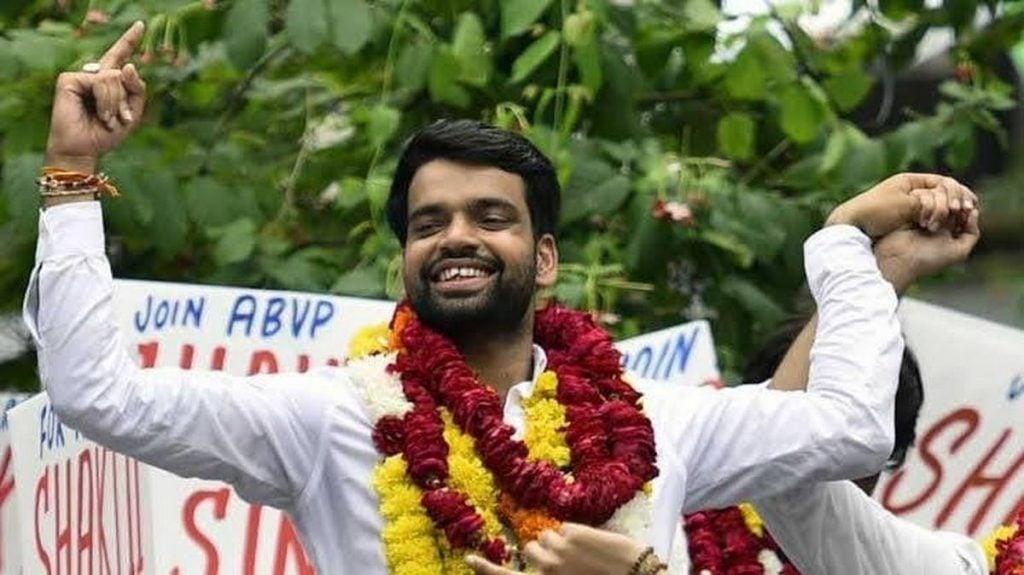
Baisoya, who said he began with “no political ambition”, is now the president of the BJYM’s New Delhi district unit. He also runs a construction company.
Baisoya’s DUSU presidency ended abruptly when his undergraduate marksheet was found to be fake, and DU cancelled his admission. He was suspended from the ABVP.
His vice-president, Shakti Singh, was subsequently promoted to the presidency under the applicable DUSU rules.
Shakti Singh (Vice-President) (ABVP)
Singh was formally promoted from vice-president to president for the remainder of the 2018-19 term in January 2019. The unusual route made Singh both the vice-president and, subsequently, the president in the same term.
Singh’s political career has moved from student politics into the BJYM and then onto international platforms.
After DUSU, Singh rose to a leadership role in the BJYM.
His current social media profiles say he is in-charge of West Bengal and a member of the BJYM’s National Executive Committee (NEC).
Singh was also an official delegate to India’s Youth20 engagement under the G20, and describes himself as having represented India at the United Nations Economic and Social Council.
Akash Choudhary (Secretary) (NSUI)
After DUSU, Choudhary moved deeper into NSUI, first working with the Delhi NSUI, before becoming the in-charge of NSUI Chhattisgarh, and then of Himachal Pradesh.
After roughly a year back in Delhi, he is now working with the IYC team, although without a formal organisational post.
“You learn how to deal with the administration, the police, and how to put your demands in front of them and get them met,” he said of student politics. “Then these things carry forward into mainstream politics.”
Jyoti Chaudhary (Joint Secretary) (ABVP)
Chaudhary, like several other women panelists before her, has taken a pause from politics following motherhood last year.
She is currently an Assistant Professor of English Literature at Satyawati College.
“After a certain age, women have to look after the family as well,” she said. “The same burden does not fall on men, letting them pursue politics freely.”
She expects to return, “possibly in later years”.
2019–20 (extended through 2022–23)
The 2019 panel remained in office until 2023 after DUSU elections were suspended during the pandemic.
Akshit Dahiya (President) (ABVP)
Dahiya has taken one of the more direct routes from DUSU into mainstream politics.
After serving as DUSU president, he moved into the BJYM, and is now its Haryana State President.
He also works as an advocate at the Supreme Court of India, and his public profile says he is the Head of the Indian Delegation at G20 Youth and a Youth Icon associated with the Government of India.
Pradeep Tanwar (Vice-President) (ABVP)
Tanwar was active in DUSU politics until 2023 and continued with the ABVP until 2025. His political career so far remained within the ABVP.
According to his cousin, Monty, he is now seeking a state-level position in the BJYM in Delhi.
Ashish Lamba (Secretary) (NSUI)
Lamba has stayed firmly within the NSUI-Congress organisation.
He became NSUI’s Delhi state president ahead of 2024 DUSU elections and has since served as an AICC observer for elections in Uttarakhand.
He said he is now pursuing politics full-time and eventually aspires to move to the national stage.
“Student politics serves as a base for national politics,” he said. “Looking at the hard work put in during DUSU, the party recognized me further.”
Shivangi Kharwal (Joint Secretary) (ABVP)
Currently pursuing a PhD in International Relations at DU, Kharwal has moved steadily from DUSU student politics into national leadership within the ABVP.
After serving as DUSU joint secretary she became the National Secretary of the ABVP in 2023, serving the post for two years.
She is now listed among the National Executive members of the ABVP.
2023–24
Tushar Dedha (President) (ABVP)
Currently pursuing a PhD at Delhi University, Dedha has remained within the ABVP since leaving DUSU.
He is now a national executive member of the ABVP, and serves as the BJP’s “One Nation, One Election” in-charge for Chhattisgarh.
“My parent organisation is ABVP,” he said, adding that it has consistently “thought about me”.
He expects the organisation to play a role in him eventually contesting elections, if he decides to do so.
Abhi Dahiya (Vice-President) (NSUI)
Dahiya is still in NSUI, and says he wants a role in national politics, though he doesn’t see NSUI as a waiting room for it.
“NSUI itself is national politics,” he said.
Aparajita Thakur (Secretary) (ABVP)
Currently pursuing PhD in History, Thakur has continued to work with the ABVP.
She is currently a national executive member and state joint secretary of the team.
“I was inclined towards ABVP ideologically, but I did not plan on getting into active work” she said. “My main interest was social work, and then I navigated towards politics.”
Sachin Baisla (Joint Secretary) (ABVP)
Baisla contested the DUSU elections under odd circumstances at 27 beyond the age-limit for candidates. He was offered a relaxation upon request, on account of the cancelled elections.
He wants to work with the BJP in Uttar Pradesh and said he expects a place on the new BJYM state panel.
2024–25
Ronak Khatri (President) (NSUI)
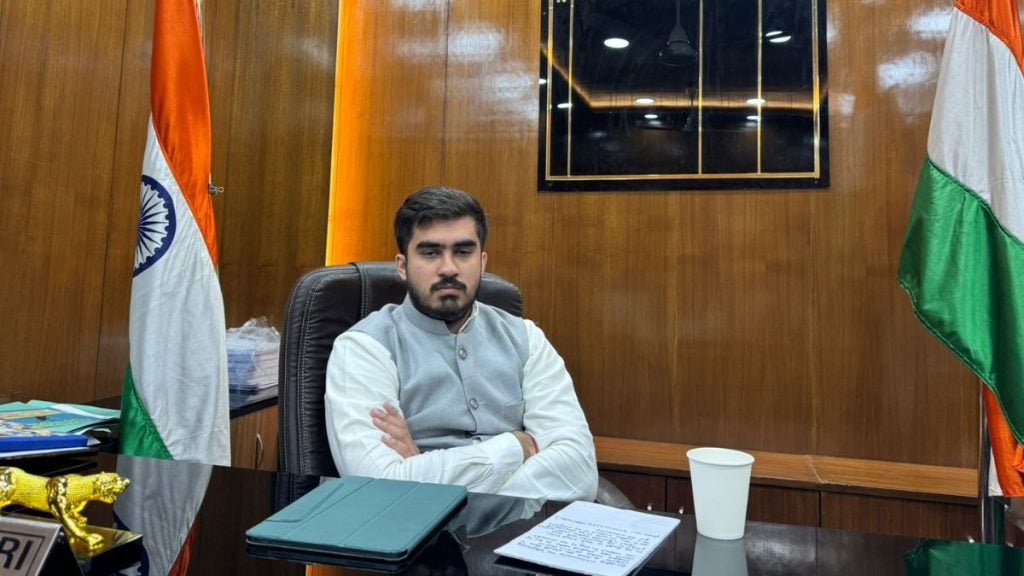
Khatri became the first NSUI president in seven years, winning by a margin of 1343 votes.
Of the recent DUSU presidents, Khatri has arguably had one of the most visible public profiles thanks to his distinctive campaigning style and social-media presence.
Before the election, he had already spoken openly about his ambition to enter mainstream politics.
He noted that he is now preparing for the Lok Sabha polls, although the constituency he may contest from is undecided.
He noted that DUSU gave him a national network of about 13 states.
“It provides a platform to expand one’s reach,” he said. “After that, people can easily prepare for Lok Sabha or Vidhan Sabha elections.”
Bhanu Pratap Singh (Vice-President) (ABVP)
Now working in Haryana with the BJYM on youth and grassroots issues, Singh said he doesn’t count his career in posts.
“The journey is not about holding a particular position,” he said in a written response. “It is about remaining connected with people.”
Mitravinda Karanwal (Secretary) (ABVP)
Karanwal has moved to London to pursue a Masters degree from Kings College. According to her Instagram profile, she continues to be associated with ABVP.
Lokesh Choudhary (Joint Secretary) (NSUI)
Currently completing his law degree, Choudhary is an NSUI organisational member.
“I am more focused on finishing my education for now,” he said.
His route began an independent run for central councillor at Pant College in 2018, followed by a short span in AAP’s student wing, and a switch to NSUI barely six weeks before the DUSU.
2025–26
For the most recent DUSU batch, the term ended with the handover to the newly elected candidates earlier this month. Their political trajectories are yet to unfold.
The President was Aryan Maan, Secretary Kunal Chaudhary and Joint Secretary Deepak Jha from ABVP. Vice-President Rahul Jhansla of NSUI was the lone opposition member. All candidates remain associated with their original parties.
(Edited by Stela Dey)