





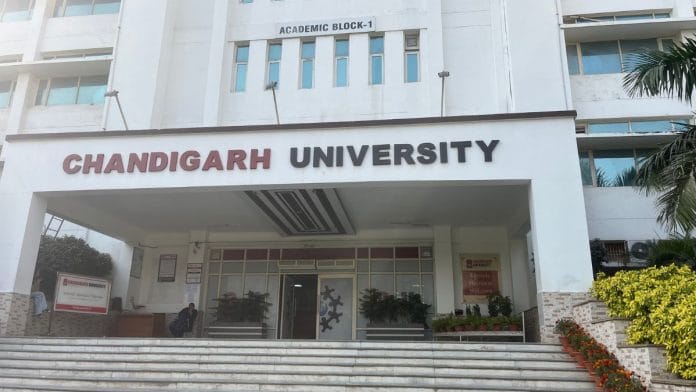



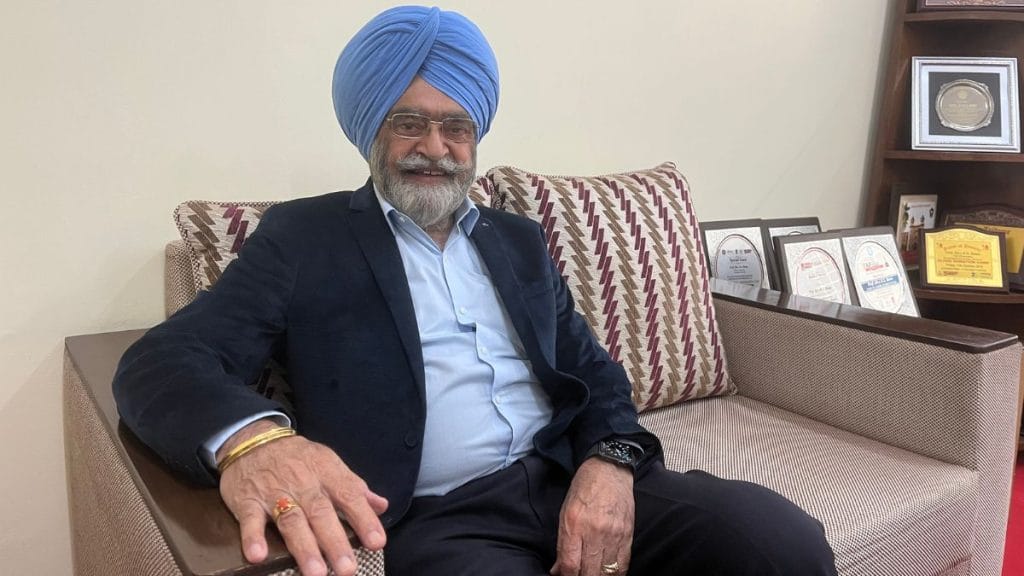
Chandigarh: What is most conspicuous about Chandigarh University Vice-Chancellor Rajinder Bawa’s otherwise ordinary office is a flat-screen television. The screen is split into multiple windows, and it’s playing CCTV footage on a roll. Private universities, many of which want to create campuses styled along the lines of American behemoths in rural India, are known for stringent security measures. But at Chandigarh University, it’s about discipline.
“We want to create good citizens and professional leaders. Our ultimate aim is to contribute to nation building,” said Bawa, smiling gently, surrounded by various placards and certificates in a range of ornate wood and silver frames.
The 2025 QS rankings have named Chandigarh University as India’s number 1 private university, the 109th best university in Asia and 575th worldwide. This places it in the top 2 per cent of universities worldwide and in India, alongside storied institutions with equally prominent alumni — the IITs.
Institution-building is a tall task, one that requires patronage at every level and an abundance of patience. It takes decades to secure a reputation, to nurture an idea. However, Chandigarh University stands as a marked exception to every single norm. Its dizzying growth trajectory in just over a decade is everybody’s envy.
Founded in 2012 by Satnam Singh Sandhu, the young university, a new entrant to the higher education space, has accumulated a dizzying number of accolades. It’s a remarkable achievement that has been built by design. Chandigarh University isn’t interested in creating an atmosphere, an environment cultivated by ideas of protest and politics. It’s a single-minded, result-oriented institution attuned to the curves of the market. Set on a highway cutthroat college campus for New India — where the curriculum is dictated by buzzwords like AI and entrepreneurship, and the numbers game is all that counts.
Bawa, the founding vice-chancellor, claimed to have visited 200 universities in 54 countries in order to develop the Chandigarh University model. A vision was built by studying the best in the world –– Harvard, Stanford, Oxford.
“We compare ourselves with the best in the world,” he said. Before joining Chandigarh University, Bawa was registrar at Guru Nanak University. “Whoever is the best, we try to be better.”
At a time when young Indians are entering an extremely precarious job-market, Chandigarh University is ramping up their placements. While the university is a full stack institution offering everything from hotel management to architecture, its focus is on the fields that are most likely to open doors. Computer Science Engineering, Data Science, AI and Machine Learning are the departments with maximum students.
“We’re providing our students with new knowledge and new technology. Employability is a small word. We want them to build the vision of the government and the prime minister — and become professionally competent,” said Bawa.
Years before the onslaught of ChatGPT, Chandigarh University introduced a BA degree in Artificial Intelligence and Machine Learning back in 2014.
150 start-ups have been incubated at Chandigarh University, with the institution consisting of a government backed “technology-business” incubator. The start-ups are varied in nature, with the majority being consumer centric: “new age” dhabas, “smart” bicycles, a platform for selling agri-products.
A desire to control
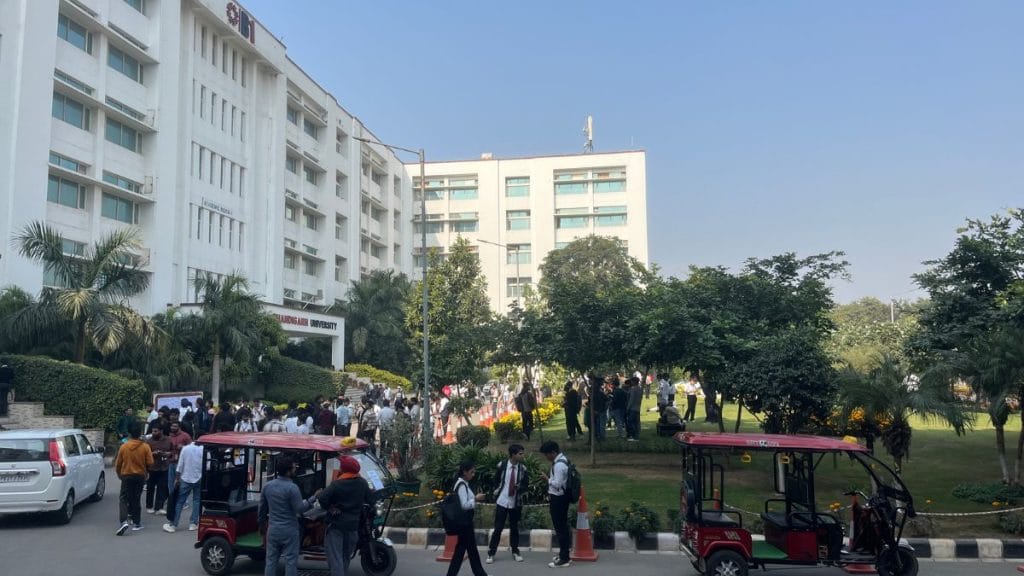
On Wednesdays and Thursdays, students are expected to be in uniform. They’re dressed in starched white shirts and shiny, paper-like red ties. Exams are going on, and a member of the university’s public relations department is firm: “We will not be disturbing the students,” he said sternly, in what appears to be a reflection of the university’s ethos: Academics are sacrosanct.
It’s a university in ambition, but really a school in its desire to control. It lacks the free wheeling campus life that young people associate with colleges. When students do not attend class, or perform poorly in an examination, their parents are often called. If they fail, they’re detained and have to spend either their summer or winter vacations on campus.
“I don’t understand much in my math class,” admitted one student from north Rajasthan. “But if I fail, I’ll have to spend my holidays here.”
He wants to become a software engineer. Chandigarh University has between 12-15,000 students pursuing a slew of B-Tech programmes, their largest offering.
A fourth year Computer Science engineering student spoke about the rigour demanded by the university — the number of projects, assignments, reports, and quizzes that he needed to finish. He completed his internship in July and will soon be appearing for placements which require a 7.5+ CGPA. Despite being a full stack university and the shine of software development dimming owing to catastrophic lay-offs with the advent of AI across the world, it remains coveted at Chandigarh University.
“A lot more companies come for software development,” the student said.
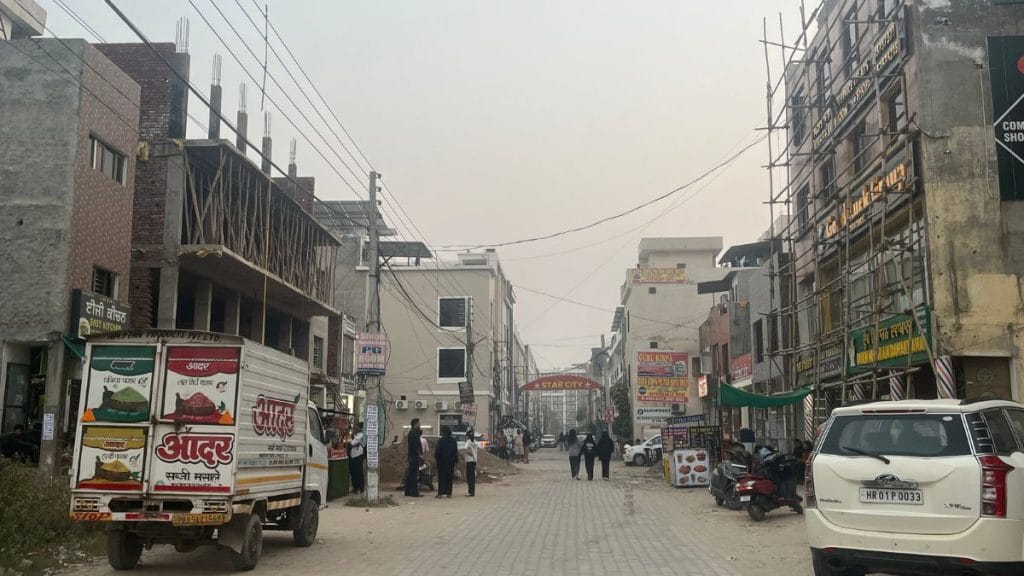
The discipline and diligence seems to be working for the university’s aspirations. And fetching first-job seductive salaries for the students.
“These universities respond much quicker to market changes in syllabus. That flexibility in terms of decision making is tremendous,” said IAS officer KBS Sidhu.
The 2023-2024 batch saw a whopping 9,000 job-offers with 1,100 companies coming to the campus. The highest packages belong to computer science engineering (CSE) students, the achievements of which have been marketed extensively on the university website. CSE students also have a 100 per cent placement rate, according to the university.
The highest national package belongs to a woman student, Vandana Chauhan, who secured a Rs. 54.5 lakh job at Palo Alto Networks, an American cybersecurity company.
Chauhan, according to her LinkedIn, studied in Dhampur, a city in Uttar Pradesh’s Bijnore. After news of her placement spread, she even became a podcast fixture, answering questions about her journey. It was a celebrity moment. Chauhan encourages fellow aspirants to live well-rounded lives, focusing on more than just their studies.
She has also returned to her alma mater, speaking at a university event: Game of Code, an annual university event that spotlights women in engineering.
Chandigarh University markets itself as a research-oriented institute. There are labs for everything — from genetics to AI. The website has a list of government-cleared grants that have been given to current and former academics. It has over 30 Centres of Excellence — “hubs” specifically crafted to carry out research, with an annual research fund of Rs 15 crores.
According to QS’ study, 10,940 journal articles were published, 5,891 papers were presented at conferences, and 1,090 books were sent out into the world. It’s a testament to the sheer size of the university, where there are 500 faculty members working on research. According to the university website, 35 per cent of their research focuses on engineering, 34.3 per cent on computer science. Social sciences research comprises a paltry 5.4 per cent.
Aggressive admissions
There are over 400 private universities in India, many of them evidence of a new social fabric and a generation that wants something entirely different from their public university predecessors. In Punjab, it’s not just Chandigarh University. Rajya Sabha MP Ashok Mittal’s Lovely Professional University and Chitkara University also boast of tailored placements and thousands of students.
“They’ve battled aggressively in terms of admissions. The academic standard is high — at least if someone wants an education,” said KBS Sidhu. “On paper, these are not for profit trusts. But they keep expanding.”
Chandigarh University founder Sandhu and LPU’s Mittal are both Rajya Sabha members. When Sandhu was appointed, even Prime Minister Narendra Modi put out a tweet.
“Satnam Ji has distinguished himself as a noted educationist and social worker, who has been serving people at the grassroots in different ways. He has always worked extensively to further national integration and has also worked with the Indian diaspora,” he said. Sandhu is seen as his “Sikh-outreach” face.
“At the end of day, students may not get the best. But they get what is reasonably good,” said KBS Sidhu.
Also Read: ‘Spies’ on campus, police, protests—the uneasy evolution of TISS after govt takeover
When it came to building a new genre of university education, Punjab was late. And Mittal entered to fill the gaps.
“Our curriculum, our delivery mechanisms, our evaluation system doesn’t match industry requirements, the prime recruiter,” said Mittal. “Government jobs are limited. We need corporations.”
Similar to Chandigarh University, LPU hashed out a syllabus that makes its students employable or “job creators.” The idea is that even students who are competent, but not the best, can ably work their way up the entrepreneurship ladder. Last year, LPU’s highest package was Rs 2.5 crores for a Gujarat-based company.
This was attested to by Sidhu as well, who said that the private universities have responded much quicker to “market changes.”
According to Bawa, it’s not just entrepreneurs — they’re also contributing to the armed forces. After all, it’s all about building India, as envisaged by the Prime Minister.
“Even our QS rankings are about the country,” he said. “If CU starts doing better and better, it’s for the country.”
Success as a marketing tool
A first year Mathematics student who wound up at Chandigarh University by mistake did his due diligence. He looked up research papers and checked out placement data. The ‘success’ of BSc Mathematics alumni was used as a marketing tool. He was told the average placement was Rs 5-6 lakhs while the highest package was Rs 9 lakhs. According to some students, the focus on computer science and engineering is such that other core disciplines are left in the lurch.
However, another student notes that the university is packed with opportunities.
“I was applying for NEET, and looking at Tezpur University. But there was a lot of bullshit,” the student said, referring to arbitrary processes and bureaucracy. “I wanted to choose something secure. Here, the opportunities are promising.”
He arrived at the university, only to find that the placement data that had been fed to him belonged to data science and masters’ students. Nonetheless, he was undeterred. Placements were of no consequence to him — he wanted to become a researcher.
But that’s a dream that the university isn’t helping nurture. Mathematics in its purest, academic form is about proofs, dissecting theorems down to their skeletal form. But he was told otherwise by his Algebra professor, a PhD holder.
“She said proofs are important, but we won’t be doing proofs because we don’t have time,” the student said. “Our teachers are just teaching theory — directly copying what’s written in the books onto the board.”
What VC Bawa also lists as part of Chandigarh University’s strengths is their 90 per cent integration of the contentious National Education Policy (NEP) — which stresses the importance of “soft skills.” As a result, communication classes are compulsory.
One student, during his communication classes, brought up caste and rising Islamophobia in his home state of Uttar Pradesh, only to be told not to be “pessimistic.” When it came to caste, his teacher informed him that “these values and traditions” should be treated “with respect.”
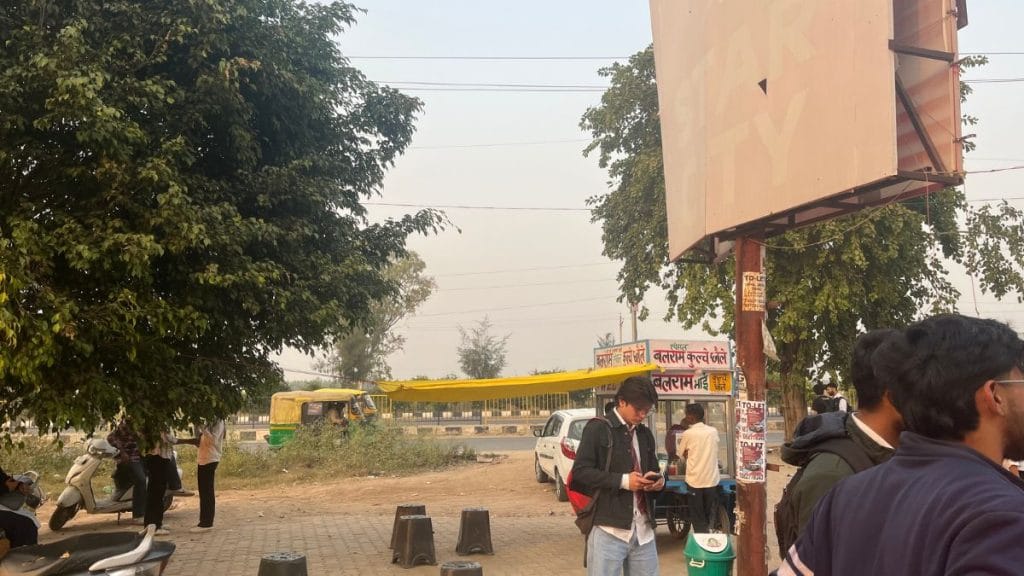
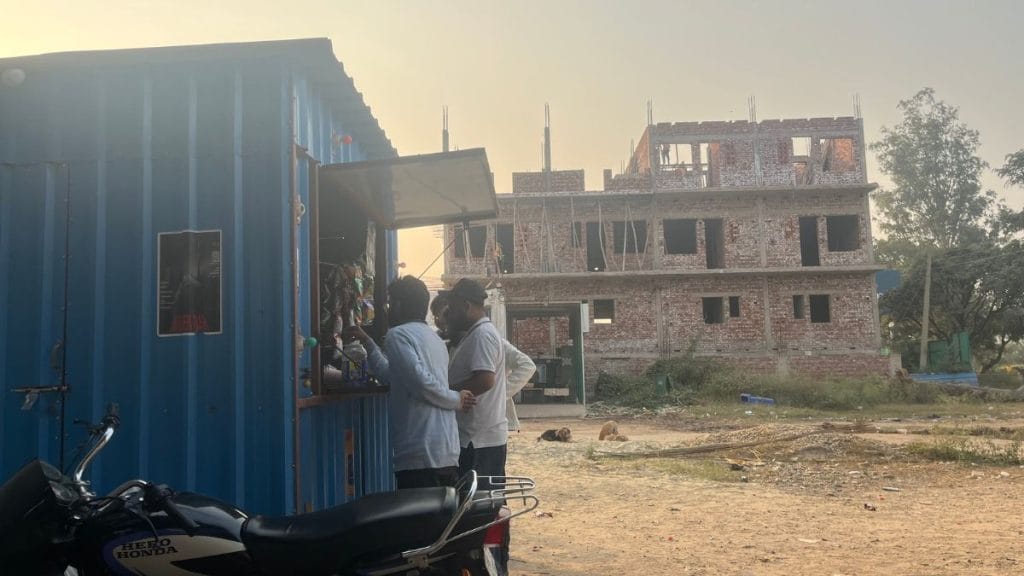
“I didn’t go much further with this argument because I didn’t want to get into trouble,” he said, smoking a cigarette on an abandoned plot of land outside the campus. “But you can’t get political here.”
Women students living in the hostel have to strictly adhere to a curfew of 7 PM and their lights are switched off at 11 PM. A mini protest ensued, but it was shut down before most students even heard the news.
“It’s killing their (girls staying in hostels) freedom,” said one student, looking at her friends for approval. Dressed in a black hoodie, she quickly said she shouldn’t be critical of her college. “It’s our college. We have to be here. And the communities, our teachers, they definitely won’t like us.”
(Edited by Stela Dey)