







Greater Noida: For 26-year-old Satya Prakash Kumawat, the high point of his life was cracking one of India’s toughest tests. He was one of just 25 students selected nationwide for the Institute of Archaeology. He walked proudly into the legacy institution in January 2024 with the aspiration to follow in the footsteps of many of the country’s finest archaeologists.
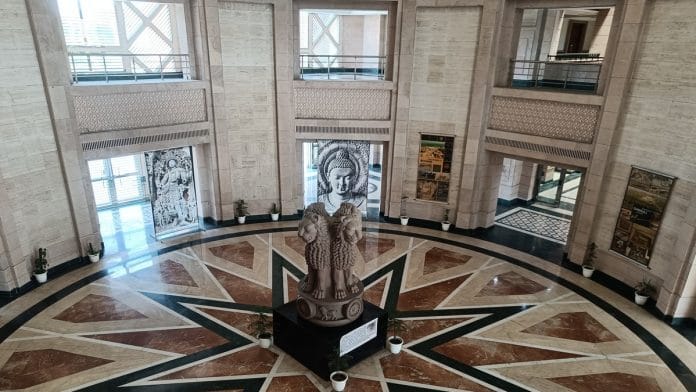
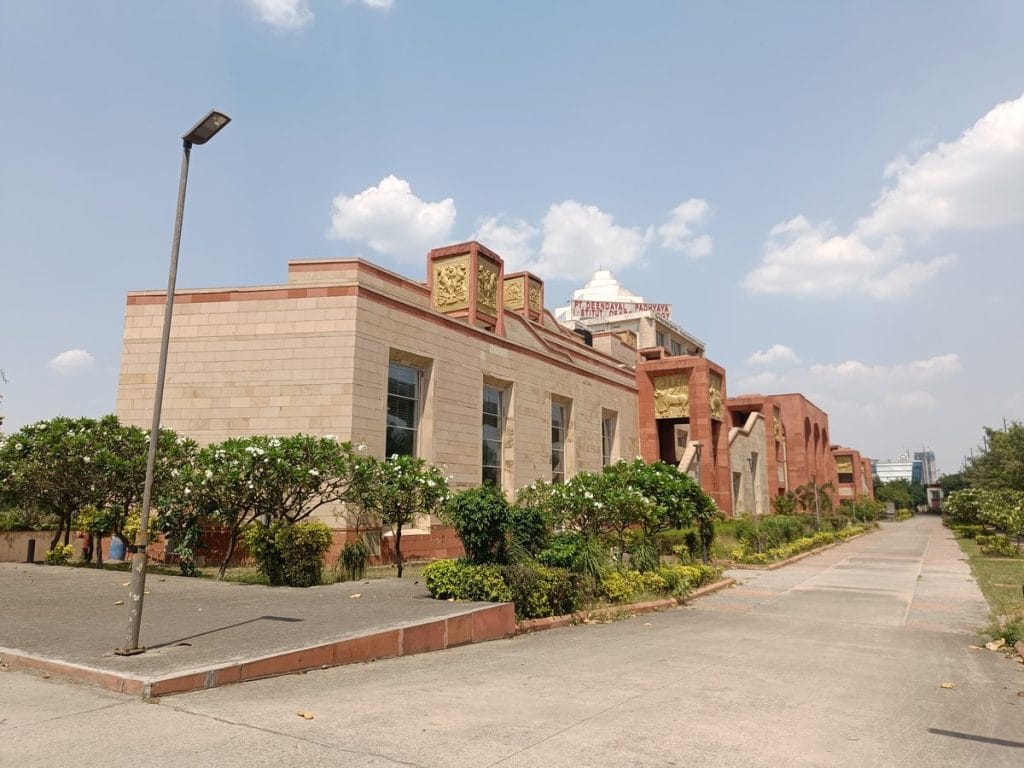
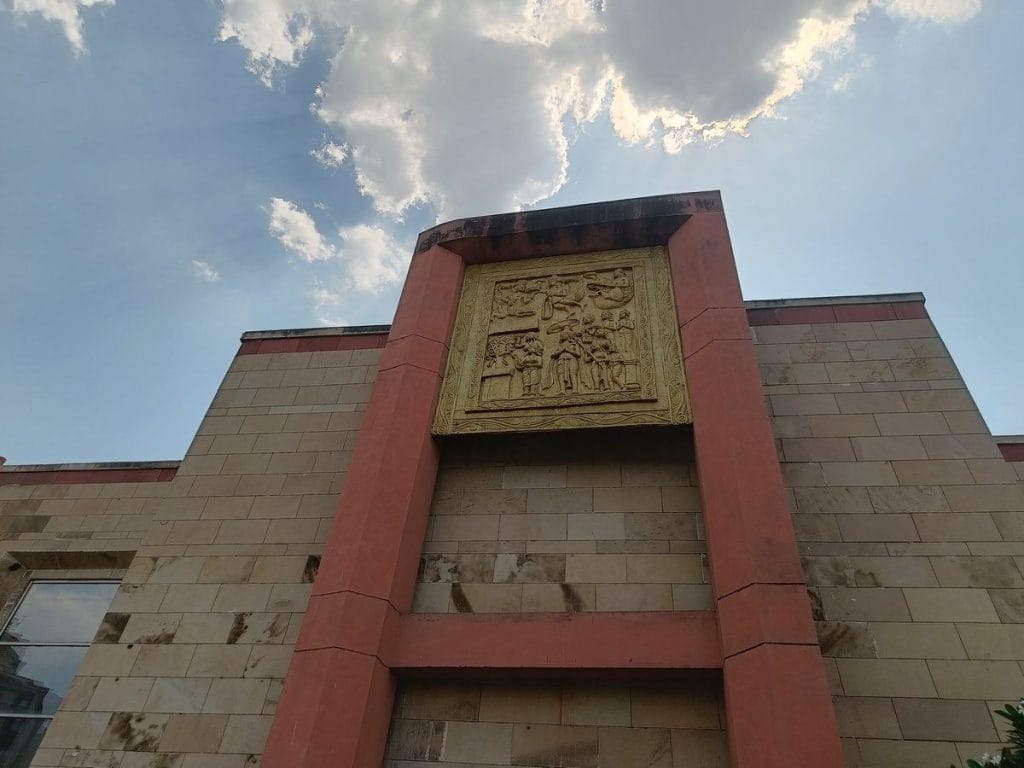
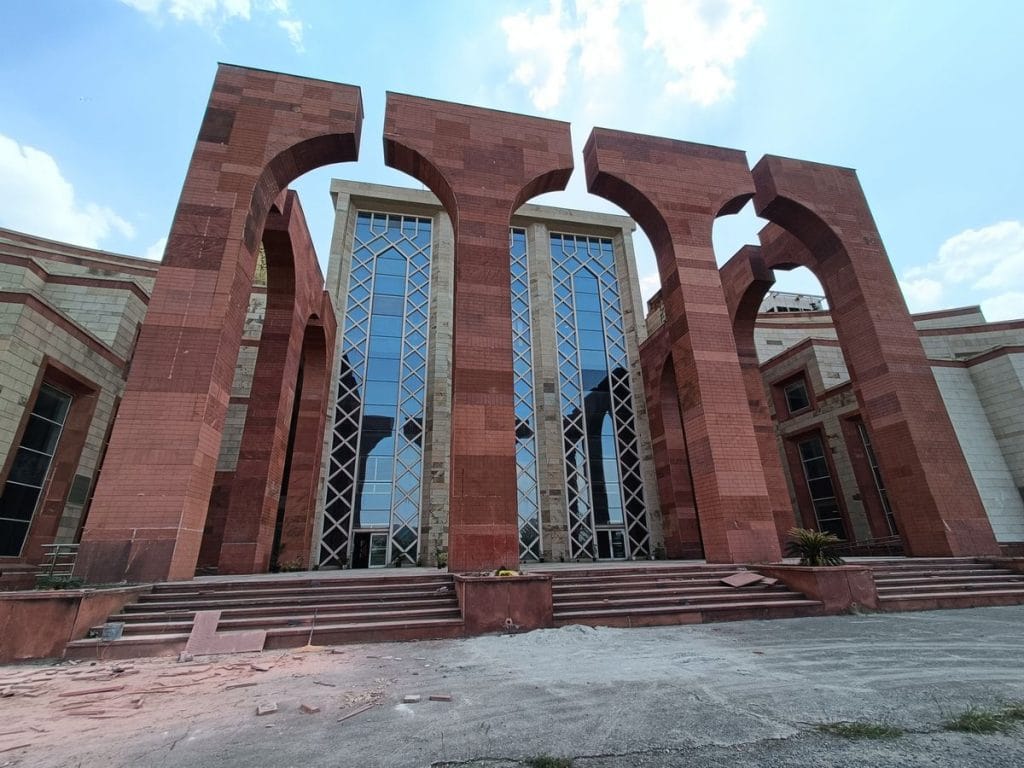
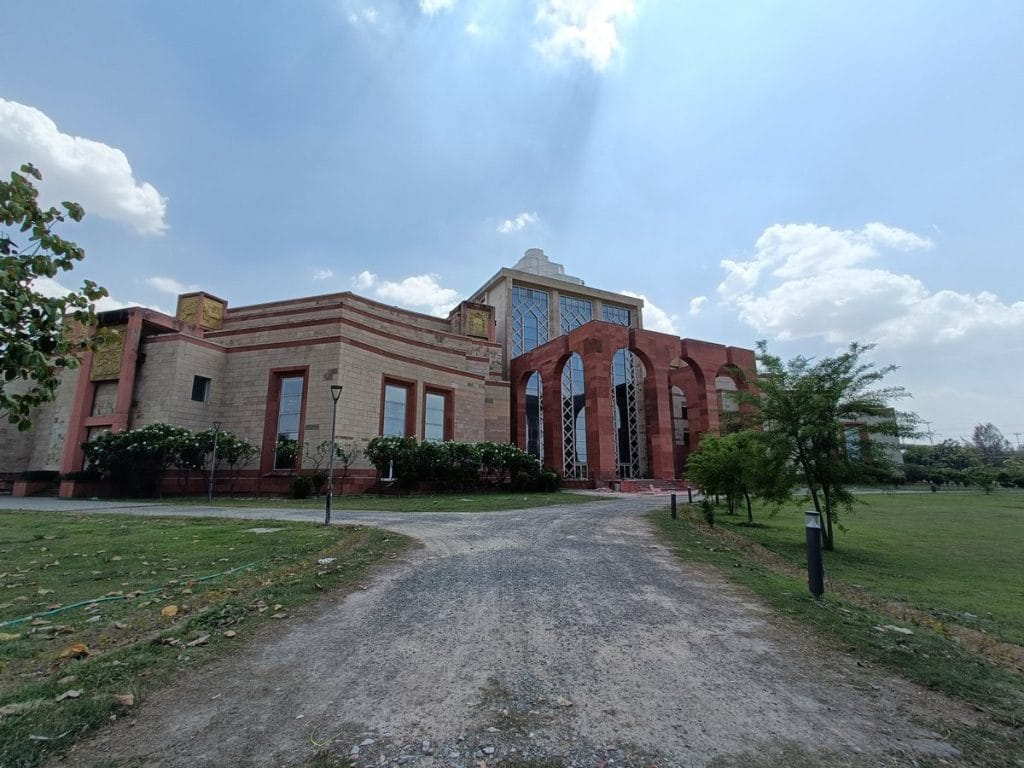
The Institute of Archaeology now has a gleaming new campus in Greater Noida. It even has a new name — Pandit Deendayal Upadhyaya Institute of Archaeology. Sprawling across 25 acres and built at a whopping cost of Rs 289 crore, the four-storey building features giant Harappan-style seals mounted on the outer walls. Its auditorium seats 900 and its library has over 20,000 books. When Prime Minister Narendra Modi inaugurated it in March 2019, he said a “New India” was being created.
“The institute will provide modern amenities for research scholars and students from India and all over the world,” the PM added.
But Kumawat’s sense of awe didn’t last. Seven years after it opened, it is still a ghost campus.
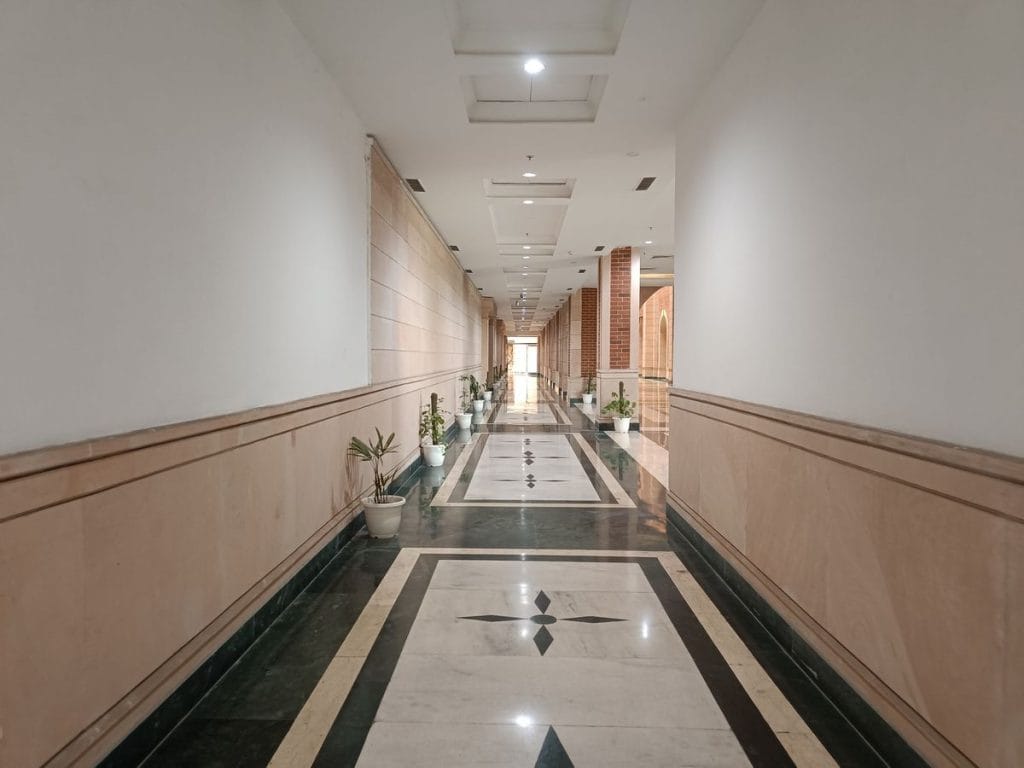
“The infrastructure was all there — huge labs, a museum, a well-stocked library, heritage-like corridors. Yet much of it stood unused. Doors used to stay locked and the energy one expects from a premier academic institution felt missing. Everything exists but it’s not being used effectively,” said Kumawat.
But the biggest disappointment was that he finished his course in December 2025 and is still waiting for his results four months later. And there is no campus placement and job prospects appear weak.
For all its grandeur, the building only has one classroom in use on the top floor. Rather than academic offerings growing with the expansion of facilities, they have diminished. Since its inception, the Institute of Archaeology has run only one course, a post-graduate diploma in archaeology (PGDA). This has now shrunk to a one-year course, and faculty positions haven’t been filled yet.
Any institute needs multiple courses and a full research system to succeed, said archaeologist Ramnath Fonia, former additional director general at the Archaeological Survey of India (ASI).
“An institute is not merely about awarding diplomas,” he added. “A fully integrated approach is needed to overhaul the institute.”
Unlike most Indian educational institutions that struggle for better infrastructure facilities, the Institute of Archaeology has all the infrastructure but no follow-through. It now risks becoming a symbol of institutional drift, where ambition collides with systemic neglect.
Also Read: Sheila Dikshit to Kejriwal, every CM pledged to fix Old Delhi. Now BJP wants NDMC-like teeth
An institute without teachers
For decades since its founding in 1959 under the academic wing of the ASI, the Institute of Archaeology functioned without a permanent home. It drifted through makeshift arrangements in Janpath, then Tilak Marg, then the Red Fort’s colonial-era barracks, which have since been turned into museums.
What didn’t budge was the academic system despite former ASI director-general Nagaraja Rao attempting to overhaul it in 1985. Soon after the Mirdha Committee recommended that the ‘School of Archaeology’ function as a teaching and research institute, he held talks with JNU’s Centre for Historical Studies for formal recognition. But nothing came of it.
“Rao wanted to make things systematic, but he didn’t succeed as ASI officials did not want to lose their hold,” said Fonia.
Sometimes for one month no classes were taking place… the academic management is not up to the mark
-Satya Prakash Kumawat, alumnus of the Institute of Archaeology
The Greater Noida campus was meant to be the turning point for firmer moorings and a fresh start.
Yet, for all its trimmings of a facility designed to mould the archaeologists of tomorrow, it is curiously bereft of people. Over the last couple of years, intake has reduced from roughly 25 seats per batch to just 15, and there is still no permanent faculty.
The only permanent academic presence comes from ASI officials who double as instructors. Current director Bhuvan Vikrama, known for his excavations at Ahichchhatra, and superintending archaeologist Gautami Bhattacharya, who served in the Patna circle, bring their field experiences into the classroom. But their primary roles are administrative; they act more as course coordinators, inviting guest scholars from across India to fill the gaps.
“For any academic institution of higher learning, permanent faculty is absolutely necessary,” said Nayanjot Lahiri, professor of history at Ashoka University. “You cannot run a teaching programme with scholars coming and giving lectures in a compressed format over a few days.”
In decades past, even if the institute lacked a variety of courses, it did boast many instructors of note. The classrooms were led by luminaries such as the legendary museologist C Sivaramamurti; JP Joshi, who discovered Dholavira; VS Wakankar, who discovered Bhimbetka; HD Sankalia, often called the founder of modern Indian archaeology; and BB Lal, a giant of Indian archaeology now often associated with the Babri Masjid case.
“The environment in the classroom was like, ‘Hamne Sivaramamurti ko dekha hai’ [We have seen Sivaramamurti],” recounted Phanikanta Misra, former regional director (east).
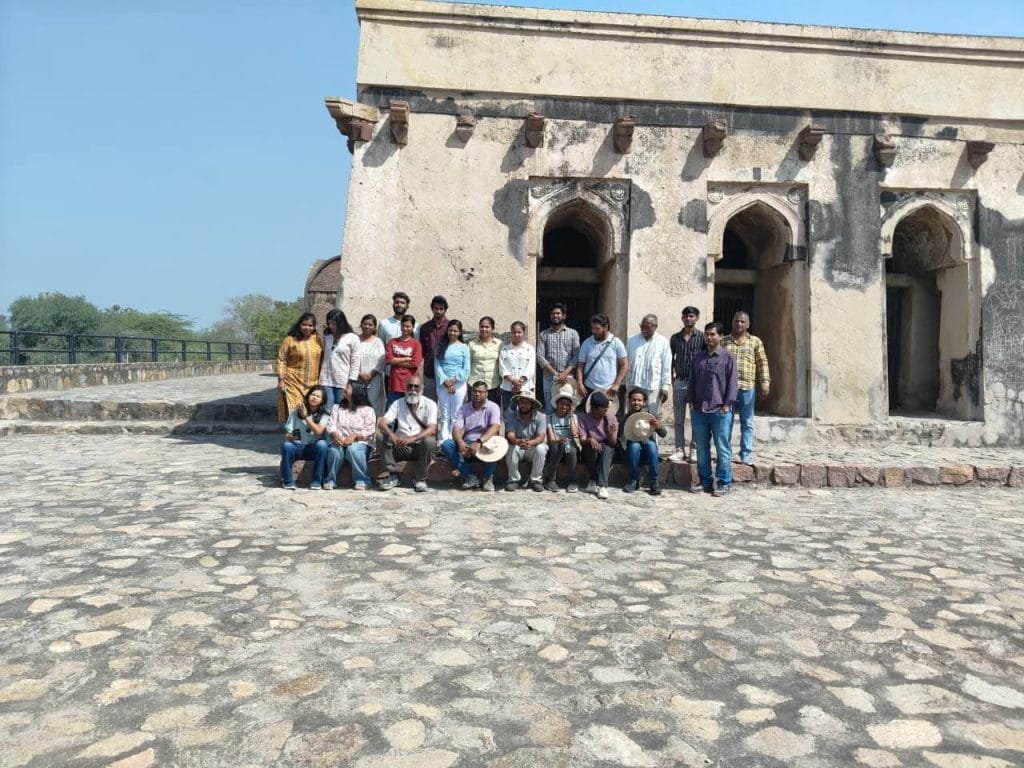
Multiple ASI officials who graduated from the institute told ThePrint that scholarship began slipping after the early 2000s. Current ASI Director General Yadubir Singh Rawat pointed to a past practice in which visiting professors would schedule classes when they happened to be in Delhi for personal work, simply to have their travel and stay covered.
“This arrangement was inappropriate and significantly tarnished the institute’s reputation,” Rawat said.
But no new golden era has dawned. Students face an unpredictable academic calendar with no fixed class timings. It all depends on which guest lecturer arrives.
“Once the institute had a charm. But it is not the case now,” said a former student, now a senior official at ASI.
ThePrint tried to contact Institute of Archaeology director Bhuvan Vikrama via phone calls, text messages, and email, but did not receive a response.
An ‘experimental’ batch
Signs that things weren’t quite right at the Institute of Archaeology were quickly apparent to Kumawat. He was no novice, having done his MA in Archaeology from Rajasthan’s Bikaner University and spent time on the dusty trenches of the Benwa excavation in Sikar.
As soon as he arrived, it was clear that the institute was in a state of flux. Talk of restructuring and ‘streamlining’ the curriculum created a climate of instability.
“Our batch was experimental. There was a lot of uncertainty from the administration side,” recalled Kumawat, who is now preparing for NET-JRF, the national competitive exam for a junior research fellowship in humanities and sciences.
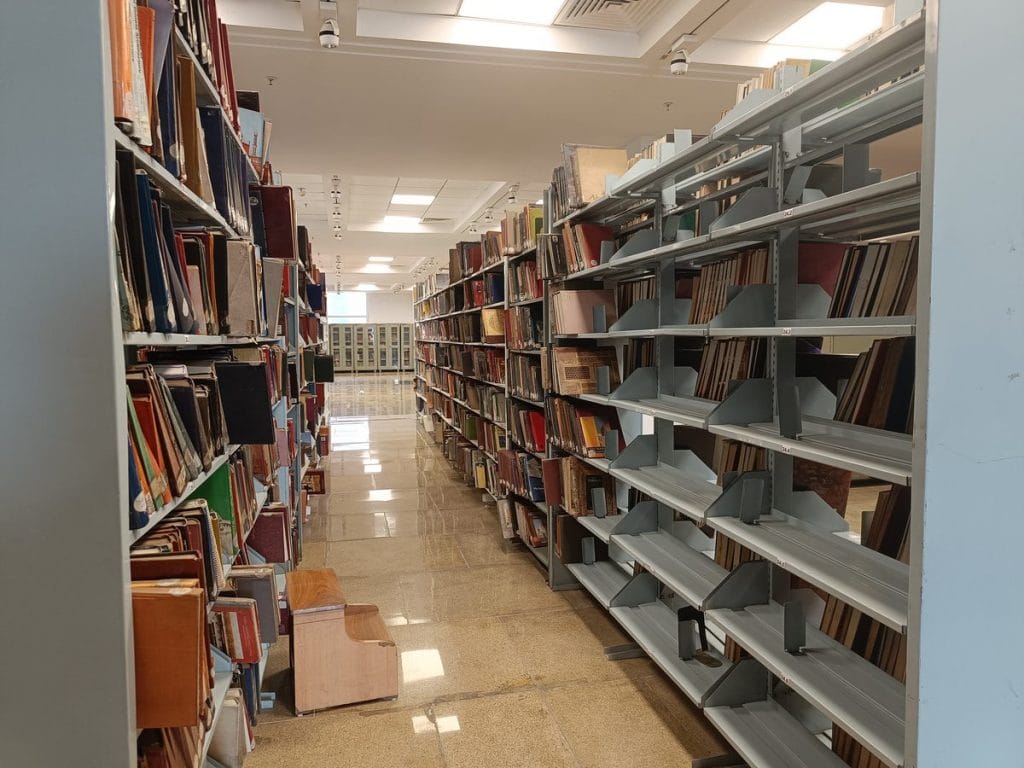
While he said that the library had a good collection of archaeology books and journals, the academic experience at the institute was far from inspiring. The schedule swung between extremes, according to Kumawat. Students were either buried in back-to-back classes or sitting idle for weeks.
“Sometimes for one month no classes were taking place,” Kumawat said, adding that when scholars did arrive, the sessions could be gruelling. He recalled veteran archaeologist RS Bisht’s lectures on the Indus Valley Civilisation stretching late into the night.
Students selected for this course already have a master’s degree. They don’t need a two-year course. When I joined, the condition of the institute and the academic performance were not good. They were just enjoying the luxury given by the institute. So I decided to make it more precise
-Yadubir Singh Rawat, ASI director-general
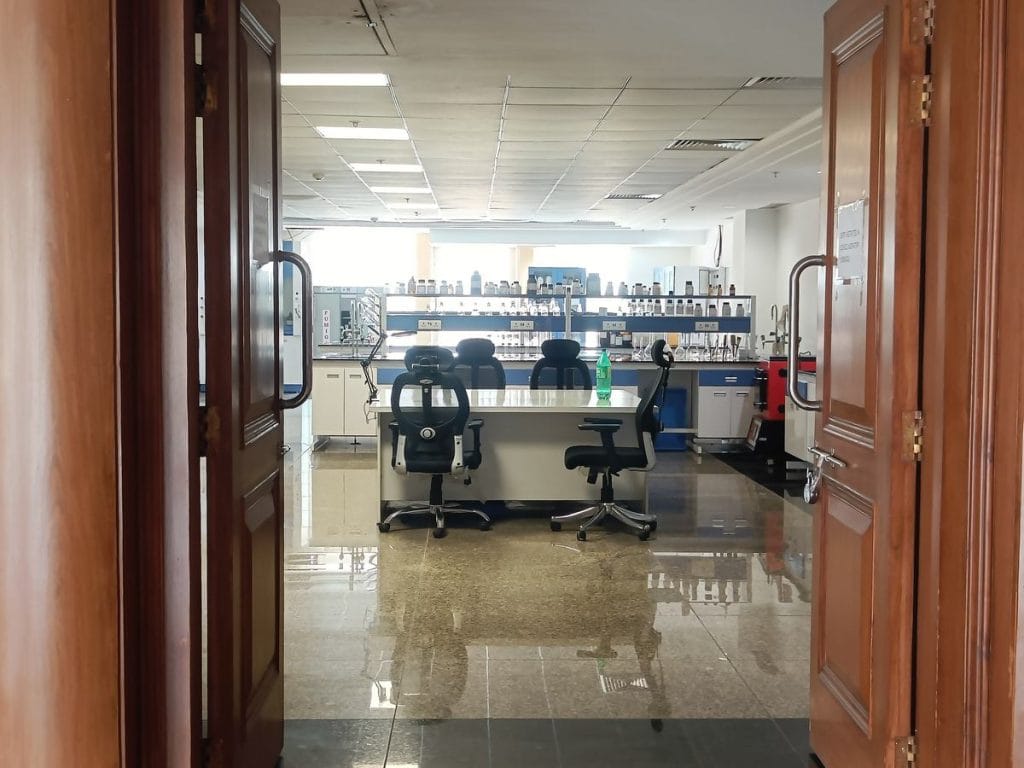
Even the physical resources felt out of reach. Kumawat said that though the institute has a very good lab, students were not allowed adequate time to use it. Life on campus, meanwhile, had a makeshift quality. The student hostel mess is a self-run operation; the institute deducts Rs 250 from the students’ Rs 8,000 monthly stipend for rent, leaving them to pool the remainder to buy their own rations. The administration’s only contribution is providing a cook.
The bright spot was not on campus but a 45-day all-India tour through about a dozen states, including Goa, Karnataka, Telangana, West Bengal, Odisha, Bihar, MP, and Gujarat.
“We visited Badami caves to understand pre-history and also explored Bhimbetka caves,” he said. Some members of his batch were sent to Rakhigarhi and others to Rajgir for an excavation tour where they assisted with digs.
These bursts of field energy were consistently dampened by administrative snafus. The results for the first semester were only declared after a year and a half, forcing the students to take the exams for the remaining three semesters all at once. His batch saw two different directors in just two years—T Arun Raj and Bhuvan Vikrama.
“I enjoyed and learnt a lot from the field visits, but the academic management is not up to the mark,” Kumawat said.
‘More precise’ — or less rigorous?
When Yadubir Singh Rawat took charge as director general of the 165-year-old ASI in 2023, after decades in Gujarat, he set about tightening what he deemed lax. One change was a new action plan under which excavation licences would be issued only to applicants submitting a detailed plan for at least three years. Another was cutting the diploma at the Institute of Archaeology from two years to one.
“Students selected for this course already have a master’s degree. They don’t need a two-year course,” Rawat, an alum of the 1982 batch, told ThePrint. “When I joined, the condition of the institute and the academic performance were not good. They were just enjoying the luxury given by the institute. So I decided to make it more precise.”
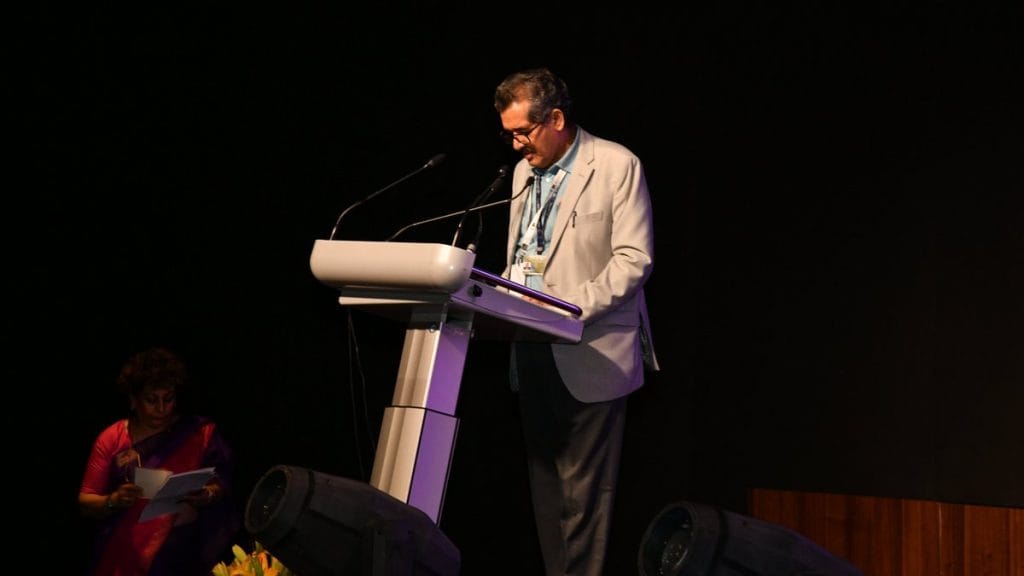
But the “precision” has been met with criticism from the archaeological community. Some argue that it saps the very essence of the training.
While one-year postgraduate diplomas in archaeology are the norm internationally — from UCL in London to Galway in Ireland, and closer home at Deccan College in Pune — the Institute of Archaeology had always charted a different course. The idea was to impart the kind of extended field training a master’s programme could not provide, and still have time left over for building theoretical rigour.
“The way the institute rigorously trained the students in the field, no other institution in the country matches that approach. By reducing the course, that rigorous training has been affected,” said an archaeologist and alumnus of the institute on the condition of anonymity.
If the situation remains like this, good people will stop coming. Previously, people used to get jobs, but now the situation is completely the opposite
-Shubham Kewaliya, alumnus of the Institute of Archaeology
Rawat, however, makes no bones about wanting to run a lean operation. As far as he is concerned, the students have it too easy.
“When we were students, we struggled for basic infrastructure. There were no hostels for us. We were living on a rent to pursue this course. Now, students have all facilities but lack dedication,” he said.
Between 2019 and 2024, the Ministry of Culture allocated Rs 33.66 crore to the institute. Students get a monthly stipend of Rs 8,000 and a hostel room. The sum is deposited directly into students’ bank accounts. Annually, the institute pays out around Rs 14 lakh in stipends.
Students argue Rs 8,000 is insufficient, and the amount has not been revised in over a decade. They also say the biggest perks of doing the course— the all-India Tour and on-field excavation experiences— are in jeopardy.
The Institute’s prospectus, seen by ThePrint, notes that the PGDA was “modified to realign with the need for more hands-on training”. However, field visits are now being truncated.
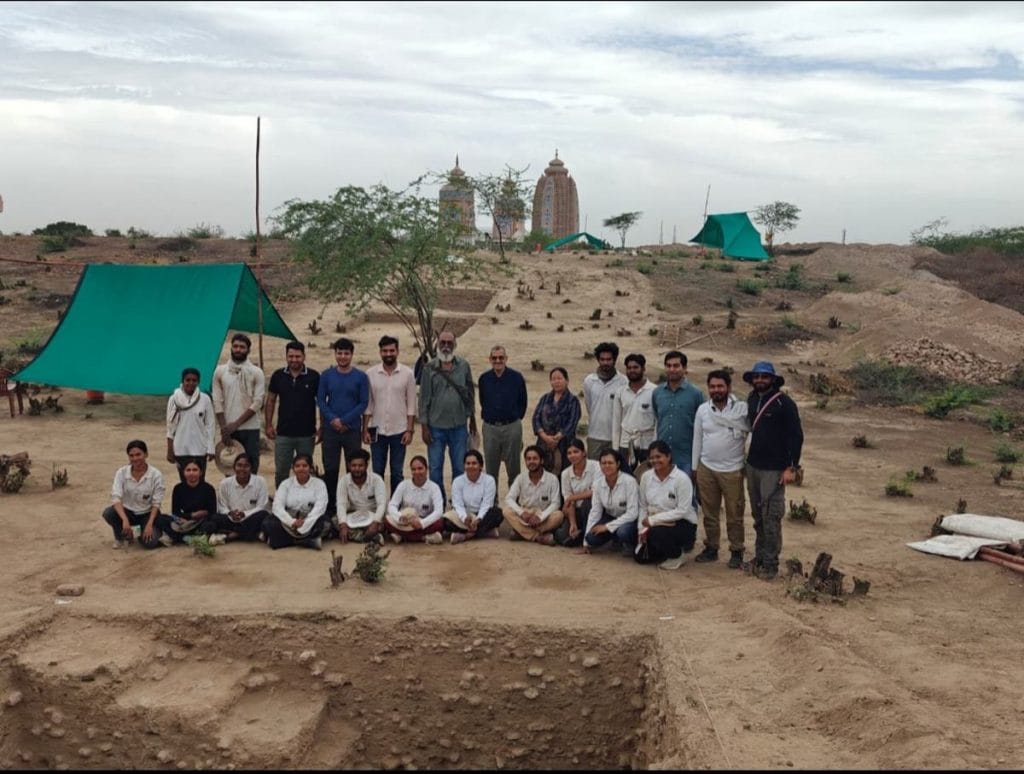
The current batch was on a 60-day camp at Agroha in Haryana, where the ASI is digging after four decades, and they’re due next to go on the “all-India Tour” designed to provide exposure to monuments and conservation techniques across 10-12 states. But with the clock ticking on a one-year calendar, the tour has been slashed.
“This year we will take them only to 4-5 states as we have limited time,” said a senior official of the Institute of Archaeology.
Phanikanta Mishra recalls a much more immersive experience.
“In the 1980s, students lived in makeshift arrangements at sites for three months at a time,” he said.
No more golden ticket
The Institute of Archaeology has long been involved in the country’s most celebrated digs —from Rakhigarhi in Haryana to Dholavira in Gujarat and Sanauli in Uttar Pradesh. The famous 4,000-year-old Sanauli chariot was stored at the Greater Noida campus for years before being shifted to the National Museum last year.
The institute’s alumni have also occupied the top ranks of the ASI: BM Pande, YS Rawat, Sanjay Manjul. For decades, a diploma from the institute was effectively a golden ticket to the ASI itself. The agency’s regional circles would hire assistant archaeologists directly from the institute because of their well-honed experience on the field.
However, the institute is no longer a guaranteed path into the ASI.
Earlier, students from the Institute of Archaeology came to ASI, but after the recruitment rule change, their number decreased
-BR Mani, archaeologist and former director of the institute
In 2013, recruitment rules were changed, mandating that assistant archaeologist posts be filled through the Staff Selection Commission (SSC) exam.
For many archaeologists, this raises concerns about the quality of archaeology in India itself given that the SSC prioritises general aptitude over specialised field knowledge. Now even candidates with postgraduate degrees from non-archaeological branches— such as history, geology, and anthropology— can join the ASI without specialist training.
“Earlier, students from the Institute of Archaeology came to ASI, but after the recruitment rule change, their number decreased,” said BR Mani, archaeologist and former director of the institute.
Since 2013, the ASI has not hired any candidate from the institute at the circle level. As reported earlier this month by ThePrint, out of a sanctioned strength of 7,585 posts, 2,646 vacancies currently exist across the 38 circles of ASI.
“Those students are entering ASI who have no interest in archaeology,” said Kumawat, adding that there is no campus placement to speak of.
Shubham Kewaliya, now an assistant professor at Delhi University, was part of the institute’s work on the Sanauli excavation under archaeologist Sanjay Manjul. Thirteen of his classmates from the 2020 batch, he said, are still jobless and preparing for various government exams.
“If the situation remains like this, good people will stop coming. Previously, people used to get jobs, but now the situation is completely the opposite,” he said.
A white elephant
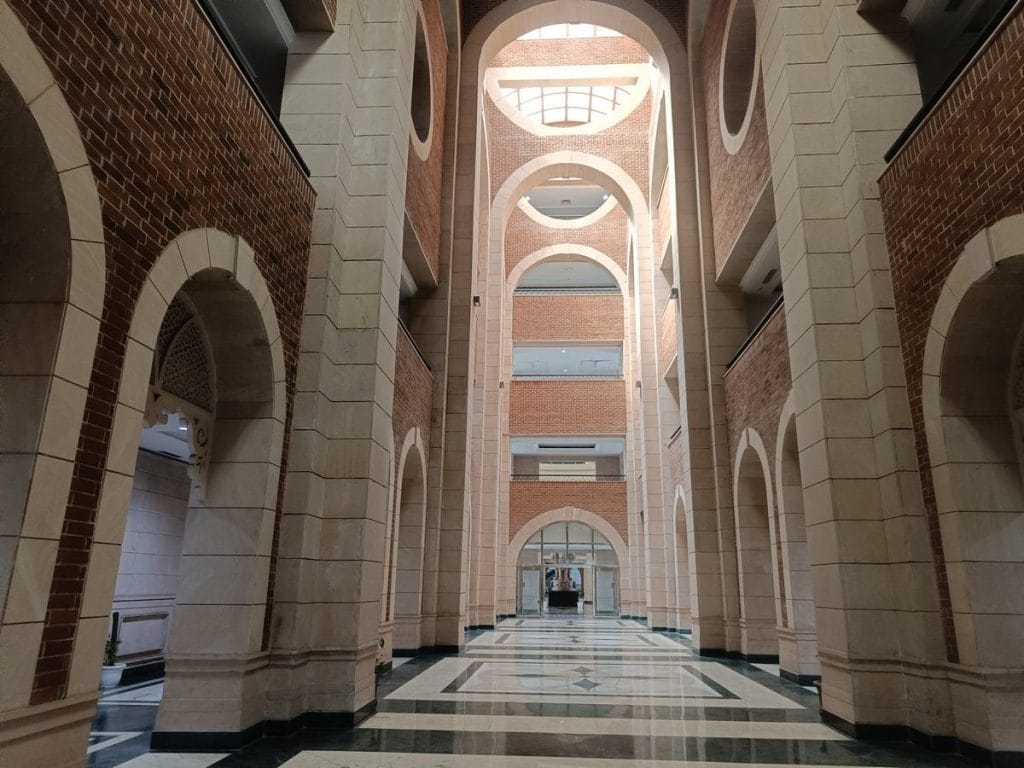
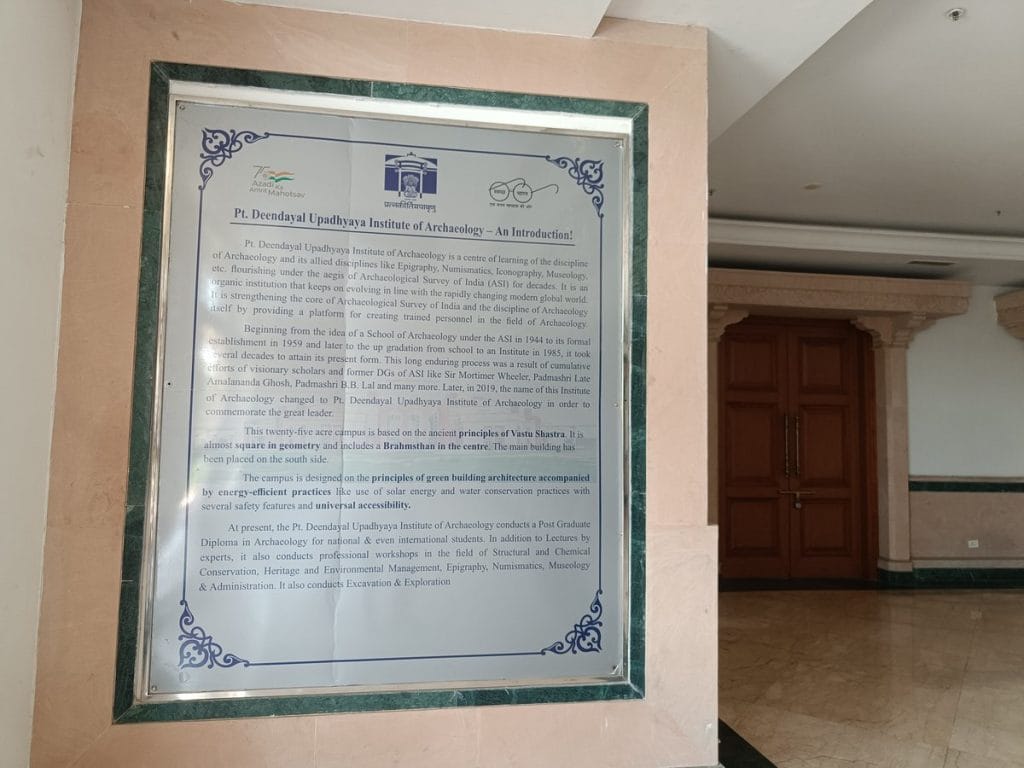
The architectural aesthetic of the Greater Noida campus of the archaeology institute is grand and not lacking in imagination. It blends tradition with the new seamlessly — in both scale and theme.
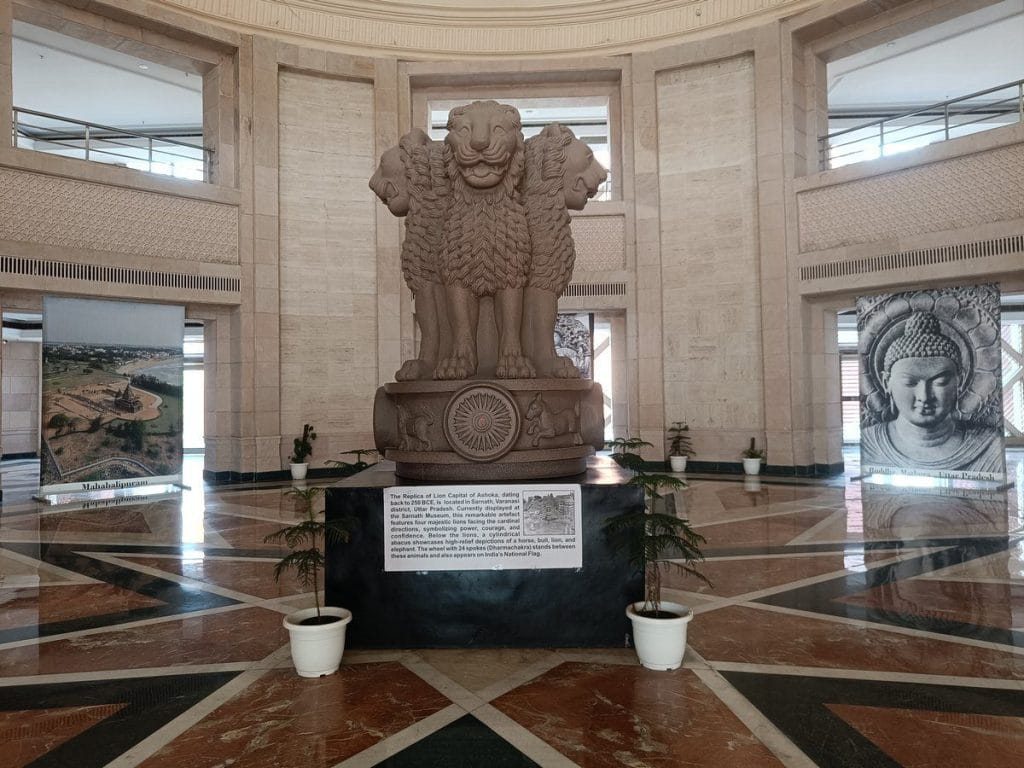
The building is based on the ancient principles of Vastu Shastra, almost square in geometry, with a Brahmasthan in the lobby displaying a replica of Sarnath’s Lion Capital of Ashoka. The corridors are full of banners of the ASI’s ambitious new excavation sites — Sanauli, Binjor, Barnawa. A panel at the entrance declares the campus is designed on the principles of green building architecture and energy-sufficient practices such as use of solar energy and water conservation.
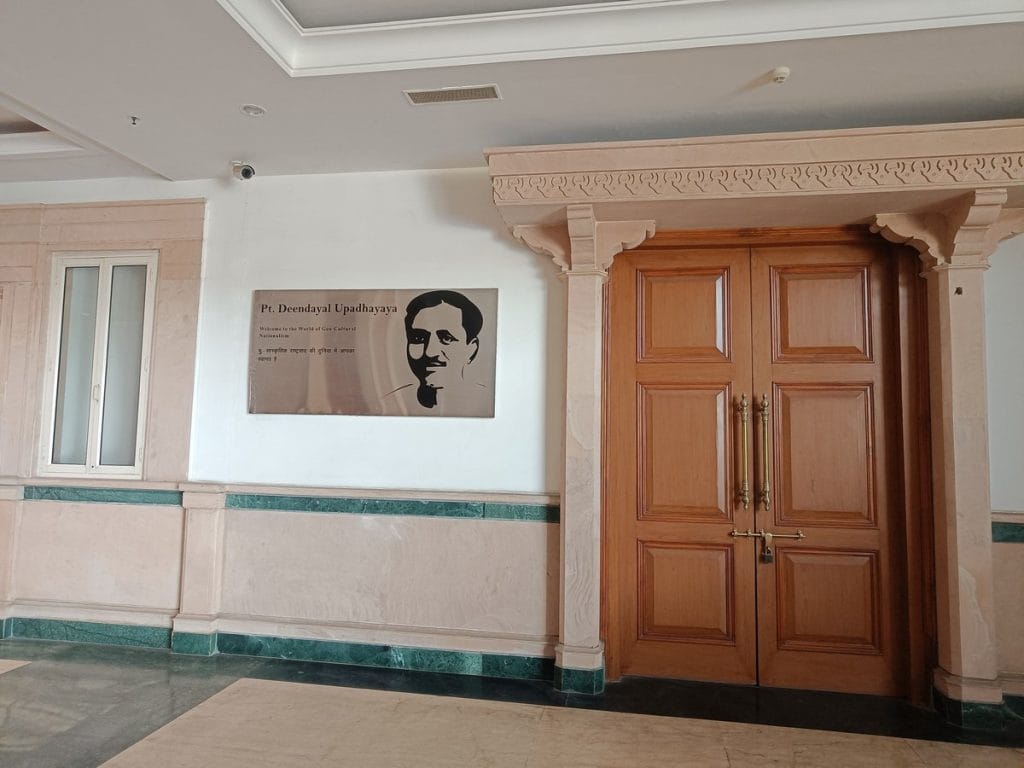
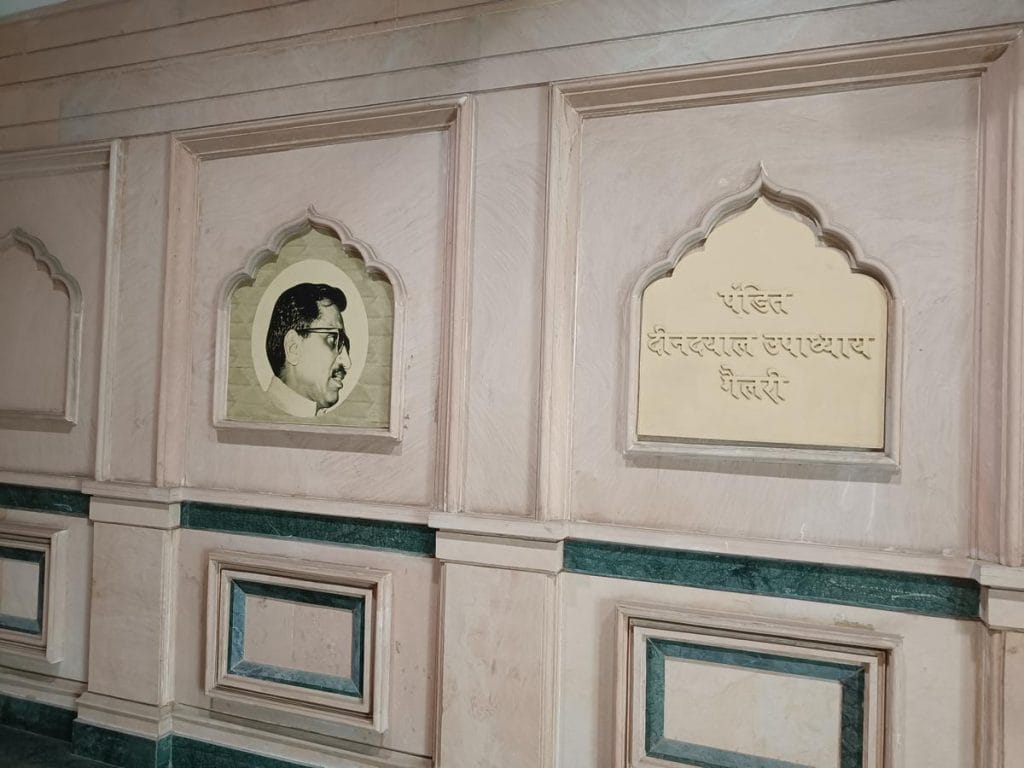
A towering statue of Bharatiya Jana Sangh leader Deendayal Upadhyaya also stands at the entrance, and the museum is named after him as well. His image hangs on the museum wall, with an information plate that reads: Welcome to the world of Geo-Cultural Nationalism.
“Deendayal Upadhyaya has nothing to do with the field of archaeology. Indian archaeology has many stalwarts but they chose to name the institute after a politician,” complained an archaeologist and alumnus who graduated a decade ago and has visited the campus many times.
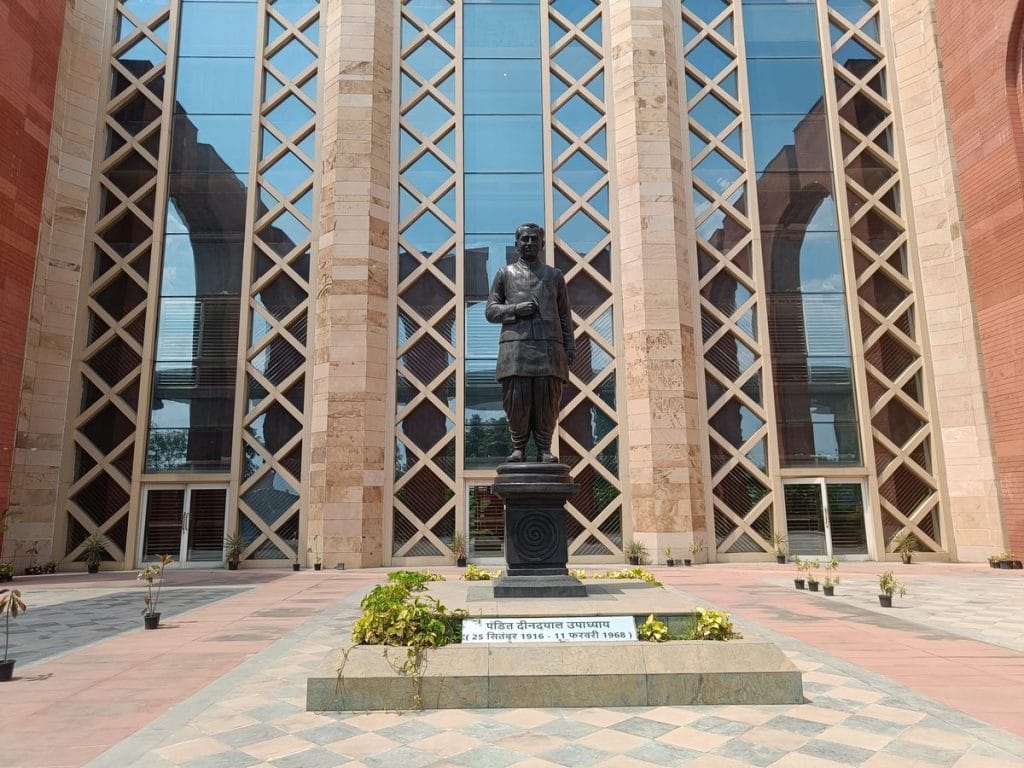
Despite all the ideological foregrounding and heavy investment, the campus looks desolate on most days.
“It’s like a white elephant. Crores have been spent on the building but the resources there have no use. It’s a total waste of money,” added the archaeologist quoted above.
An official posted at the institute said navigating the capacious building— which also houses offices of the ASI’s excavation branch and National Mission on Monuments and Antiquities (NMMA)— is a chore, as the lifts are mostly closed and visitors have to use the stairs.
“The corridors of the institute are mostly deserted,” he added.
Officials, however, say they are trying to find good use for the wilderness of empty rooms.
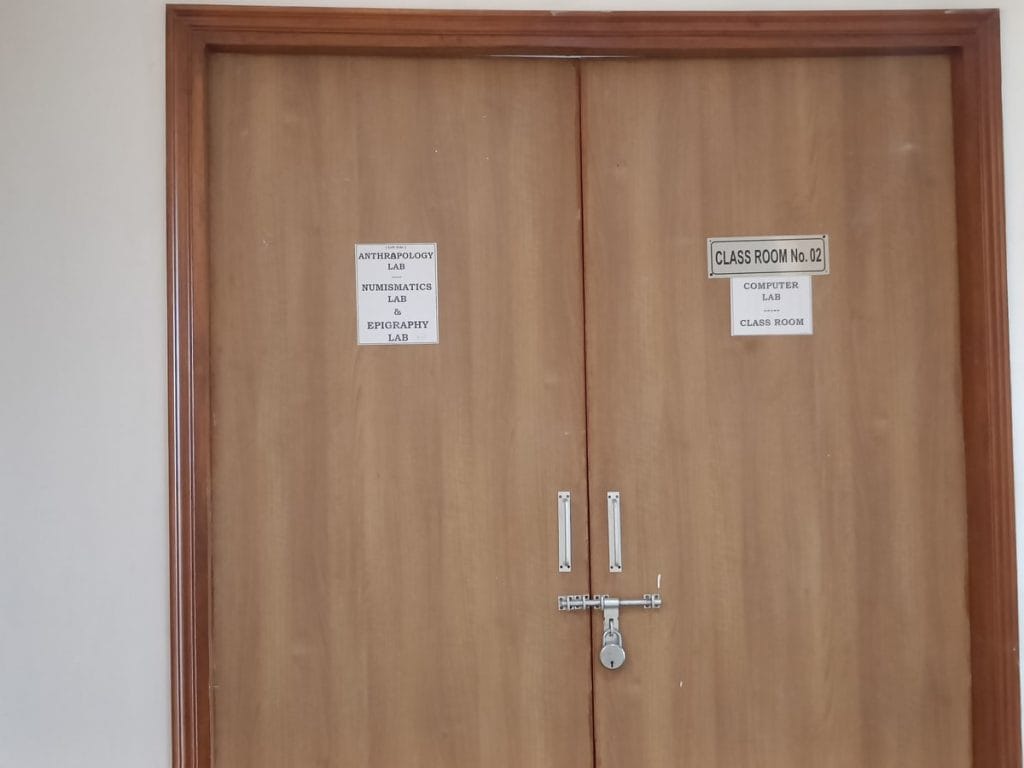
Ceramics from the Central Antiquity Collection (CAC) are in the process of being moved to the institute, and some of the wooden doors now have stickers marking them out as CAC storage.
“We are moving ceramics to the institute so that students can easily access them for research,” Rawat said.
There are also plans to establish a research centre on the campus, and to allocate space for a long-standing ASI problem: delayed excavation reports.
“Our report writing record is not good, so we are planning to clear the backlog,” said Rawat, adding that excavators returning from digs will be given resources at the campus to write up their findings.
The priority is to establish a research centre at the campus. There are hopes it may help the problem of ASI failing to publish its excavation reports on time.
The glorious past
The institute’s struggling present is a far cry from an illustrious past that began amid the ancient ruins of Taxila (now in Pakistan) in 1944. There, ASI director-general Mortimer Wheeler set up a training school after an annual meeting of 19 vice-chancellors conveyed the urgent need to recruit university graduates into archaeological research.
“The response was to me astonishing alike in quantity and quality and was almost instant. Within a few weeks more than sixty young graduates had assembled from all directions amidst the inviting facilities of Taxila,” wrote Wheeler in his memoir My Archaeological Mission to India and Pakistan.
One of the trainees under Wheeler was BB Lal, who in 1959 became the first director of the newly established School of Archaeology in independent India.
Veteran archaeologist BM Pande, who was in the first batch of the School of Archaeology, fondly recounted his days when the institution was in Janpath and field work was the focus.
“The course was designed in such a way that students had a clear idea of subjects such as architecture, pre-history, and conservation,” he said.
Historian Devendra Handa also recalled that during his 20-month training period, he spent a full year outside the campus. Even then, there was no permanent faculty, he said, but the guest lecturers were giants such as HD Sankalia and VS Wakankar.
“This institution produced a galaxy of archaeologists for the ASI, who later reached the top rank,” said Rawat, adding that scholars from countries such as Myanmar, Sri Lanka, and Nepal would also come here and eventually lead their own national archaeological departments. Now for many years, these international students have stopped coming.
A new plan to bolster the archaeology institute’s legacy is currently in limbo. In 2021, the government announced that it would subsume the institute into the Indian Institute of Heritage (IIH), a new deemed university designed to consolidate the country’s fragmented heritage education.
Formerly known as the National Museum Institute of History of Art, Conservation and Museology, the IIH was also moved from Janpath to a new campus in Noida.
“There was talk of bringing the Institute of Archaeology under an overarching umbrella of the Indian Institute of Heritage,” recalled Mani. “But it did not happen.”
The merger has no timeline, and the IIH is currently facing a Delhi High Court petition over alleged financial and administrative irregularities; the court sought the government’s response earlier this month, calling the matter “serious”.
Also Read: Did National Museum need a shake-up? Nehru’s vision to Modi’s Yuge Yugeen
The mess and the Plan-B
The degradation isn’t limited to scholarship. During Kumawat’s two years at the campus, students wrote multiple letters to the administration about the alarming conditions in the hostel mess, from insects nesting in utensils to rats roaming inside pots of cooked food.
“A quick trip to the kitchen and store room after hours shows rats rummaging through the larder, burrowing through the bags containing flour and rice and playing tag on the kitchen counters,” reads one of the letters accessed by ThePrint.
Beyond the hygiene crisis, students have also written to the director general for a hike in their monthly stipend, which has been unchanged for the last decade.
“Nothing happened,” Kumawat said.
A telling sign of the institute’s current state came when Rawat visited students at the Agroha excavation site. He suggested a plan B for their career.
“I personally advised students not to rely solely on this course, but to also explore other emerging fields such as Museology,” he said, adding that new museums are opening across several states.
(Edited by Asavari Singh)