





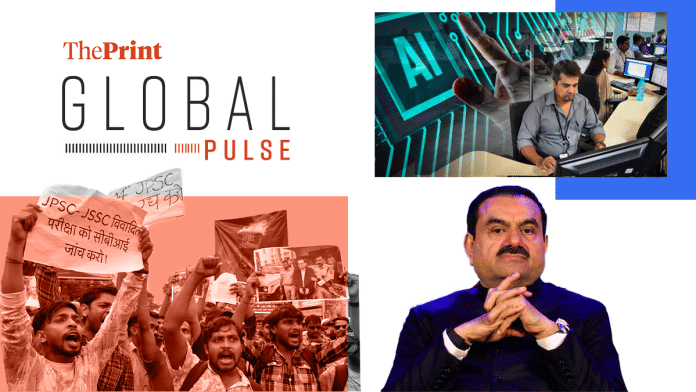


New Delhi: In an article titled ‘The AI threat to India’s IT jobs machine,’ the Financial Times says that AI is a real threat to India’s IT industry which provides employment to many. The Indian IT sector “employs 6 mn people and contributes about 7 percent to the GDP,” the article notes. This sector depends on a model where “more clients plus more work equals more demand for tech engineers.”
But that equation is breaking down now because “using AI, you can actually do more work with less”. TCS chairman N. Chandrasekaran is quoted as saying that he believes AI agents could take on “half of the company’s tech roles within three years”, while Karnataka CM D. K. Shivakumar warned AI “will cut a lot of jobs”.
This comes at a time the government is already “struggling to create enough jobs for India’s huge workforce” the article further notes. Financial Times quotes a recruiter who said “we don’t have that many jobs”. A laid off worker said “a traditional IT job is totally dead”.
Anxiety over the rising risk of unemployment in the country is not just restricted to IT workers. There are also protests, mostly by youth, in Jharkhand over the alleged irregularities in the government recruitment exams.
In an article titled ‘Police in India Use Tear Gas to Break Up Another Youth Protest’ published in The New York Times, Anupreeta Das writes that thousands of young protesters in Jharkhand “marched to the state legislature”. The main demand of the protesters was an investigation into the alleged “grading errors and financial irregularities” in the state civil services examination. Das adds that the police used “batons, tear gas, barricades and water cannons” on protesters as they marched toward the state legislature.
Das writes, “The head of the Jharkhand Public Services Commission and its members resigned”, but the students are still “unconvinced” and have continued their protest. Protesters have blamed the Modi government for the exams leaks, but these issues “have long been a problem in various states” and “predate the Modi government”, she says.
As India continues to navigate its domestic discontent, it is also dealing with its regional partners delicately.
A report titled ‘India’s RAW chief meets PM’s defence adviser in Dhaka’, published in Dhaka Tribune talks of India’s RAW chief Parag Jain’s meeting with Bangladesh PM’s defence affairs adviser Brig Gen (retd) AKM Shamsul Islam in Dhaka. This visit was made “at the invitation of a government agency”. Jain led a four-member delegation and also met Bangladesh Home Minister Salahuddin Ahmed, the report added.
Beyond India’s regional relations with its neighbours, the country is under scrutiny internationally in the US with a case involving Gautam Adani.
In an article titled ‘Judge Grants Justice Dept. Request to Dismiss Case Against Indian Tycoon’ published in the The New York Times, journalist Santul Nerkar writes “a federal judge on Monday dismissed criminal charges against Gautam Adani”.
Adani was charged in 2024 with paying “bribes to Indian officials to secure solar energy contracts for one of his companies”.
Judge Nicholas G. Garaufis said in his ruling that the elements of the case were “legally dubious” and that the “$10 billion investment offer” by Adani did not play any role in the DOJ decision to dismiss the case, writes Nerkar.
But Judge Garaufis criticised the department conduct and singled out Trent McCotter, a senior Justice Department official who led the effort to drop the case, Nerkar further noted. The article added that Adani on X welcomed this ruling “with humility and deep respect for the judicial process.”