





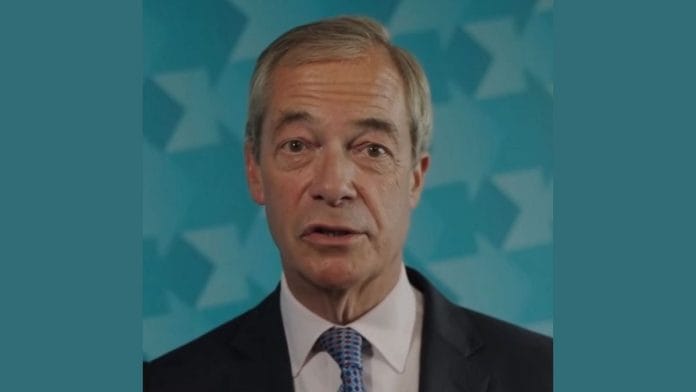


New Delhi: British politician and Reform UK MP Nigel Farage has a prognosis for the UK government’s proposed social media ban for children: it is destined to fail.
Responding to Prime Minister Keir Starmer’s plan to ban under-16s from social media, the opposition leader posted a video on Instagram saying: “It ain’t gonna work.”
He posted the clip with the caption: “If you’re old enough to vote, you’re old enough to scroll”, a reference to the Labour government’s proposal to lower the voting age to 16, which is currently before the British Parliament.
On Monday, the UK government announced a ban on social media for children under 16, along with restrictions on features such as livestreaming for those under 18. The restrictions are expected to come into force in spring 2027. Modelled on Australia’s social media ban for under-16s, the proposal would cover platforms such as Instagram, Snapchat, Facebook, X, YouTube and TikTok.
Also Read: UK bans social media for children under 16. Which other countries have or are planning to?
‘Back door’ to digital ID?
Farage pointed out shortcomings in the implementation of Australia’s ban, which came into force in 2025.
“They tried this in Australia, and six out of 10 under-16s in Australia found a way around it. Indeed, the kids in Australia are laughing at their government. I am not suggesting that any of you kids will find a way around this if it becomes law, but I’d be surprised if a lot don’t.”
Ahead of Australia’s ban, teens reportedly rushed to download niche social apps such as Lemon8, Yope and Coverstar. Downloads of virtual private networks, or VPNs, also increased before the ban.
In an X post, Farage called the proposed ban “well-intentioned” but argued that it would be unlikely to work because of VPNs.
He also warned that enforcing the ban could usher in digital ID “through the back door”, referring to the Labour government’s proposal for a national digital identity scheme.
Whilst the social media ban is well-intentioned, it’s unlikely to work given the mass adoption of VPNs.
It will also mean the introduction of Digital ID via the back door.
The real answer here is handsets for children with limited features.
— Nigel Farage MP (@Nigel_Farage) June 15, 2026
In his address announcing the ban, Starmer said that while the measure may not be perfect, he was not prepared to compromise on children’s safety.
The proposal has triggered mixed reactions. Some say it could have positive effects in the long run, while others argue that social media should be restricted rather than banned outright so that contact with strangers can be blocked. Others say it is up to parents to decide which apps their children should use, and that a complete ban veers on authoritarianism.
But it’s one schoolgirl’s answer to a BBC reporter that has gone viral. Asked how she would spend her time after the ban, she replied: “Stare at the wall.”
(Edited by Asavari Singh)