


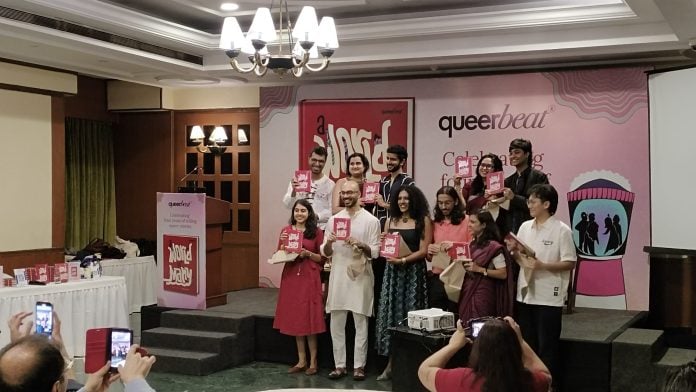
New Delhi: Does India have a queer beat yet? And what happens to journalistic distance when a queer person reports on the lives of their dear ones? These questions took centre stage at the launch of A World of Many, the first book published by the independent journalism platform queerbeat.
When founder Ankur Paliwal asked Visvak, an editor at queerbeat who also worked on the book, how one maintains journalistic distance in a story about one’s own community, the editor responded that the question was as tricky as the task.
“The queer community is often said to be really diverse. But another way to put it is that the community is also very divided. A lot of groups of people don’t see eye to eye, and telling stories about this community often brings these conflicts to the forefront. The way I have learned to do it at queerbeat is with absolute fidelity to the truth,” Visvak said.
But it is not enough to centre truth; one must be seen to do so. In its long-form stories, the platform also lays bare its methods of research, analysis, and verifying facts.
“We try to show it in how we present the story as well. It’s not just that we do the work, but it also must be apparent to the reader how we have done the work, how we have arrived at the truth,” Visvak added.
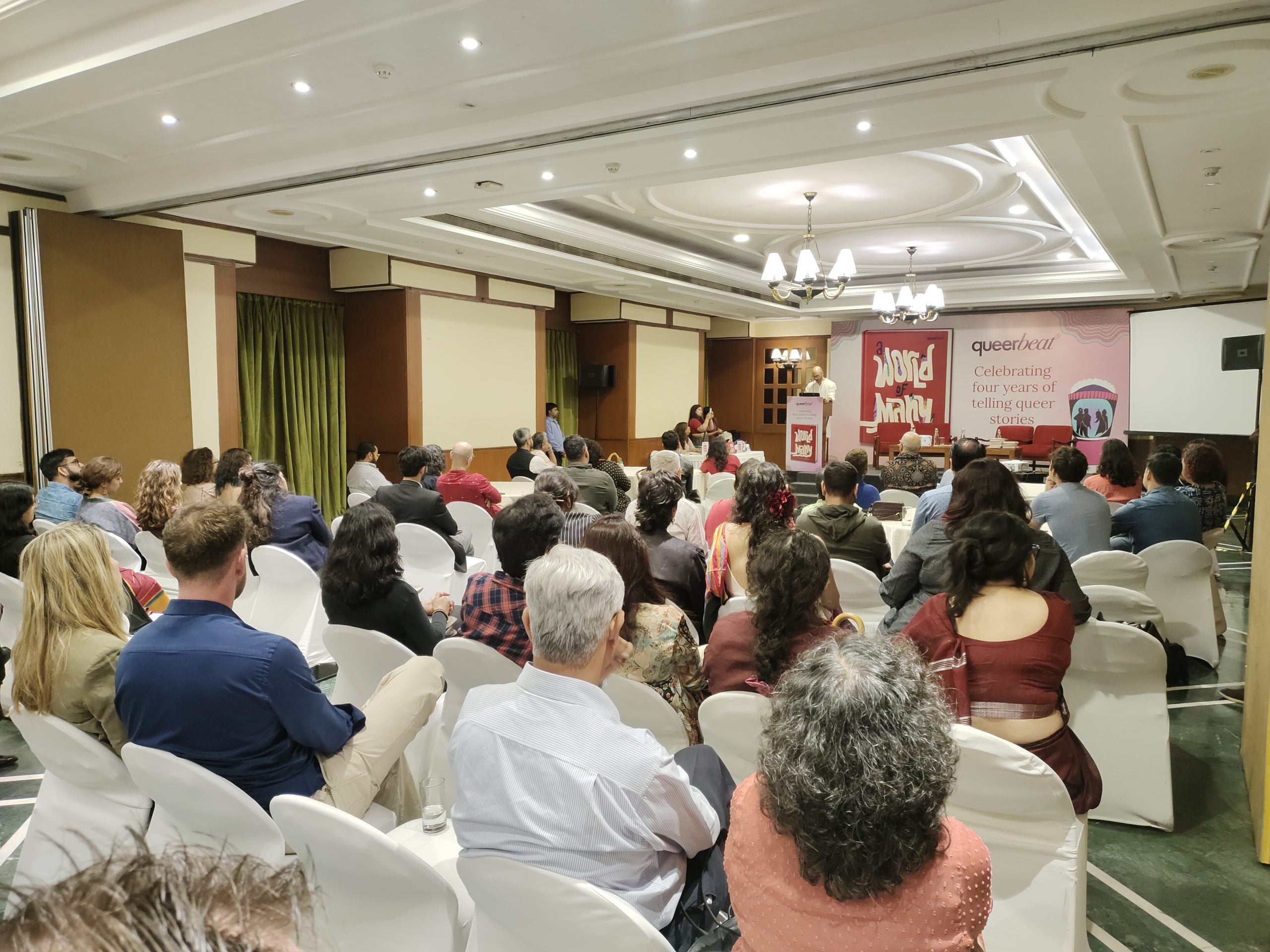
A World of Many is a collection of 12 stories that have appeared on the platform, along with illustrations by Mia Jose. The book launch, organised on the fourth anniversary of queerbeat, drew a cosy crowd of friends at the India Habitat Centre on 30 October. Even as the unseasonal rain pattered Delhi’s streets, a hundred-odd people filled the Silver Oak Hall.
In two of the stories discussed on stage, the reporters knew the ‘characters’ to some extent. Sudipta Das, who wrote a story on how a queer couple navigates chronic illness and neurodivergence, has been friends with one of the protagonists for 10 years. But for Das, the lack of journalistic distance helped report the story with sensitivity.
“I think having proximity with the story, and with the people, helped in terms of ensuring that the exercise doesn’t become extractive, because this story also gets deeply personal in terms of the people talking about their mental health, suicidal ideation… Because I knew them beyond this context, I was not looking at them in that deductive or unidimensional manner. I could also see their humour, their life, love, laughter, all of that,” Das said.
Naina Bhargava, who wrote a story on queer love in small-town India and knew both people in the story, resists associating this proximity with the label of ‘queer journalism’.
“I’m not comfortable with calling it queer journalism. Journalism is journalism. My story has class, caste, geographical dynamics,” she said, adding that it wasn’t unheard of for reporters in a beat to befriend sources eventually.
There is no neat answer to the question. For Visvak, it is one of many enquiries to creating a queer-focused newsroom.
“A queer beat covering journalism that focuses on queer people, on queerness, doesn’t really exist in India. queerbeat is trying to bring it into existence in some way. And so we keep encountering the challenges that a pioneer might encounter,” Visvak said.
A space for queer journalism
queerbeat was shaped in cafes across GK2, where Paliwal met writers in the early days.
“I had a grant from the Pulitzer Center, and I wanted to commission four really diverse stories. So I started meeting reporters, authors, and discussing ideas. I was lucky that all the writers I spoke with about these stories were happy to do it, and that’s how queerbeat started,” he told ThePrint.
Four years later, Paliwal finds it all “unbelievable”.
“In today’s time, when publications are shutting down, and journalism is struggling, having a space that does queer journalism is unbelievable,” he added.
Paliwal closed the event with an appeal to attendees to support queerbeat by reading and sharing its stories, by becoming a paid member, or by buying a copy of the new book. As newsrooms worldwide feel the pressure of views, clicks, and spreadsheets, queerbeat is attempting to set up a revenue model to sustain its work.
“It is very hard to do journalism in this time when people are reading less of it. It is harder for a publication which is so niche. Big publications have reach and a wide audience. We’re doing one thing, but we’re doing it well. How many people are going to buy it, we’re still figuring out,” he said.
Depending on who you ask, queerbeat is a newsroom, a community project, or an archive. For Paliwal, it is all three. And in the near future, he would like to take the platform hyperlocal.
“I want queerbeat to be multilingual. I want us to go hyperlocal, because I know that is where we need to shape conversations about queerness. We want to collaborate with local media outlets and influence conversations there—that’s what queerbeat is working towards.”
(Edited by Aakriti Handa)