


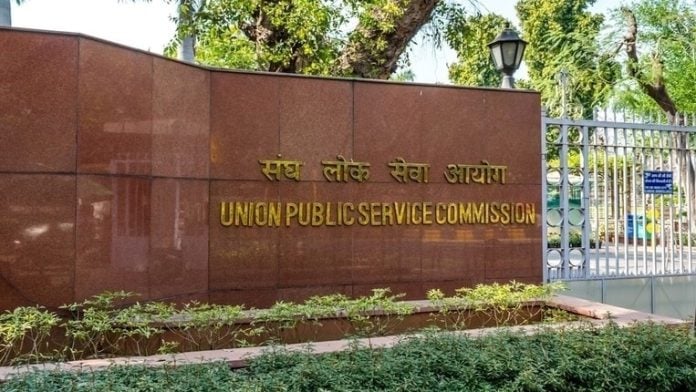
New Delhi: As paper leaks, exam cancellations, and delays in government recruitment continue to trouble State Public Service Commissions, the Union Public Service Commission on Monday brought together secretaries of state commissions to discuss ways to make recruitment examinations more secure and transparent.
The one-day workshop, held at the UPSC headquarters at Dholpur House in New Delhi, brought together secretaries, joint secretaries, and senior officials from State Public Service Commissions across the country.
The meeting comes against the backdrop of repeated controversies surrounding state recruitment examinations. For instance, the Telangana State Public Service Commission had to cancel its Group-I preliminary examination in 2023 after allegations of a paper leak. In Jharkhand, the State Public Service Commission’s recruitment process has also faced controversies over alleged examination irregularities and demands for greater transparency.
Addressing the gathering, UPSC chairman Ajay Kumar said technology would play an important role in preventing malpractice and maintaining the credibility of recruitment examinations.
“This is a time of reform and innovation, and technology has a big part to play in it. When people use technology to beat the system, the only way is to use more technology to keep a check on them, so that the system remains fair and transparent and the integrity of the examination process is upheld,” said Ajay Kumar, Chairman, UPSC, while addressing the gathering.
‘Gathering, not workshop’
The event was organised following a decision at the 25th National Conference of Chairpersons of State Public Service Commissions, held in Bengaluru in January 2025. It gives the Secretaries—the operating arm of every Commission—a national platform of their own.
“At the UPSC centenary celebrations, the Hon’ble Prime Minister emphasised the importance of sharing best practices among Public Service Commissions, and this workshop is a realisation of that vision,” Kumar added.
He also outlined recent initiatives of the Commission, including AI-enabled face authentication of candidates at examination venues, the Universal Registration Number for applicants, digitisation of Departmental Promotion Committee proposals and computerised randomisation of interview boards.
UPSC secretary Shashi Ranjan Kumar said the meeting would help state commissions learn from one another.
“This is not a workshop where we teach, and you learn. It is a gathering of colleagues who perform the same responsibilities in different circumstances, under the same constitutional obligations. While Chairpersons and Members shape the vision, it is our duty as Secretaries to ensure that operational mechanisms are robust, legally sound, fair and technologically modern. We bridge policy intent with administrative execution,” he said.
Ranjan Kumar also said at the workshop that several state commissions have effective practices in online application processing, conducting examinations in regional languages, and grievance redressal. He urged the officers to share these methods and practices to build a common repository that other commissions could use.
The secretary also said the workshop could become an annual exercise, depending on the feedback from participants.
“The presentations rest on four pillars of our shared work: secure examinations that preserve public trust, transparent selection, recruitment rules that keep pace with modern job profiles, and disciplinary advice that balances administrative firmness with natural justice,” said Ranjan Kumar.
(Edited by Prasanna Bachchhav)
Also read: 169 of 184 Indian studies on air pollution found adverse health effects. 44 were govt studies