



New Delhi: When the weekend comes around, IT professional Beta Mahatvaraj heads straight to one of Chennai’s lakes. Not for a picnic, but to wade into the water with a snorkeling kit and photography equipment in place. He is on a quest to bring Chennai’s forgotten freshwater fish back into view.
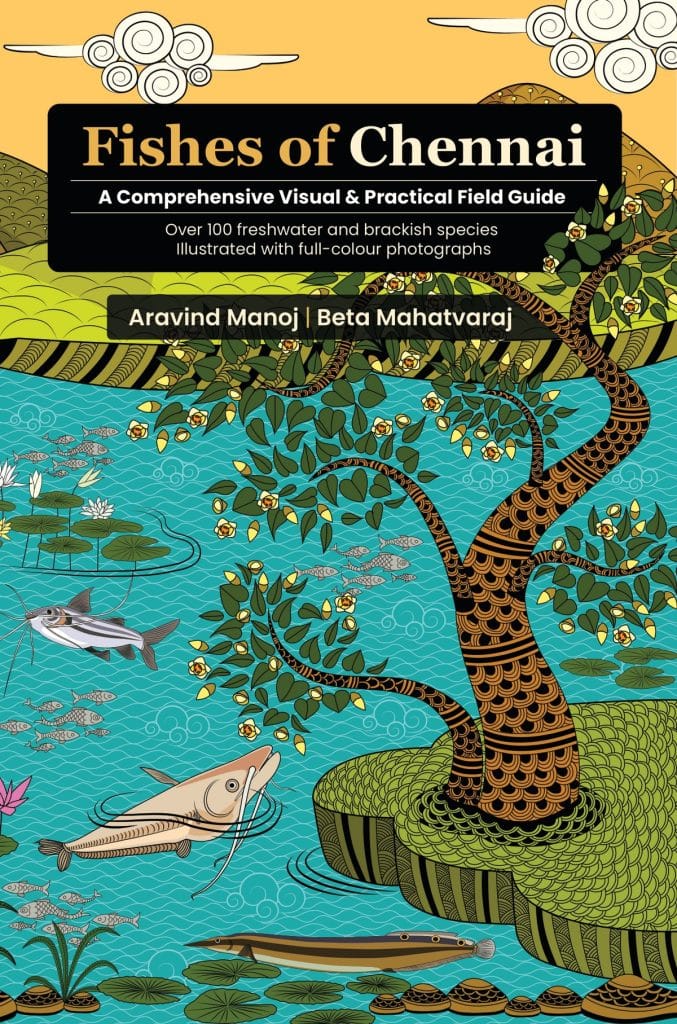
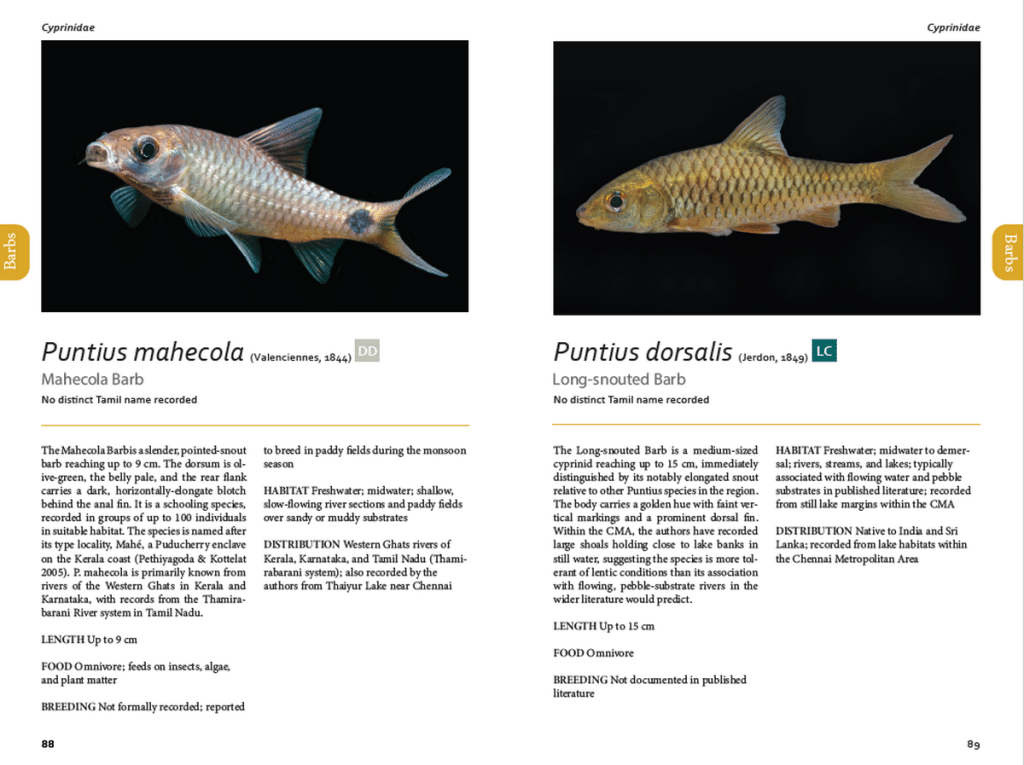
For five years, Mahatvaraj and fellow software professional Aravind Manoj have painstakingly catalogued fish after fish. Their work has now become Fishes of Chennai: A Comprehensive Visual and Practical Field Guide. The 230-page book covers more than 100 freshwater species, with photographs and details of their habitats, diets, breeding habits and conservation status. Some of these fish have been part of the region’s waterbodies for centuries and have even appeared in Sangam literature.
The IT duo describe the book as the only visual record of what lives in Chennai’s water today. It also logs which are missing or dwindling dangerously. They logged nearly 80 pre-orders before the book’s launch on 22 August, coinciding with Madras Day.
The seed for the field guide was planted in Manoj’s mind several years ago.
“We knew that there was no visual guide for Chennai’s fish. There were only scientific descriptions, no live photos. We wanted to change that. We also wanted to show that Chennai has lost some biodiversity over the years,” Mahatvaraj told ThePrint. “We want to show what we have in our waters, what we used to have, and also what damage is being done.”
Such documentation is much needed, especially since freshwater fish are among the least studied vertebrate groups in India, according to Rajeev Raghavan, a fisheries scientist and assistant professor at the Kerala University of Fisheries and Ocean Studies.
“There are only two freshwater fish even mentioned in any of the schedules of the Wildlife Protection Act. Policymakers are least concerned with freshwater fish. Much of it is an awareness issue. If you ask someone in the ministry of environment and forest, they can speak for hours on tigers, leopards, rhinos, and elephants, but they would be absolutely clueless about freshwater fish,” Raghavan told ThePrint.
Also Read: Is Chandigarh’s Sukhna Lake under threat? ‘Violations become routine’
Why India’s forgotten fish matter
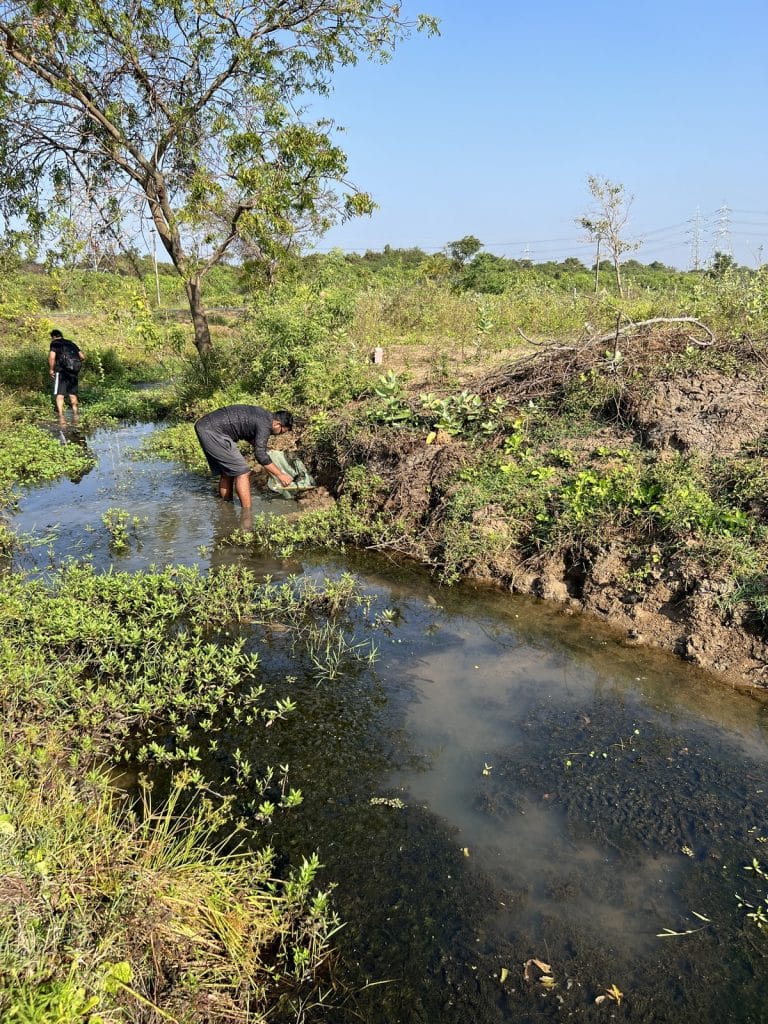
Mahatvaraj and Manoj are the Salim Alis of Chennai’s fish. Their field guide captures the city’s freshwater species alive in waterbodies such as Chembarambakkam Lake, Thaiyur Lake in Kelambakkam, Korattur Lake and the Ennore estuary. Their aim was to change how people look at fish.
“If someone has a DSLR, they might go bird watching, taking photos of butterflies, or other wild animals. But fish are just considered a source of food. This is why we gave priority to photos. Most of the photos in the book are live images. We didn’t take dead fish from fishermen,” Manoj told ThePrint.
While there are other books on India’s freshwater fish, Mahatvaraj and Manoj say theirs is the first pictorial field guide of its kind. Apart from some help with printing costs, the research, documentation and compilation were self-funded.
Chennai’s fish have been recorded in two major surveys, once in 1916 by Dr Sundar Raj and again in 2010 by Dr Ramadevi and Dr Marcus Knight. The first survey found 57 native species of fish and the second found over 80. This new guide creates a visual database of the fish that live in Chennai’s waters today. If a fish disappears years from now, Mahatvaraj and Manoj want the book to show that it was once there.
Throughout the country, the picture of freshwater fish is murky. India’s over 1,000 species of freshwater fish are little known, and many are endemic to individual rivers. Raghavan said that over 100 species of freshwater fish might have already gone extinct and several others are on the verge of extinction. Many are so little known that there are no specific protections for them.
Conserving fish is particularly challenging because they are deeply connected to people’s livelihoods, including tribal communities, forest dwellers and inland fisherfolk. But losing freshwater fish could have cascading effects that scientists cannot yet predict because their role in the ecosystem is so poorly understood.
Research on freshwater fish in India is concentrated in a small set of specialised institutions. The Coldwater Fisheries Research Institute in Uttarakhand, the National Bureau of Fish Genetic Resources in Lucknow and the Central Inland Fisheries Research Institute in Kolkata study everything from taxonomy and ecology to fish biology, populations, migration and conservation. The work always begins with the most basic task: identifying and describing what species are there.
“The idea is not that you need to love fish. But you need to know that if you preserve freshwater, you preserve not just the fish, but everything that lives around. If you don’t know what is there, you don’t know what to conserve,” said Mahatvaraj.
The perils of finding fish
When Mahatvaraj was five years old, his family lived near a stream in Ernakulam, Kochi. Every day after school, he would run home with his friends to catch and observe the local fish. Now the COO and director of agri-tech company Farms.io, the 46-year-old has never let go of his childhood passion.
He has spent the past 25 years documenting freshwater fish across the Eastern and Western Ghats. His unusual hobby often means waking before dawn on weekends and heading to remote waterbodies to look for fish that hardly anyone has even heard of.
It’s not always a pleasant pastime. On one expedition to Thaiyur Lake, Mahatvaraj and Manoj found themselves deep in murky water. Within minutes, their hands and feet began itching. The irritation lasted an entire week.
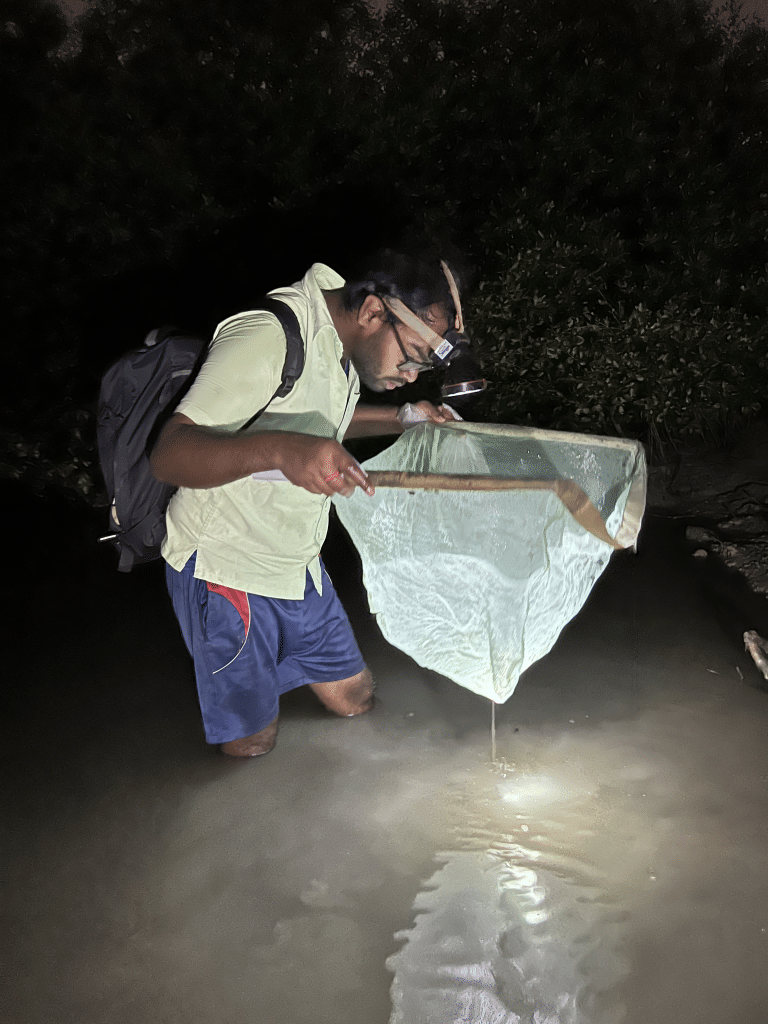
The duo’s weekend trips begin early to avoid Chennai’s midday heat. Often they have to tiptoe around broken bottles left behind by late-night drinkers. They keep up their work for hours on end.
“By the time we are done, we are baked and dehydrated,” said Mahatvaraj.
But they still return every weekend. Every season reveal different fish. Even different times of day reveals different fish.
Manoj recalls going in search of nocturnal fish near Ponneri one evening. The fish could only be found during low tide, so they did their calculations and headed to the Kosasthalaiyar river.
“We were looking for fish when sand smugglers found us. At first they saw our charts and thought we were the police, and they ran away. Then they came back and started questioning what we were up to. It was so scary,” said Manoj.
Zombies, conquerors, survivors
In his decades of observing fish, Mahatvaraj has come across hundreds of species. But one that fascinated him early on was the orange chromide, Etroplus maculatus, one of only three native cichlids in India. It can survive in both freshwater and brackish water, and has a rare parenting technique among fish.
Rather than simply scattering thousands of eggs and leaving the young to fend for themselves, both the male and female protect the eggs and care for their offspring.
Among the fish in the new field guide, the most surprising and dangerous are the plecos, an invasive armoured catfish from South America that has invaded the waters of Chennai too.
“When a pond dries up, these guys can survive with very little moisture. So they look like they’re dead but put them back in water and they will come back alive,” said Mahatvaraj.
According to him, plecos are a huge problem elsewhere as well, but no country has found a successful eradication programme.
“It’s important to at least keep their population down, because otherwise they can easily outcompete our native fish for food,” Mahatvaraj added.
Tilapia, too, are now among the most common fish in Chennai’s waters, though they do not occur naturally in the area. Like plecos, they breed rapidly and can survive in low-oxygen waters or those infested with untreated waste.
As these fish establish their kingdoms in Chennai’s fresh waters, the change is most visible in fishermen’s nets, now increasingly filled with non-native species.
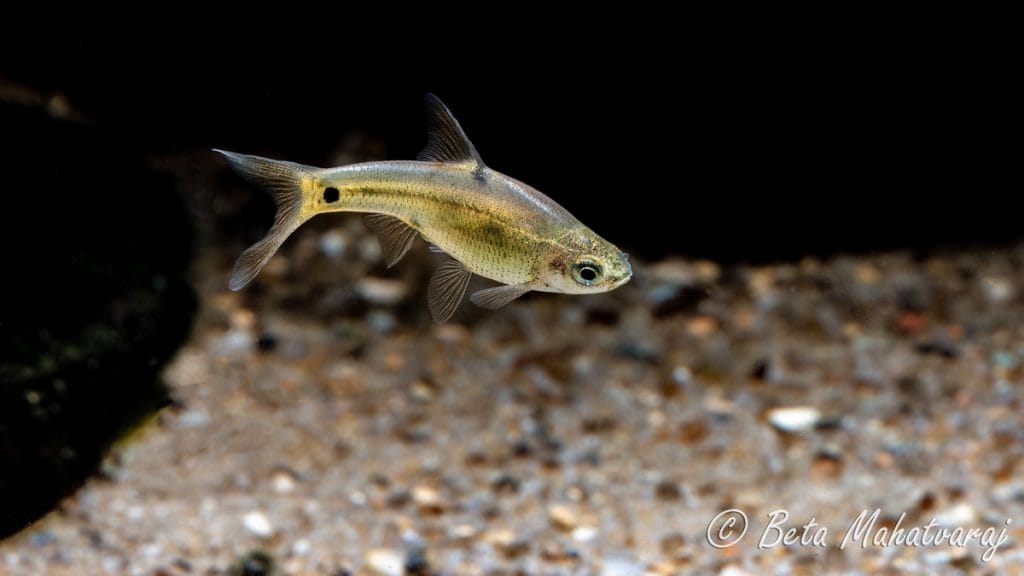
The Pethia sharmai, a tiny fish native to the region, has been a victim of this change. It is already difficult to find in the city. And when Mahatvaraj and Manoj waded into remote waters looking for it, they found that a majority of the specimens were infested with parasites.
Photographing the fish brings another set of problems. Many of these fish cannot be transported to the little fish studio, complete with spotlights, that Mahatvaraj has created in his house to give them the stage he says they deserve.
Some of these fish lose their natural colours when they grow stressed. At times, the two men have to let them acclimatise in special tanks so that they can regain their colours.
“When I was young I could go 5-10 minutes to a nearby pond and catch native fish. Now, I have to go to the outskirts because whatever ponds are left in the city are full of invasive fish,” said Mahatvaraj, who is also part of the Freshwater Sanctuary Foundation, an NGO working to protect freshwater habitats.
How Chennai’s waterbodies have changed
Pollution and development have taken a toll on Chennai’s lakes. Areas around Anna Nagar West and Mogappair, where Mahatvaraj once found native fish, have changed dramatically.
Closer to the city, the two men found invasive species dominating many waterbodies, along with aquarium fish that had been released, abandoned or escaped during Chennai’s many floods. The Ennore estuary presents a particularly bleak picture.
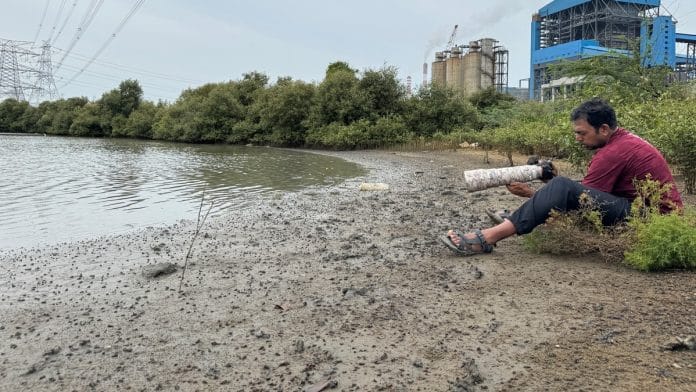
“Every year you will see a huge die-off of fish at Ennore because there is an oil slick or some other industrial issue. There are thermal plants there which release warm water, there is dredging happening. We have seen that these are turning into fragile water bodies where our native fish find it very hard to survive,” said Mahatvaraj.
Native fish are also biological indicators of the health of a waterbody. Invasive species can survive in degraded environments, while healthy native populations signal a functioning ecosystem. The fact that the Buckingham Canal has no fish and can hardly be called a canal at all speaks for itself.
‘Why are you wasting your time?’
Facebook brought the two fish lovers together. Manoj, 29, first messaged Mahatvaraj for help identifying fish he was finding in his locality. He, too, had been obsessed with fish since childhood, catching them near his home in Tirunelveli with a torn piece of mosquito net.
A few years into their work together, they began putting the field guide together, mostly over late-night video calls to discuss which fish photo should go where.
Their family members have come to accept and even support their time-consuming fascination with fish.
“Fish are not ‘in your face beautiful’. In fact, native fish are not colourful enough for somebody to notice immediately. So it is always a challenge to convince people why it is important to preserve something that is not beautiful or small or cute,” said Mahatvaraj.
He credits his wife and children for allowing the hobby to persist.
“I have been married for 20 years now. A lot of my photography equipment is actually gifted by my wife. My kids are now busy with tuition but they used to come with me on surveys quite often,” he added.
The family makes do when he disappears into forests for days without internet or phone connectivity. Mahatvaraj says even his bosses know that when the fish summon, he will respond.
As for the much younger Manoj, who has been in IT for five years, his parents are still a bit bewildered.
“Initially they were like ‘Why are you wasting your time? You should behave like an adult. We are ashamed that you are going into dirty water and collecting fish.’ But once I won the Native Fish Enthusiast Award given by the Endangered Wildlife Trust, they were more understanding. Today, as long as I don’t quit my IT job, they are fine with it,” he said.
Also Read: Vegetarian Haryana is leading fish revolution—Katla, Rohu, Mrigal, Pangas, Shrimp
What happens when fish disappear
Chennai’s disappearing native fish are part of a much larger freshwater crisis. In Karnataka, Naren Sreenivasan, a conservation biologist with the Wildlife Association of South India, has spent years studying the mahseer, a large carp whose migration routes are increasingly disrupted by dams.
Mahseer travel upstream through tributaries to spawn, often returning to the same stretches of river where they were born. A dam can cut that migration route off completely.
“The fish then swim up to the dam, congregate in one spot, and are confused about where to go. Sometimes they spawn there, all together, and there is a crossover, a genetic mix, hybridisation that takes place. This, over maybe 20-30 years, can wipe out an entire population,” Sreenivasan told ThePrint.
Another effect of dams is the sudden fluctuations of water levels. During the rains, rising water gives them time to move upstream and return before levels fall. A sudden dam release can mimic that rise. Many fish begin swimming upwards to then get stuck in smaller pools when the water level suddenly sinks.
According to Sreenivasan, research into freshwater fish can allow policy makers to decide when it is the best time to release waters from dams so that they don’t harm the local freshwater fish.
Field guides such as Fishes of Chennai are a move in the right direction, but there is a long way to go in protecting India’s freshwater fish. Sreenivasan warns that their decline can set off a much larger chain reaction.
“It will be ecosystem collapse, complete ecosystem collapse,” he said.
He points to the Rishabhavati river in Bengaluru. When Sreenivasan goes there now, people recall swimming and fishing in those waters. Nostalgia is virtually all that’s left.
“It used to be a major river, today it is completely dead. There is nothing in those waters. Only two three species of exotic fish. All the native species are gone,” he said.
The fish that once filtered the water are gone. So are the filter-feeding crabs. Sreenivasan says the river is now essentially sewage water.
“You can’t even call it a river because all the ecosystem services that a river provides, no longer function,” he added.
(Edited by Asavari Singh)