



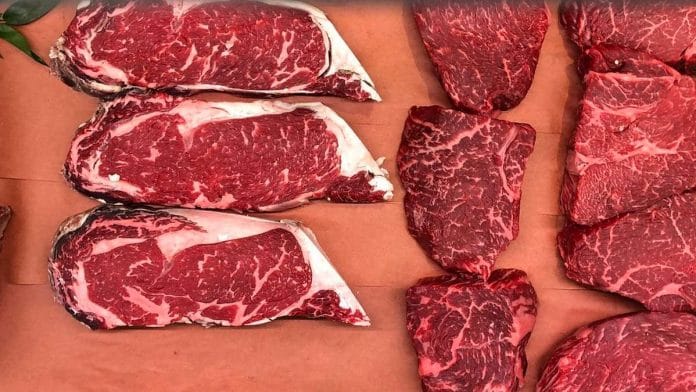
New Delhi: Sugar molecules in red meat are linked to a 63% higher risk of type 2 diabetes (T2D), according to a recent study. The study accounted for other risk factors related to T2D, such as physical activity, overall diet, smoking status, and other health conditions.
Preliminary results of the observational study, carried out by the European Association for the Study of Diabetes, are being presented at the organisation’s annual meeting in Milan, Italy, till 2 October.
The study also showed that the association was weaker but remained significant after accounting for body mass index (BMI).
“Our findings support chronic inflammation as a specific mechanism linking red meat consumption with T2D, partly beyond the amount of red meat a person eats and partly independent of body fat,” said lead author Dr Leopold Fezeu from the Université Sorbonne Paris Nord, Bobigny, France.
Dr Fezeu added that “Although we do not know exactly what levels of Neu5Gc trigger an immune response, our data suggest that higher intakes of meat-derived Neu5Gc are associated with a progressively higher risk of T2D.”
The sugar in question, called dietary N-glycolylneuraminic acid (Neu5Gc), is produced by most mammals. However, humans stopped producing it several generations ago because of an ancient genetic mutation in the CMAH gene. Apart from red meat, the sugar is found in lesser quantities in dairy.
Research methodology
While studies have previously linked Neu5Gc intake with cancer and cardiovascular disease, similar analyses had not been conducted in the case of Neu5Gc and its relationship with chronic inflammation, leading to T2D.
The recent EASD study took a sample size of 89,953 adults from the NutriNet-Santé study—a large, long-term French prospective observational cohort study investigating relationships between diet, lifestyle, and health.
The average age of participants was 42 years, with 79% female, and none of them had T2D or cancer at the start of the study. They filled out three 24-hour dietary records, which researchers used to gauge their Neu5Gc intake.
Their analysis covered all red meat, including lamb, beef, pork, rabbit, goat, and game meat. It recorded processed foods such as bacon, sausages, and cured meats as a separate food group. Dairy products were also analysed separately.
The research identified 966 T2D cases among participants over a median follow-up of 7.2 years.
Also Read: Type 2 diabetes looks different in lean and overweight people
Higher risk of type-2 diabetes among red meat consumers
The analysis found a strong correlation between meat-derived Neu5Gc and T2D risk, with the risk increasing steeply at higher exposure levels to the sugar.
People in the study’s highest quintile had a 63 per cent higher chance of developing T2D, and people in the second highest quintile stood at a 41 per cent higher risk of developing the same.
In the highest quintile, men’s and women’s red meat consumption (including processed meat) was as follows: 136g and 96g respectively. This is in contrast to their consumption figures in the first quintile: 21g and 9g respectively.
Warning against the strong implications of the findings for regular red-meat consumers, Dr. Fezeu said, “Given how common red meat is in Western diets, the strong association between meat-derived Neu5Gc and T2D risk is an important finding”.
Edited by Maryam Hassan