



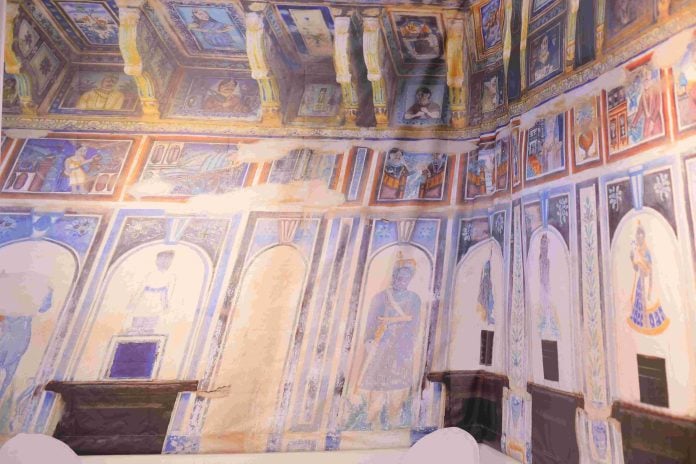
New Delhi: Months after the ‘Painted Haveli Towns of Shekhawati’ were added to the tentative UNESCO World Heritage list, a Delhi exhibition brought together the art and stories, which traced the journey of Rajasthan’s Shekhawati region through the British Raj, the freedom movement and 80 years of independent India.
The exhibition was inaugurated by Tim Curtis, Regional Head of UNESCO for South Asia. The launch brought together Raja Rama Varma, a descendant of artist Raja Ravi Varma, and Guru Shovana Narayan, chairperson of the Shruti Foundation, an NGO working on education, heritage and culture.
The display draws from the Museum of Heritage and Art (MOHAR) collections and Shruti Nada Poddar’s extensive personal collections, featuring paintings, manuscripts, telegrams, newspapers, letters, maps, and oleographs. Poddar is the founder of Shruti Foundation and curator of the exhibition titled “Raj Se Swaraj Tak – From Colonial Rule to Independent India, through the Eyes of Shekhawati.”
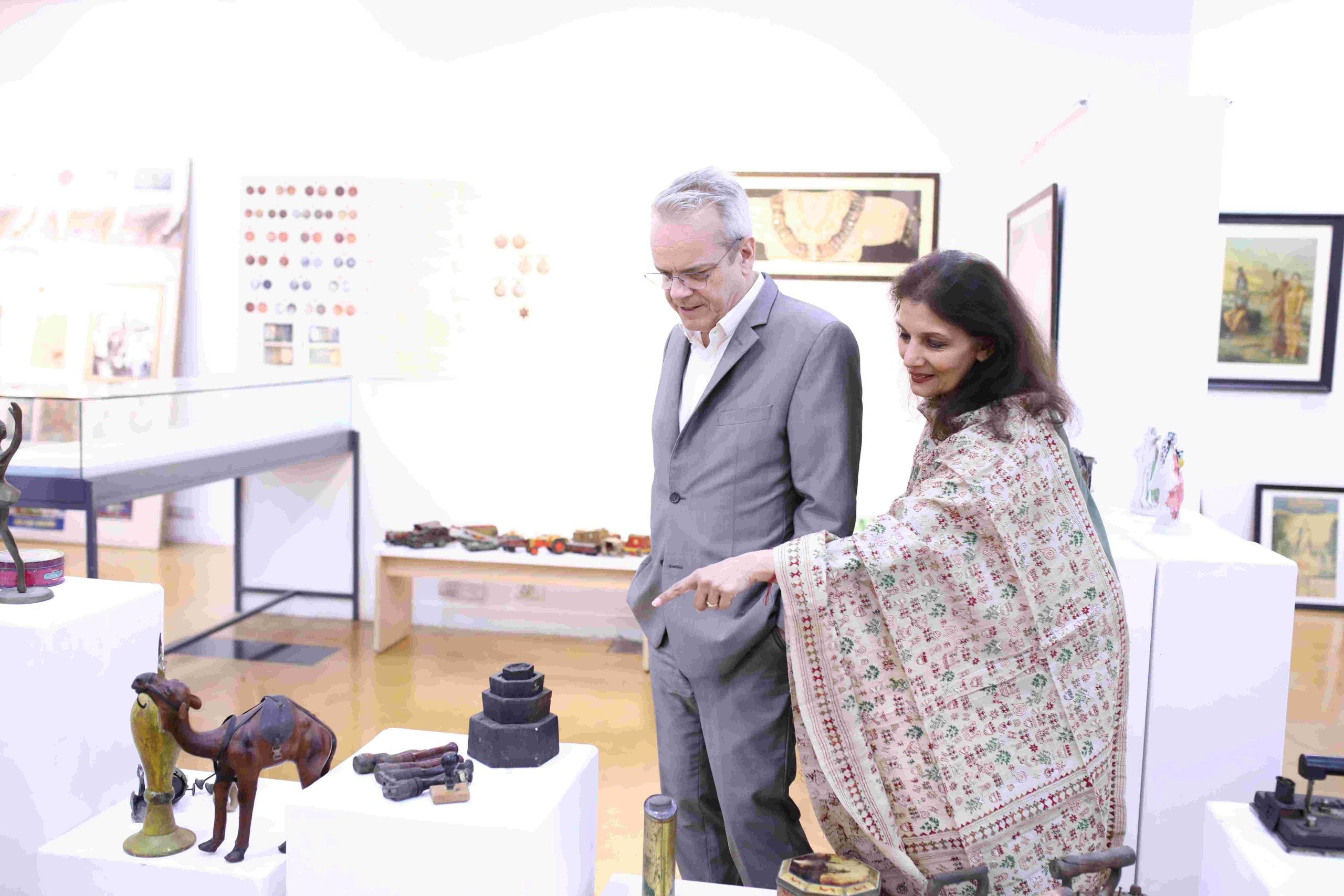
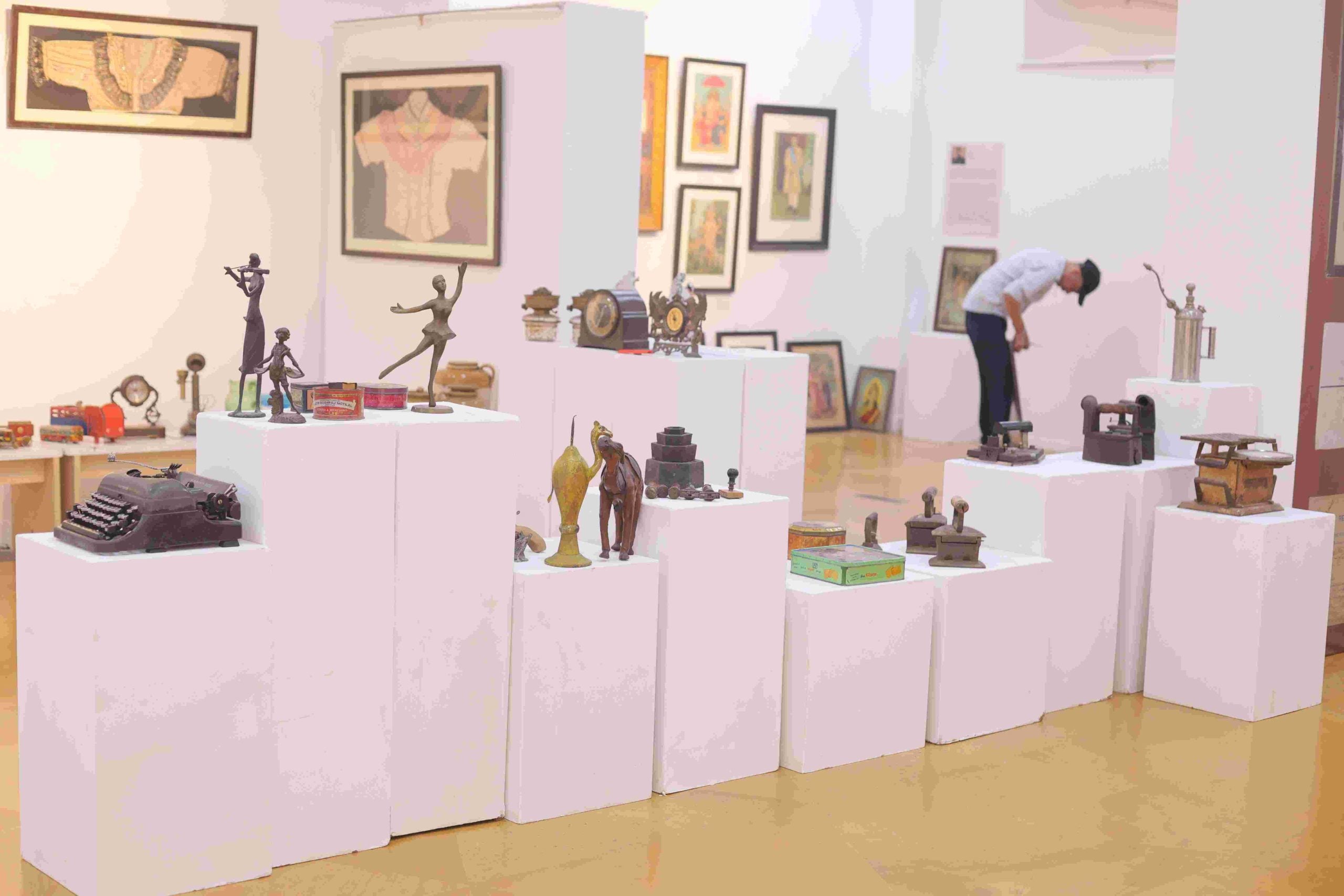
The display also included the Raja Ravi Varma Collection, Manchester textile labels, old messages, coinage, currency, games, and rare photographs of MK Gandhi, Jawaharlal Nehru, and Shubhash Chandra Bose.
These artefacts reveal the intersection of Indian and foreign influences that shaped the country and offer glimpses into the freedom struggle and the making of a new India.
“The mixed influence of the Portuguese and British architecture is visible in the architecture of Shekhawati’s havelis,” said Poddar.
Rajasthan’s open-air art gallery
The exhibition also highlighted the role played by the merchant communities of Rajasthan in India’s freedom struggle as well as in the development of independent India.
“I think this exhibition really demonstrates the richness of the Shekhawati region in Rajasthan. I was lucky to visit it in January. I was really taken aback not only by the impressive architectural dimension of the towns, but also by all the art and associated art, the murals, the technology and the fascination with technology. The wealth that was there really comes through,” said Curtis.
Shekhawati is often described as the “Open Air Art Gallery of Rajasthan” because of its remarkable frescoed havelis. However, beyond their artistic and architectural significance, these havelis also preserve stories of the people who built them and the changing social, cultural and economic influences that shaped their lives.
“Shekhawati has always been seen for its beautiful frescoes, but there is so much more to discover in the stories surrounding these havelis,” said Shruti Nada Poddar, curator of the exhibition
Poddar said the exhibition allows us to see how the people of Shekhawati experienced a changing India and how that change found their way into their homes, their walls and their lives.
“I was quite astounded at the kind of melting pot that we have in a place like Shekhawati; it gave so much knowledge to the world and learnt so much from the world,” said Poddar.
Not just paintings
The exhibition displays old paintings from Raja Ravi Varma collection, including paintings of the King and Queen of Mysore, Radha Vilas, Sita Vilas and Mahishasura Mardini. Apart from the paintings, Shekhawati-style turbans and clothes, a typewriter, a weighing machine, and British-era medals were also on display.
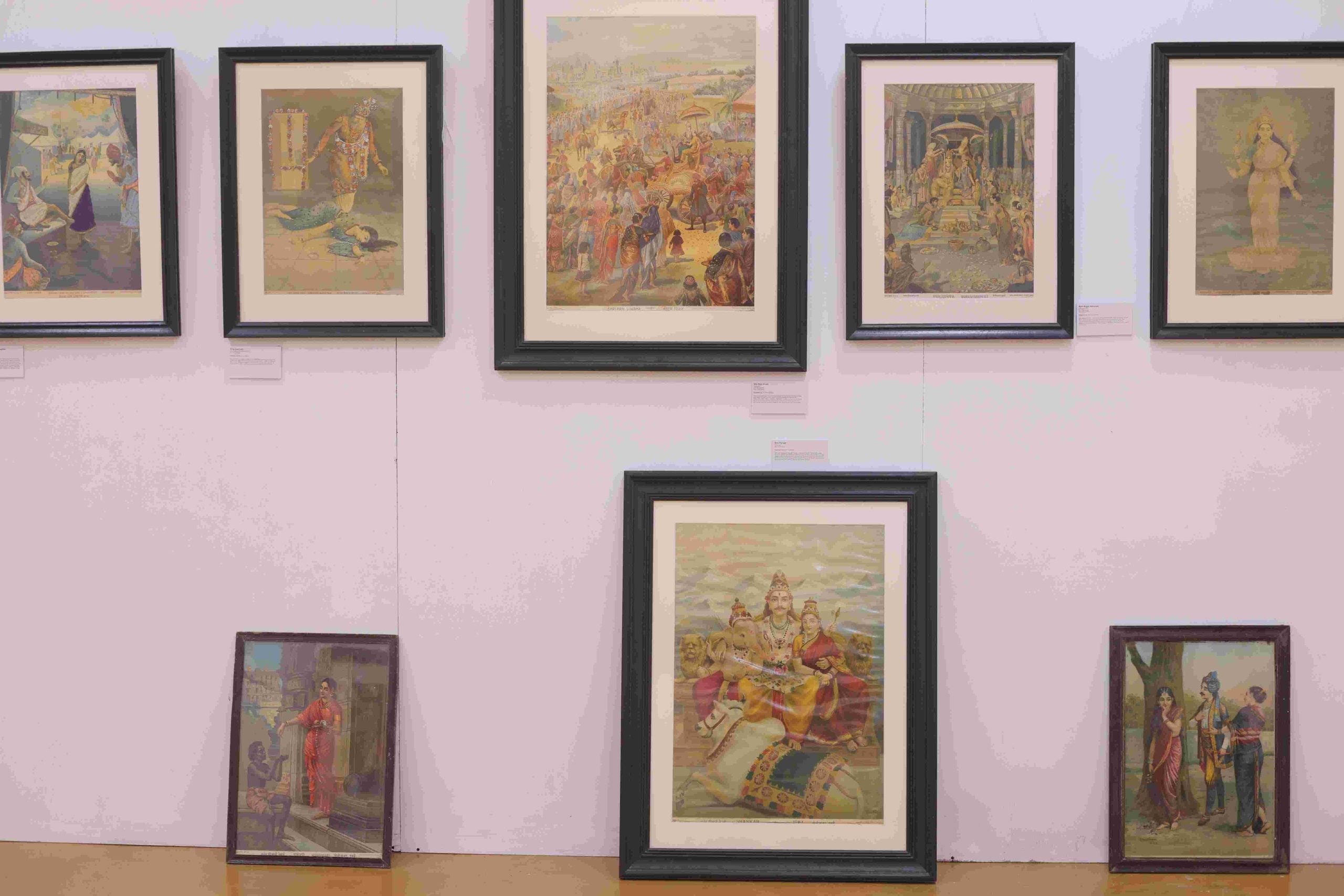
The curator puts a detailed panel with information about the objects and its history.
“Trade transformed Shekhawati into a gateway between India and the wider world. Merchant families established a commercial network that connected Rajasthan to Kolkata, Mumbai, Chennai and international ports, carrying goods, ideas and innovation across continents,” read a panel titled “Trade, Travel and Global Connections.”
Another panel described the making of desert citadels in limestone.
“Built in local limestone and lime plaster, the havelis of Shekhawati are masterpieces of architecture that reflect a remarkable dialogue between tradition and global influence,” reads the panel titled “Building Global Desert Citadels in Limestone.”
(Edited by Aakriti Handa)