





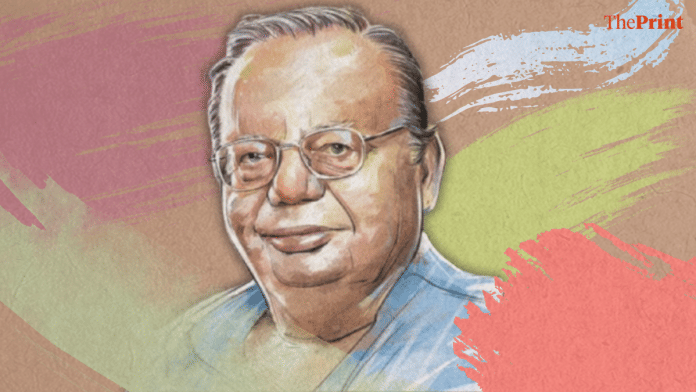


New Delhi: If Ruskin Bond could go back in time and relive his childhood, the one thing he would do differently would be to kick his school headmaster in the shin. The offending instructor once made him apologise in front of the entire school for no fault of his.
In a telephonic conversation with ThePrint, the celebrated author and poet recalled his childhood in Dehradun, and out came tumbling stories of long-lost friends.
If he got the chance, Bond said, he would like to meet some of them again: Somi, the boy who features in A Room on the Roof (1956), Kishen and Devinder from Vagrants in the Valley (2016), and a girl with whom the author would play badminton—and had a secret crush on—who appears in A Song of India (2020).
“You see, when you get old, you’re bound to lose friends along the way. You can’t all grow old together. So, growing old is a time to remember old friends,” said Bond, 92.
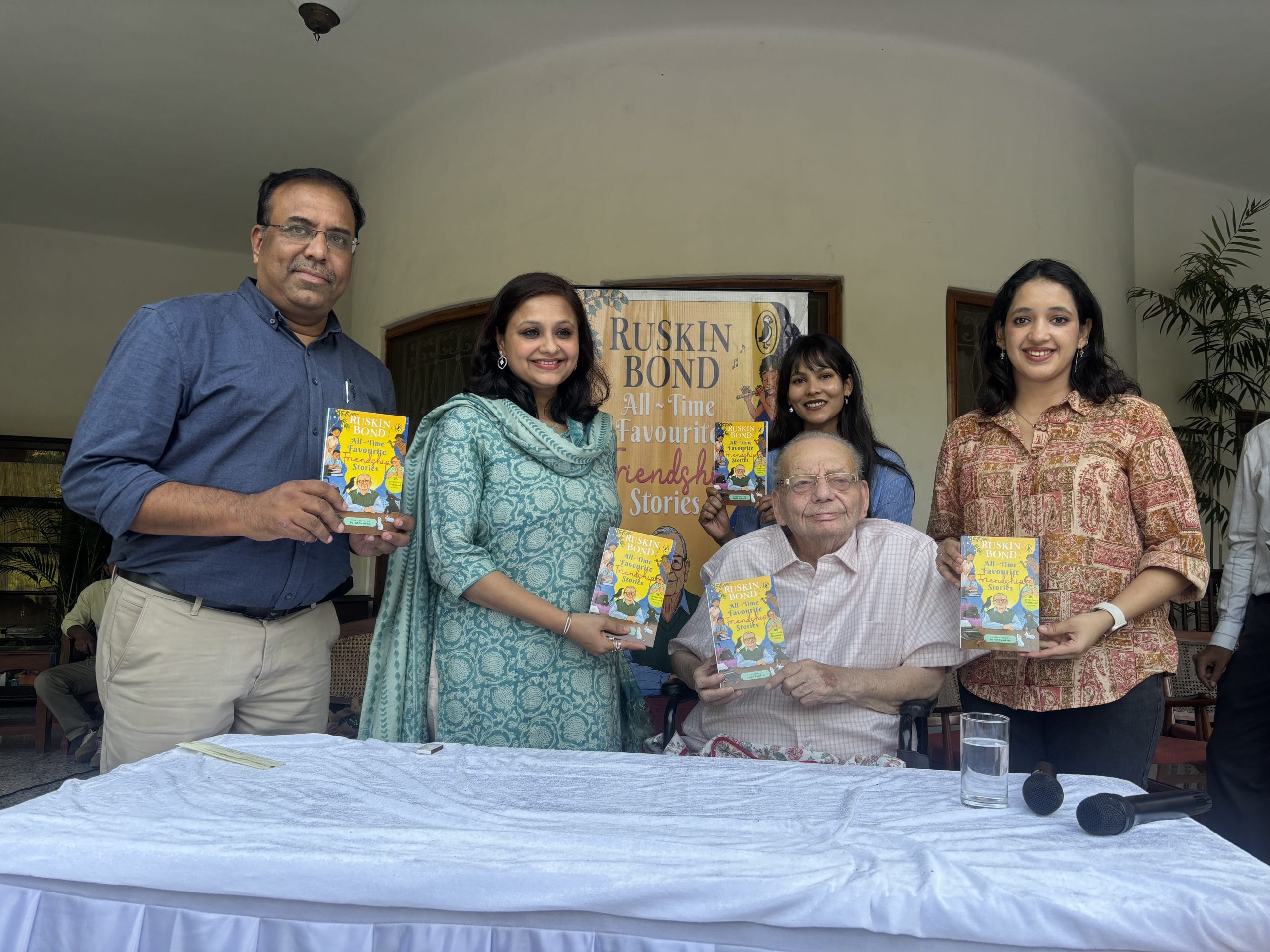
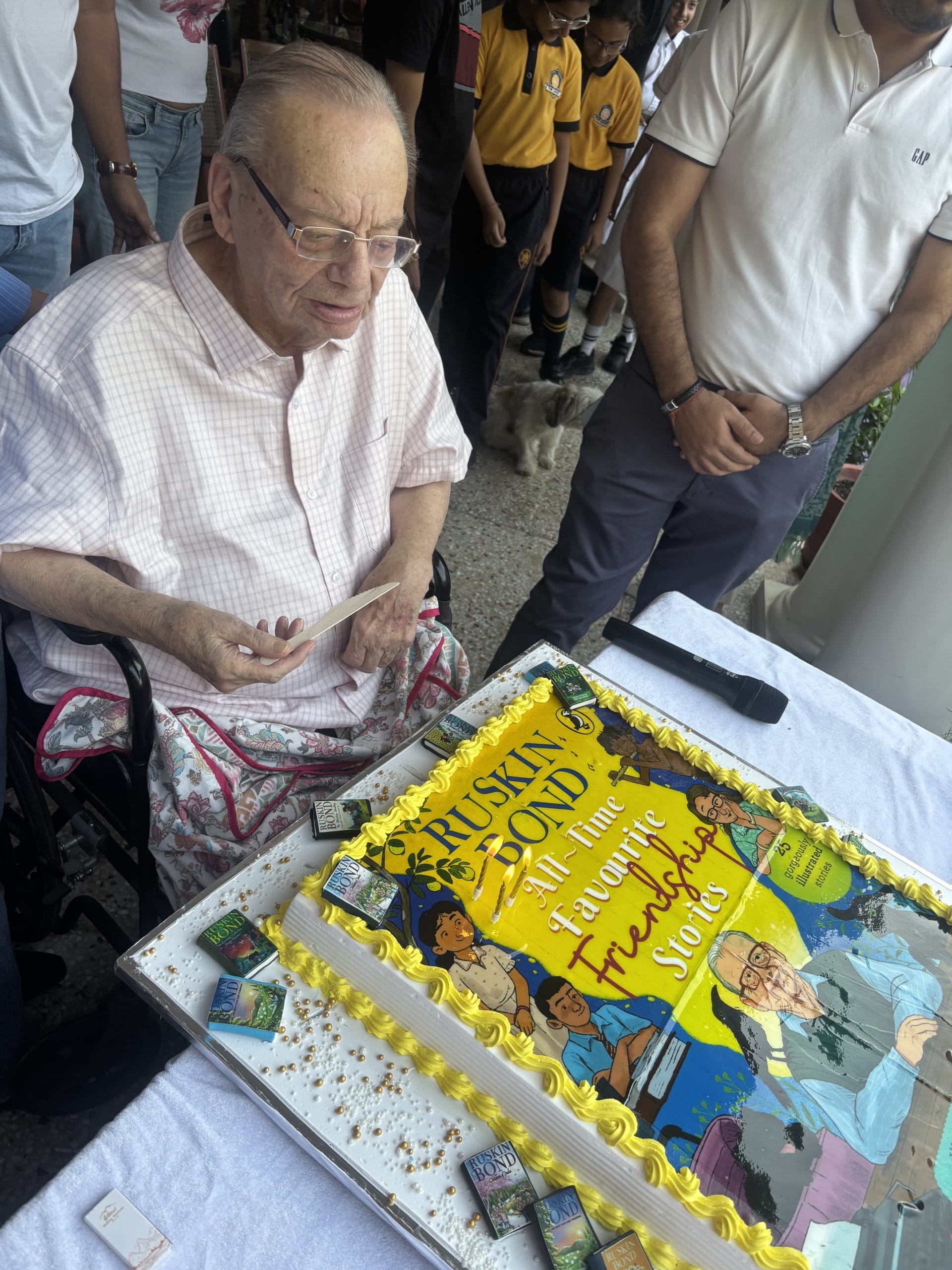
Bond’s latest book is an effort to do just that. Published by Puffin India, All-Time Favourite Friendship Stories, launched on 19 May—his birthday—is a collection of short stories, old and new. Some are extracts from beloved novels, while others are recent works.
The characters in these stories are often children or teenagers who spend their time organising beetle races, stealing mangoes, and playing in ponds. But today, children grow up on the phone. Bond knows a boy who spends his day watching YouTube.
“Every day, this boy comes out with the most amazing predictions that the world is going to end—everything that could possibly go wrong, out of space or elsewhere. But otherwise, he’s firmly stuck in the house. He doesn’t go anywhere… Maybe today’s generation, a lot of their living is in the head,” the author said.
The childhood in Bond’s stories belongs to an older India. The Boy Scouts, who once helped Bond connect with nature and outdoor activities, are nowhere to be found. Hockey is a “lost game” that has disappeared from schools. Even cricket, he said, has changed formats from Test matches to T20 and IPL.
It was those hours spent outdoors that helped Bond shed a lonely childhood and form friendships. He especially loved to watch cricket matches.
“Once, when I was 18 or 19 years old, in order to see a Test match, I climbed on the walls of Feroz Shah Kotla in New Delhi with a group of street kids, because the stadium was full. But we could only see one side of the pitch,” Bond recalled.
In his youth, he also followed hockey and football ardently.
“I used to go see Mohun Bagan, Mohammedan Sporting. They were the top Calcutta (Kolkata) teams,” he added.
Also Read: A Cloud Called Bhura to Hello Sun, Indian children’s fiction is telling climate stories
The importance of wonder
Bond, apart from creating one of the more versatile literary legacies, has also carried several of his books into the cinematic universe. Director Vishal Bhardwaj famously made two of them: The Blue Umbrella (2005) and the Priyanka Chopra-starrer Saat Khoon Maaf (2011). The director has mentioned in the past that he would like to make one more. Bhardwaj was close to adapting a “school story”, Bond said, but the project never materialised.
Now, Bhardwaj is interested in adapting Bond’s The Sensualist (1974), the author shared. The erotic novella, serialised in Debonair magazine, caused controversy at the time of publication, with Bond even facing an obscenity trial.
“Vishal says it’s got several layers of meaning to it. Well, when I wrote it, I only had two layers of meaning. He has found three or four,” Bond said, chuckling.
That’s how Bond’s anecdotes go: they begin in the past, are peppered with quips, and almost always end with a joke made at his own expense.
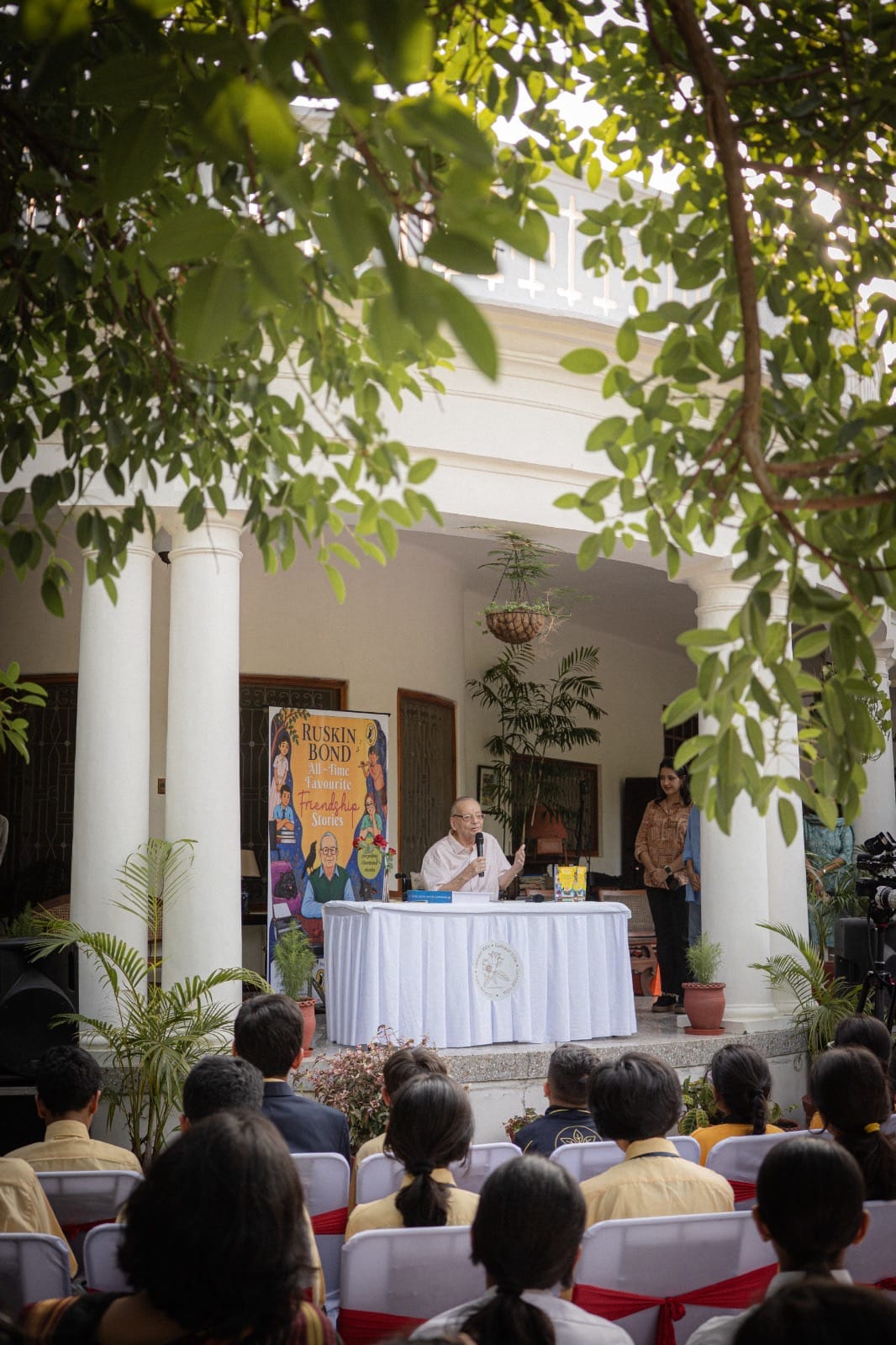
At 92, Bond is learning to walk again with the help of a physiotherapist after undergoing spinal surgery in December 2025. He can see little, which makes it hard for him to read and write. Yet, he dictates to his adopted granddaughter, Shruti, and has churned out about half a dozen stories in the last four months.
One of his recent books, The Wonderful Stone (2026), tells the story of a boy who comes across a mysterious stone in the hills of Mussoorie. Having spent his life in the mountains of Dehradun, the hills carry a special meaning for Bond. In his writing, they appear as places of magic and comfort. Yet, he has also watched them evolve.
“The hill stations went through a kind of slump for a few years in the 1950s and 1960s. They weren’t very popular. You could buy a house, a cottage for Rs 10,000-20,000,” he said. It’s part of why Bond moved to Mussoorie in the first place—it was hard for a freelance writer to sustain living in Delhi or Mumbai.
Then came the boom. By the 1990s, hill stations had become popular. But this came at a price.
“They were virgin mountains once, not meant for buildings everywhere or hundreds of thousands of cars… So what happens now is that constant pressure, along with the heavy rains, is causing subsidence in many places,” Bond said.
This conversation is at the heart of The Wonderful Stone. While the protagonist finds beauty and mystery in the purple stone, his older, city-dwelling cousin—with “spiky hair” and an iPhone—wants to inspect the hills for rare earths.
For Bond, wonder is important in a world based on an extractive logic.
“Magic is important. Especially if you grow up with fairy tales. It stimulates your imagination and helps you think that maybe there is a better world. It inspires you,” he said.
And one doesn’t have to venture far in search of it, either.
“After all, what is nature but magic? The sun coming up, the rain coming down, the spring on the mountain… It helps to look around at the world as magic, which it is.”
(Edited by Insha Jalil Waziri)