



New Delhi: The high-level talks at the BRICS summit in Delhi may well have been less debated than the millet pulao, shahtoot phirni and all-vegetarian spread served to delegates. Now comes more fodder in a country ravenous for details about what its top leaders eat and serve.
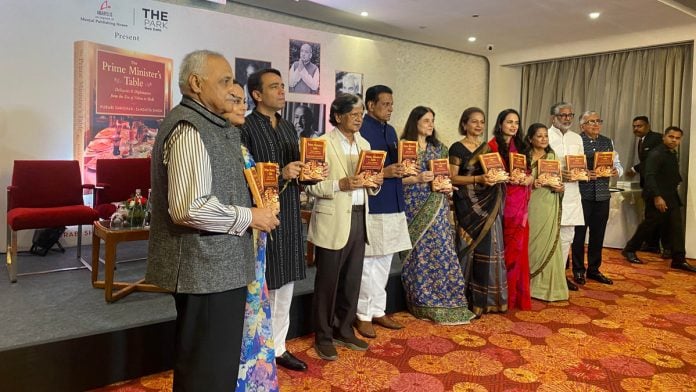
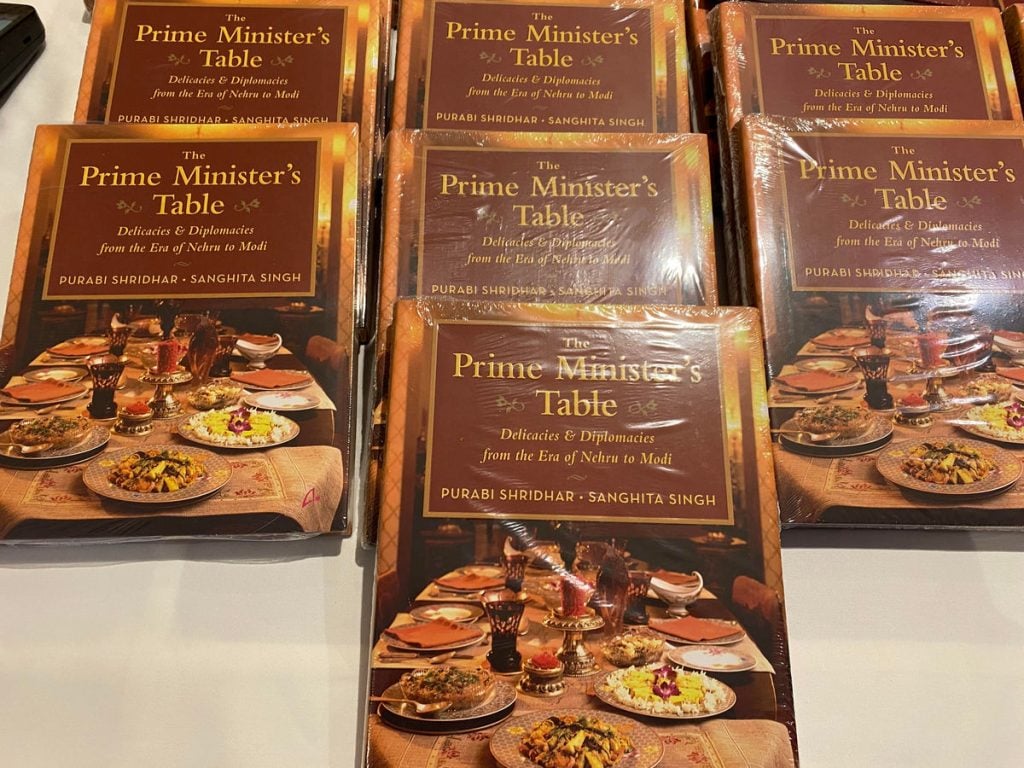
At Delhi’s Park Hotel on Sunday, the sons, daughters, grandchildren and other relatives of several former Prime Ministers revealed plenty of kitchen secrets, from family recipes and elaborate banquet menus to food-related anecdotes. The occasion was the launch of The Prime Minister’s Table: Delicacies and Diplomacies from the Era of Nehru to Modi, by journalists Purabi Shridhar and Sanghita Singh.
Nehru loved his porridge, Lal Bahadur Shastri “almost starved himself”, and P V Narasimha Rao was a “pakka vegetarian” who stuck to simple South Indian fare. Some Prime Ministers were less austere. Vajpayee loved fried fish, while Rajiv Gandhi “loved the Quality chocolates from his childhood”, said Sanghita Singh.
“Let’s find out in totality what they were like, what their homes were like. And what better tool to do that than food?” Shridhar said, kickstarting the discussion.
Also on the panel were Jayant Chaudhary, grandson of former Prime Minister Chaudhary Charan Singh; former MP Anil Shastri, son of Lal Bahadur Shastri; BJP Telangana chief spokesperson N V Subash, grandson of P V Narasimha Rao; lawyer Richa Singh, granddaughter of V P Singh; and former Indian Tourism Development Corporation director Rajiv Makin. The event was moderated by writer and journalist Kishore Singh.
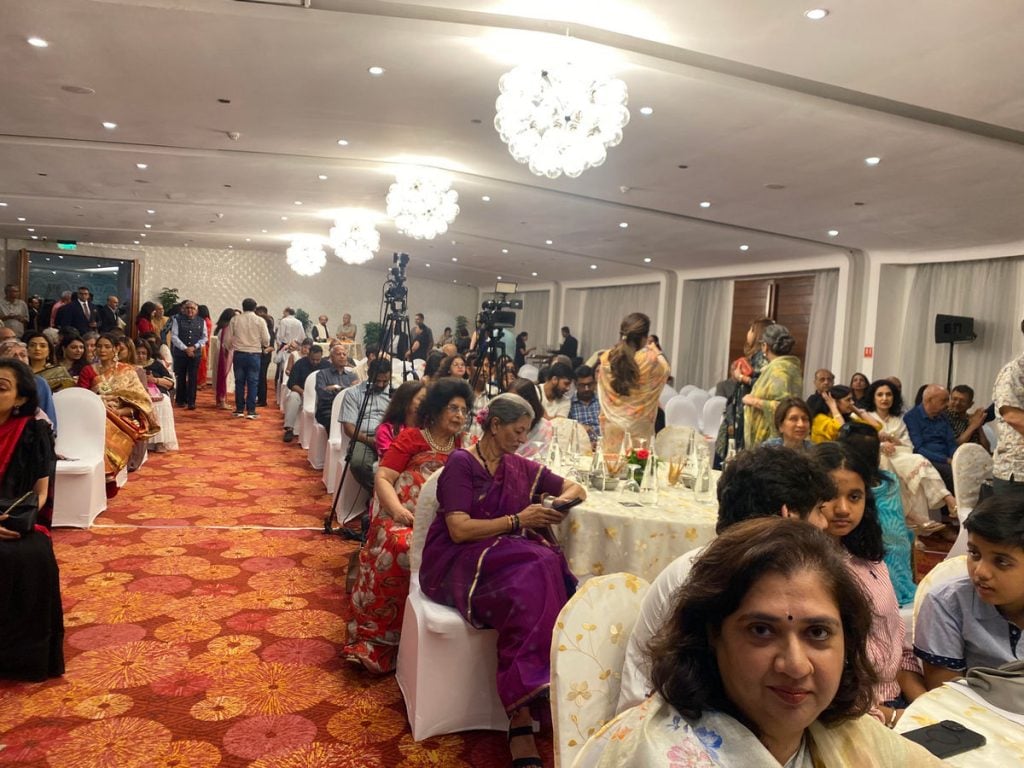
Over the next two hours, the panel discussed recipes from the book and the stories attached to them, with audience members occasionally chiming in with memories of their own. Among those present were Menaka Gandhi, daughter-in-law of Indira Gandhi, and cardiologist Dr M Wali, who treated V P Singh, along with friends and family members who had dined with some of the leaders being discussed.
Also Read: ‘Shrikhand crème brûlée’ doesn’t reflect ‘Naya Bharat’. Stop complicating state banquet menus
Chaat paapdi to scissors for grapes
The personal food preferences of PMs have been diverse — from Narendra Modi, who apparently prefers plain chapati with adrak ki chai, to Indira Gandhi, who was “quite a foodie”, eating everything from caviar to gushtaba.
And at their elaborate state banquets, some brought their own eccentricities to the table.
Atal Bihari Vajpayee was “very fond of chaat-paapdi and golgappa,” recalled Makin, who often oversaw the food and service at state banquets back then. And so every time Vajpayee hosted such an event, chaat “had to be part of the menu”, often procured from his favourite vendor in Old Delhi.
“Almost all of the cabinet would be willing to go to the counter and eat it. Because they couldn’t do that in their normal lives. In their everyday lives,” he added.
One of the most particular PMs when it came to state banquets was Indira Gandhi, according to Kishore Singh.
“She was very fussy and she’d come around and she’d look at the menus, she’d study the flowers, and she’d take care of everything,” he said.
Sudhir Sibal, a former ITDC vice-president who was in the audience, chimed in with an example. Gandhi once noticed that dignitaries were struggling to break grapes off the bunches served in fruit baskets. She then asked for scissors to be kept alongside the grapes, he said.
Protocol mattered just as much, and MPs were trained to mind their Ps and Qs at banquets.
“She had conducted classes for many MPs on how to eat in state banquets. The etiquette of it,” said Makin, adding that as soon as the chief guest was done eating, everyone else was supposed to stop too and dinner came to an end. “In state banqueting…if the chief guest has finished [eating], everything is gone.”
Serving styles, though, changed with the times. Sibal spoke about being sent with his team to London for a three-month course on plating and fusion cuisine.
“And this is what brought a lot of changes in the style of service,” he said. “Earlier it used to be from platter to plate, but later it became ‘plated food’.”
Also Read: ‘Why hide India’s culinary diversity?’ Opposition roasts Modi govt’s vegetarian menu at BRICS gala
Dietary diplomacies
Food and diplomacy could intersect in amusing ways. When PV Narasimha Rao was serving as foreign minister in Indira Gandhi’s cabinet in the 1980s, he returned from a visit to Pakistan with a “truckful of mangoes”, his grandson NV Subash recalled.
When Indira Gandhi visited Rao’s house, he said, she was astonished at the sight.
“Ye kya hai bhai? What is this?” she asked. “Pakistan ke mangoes hai, ya bombs? Are these Pakistani mangoes or bombs?”
The mangoes then had to “go through all the diplomatic channels for 15 days” before they were returned to his grandfather, Subash said, eliciting laughter from the audience.
But the India-Pakistan relationship could also impact the contents of ordinary plates.
During the food shortages of 1965, as India and Pakistan were at war, Lal Bahadur Shastri asked Indians to skip one meal every Monday as an austerity measure. At the time, there was mounting anxiety over India’s dependence on American grain imports.
The PM was “a self-respecting man and he didn’t want to compromise on the self-respect of the nation, and of the Indian people”, said his son Anil Shastri. At home too, the family swapped out wheat for sabudana.
“Sabudana khichdi came into our home on the table in 1965 when the war was going on between India and Pakistan,” Shastri recalled. “At that point in time an American president had said that, ‘If you don’t stop the war against Pakistan, we will stop giving you wheat under PL 480’.”
What began as a response to the wheat shortage has since become a staple in the Shastri household.
“It is cooked even today every Monday in our home,” Shastri added.
As the discussion wound up, the panellists and guests made their way to high tea. On offer were curry leaf-dusted galouti kebabs, gremolata fish skewers and more conversation. In chiffon saris and Nehru jackets, some chattered among themselves about the shared memories of their illustrious families.
“What I loved most about the panel was that it brought [the PMs] down from their pedestals and showed them as people,” said family physician Dr Gita Prakash.
(Editd by Asavari Singh)