





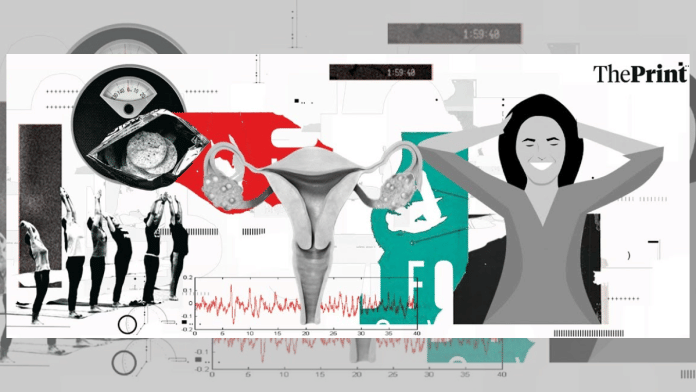


New Delhi: Polycystic ovary syndrome, one of the world’s most common hormonal disorders among women of reproductive age, has been renamed polyendocrine metabolic ovarian syndrome, or PMOS.
The change was announced on 12 May at the European Congress of Endocrinology in Prague and published in The Lancet, but the campaign behind it had been running for 14 years. Led by Monash University endocrinologist Helena Teede, alongside international PCOS experts and patient advocates, including the Androgen Excess and PCOS Society, and Verity, a UK-based PCOS charity. What began as a push to correct a misleading medical name became a global consultation involving 56 patient and professional organisations, more than 22,000 survey responses and workshops with patients and healthcare professionals.
At the centre of the campaign was a simple complaint—the term PCOS made doctors and patients look for cysts. Campaigners argued that this narrowed the condition to ovaries and fertility, when it is now understood as a lifelong hormonal and metabolic disorder affecting menstrual cycles, skin, weight, insulin resistance, mental health, and long-term disease risk.
The name change does not mean patients will suddenly need a new test. But doctors say it should change what is taken seriously in the clinic. A teenager with irregular periods and acne may be assessed for PMOS even before an ultrasound. So may someone struggling with infertility, weight gain, or insulin resistance. Now, patients can no longer be ruled out simply because an ovarian scan does not show “cysts”. Many women with the condition do not have polycystic ovaries. And often the so-called “cysts” are not cysts in the usual sense. They are small follicles, or egg-containing sacs in the ovary, whose development has stalled.
Also Read: No more tests, a bracelet-like device aims to track women’s hormones real-time
What is PMOS?
The condition is caused by a hormonal imbalance, especially involving androgens. These are often described as “male” sex hormones, though they are present in women too. Higher androgen levels can disrupt ovulation, affect menstrual cycles and cause symptoms such as acne, excess facial or body hair, and hair thinning. But PMOS is not only a reproductive condition. It is also linked to insulin resistance, type 2 diabetes, obesity, and long-term cardiovascular and metabolic risks.
PMOS affects more than 170 million women worldwide, or about one in eight women, according to the Endocrine Society. The World Health Organization estimates that PCOS affects 10-13 per cent of reproductive-aged women, and that up to 70 per cent of affected women worldwide remain undiagnosed.
Online, reactions have been split between relief and caution. Some patients have welcomed the new name, saying PCOS made the condition too easy to dismiss as just an ovarian problem.
In responses gathered by The Guardian, patients described delayed diagnosis, weight stigma and years of being treated as though fertility was the only concern. While others worried that a new acronym could create fresh confusion.
“PCOS” is still the term attached to medical records, prescriptions, Google searches, support groups and years of patient advocacy. For many patients, the fear is not that the old name was inaccurate, but that changing it without a careful transition could make information and care harder to find.
STAT News reported that some advocates also have concerns about the new name itself, including whether retaining “ovarian” fully captures the condition’s wider hormonal and metabolic nature.
The new terminology is expected to be phased in over three years, with full implementation planned in the 2028 update of international guidelines. Experts say the aim is not cosmetic, but to move diagnosis and treatment beyond fertility and gynaecology, and toward hormones, metabolism, skin, mental health, and long-term risk.
(Edited by Insha Jalil Waziri)