



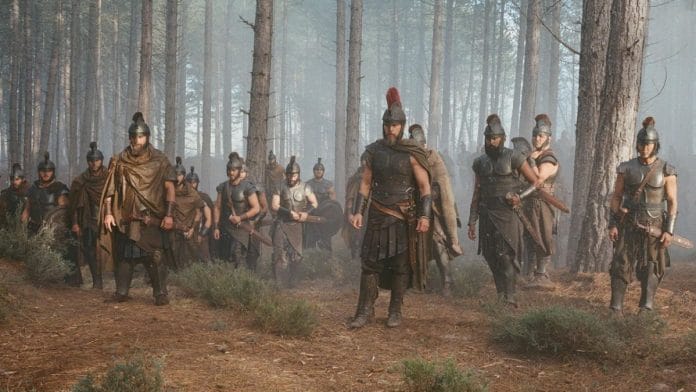
New Delhi: When Christopher Nolan’s The Odyssey hit theatres, the internet argued. Not about Homer’s dactylic hexameter or the original poem’s treatment of memory and mortality, but about casting decisions and whether a 3,000–year–old epic should bend to modern ideas of identity.
For the scholars who have spent careers inside this poem, the discourse is just the latest chapter of a story that has been rewritten for centuries.
Scholars at the University of Chicago, where Homer’s Odyssey is a core text, argue that Western literature’s oldest poem has survived not because it settles anything, but because it keeps handing new questions to each generation.
Carolina López-Ruiz, a historian of ancient Mediterranean religion, put it simply. “Classics are classic because of their capacity to speak universally about the human condition,” she told ThePrint.
The hero from the epic tangles with monsters and gods, sure, but what actually keeps readers coming back, scholars say, is something much smaller and more familiar: the strange unease of coming home changed.
Whether or not we’ve been at war, or in exile, or forced to move, we can relate to the longing for home, for belonging, and the difficulty of achieving it, noted associate professor Emily Austin in a Q&A session for the University of Chicago.
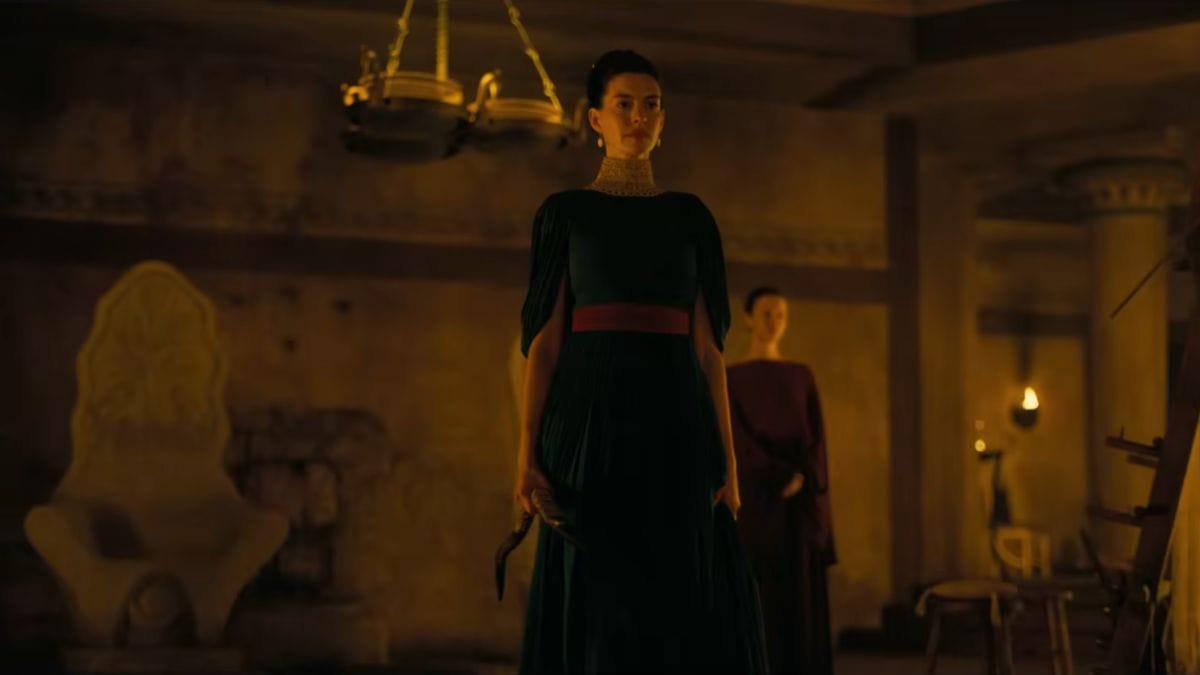
Classics and contemporary interpretations
Patrice Rankine, whose work sits at the intersection of classics and questions of race and identity, isn’t bothered by the online noise over casting. If anything, he sees it as proof of the poem doing its job.
“The idea of antiquity is as much about us as it is about histories of the past,” he said.
Rankine added, half-amused, that people fighting over casting choices aren’t really straying from the text so much as continuing an argument the text itself invites.
“Not only were previous Odysseuses decidedly not Greek—Armand Asante was New York-born, of Irish and Italian descent—but we would have to question what it would mean to be Greek in the first place. The term did not exist at the time of the Trojan War, and was only a vague possibility when the poem was first composed. Antiquity often is a blank canvas for our projections—or if not entirely blank, certainly with enough space for us to cast ourselves,” he said.
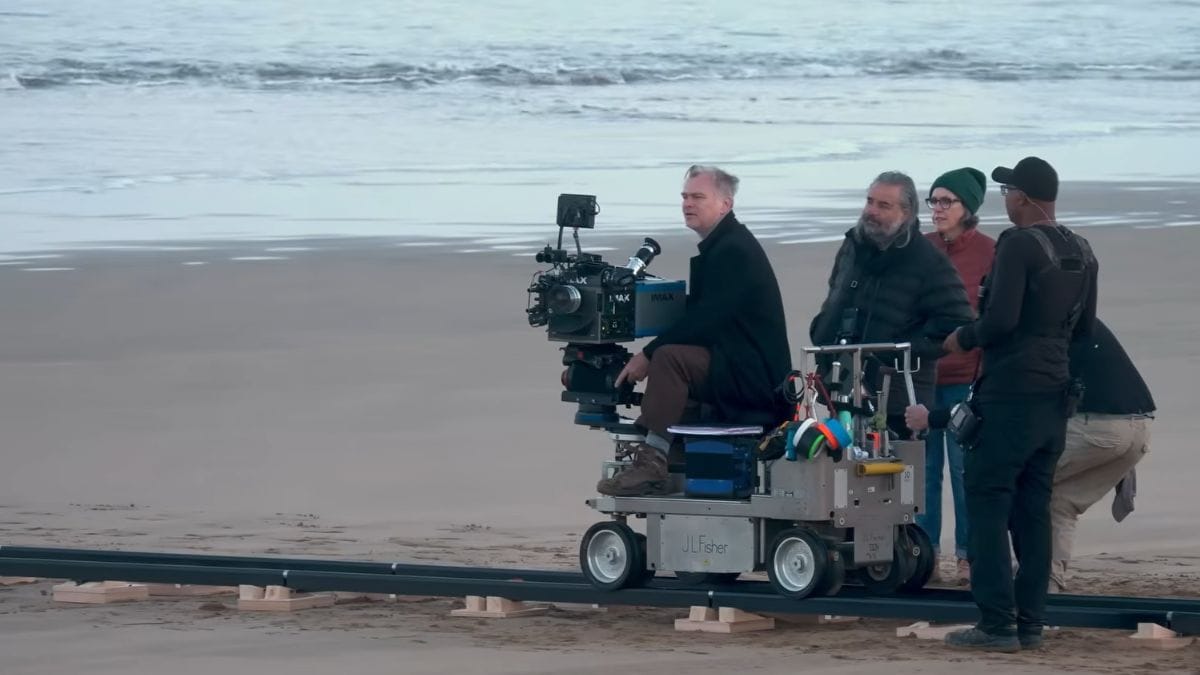
He then pointed out that Nolan’s film is dedicated, in its closing credits, to the people of Greece—a small gesture that raises a much bigger question: does the poem belong to Greek cultural history specifically, or to everyone?
His answer: both, and neither cleanly. The poem comes from somewhere particular, he said, while still managing to speak past its own borders and centuries.
“This will be controversial, but the assertion suggests that the Homeric epic is a Greek patrimony rather than a broader, human cultural heritage. The epic can, of course, be both, but what I am getting at is the assumption of heritage and cultural continuity. This is the very same assumption that makes a Black Helen problematic. These assumptions do inevitably send us back to the poem, to historical study and a quest for understanding,” Rankine said.
He’s also heard from moviegoers who left the theatre and went straight to Homer, pulled in, in part, by the poem’s own reminder that the ancient world was never one tidy civilization but, in Homer’s phrase, a scatter of “very many” peoples and tongues. “Ultimately, the poem is very much local, a story about Ithaka and its wandering, mythic king, and it is also universal,” he added.
Of monsters and men
Rankine was surprised by how immersive the film felt. He sees a throughline from oral performance to the written page to Nolan pushing large-format filmmaking somewhere new. The technology, in his view, isn’t just showing the story anymore; it’s now part of how the story gets told.
“It strikes me, too, that just as technologies had to be invented to properly tell the story of the epic poem—technologies that move it from oral to literary, for example—in the same way, Nolan has forced the technology of IMAX into a new iteration,” he said.
Where the adaptation lands hardest, he argues, is the scene where Circe turns Odysseus’ men into pigs, long read as a warning about what violence and domination do to people.
As Rankine puts it, Homer is blunt that conflict and greed come with a cost, and “the price is that we become pigs”—a line the film’s visual transformation only sharpens.

If the culture wars start with who’s on screen, López-Ruiz argues it inevitably circles back to the poem’s harder question: how literally to take the gods.
The epic opens not with a deity but with “the man”—Odysseus, front and centre. Yet, almost every turn in his journey is steered by forces he can’t control: Poseidon’s grudge, Athena’s favour, Zeus’ insistence that mortals mostly bring ruin on themselves through their own recklessness.
The poem’s real lesson, López-Ruiz suggests, isn’t about monsters at all. It’s that persistence is worth something, but the place you’re trying to get back to is never quite the place you left. The traveller changes. So does the destination. Ithaca, in her reading, stops being a fixed point on a map and becomes a moving target.
This is the real subject of the poem’s second half. It’s not the adventures, but the slow, wary process of a man reintroducing himself to a life he no longer fits into: revealing himself in pieces to the people he loves, testing them, being tested in turn by a wife who isn’t about to take his word for it.
Odysseus comes home having lost every companion he set out with, arguably through blunders of his own making. His household isn’t his anymore. His marriage isn’t guaranteed. Twenty years of war and wandering have to be undone in careful stages.
Rankine expected the “message” of the film to dominate the conversation more than the film itself—and he wasn’t surprised the backlash zeroed in on race, ethnicity, and gender.
“The return to the classics is always as much about us as it is about the past,” he said.
For López-Ruiz, the message is simple. Beyond the divine and the tangible, the journey is what defines you.
“A noble goal such as the return home can keep you afloat through many travails. Persist, have hope, and you will get there. But don’t expect ‘your Ithaca’ will be what you expected. The journey changes you and time changes even what Ithaca is. In other words, perhaps there is no fixed state of happiness waiting anywhere or depending on one single outcome; everything is a continuous journey and adventure,” she added.
(Edited by Prasanna Bachchhav)