





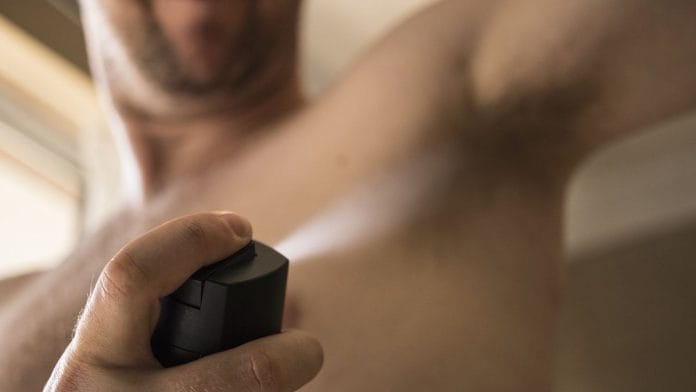

New Delhi: New dating advice circulating on social media is challenging conventional grooming wisdom, where some Gen Z men are deliberately skipping showers, ditching deodorants, and not even cleaning their clothes before dates. This is in hopes that their natural body odour will make them more attractive.
The practice has been dubbed “pheromone-maxxing”. According to Vice, the trend has been circulating on TikTok as part of the “looksmaxxing pipeline”, where users attempt to maximise their physical attractiveness through grooming, fitness, and, sometimes, more extreme methods.
Rather than masking body odour with deodorant or perfume, proponents of the trend believe that their natural scent could trigger a biological attraction response in potential partners.
Some participants reportedly go beyond skipping deodorants and showers, and choose to wear unwashed clothes or adopt other unusual practices in an attempt to intensify their “natural musk”.
But the scientific basis for pheromone-maxxing is considerably less certain.
Also read: Google Maps renames it to ‘Lake America’ in the US. Bye-bye, Lake Ontario
The science
Pheromones are chemical signals known to influence behaviour in many animals, including mating behaviour. Whether humans possess functional pheromones that operate in the same way remains an open question.
A 2025 review published in the journal Physiology & Behavior examined androstadienone, a steroid found in male sweat that has long been investigated as a possible human pheromone. The review concluded that its classification as a human pheromone remained “inconclusive”.
There is nevertheless evidence that human body odour can carry information relevant to attraction. Research into the major histocompatibility complex (MHC), which is a group of genes involved in the immune system, has explored whether people are subconsciously attracted to the scent of genetically dissimilar potential partners.
The idea gained prominence through a series of experiments commonly referred to as the “sweaty T-shirt” studies, in which women were asked to rate the odour of T-shirts worn by men. Some studies found preferences for the scent of men whose MHC profiles differed from those of the women assessing them.
However, the findings are more complicated than the viral trend suggests. Research has also indicated that hormonal contraceptive use may alter these scent preferences, with women using hormonal birth control showing different patterns in MHC-related attraction.
Taken together, the research suggests that body odour may play a subtle role in human attraction, but it does not establish that deliberately avoiding basic hygiene will make someone more sexually attractive.
(Edited by Aamaan Alam Khan)