


New Delhi: Nepal wants climate finance to move beyond post-disaster relief and help vulnerable countries prepare for the next catastrophe.
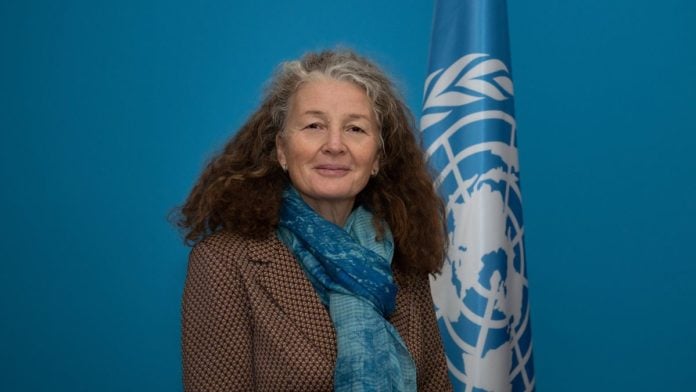
In an exclusive interview with ThePrint at COP31, UN Resident Coordinator Lila Pieters Yahia said the country was working to break the cycle of rebuilding the same vulnerabilities after every disaster, while pushing for easier access to recovery funds and greater international recognition of the risks facing mountain regions.
Yahia, who has over 25 years of experience in public service across diverse country contexts, said that Nepal was not a mere victim of natural disasters. Instead, it is adapting its strategies and is actively modernising its immediate disaster response, operational logistics, and institutional capacities.
“Nepal understands that climate resilience is an investment, not an expense—proactive prevention, data-backed financial collateral, and risk-informed infrastructure cost far less than repeated destruction and post-disaster recovery,” she said, responding to ThePrint’s questions from Türkiye’s Antalya.
On 26 August this year, Nepal was hit by devastating flash floods, sweeping away houses, bridges, roads and leaving at least 1,500 people dead and hundreds missing or displaced. The sudden surge of water, triggered by an ice-and-rock collapse and subsequent outburst near the Nepal-Tibet border, inundated settlements along the Bhote Koshi river basin.
At Antalya, the Nepal delegation has asked for a dedicated mountain agenda, along with Bhutan and mountain allies, to formally recognise and give dedicated focus to mountain ecosystems. The country delegation has also brought the world’s attention to securing direct, simplified access to recovery and reconstruction funds that reflect the true scale of post-disaster needs without burdening climate-vulnerable nations with unsustainable debt. It also stresses transboundary data and regional cooperation, among other pressing climate action.
The Rasuwa flash floods
Yahia said that the Rasuwa floods were not an isolated event—the same river flooded just a year ago, and in October the Budhigandaki flooded in Gorkha. Rapid warming across high-altitude mountain regions, she said, was posing a severe risk to glaciers, water security, and rural livelihoods, erasing years of hard-won development progress in hours.
“For survivors—especially women who have lost spouses—lost homes and livelihoods, it is dealing with compounding debt and long-term socio-economic vulnerability,” she said.
Yahia added that targeted adaptation and localised response efforts are proving effective.
“Nepal’s early warning systems demonstrated their critical value when a second flood struck six weeks after the Rasuwa flood, successfully alerting communities and saving lives,” she said.
Yahia explained that the country maintains a highly experienced, trained search and rescue team accustomed to navigating extreme mountain terrain.
Driven by hard-learned lessons from past disasters, she said, Nepal is actively modernising its immediate disaster response, operational logistics, and institutional capacities.
“For example, Nepal is shifting from reactive disaster aid to proactive risk financing. It is deploying cargo drones for rapid emergency deliveries across impassable terrain, digitalising social protection and emergency cash transfers, and streamlining supply distribution channels,” Yahia said.
She added that Nepal is also leveraging operational data from these recurring shocks to advocate for direct access to international Loss and Damage funds. She said it would help to “bridge the widening gap between immediate post-disaster recovery costs and national development budgets.”
Adaptation
Yahia stressed that for Nepal, adaptation means breaking the cycle of rebuilding the same vulnerabilities after every disaster.
Through the government-led, UN-supported Living Sagarmatha Strategy—a $4.08 billion, 10-year investment roadmap—Nepal is establishing a unified framework to protect its high-altitude ecosystems, secure vital water systems, and build a climate-resilient economy.
She said that because Himalayan glaciers supply the headwaters for over 1.3 billion people downstream, Nepal treats mountain adaptation not merely as a national priority, but as a regional and global public good.
“Nepal understands that climate resilience is an investment, not an expense—proactive prevention, data-backed financial collateral, and risk-informed infrastructure cost far less than repeated destruction and post-disaster recovery,” she said.
Under the Sagarmatha vision, adaptation is anchored in forward-looking infrastructure, cutting-edge technology, and innovative financing.
For example, Nepal is investing in a nationwide systemic climate and cryosphere observatory—integrating satellite imagery, AI analytics, seismic/hydrological sensors, and high-altitude monitoring stations.
The granular, continuous risk and environmental data generated by these observatories serves as financial collateral: verifiable baseline data lowers risk premiums, unlocks parametric insurance, attracts global private climate investment, and validates resilience returns for international climate finance.
“It involves adopting a national Early Warnings for All roadmap and fostering cross-border collaboration to manage shared transboundary river-basin and climate risks; re-engineering how shelter, roads, bridges, and hydropower projects are planned and built—integrating multi-hazard climate assessments so critical national assets and local housing withstand extreme weather events,” Yahia said.
Climate finance for vulnerable nations
The provisionally set aside $21.6 million for Nepal from the UN Fund for Responding to Loss and Damage is a very positive step, marking the first time the fund has responded to a specific disaster, the UN resident coordinator said.
But she added that it covers less than 0.5 per cent of the country’s recovery needs.
“Nepal’s preliminary Post-Disaster Needs Assessment estimates total recovery and reconstruction costs at approximately USD 4.7 billion—for a country that contributes just ~0.1% of global greenhouse emissions. Clearly, traditional international aid and national fiscal budgets alone cannot fill this gap,” she said.
According to the coordinator, to achieve true long-term resilience without taking on unsustainable debt, climate finance for vulnerable nations like Nepal must evolve from reactive post-disaster handouts into a diversified combination of grants, highly concessional finance, and innovative disaster risk financing.
The roadmap to scaling up climate finance to 1.3 trillion annually provides vital pathways; there is a clear need to see faster progress moving it closer to reality, she added.
Also read: COP31 president calls for action as climate meet opens in Turkey
Nepal at COP31
Yahia said that the government of Nepal has spoken strongly about what is needed, particularly clear progress that helps to ensure humanity can keep the overshoot of the 1.5 degree global heating limit as short and shallow as possible. “Nepal has also been very clear about the need to recognise the unique vulnerabilities of mountain regions, and scale up accessible, highly concessional, and non-debt-creating climate finance,” Yahia said.
Above all, she said, Nepal seeks special acknowledgement by the international community of the horrific human and economic toll of recent climate disasters—such as the catastrophic Rasuwa and Budhigandaki floods. Nepal is asking the global community for explicit solidarity, translated into dedicated, predictable financial mechanisms for long-term recovery, reconstruction, and Loss and Damage.
(Edited by Ratan Priya)