



Lamka: Peace is not restored in Manipur. After the violence that erupted on 3 May 2023, nothing remained the same. In all this chaos, the youth of Manipur are using different art forms as a means of expression, spreading hope and unity in their communities. Among them, the artisans of Lamka, the district headquarters of Churachandpur, stand out. Their various forms of art serve as a great example of respect and pride for their culture and their homeland. Their spirits remain unshaken, and their bond unbreakable.
For some, healing means creating opportunities. For others, it means preserving a memory of home, putting Lamka on the map, telling stories through music, or making sure traditions are not forgotten. Their work shows that rebuilding does not always have to be something grand. Sometimes it is a painting, a song, a piece of clothing, a mural, an illustration, or even a small magnet on a refrigerator.
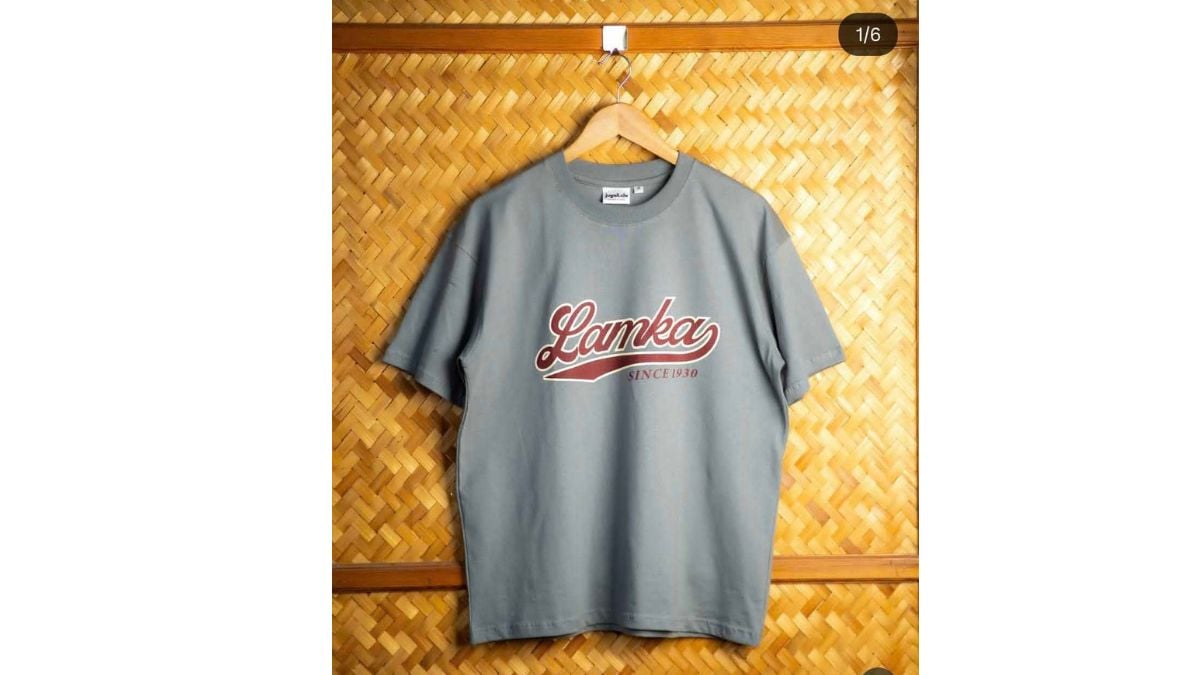
Jugali.clo, owned by H. Liansuanlal, 24, is a clothing brand based in Lamka that combines modern fashion with a touch of culture. Their collections are inspired by the community and the idea of creating something people can proudly wear and call theirs.
“Representing Churachandpur and its culture plays a big role in my work today. Through Jugali.clo, I want people outside the state to know more about Lamka; not just through the violence, but through its rich culture, creativity, and the talent of its people,” Liansuanlal said. “Just like anyone else, we also can reach great heights and make our mark. My work is one way of carrying that message and giving our place a stronger voice.”
The idea behind Jugali was also to create something locally. Growing up, Liansuanlal saw how difficult it was to find good quality clothing in Lamka, with people often depending on imported products. The brand’s best seller is the Phalbi Collection (winter wear), with its hoodies priced at Rs 1,800. Other popular collections include the Lamka Collection, priced between Rs 900 and Rs 1,800; the Lamka 1930 Carry Bags at Rs 1,200; and their TopDog collaborations priced between Rs 900 and Rs 1,000. The products are currently available for purchase via their Instagram @jugali.clo. The brand is also working on a website for its upcoming Phalbi Collection 2026.
Getting these products to customers has not always been easy. The ongoing situation has made transportation more difficult, with products having to travel a much longer route. This means that shipping costs can make the overall operations almost twice as expensive. Liansuanlal wants the prices to stabilise and does not plan on making his brand more expensive than it has to be.
He has also noticed how fashion has become a way for people to express their identity and the struggles of their communities. For Jugali.clo, this connection can be seen in the response from customers, with some collecting every release as keepsakes and even children travelling long distances to buy something as small as a Rs 20 sticker. For Liansuanlal, these moments showed that the brand had become more than clothing—a bond between people and their home.
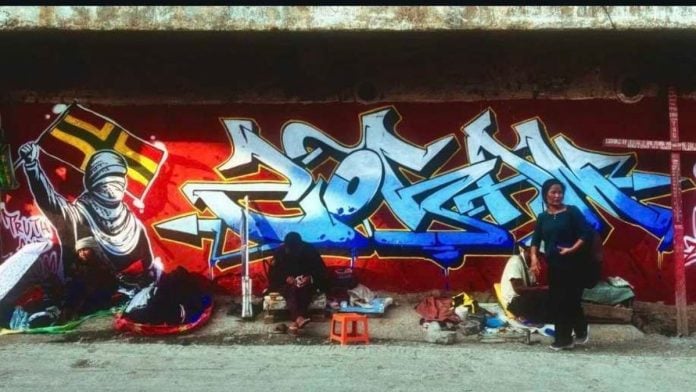
Similarly, graffiti artist P. Chinkhanlian, 26, who goes by the name TopDog, uses public spaces to make Lamka visible. His work ranges from letter-based graffiti to concept art inspired by folklore, social issues, and political issues. His love for graffiti art is connected to hip-hop culture. He saw graffiti being used to express the artist’s creative mind in music videos and live shows. Gradually, graffiti has become more than a creative outlet for Chinkhanlian.
Paintings on the wall
Growing up in a difficult environment, he witnessed fights at home because of his father’s heavy drinking. His family also struggled financially; comfort and opportunities were often limited. In that reality, art became something he could create with whatever he had. It became a form of therapy, helping him process emotions that were difficult to express through words.
The violence and uncertainty around him made his work more reflective. He began looking beyond aesthetics and paying greater attention to the stories and emotions behind his work. Themes of identity, memory, resilience and hope became more prominent.
“Nobody really knows where Lamka is or who Zomis are,” he said. Through his work, Chinkhanlian has tried to put Lamka on the map in the world of graffiti. He has worked with international writers and makes sure to tell them where he is from, with some even referring to him as “Lamka Boy.”
One of his works, Phaizang Kumpinu (The Valley Queen), is a hand-painted watercolour inspired by the story of Thanghou and Liandou, two brothers who were abandoned by their mother and left to fend for themselves. He draws a parallel between the story and the relationship between the people of the hills and the valley, exploring the need for unity among the hill tribes.
Another digital artwork questions the physical borders separating Zomi people across Myanmar, India and Bangladesh. For TopDog, Zoland is not necessarily about creating a separate country; it is about living with dignity, autonomy and a sense of belonging in the lands they call home.
He also created a bleeding Manipur map with barbed wire; a work that questions opposition to the demands of the hill people and calls for better understanding, mutual respect and trust. Another of his works is a tribute wall painting to Zomi MLA Pu Vungzagin Valte.
For TopDog, graffiti is about speaking up when other systems fail to listen. He said he feels the need to speak the truth and ask questions; graffiti gives him the anonymity to raise awareness without concerns of getting lost in a delayed system. His recent work in Lamka reflects the strong emotions people have carried since the violence began, particularly the belief that their land is theirs and that unity is necessary to protect and improve it.
He also believes that public spaces can become places of healing. Art can transform ordinary or neglected spaces into places where people encounter creativity, conversation and shared identity. For him, healing means rebuilding trust, restoring relationships and creating opportunities for people to move forward with dignity. The resilience of ordinary people, who continue to help one another, create, work, study and dream, is what gives him hope.
The lost homes
David Guite, 28, a self-taught fine artist, has also turned to his surroundings to document Lamka and its people. He works with pencil on paper and acrylic on canvas; his work is influenced by society, personal life, nature and the situation around him. The violence affected his ability to travel for exhibitions and forced him to abandon plans of pursuing an art degree at Imphal Art College. It also changed the way he painted. Finding it difficult to concentrate on detailed realistic works, he began exploring acrylic painting, which he found therapeutic.
One of his paintings shows a human figure with a house in place of the head, representing displaced people whose minds remain occupied by the homes they were
forced to leave. Another work, Ka Inn, meaning “My Home,” was inspired by families who had spent years building homes in Imphal, only to abandon them and begin again in relief camps. The stories of people losing their homes and starting from scratch stayed with him.
Yet his paintings are not only about the violence. He paints traditional attire, shawls, community gatherings, local landscapes, clay pots and cane and bamboo handicrafts because of his love for his roots. He wants people who encounter his work outside the state to see that Lamka exists beyond the headlines. He sees art as a way of documenting and preserving a place; believing that paintings can communicate stories that writing cannot always fully describe.
His paintings also capture ordinary moments of Lamka that he feels deserve to be remembered. He speaks of roadside vendors at dawn, women selling vegetables in cane baskets, rickshaw pullers and local tea stalls where people gather over coffee and newspapers. For him, these everyday scenes are part of the identity of the town. He hopes his paintings can outlive him and continue telling these stories to future generations.
Souvenirs from Lamka
For Chingbiaklian, 26, preserving Lamka takes a smaller and more tangible form. She began creating fridge magnets inspired by her hometown after realising that there were hardly any souvenirs that represented Lamka. While travelling, she wanted to bring something from home for friends and colleagues but could not find anything that captured the town. This gap inspired her to create something meaningful of her own.
Her magnets feature familiar parts of Lamka, including Nute Bazaar, an all-women-oriented market, and “Paupu”, a large black-and-white auto, a unique mode of public transportation that has become an instantly recognisable part of the town. She wanted these details to represent more than a place. They carry the everyday stories and memories that people associate with home.
For people living away from Lamka, the magnets have become reminders of those memories. Chingbiak said people often recognise small details in the designs and share their own stories connected to them. She hopes that when someone sees one of her magnets, they feel a sense of home. For her, healing means rebuilding trust, hope and togetherness while keeping traditions alive.
Also read: From Raja Bhoja to Mughals, how archaeologists traced Bhojshala’s changing past
The youth of Manipur
Music has become another way of making the community heard. Artiste Seimuankhup, 23, who goes by the stage name TrustKhup, creates hip hop music with the intention of helping people feel seen and heard, while also educating through his work. The violent crisis in the state pushed him to create music with more purpose and weight behind his words. Hearing stories from people directly affected by the violence, particularly the experiences of two women who were publicly assaulted, motivated him to use his platform to bring awareness and provide comfort to victims.
His song Tuailai, meaning “youth”, was inspired by what he saw among young people in Lamka. During a visit, he noticed many falling victim to drugs and addiction and began questioning why it was happening. Inspired by V. Siampu’s song “iit tuailai”, he sampled it into his own version of the song. The song encourages young people to keep their hearts even when everything else fails, and to keep moving forward.
Khup believes music can bring people together because it reaches people directly.
“Music is the fastest way to a person’s heart,” he said.
He has also noticed that people have become more supportive of artists in recent years, realising that they have each other to rely on. For him, artists have a responsibility to preserve both the scars and the beauty of their communities. He hopes young people will see local artists creating and succeeding and understand that nothing is impossible, even for a small community like Lamka.
Although their mediums are different, the work of these six creatives comes together through a common idea. They are not simply making art in the aftermath of violence. They are creating while carrying its memories, losses, and changes. Their work is a way of remembering, but also of showing that Lamka continues to live beyond the headlines.
(Edited by Ratan Priya)