





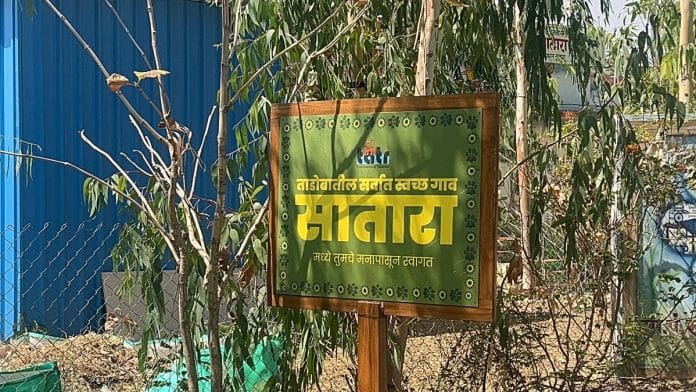


Satara Tukum (Chandrapur): It took less than a minute-long Instagram reel for Maharashtra’s Satara Tukum village to break out of anonymity. Clean lanes, children sweeping streets, solar lights glowing in unison — the images travelled fast, drawing millions of views and endorsements from public figures.
But the attention did not stop online.
In recent months, officials, researchers and neighbouring village heads have begun arriving in this 189-house settlement on the edge of Tadoba-Andhari Tiger Reserve in Chandrapur district to understand how a “model village” actually works.
Satara Tukum’s idea was simple: a clean village requires infrastructure, but also needs a shared code of conduct to keep it spotless. The town, over 880 km from Mumbai, is now being watched as a potential template in the region.
In a district where water shortages, open dumping and patchy infrastructure remain the norm, Satara Tukum has built a system that runs on something far less visible than solar panels or RO plants — collective discipline.
Chandrapur district MLA Kishor Jorgewar said the transformation sets Satara Tukum apart from many villages across the country.
“They used government schemes to acquire the solar panels and basic funding for the various structures in the town square like the school and library,” he said. “Beautification and other reforms were funded by the panchayat and locals. Now they are the ones maintaining them too.”
A village that runs on rules
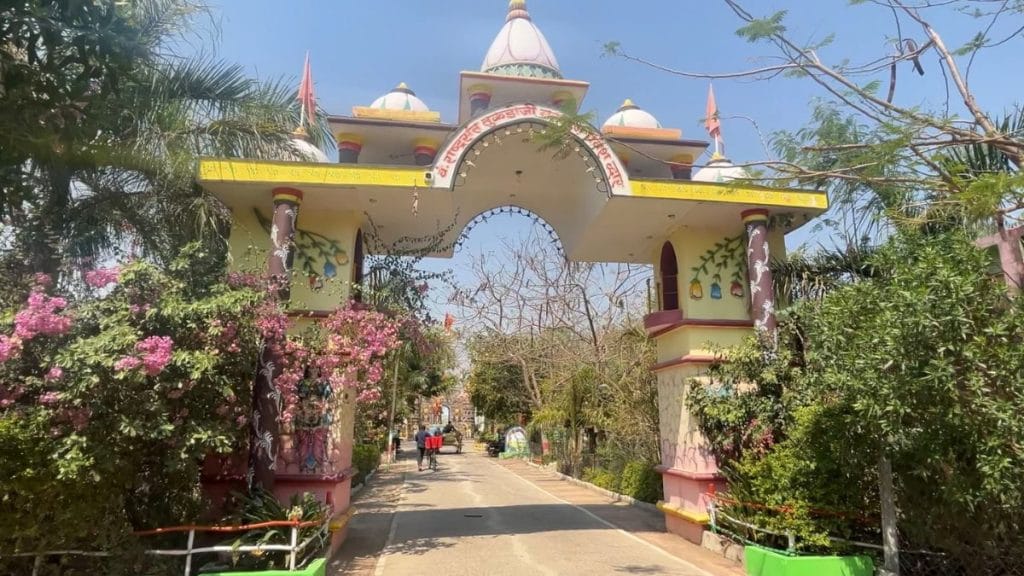
Satara Tukum is surrounded by dry deciduous forests, red earth tracks, and farmland that blends into the buffer zones. But it does not resemble the rural settlements that dot much of India’s landscape.
There is no garbage on the streets. Drains are covered and public spaces are orderly. There is no municipality, no sanitation workers — only a set of rules enforced by the community itself.
Satara Tukum’s model rests on three pillars: strict rules, shared labour and local ownership. But each of these is difficult to replicate through policy alone. This insistence on behaviour rather than just infrastructure is what people say marks the difference.
Littering invites fines. Abusing in public can cost Rs 500. Waste segregation is compulsory. Every morning, children move through the lanes collecting waste. On Sundays, the village cleans together.
Residents describe this as a habit — one that took time to build.
“If someone litters, others will notice immediately,” said Tukaram Yelve, a resident.
In the spotlight
An influencer’s Instagram Reel in November put the hamlet in the spotlight. Music composer AR Rahman amplified it with an Instagram story with the comment “Bring them to Satara.” So did billionaire Anand Mahindra.
Soon after, the village welcomed its first foreign tourists – the Fullurs from the UK. The wildlife enthusiast couple, who were touring the tiger reserve, stumbled upon the viral Reel and found their way to the village.
“They took a tour of the entire village. They were surprised and captivated by the cleanliness and discipline,” Gajanan Gudhade said. “This changed their perception of Indian villages.”
The turning point for Satara Tukum’s visibility came online, but its second phase is unfolding offline.
Forest officials are now exploring ways to include the village in eco-tourism circuits linked to Tadoba.
“The idea is to offer visitors a combined experience of wildlife tourism and sustainable rural living, with local youth trained as guides,” Gudhade said.
Neighbouring villages and local administrators have also begun visiting to study its systems to replicate the model.
“Satara Tukum stands as a reminder that dedication and resolve are the cornerstone for transformation, Anand Reddy, Deputy Conservator of Forests (Tadoba Core) said. “The village has outdone itself and should be looked at as a model for change in the entire country.”
What changed, and when
Just a few years ago, Satara Tukum was not very different from the villages around it.
There were open dumping sites; animal waste lay in public spaces. Water access was uneven. Like much of rural India, systems existed, but they were fragmented and poorly maintained.
“Earlier, people would dump the cattle waste and household waste in the open spaces right at the entry point of the village. The whole road leading up to the village would stink. It would take weeks to get the waste picked up. It had also become a breeding ground for mosquitoes,” said Akash Choudhary, a resident.
The shift began in 2021, when sarpanch Gudadhe pushed for a village-wide overhaul. Initially, the village was not entirely convinced about the changes.
Also Read: Inside small-town India’s Reel economy. Lights, camera, unemployment
“Sarpanch sir really put in a lot of effort into convincing people. We are all farmers in this village and we don’t have a lot of time to participate in cleanliness drives, maybe that’s why the village was never well-kept,” said resident Tukaram Yelve.
Gudadhe said that consensus is what residents say made the difference between a short-lived clean-up drive and a sustained shift.
“I could have just started changing things,” Gudadhe said. “But this had to be done with people’s consent.”
Meetings were held and residents were asked to identify problems and agree on rules. Once they took hold, infrastructure began to reinforce them.
Changes now
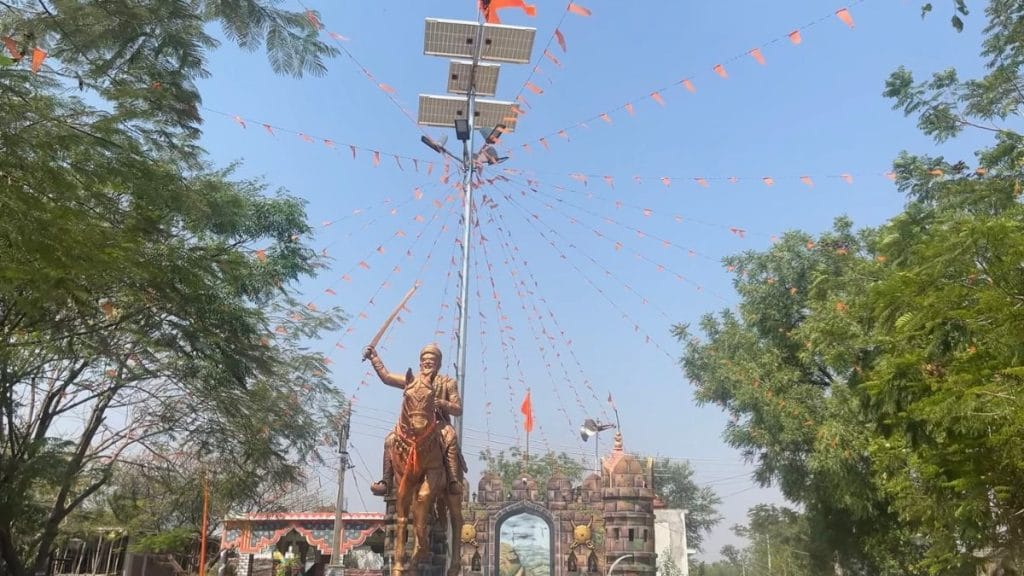
Today, Satara Tukum runs on a tightly integrated system. Basic services in the village are powered by solar energy. Streetlights across the village run on solar panels, reducing electricity costs. A solar-powered 1,000-litre tank provides hot water between 5 am and 9 am, free of cost.
Concrete pits have been created for animal waste, ending the practice of dumping it in the open. Separate concrete boxes were built for each family for waste disposal. They also compost organic waste locally.
Household waste, too, is now systematically collected. A weekly garbage van, provided by the Tadoba-Andhari Tiger Reserve, now collects waste from every house.
The village also had a long-standing water scarcity problem, like much of Vidarbha region in summer months. Dry wells, irregular supply and dependence on tankers continue to shape everyday life across several villages in the region.
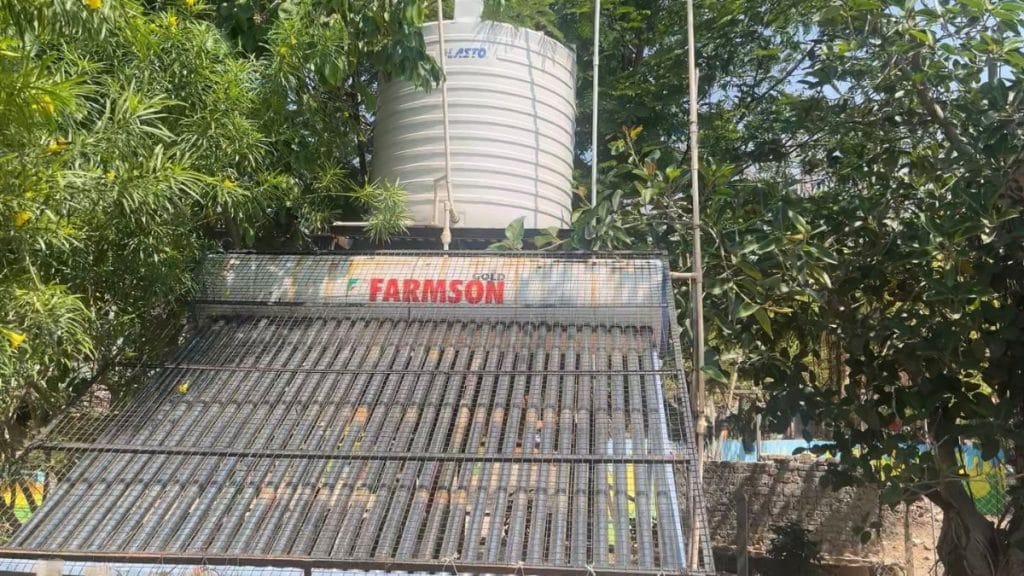
“For years, locals had to deal with no water for days. Crops were affected and routine life came to a standstill during the summers. Pipelines did not exist and there were no water storage options,” Gudhade said.
Now, they have a regulated system. Each household has a metered connection, and drinking water is supplied through a filtration system at Rs 5 per litre. In the central square of the town is a shared recreation space where mud pots provide water for both residents and tourists.
RO “water ATM” units provide safe drinking water at low cost using a card. The villagers deposit cash against their ATM card at the panchayat office. Then, they can swipe the card at the water ‘ATM’ and get clean drinking water for just Rs 5.
The children water plants in the morning before school and refill the mud pots in the village square with fresh drinking water in the evening for the village elders.
“They don’t see it as their job, but view it as their responsibility,” resident Akash Choudhary said.
A solar-powered library, equipped with books, computers and a printer, caters to students.
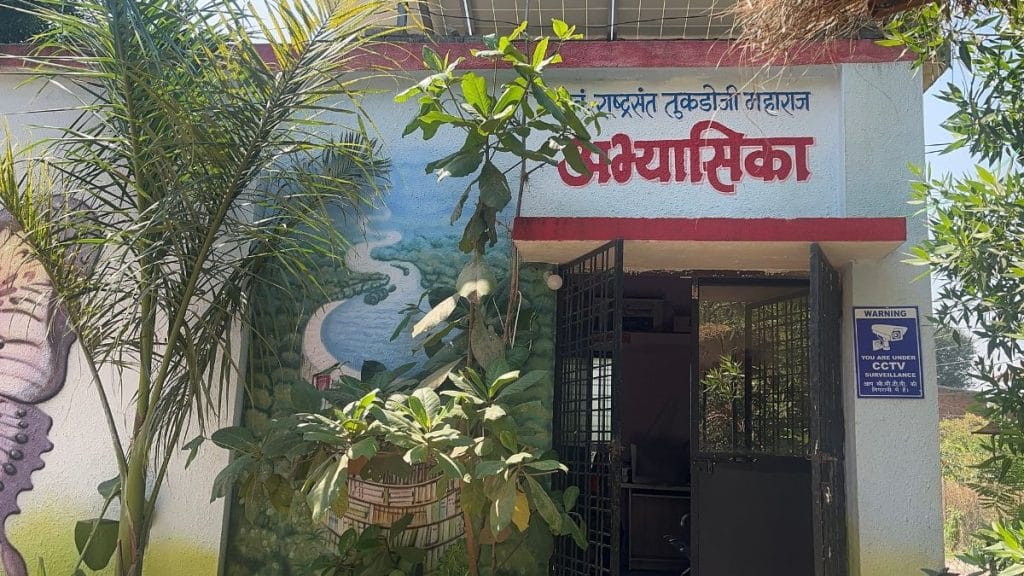
“The library also has ample furniture,” Choudhary said. “It also has cameras through which the sarpanch keeps a track of who is serious and who is not.”
Public spaces reflect the same logic of ownership. Plants lining the streets are assigned to children, whose names are marked on the pots — a small system that builds responsibility early.
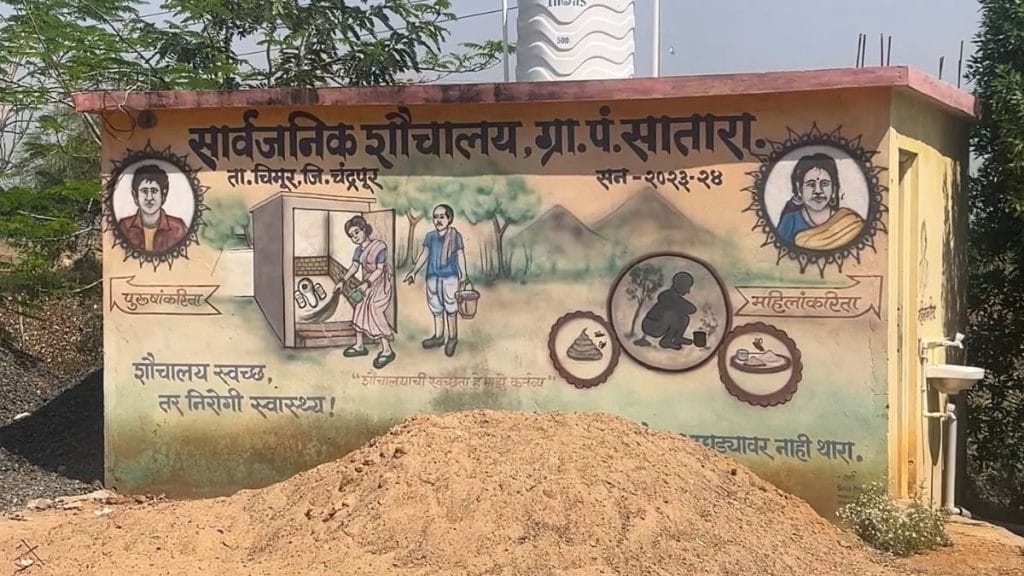
Toilets, of their lack thereof, was also a major problem. Women had to relieve themselves in the open for years.
The panchayat held a meeting and called only the village women to address their concerns. Now, public toilets have been built for the women and are solely maintained by them.
The women also complained about malnutrition in children and not enough support given to pregnant women.
Soon after, an Anganwadi structure was established to provide nutrition, care, and support for pregnant women and children under the age of four. Women from the village are also working as safari guides in Tadoba, linking local livelihoods to tourism and expanding participation beyond traditional roles.
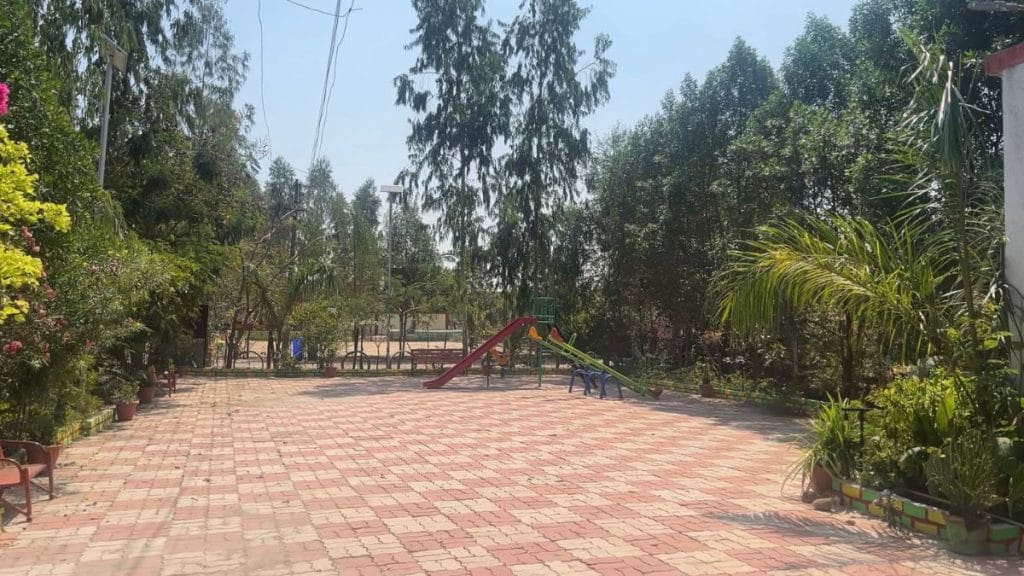
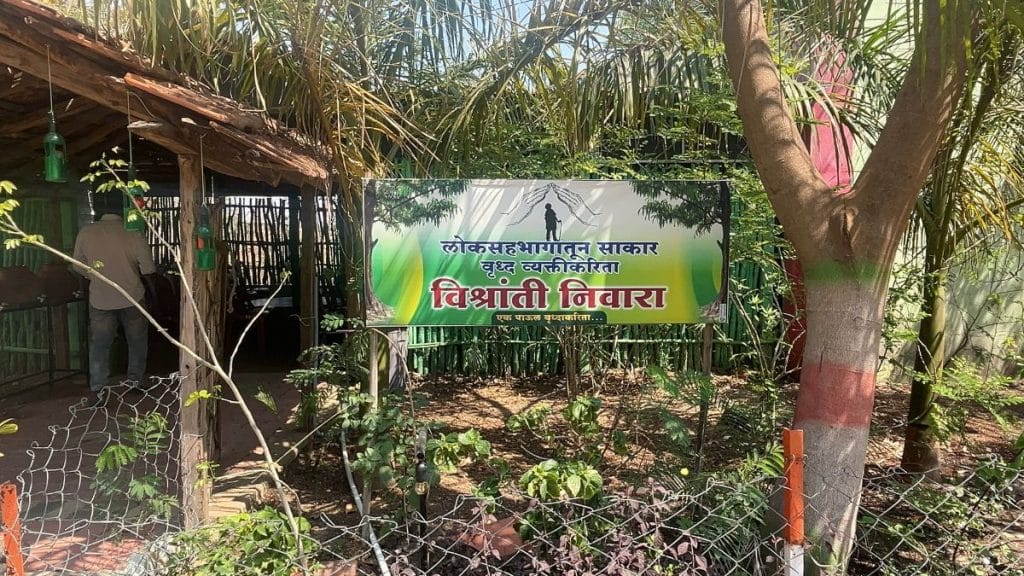
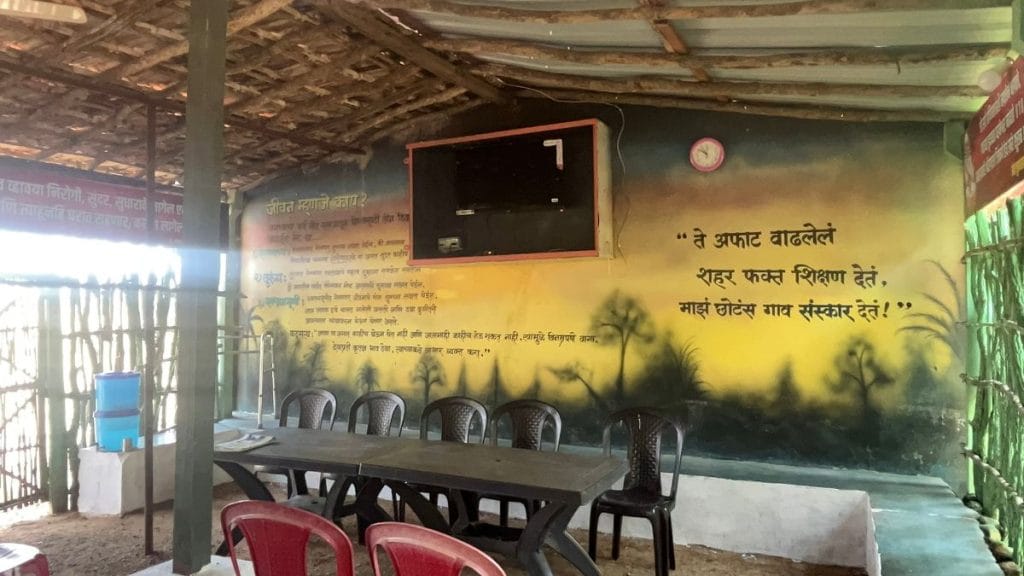
The village also has a volleyball court, basketball court, badminton court, and a small open-air exercise area for the children, all along the streets leading to the town square. There is a spot for elderly residents to unwind in the evening and watch television.
Even cattle sheds — often a weak link in rural sanitation — are maintained with unusual care and don’t stink as much. The village is also trying out rainwater harvesting as an effective long term solution.
The design is not high-cost or high-tech. Each system is linked to accountability: usage is monitored, waste is tracked, and responsibilities are shared.
Just outside, the limits of replication
A few kilometres away, the answers appear less certain.
Villages like Kolara Tukum, Tekadi Tukum, Masal Bk and Bamhangao continue to struggle with familiar problems: open dumping, water shortages and uneven sanitation.
Bamhangao has begun attempting similar changes, but progress remains slow. They have cleared the majority of a local dumping ground but unlike Satara Tukum, the locals are not entirely co-operative.
“We are still in the awareness phase. We need to acquire a plant to treat water,” said Rahul Hathe, a resident who works at the panchayat office. “Not everyone is onboard yet. So, beautification of the village is not currently our priority.”
(Edited by Stela Dey)
We need a million Gudadhes in India. Maintaining cleanliness is not at all a big task. But such has been the indifference since birth of every Indian witnessing garbage all around that by the time we become adults or even youth, we are extremely desensitized to the garbage around us. Swacch Bharat was the right call but unfortunately the citizens just forget that cleanliness is a habit. With the amount of garbage and past habits Indians have , it might take an entire generation to collectively flip their habit to make India truly clean and litter free.