



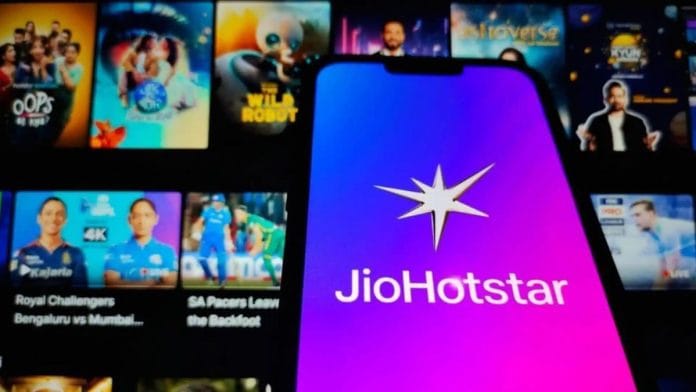
New Delhi: JioHotstar is expanding its global reach by replacing the existing Hotstar service in the UK, Canada and Singapore. The app will also be upgraded with improved interactive and user-experience features in these three countries.
More than 1,60,000 hours of content will be available across the three countries, along with personalised recommendations, an upgraded user interface and subtitles and dubs across 12 Asian languages. Fresh content of around 30,000 hours will also be added annually.
The streaming service launched on 2 September, with Hotstar Originals offering series such as Asur, Paatal Lok, Special Ops, Criminal Justice, Heartbeat and The Resort, alongside films including recent hits Dhurandhar, 12th Fail and Chhichhore.
Not a simple Indian export
The Bigg Boss franchise will also be included in six languages, allowing audiences in the UK, Canada and Singapore to vote live for their favourite contestants. Audiences in Canada and the UK will have access to a 24×7 live feed, while Canadian consumers will be able to watch Bigg Boss Hindi seven days ahead of its television broadcast.
Anil Kapoor’s India’s Got Talent will also be available to audiences in Canada and Singapore. Viewers in these countries will also receive early access to content from JioHotstar television channels, including Star Plus, Colors, Star Vijay, Asianet, Star Jalsha and Star Pravah. The feature will be called “Before TV”.
Also read: Trump’s secret plane switch exposed in new Netflix documentary
According to a statement, JioHotstar said the service is designed to resonate deeply with the South Asian diaspora while also appealing to a broader global audience.
Amit Malhotra, head of international business at JioHotstar, said the streaming service has spent the last decade competing on the size of its catalogue. And this is an opportunity to build a borderless, underserved global audience and not simply export an indian streaming service to a totally new market.
“South Asian audiences have a deep connection with Indian entertainment across languages, generations and households. At the same time, audiences globally are increasingly seeking stories and cultures beyond their own,” he said.
(Edited by Ratan Priya)