



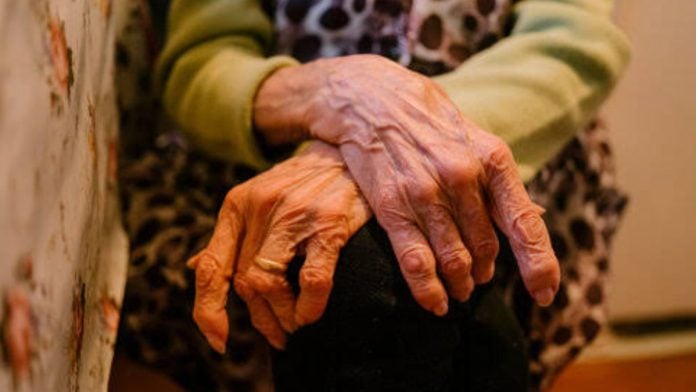
New Delhi: Women in the hilly Sardinian town of Bolotana live exceptionally long lives, a recent study found. Those who reach the age of 70 are three times more likely to live to 100, than women in the US, researchers reported.
These findings may qualify the town to be declared a “blue zone”, or a place where residents live significantly longer lives, with high rates of people who reach the age of 100.
Bolotana, which comprises 2,300 residents, is located in central Sardinia– an autonomous Italian island off the western coast of Italy. A cluster of remote villages on the island had already been classified as a “blue zone” in 1999, when it came to be known for long-lived men. Now Bolotana, located about 70 miles (110 Km) from Sardinia’s original blue zone, has the potential to achieve the same status, thanks to its female residents.
The four other blue zones in the world include Okinawa in Japan, the Nicoya Peninsula in Costa Rica, Ikaria in Greece and Loma Linda in California in the US.
The study, titled “A new blue zone? Exceptional late-life survival in Bolotana, Sardinia”, was published in Frontiers in Aging in October this year. It has been co-authored by researchers from the US and Italy.
Records dating back to 1900
According to a report in Smithsonian Magazine, co-authors of the study learned of Bolotana when they heard about the region’s abundance of centenarians, or people who live up to at least 100 years of age.
Researchers used the town’s extensive data, dating back to 1900, to verify the ages of the identified centenarians of Bolotana, living or dead. They found that of the 3,600 people born in the region between 1900 and 1925, 38 had lived to be at least 100.
“It is not just the level of longevity in Bolotana that is remarkable, but the degree to which it can be reconstructed from independent historical sources,” lead study author Giovanni Mario Pes, a longevity researcher at the University of Sassari in Italy, said in a statement.
“When civil records, parish archives and family lineages all converge on the same individuals across more than a century, it allows us to rigorously test longevity patterns in a way that is rarely possible in demography.”
Also read: Israeli diplomatic team helped Israeli researcher build ties with RSS
Local food, long walks, and healthy social lives
While women live longer than men around the world, Bolotana’s women have exceptionally long lives. Here, women who reach the age of 70 have a 13.83 per cent chance of making it to 100 years old, as compared to 4.92 per cent for men.
Italy’s national average for 70-year old women who have a chance of making it to 100 is 3.5 per cent, while in the US it is 3.6 per cent.
Bolotana’s exceptionally long-lived female population is second only to that of Hong Kong.
Researchers have hypothesised several reasons for this pattern of female longevity, including their low-meat diet, consisting primarily of foods that the community grows or makes itself. While the region does not have a gym, community members walk long distances, going up and down the region’s hilly terrain.
Additionally, families are largely multi-generational, with “very intense and very real social relations,” Pes said. These robust social relations may help slow down cognitive decline.
However, researchers fear that the community is not far from losing its propensity for long and healthy lives.
“When cars, iPhones, and American junk food arrive, you’ll see type 2 diabetes skyrocket, cardiovascular disease go up, dementia go up, many types of cancer go up, and the longevity phenomena will be gone,” study co-author Dan Buettner told National Geographic. Buettner is a longevity researcher who founded the company Blue Zones and coined the term.
“I give it a generation. But before that happens, we have a generation to bring our archaeological tools and uncover what they’ve been doing,” he added.
(Edited by Ratan Priya)