





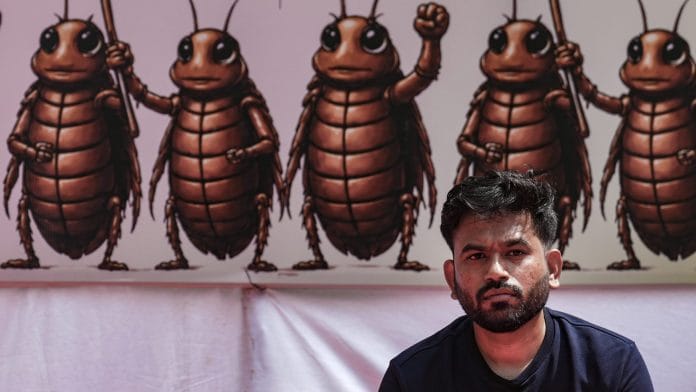

New Delhi: Cockroach Janta Party founder Abhijit Dipke reflected on his love for Boston, where he earned a Master of Science in Public Relations from Boston University’s College of Communication. In an Instagram post, Dipke shared photos of the city, with the first photo featuring Dipke and a poster that read “Boston University”.
“Dear Boston, we still talk about you. Much love, and I hope our paths cross again someday,” Dipke captioned the post.
His last post was a video of CJP member Sourav Das, in which he talks about the Supreme Court quashing all the FIRs against those who protested in Jantar Mantar. The video highlighted that it was one of the demands of the protesters, along with the resignation of Dharmendra Pradhan.
“Attention cockroaches! A historic order from the Supreme Court after the Union Government commits to fulfil all pending 25 July guarantees. The court accepted its applications to QUASH ALL FIRs against students and protesters ACROSS the country. Ordered no action or harassment in future too. Compensation to all families within 3 months. All in all, every demand has been fulfilled,” read the caption.
From Boston to CJP
At BU, Dipke studied strategic communication, media relations, audience engagement and crisis management. In one Interview, Dipke talked about how the programme helped him understand how to build a campaign, develop a clear mission and use visual identity and messaging to connect with an audience.
He specifically credited classes on strategic media relations and crisis communication for helping him handle the intense media attention around the CJP.
Dipke created the CJP as a satirical response to a controversy around remarks referring to unemployed Indian youth as “parasites” and “cockroaches”. Dipke launched it in May 2026, and soon gained 20 million followers on Instagram. But it quickly turned into a larger movement.
Finally, in July, Dipke called for a protest over alleged irregularities in competitive examinations, particularly the NEET controversy. Thousands joined the protest in Delhi and across the country. The protests finally ended with Dharmendra Pradhan’s resignation as Union Minister of Education.
The 30-year-old has previously said that the movement’s broader concerns include unemployment, the pressure of competitive exams, affordability of education and what it sees as a disconnect between young people and those in power.
After its protest, the CJP has shifted its attention towards government schools through its “Fix the Schools” campaign. The CJP is currently working on this issue in several Indian states. The group has asked supporters to visit nearby government schools and document their condition, focusing on four broad areas: drinking water and functional toilets, electricity and usable classrooms, boundary walls and campus safety, and midday meals and teacher attendance.
(Edited by Insha Jalil Waziri)