





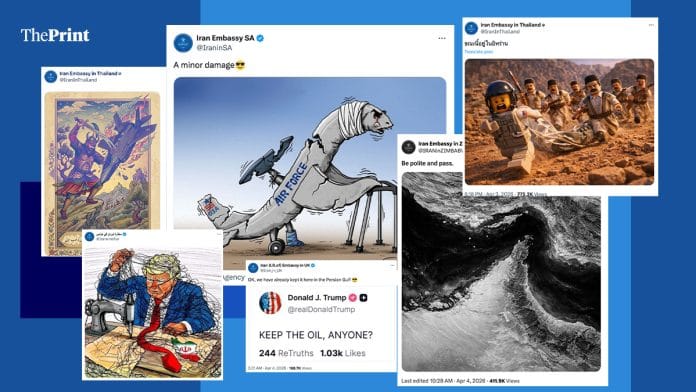

New Delhi: Iran’s use of meme warfare in its ongoing hostilities with the United States has generated much social media chatter and media coverage in recent weeks.
It reflects the country’s long-established tradition of visual propaganda against its Western adversaries.
In an influential paper, the scholar Christiane Gruber highlighted how the Iranian State has long relied on visual media such as murals to reinforce ideas of religious nationalism, anti-Americanism, and sacrificial martyrdom.
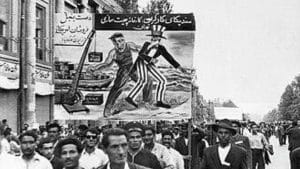
Since the Iranian revolution of 1979, these State-sponsored visual mediums been used to legitimise the repressive Iranian government as a bulwark against American imperialism.
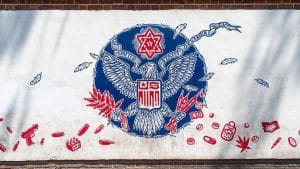
Some of the most striking anti-American murals from this period are found on the walls of the former US embassy in Tehran, which was occupied by the Islamic Revolutionary Guard Corps (IRGC) after the 1979 revolution.
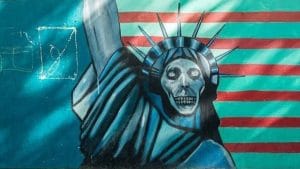
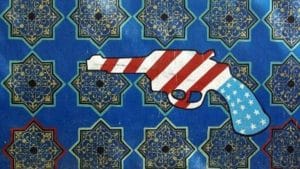
One of these murals depicts the Statue of Liberty as an ominous metal-faced figure, thereby inverting the iconic American symbol of freedom into an image of imperial tyranny. Another mural shows a pistol inlaid with an imprint of the US flag intruding upon a traditional Iranian design motif, suggesting the American threat to Iran’s civilisational heritage.
Both images reveal the Iranian State’s adversarial and antagonistic view of the United States as an evil superpower threatening Iran’s sovereignty. Another mural in the embassy ‘reinterprets’ the great seal of the US into a caricature, depicting moral decay and military interventionism.
Iranian state-sponsored murals also played an important role during the Iran-Iraq war (1980-1988), when about 1 million soldiers and civilians lost their lives. Faced with these losses, the Iranian government commissioned large-scale public murals to commemorate the sacrifice of young soldiers.
A prominent mural from this period features a 13-year-old soldier, Mohammad Hossein Fahmideh, who ‘martyred’ himself as a suicide-bomber, killing several Iraqi soldiers on the battlefield. Scholars have observed how the Iranian state drew on ideas of Shia martyrdom to facilitate the recruitment of thousands of young Iranian soldiers during the 1980s.
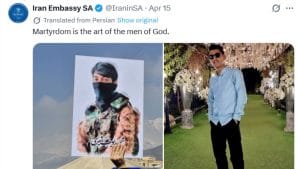
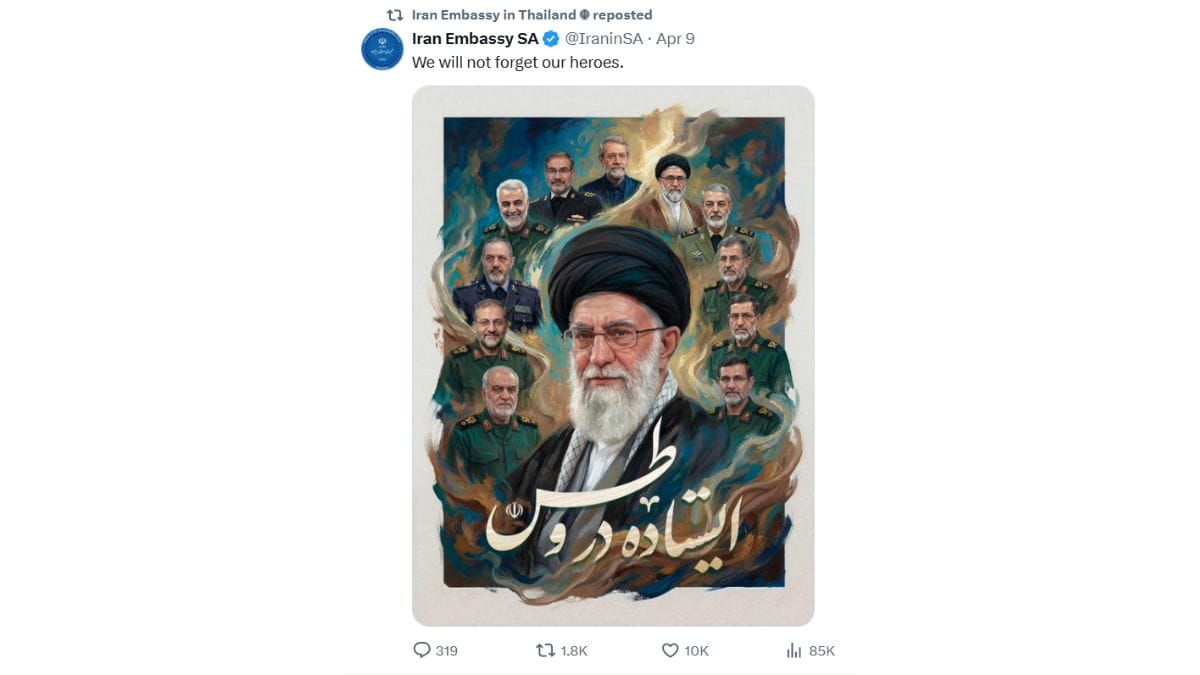
This idea of martyrdom has once again emerged as an important motif in the current Iran-US conflict, with Iranian embassies sharing posts that honour both senior leaders and young soldiers killed by US and Israeli strikes. Commentators have observed how this entrenched narrative of martyrdom provides the regime with vast numbers of sacrificial soldiers.
Meme warfare and digital soft power
While themes of martyrdom and anti-Americanism are important motifs in Iran’s current hostilities, the tone of its visual propaganda has changed. While the US is still the ‘evil enemy’, Iranian social media posts have also sought to mock Donald Trump’s erratic rants and hyperbolic threats.
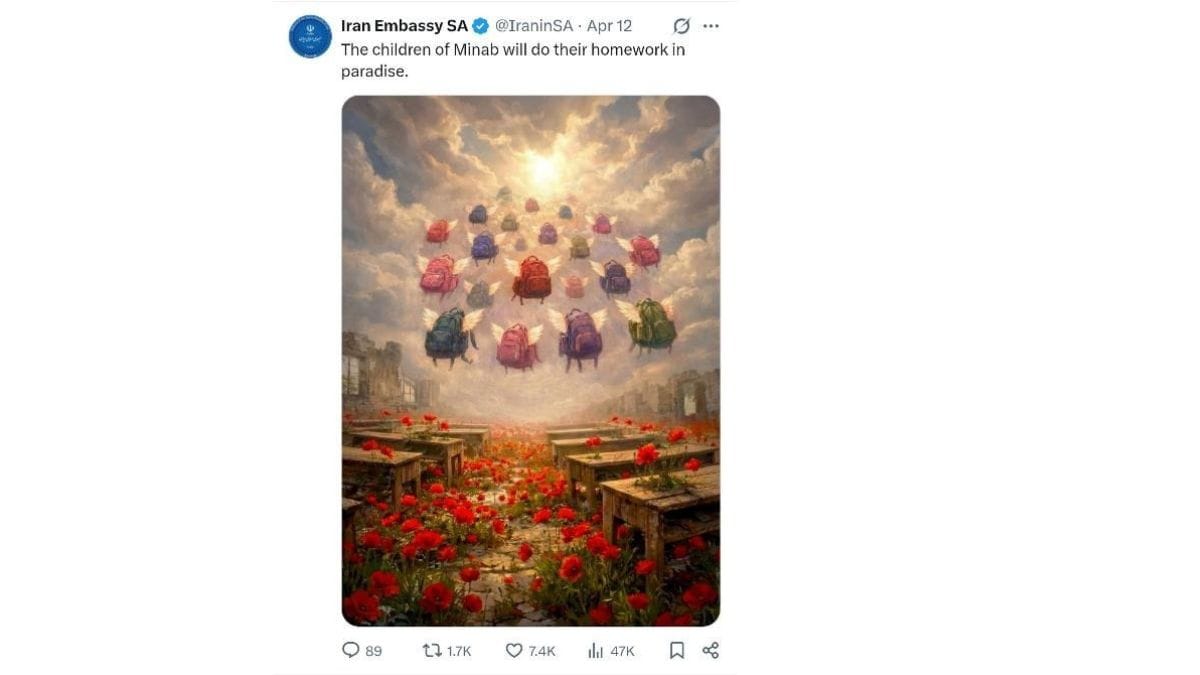
The current government has also humanised the idea of martyrdom to include civilians who have been killed in the conflict. Through their social media posts, Iranian embassies have also highlighted the bombing of a school in Minab, which resulted in over 170 deaths, including over 100 children. By evoking the innocence of those killed, these colourful AI-aided digital artworks make an implicit judgement on the enemy’s inhumanity.
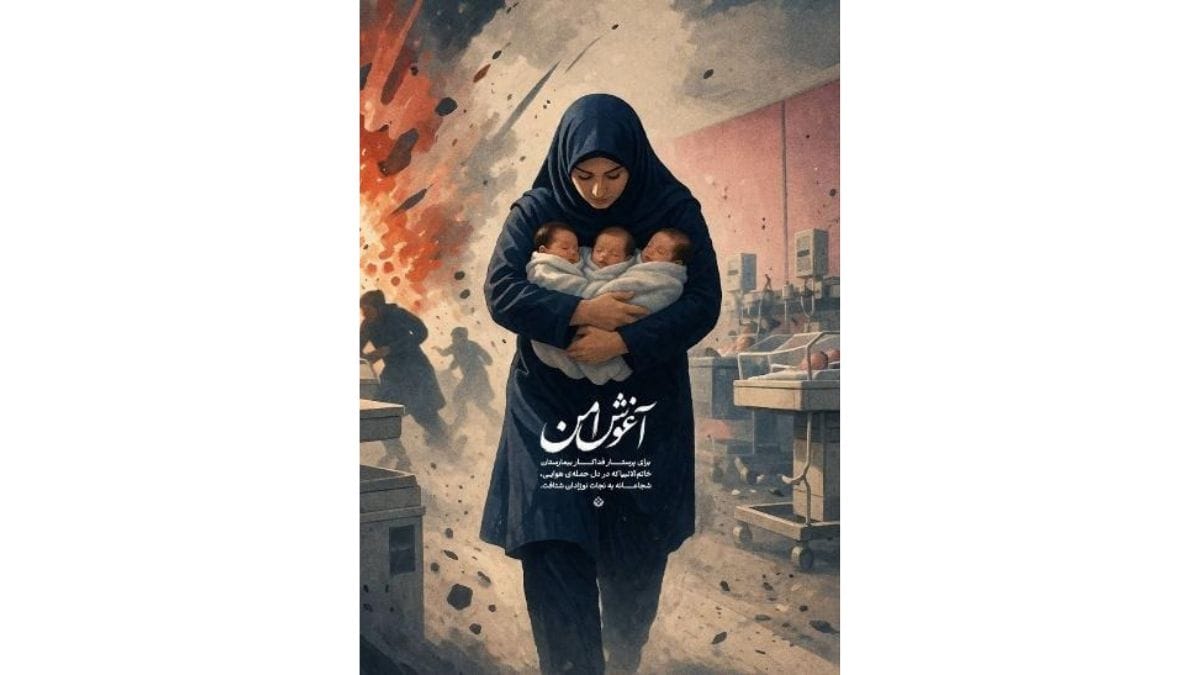
An Iranian embassy made a post depicting an incident when an Iranian nurse rushed to save three babies when a hospital was struck during US-Israeli strikes.
Apart from these scroll-sized social media posts, the State is also projecting large-scale digital murals onto a wide-screen billboard overlooking the busy Enghelab Square in Tehran. Unlike the unchanging physical murals of the 1980s, this digital screen has allowed the State to project changing artworks that have variously memorialised the dignity of fallen leaders, civilians, and lost children.
Iran’s campaign has also sought to extract soft power from its missile and drone attacks on Israel and the Gulf States. Social media handles have shown pictures of Iranian missiles signed with ‘Thank You’ messages to the people of India, Pakistan, Germany, and Spain for their support. Another Iranian account post showed a missile with a message ‘In memory of victims of Epstein Island’. These messages seek to transform Iran’s image from a pariah State to a respected nation while depicting the US as a corrupt superpower.
Also read: India needs to learn from US-Iran conflict, just like Tehran took lessons from Iraq war
Cracks in the narrative
There are, however, limits to the State’s propaganda. In recent years, Iranian artists and activists have developed their own artworks to speak back to the regime. This culture of artistic protest was especially evident during the protests of 2022, when Iranian women took to the streets with calls of ‘zan, zendegi, azadi’ (women, life, and freedom).
At times, the aesthetic façade of Iran’s visual propaganda has also faltered to reveal the State’s intolerance. Israeli media outlets recently accused Iran of disseminating antisemitic posts, including one where Israel is depicted as a cunning rat – a visual trope with origins in Nazi Germany.
For now, though, Iran’s digital propaganda is reinforcing a growing global perception that while the US may have inflicted heavy losses on the Iranian military, Tehran is claiming a moral victory by casting itself as the courageous underdog striking back at a superpower. In doing so, its social media soft power has obscured the repressive, medieval aspects of the Iranian State, and amplified the hubris of America’s predatory hegemonism.
Rahul Saika is a graduate of ThePrint School of Journalism and an intern with ThePrint.
(Edited by Ratan Priya)