



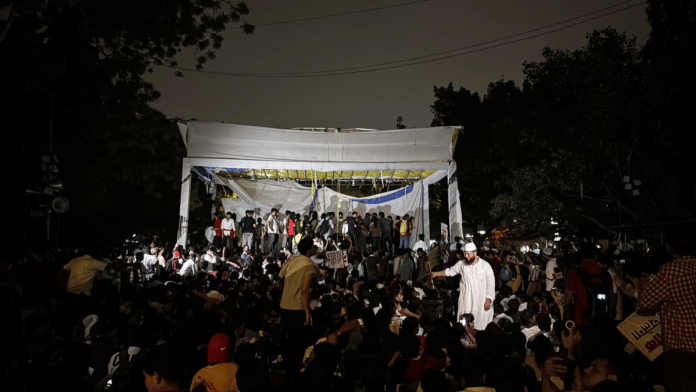
New Delhi: The indie track ‘Taare’ has emerged as the unofficial anthem of the ongoing CJP protests against the NEET paper leak case. All thanks to social media.
As protesters showed up for the Sansad Chalo march on 20 July, they also posted across social media platforms. Soon ‘Taare’ became an unplanned soundtrack running under video after video from the protest.
Most protest chants signal defiance, hatred or frustration, but ‘Taare’ doesn’t do that. Artists Farak, 10A, and Saswat Balan explored the themes of old wounds and a kind of familiarity with hardship in their 2026 song. With upbeat background music, it gives the sense of someone used to disappointment. This is exactly why it resonated with several students who feel betrayed by the system.
“Humara Thokaron Se Kuch Purana Khaas Naata Hai, Hai Jisne Ishq Hi Dekha Na Vo Rab Ka Dulara Hai, Ab Haal-e-Dil To Na Poocho, Batate Dar Sa Lagta Hai, Is Khaali Ghar Ko Na Looto, Ye Buzdil Sar Patakta Hai” loosely translates to: “We share an old and special bond with life’s hardships, One who has known only love is truly God’s beloved, We share an old and special bond with life’s hardships, One who has known only love is truly God’s beloved. Don’t ask about the state of my heart now, I’m afraid to put it into words. Don’t plunder this empty home, This cowardly soul is already beating its head in despair.”
The track was officially released last month on 23 June, as a standout cut from Farak’s second EP, Diwaar Ke Uss Paar.
Since the, it has found an entirely unplanned second life since. Over 32,000 reels have used the song, with a majority of them featuring the protests.
But this is not uncommon in India. Protests in the country have often turned to songs and artists to lend them a voice. ‘Vande Mataram’, ‘Ekla Chalo Re’, and ‘Qadam Qadam Badhaye Ja’ carried the spirit of Anna Hazare’s 2011 anti-corruption movement. The anti-CAA protests built an entire crowded playlist of their own; protesters revived Faiz’s ‘Hum Dekhenge’, as well as others such as ‘Hum Kagaz Nahi Dikhayenge’ and ‘Azadi’. The 2024 RG Kar Medical College protests in Kolkata reached back for the Mardaani anthem. The farmers’ protest ran on Punjabi boliyan and the informal ‘Kisaan Anthem.’ Each movement has found the song that fits its particular mood.
(Edited by Insha Jalil Waziri)