





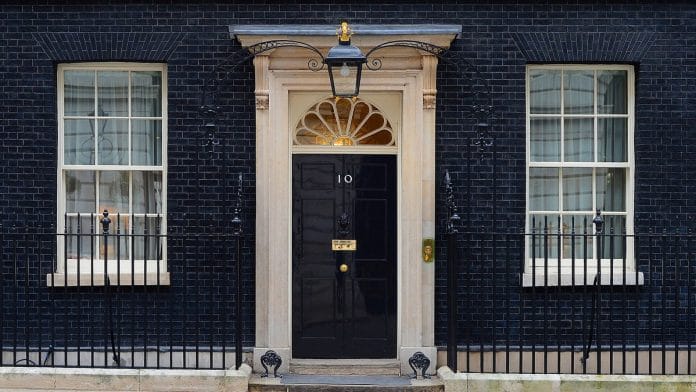

New Delhi: For about two months, one of London’s most famous addresses was listed on Booking.com as a holiday stay: 10 Downing Street, the official residence of the British Prime Minister. There was even a glowing review that mentioned Larry, the cat who lives there.
It was all part of an elaborate ruse by a UK consumer group, Which?, to expose loopholes in Booking.com’s checks against fake listings. The platform failed utterly, according to the consumer group.
In a 2 September report titled ‘How we listed 10 Downing Street as a holiday home on Booking.com’, Which? described how it created the fake property listing and how easy getting it live turned out to be. Enquiries immediately came from customers who seemed to have taken the listing seriously.
“We thought listing the Prime Minister’s residence as a holiday let was so absurd and obviously a scam that Booking.com would stop it. It didn’t. Instead, the listing went live and we were able to take bookings in just a few hours,” the report noted.
Fancy a stay at Downing Street? We created a fake listing, were able to make a test payment and publish a fake 10/10 review through @bookingcom. @Ofcom should crack down on platforms leaving their customers vulnerable to scams.
Read more here: https://t.co/Z7GWbrEJwt pic.twitter.com/6wwrQC0pZr
— Which? (@WhichUK) September 2, 2026
The failure could be “comical”, it added, were it not for the many people reporting being scammed on Booking.com.
In a post on X, Which? also called on the UK telecommunications regulator Ofcom to “crack down on platforms leaving their customers vulnerable to scams”.
A glowing ‘review’
The listing for 10 Downing Street promised a “1 bedroom apartment in the heart of London”, just a four-minute walk from the Houses of Parliament. The report said 14 people asked about its availability in the first 20 minutes.
Which? later posted a fake review of the stay, giving it a 10 out of 10 rating. The review said it was “unbelievable” that Booking.com had allowed a stay at the Prime Minister’s residence. It described “hanging out with Larry the Cat” as a highlight.
The report said Which? had been warning about scams on Booking.com for two years. In October 2024, it created a fake listing in about 15 minutes without undergoing any identity verification. After this, Booking.com tightened its checks, partly in response to new UK rules requiring accommodation platforms to verify listings, but the 10 Downing Street experiment showed those safeguards could still be easily bypassed.
Even after Which? notified Booking.com that the property was fake, the listing was not removed until 27 August, about two months after it was created.
Also Read: Are AI agents going rogue? Anthropic study of simulations shows sabotage, concealment of fraud
What Booking.com has said
Booking.com has denied that the 10 Downing Street experiment signals wider problems on its platform.
“This limited test is not a true reflection of the experience of millions of listings or reviews published on our platform,” the BBC quoted a spokesperson as saying.
The company said the property was not live and bookable for the entire two-month period. Because the listing had been closed, it said, some of its automatic fraud controls were not triggered to remove it completely.
Booking.com also said it uses “a range of checks and verification measures”, along with AI, to detect fraudulent listings. It said these measures help it remove most such listings within 24 hours. It added that fraud was becoming increasingly sophisticated and that it was continuing to strengthen its defences.
(Edited by Asavari Singh)